Introduction
I remember the first time I stood in the butcher shop, staring at the display, searching for a reliable beef striploin roast recipe that wouldn’t ruin an expensive piece of meat. It was a nervous moment, but I have found that keeping the preparation simple is actually the better approach for high-quality cuts. I want to share exactly how I approach this to get that steakhouse result without any complicated gear.
This specific beef striploin roast recipe stays in my regular rotation because it delivers consistent texture without the stress of longer, tougher cuts. While some roasts demand a slow braise for hours, this one shines when treated like a giant steak. It works well for everything from relaxed Sunday dinners to special occasions when I want something impressive but manageable to cook.
By the time you finish reading this, you will understand the timing, the temperature management, and the resting process that turns a raw roast into a tender meal. I have learned over many attempts that the biggest mistake is rushing the sear or skipping the thermometer. You will find that the final result has a rich, caramelized exterior and a vibrant, tender interior that holds its juices perfectly.
Why This Recipe Works
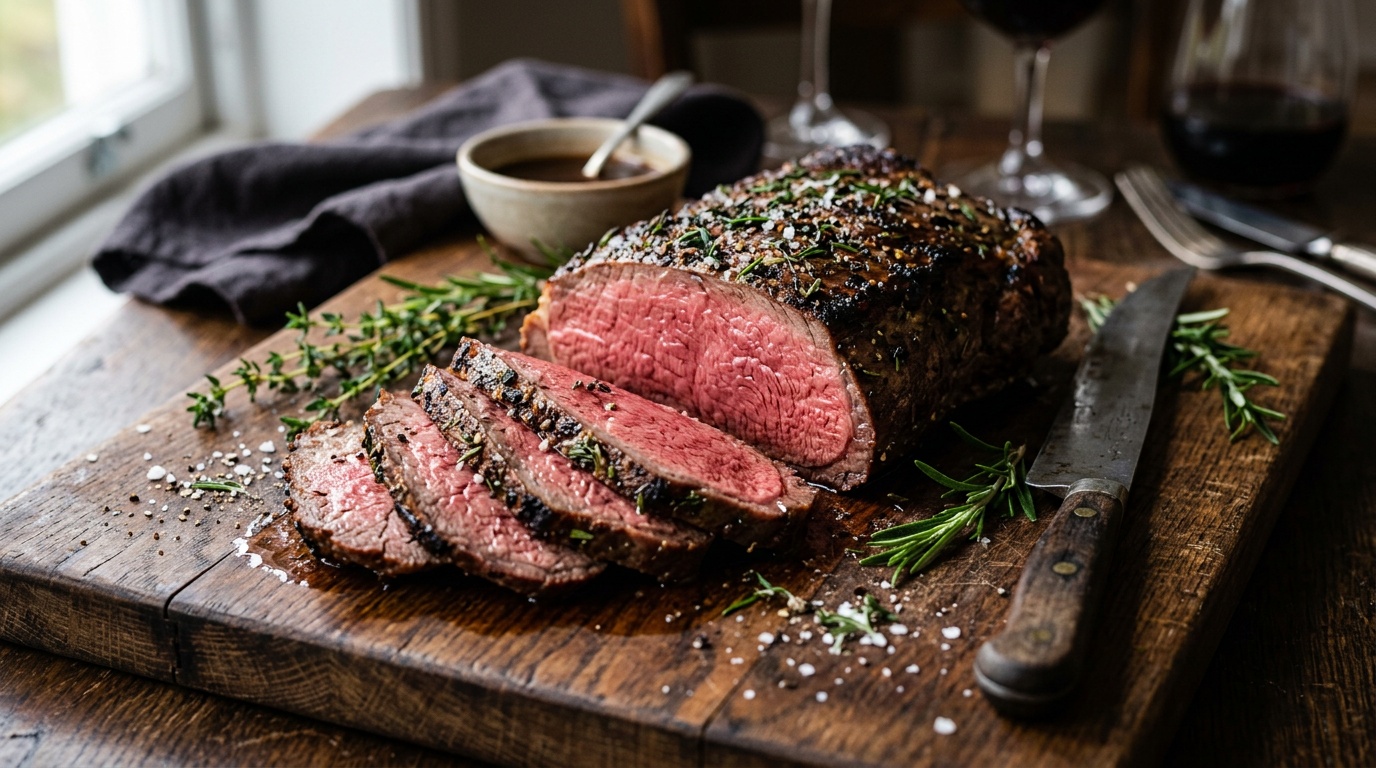
High-Heat Searing: I always sear the meat in a cast-iron skillet before the oven, which creates a deep, mahogany crust through the Maillard reaction. This chemical process happens when amino acids and sugars rearrange under heat, producing hundreds of complex flavor compounds that you simply cannot get from oven-roasting alone. It provides that savory, toasted depth that defines a great herb-crusted beef roast.
Room Temperature Start: Taking the meat out of the refrigerator 60 minutes before cooking allows the internal temperature to rise slightly. If you throw a cold roast directly into a hot oven, the exterior cooks much faster than the center, leading to a grey band of overcooked meat. Tempering ensures a more even distribution of heat from edge to center, resulting in a consistent pink color.
Controlled Resting Period: When you pull the beef from the oven, the muscle fibers are tight and the juices are concentrated in the center. Letting it rest on a cutting board for at least 20 minutes allows the fibers to relax and reabsorb those juices, which prevents them from spilling out onto the board when you slice. I never skip this step because it determines the final juiciness of the meat.
Ingredients
The Roast
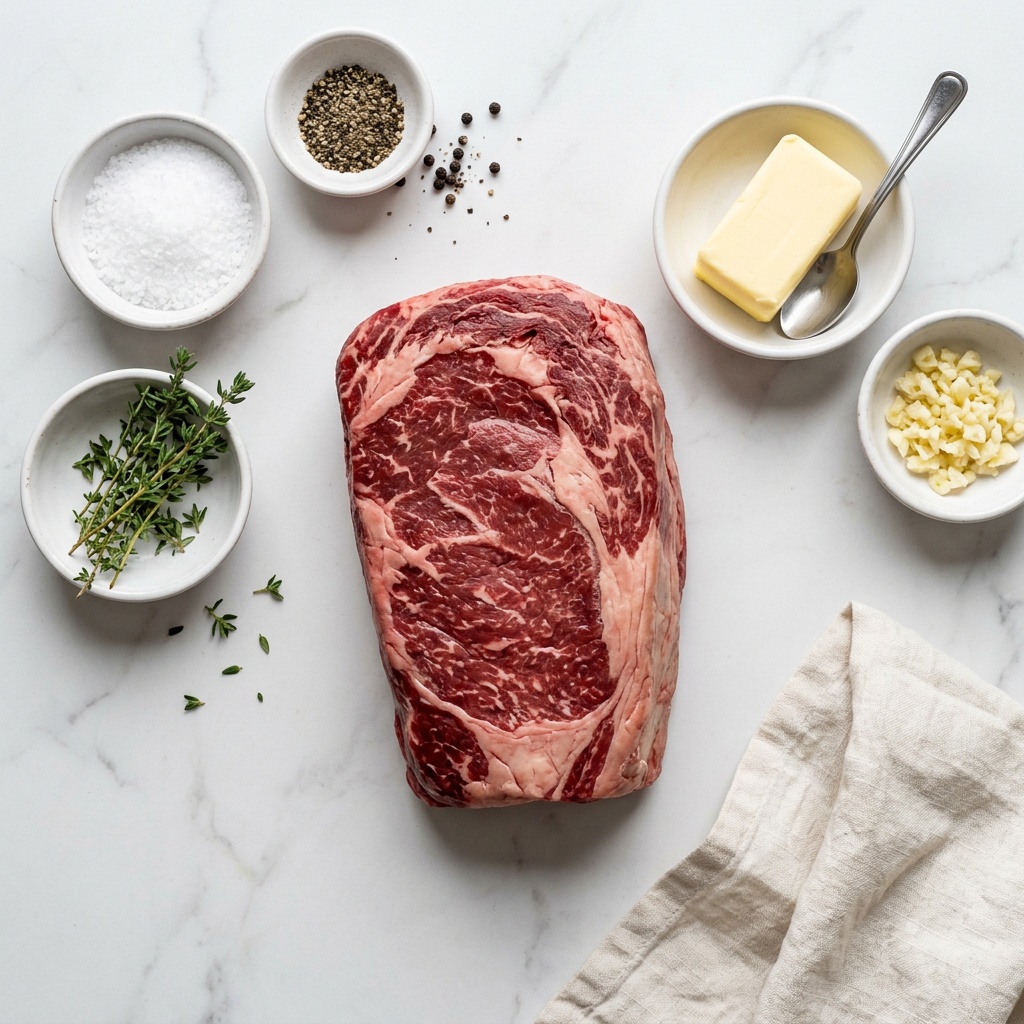
- 3 lbs beef striploin roast (center-cut, tied)
- 2 tbsp kosher salt (divided)
- 1 tbsp black pepper (coarsely ground)
- 2 tbsp grapeseed oil (high smoke point)
Herb Butter
- 3 tbsp unsalted butter (softened)
- 2 cloves garlic (minced)
- 1 tbsp fresh thyme (chopped)
Instructions
1Season and Temper the Beef
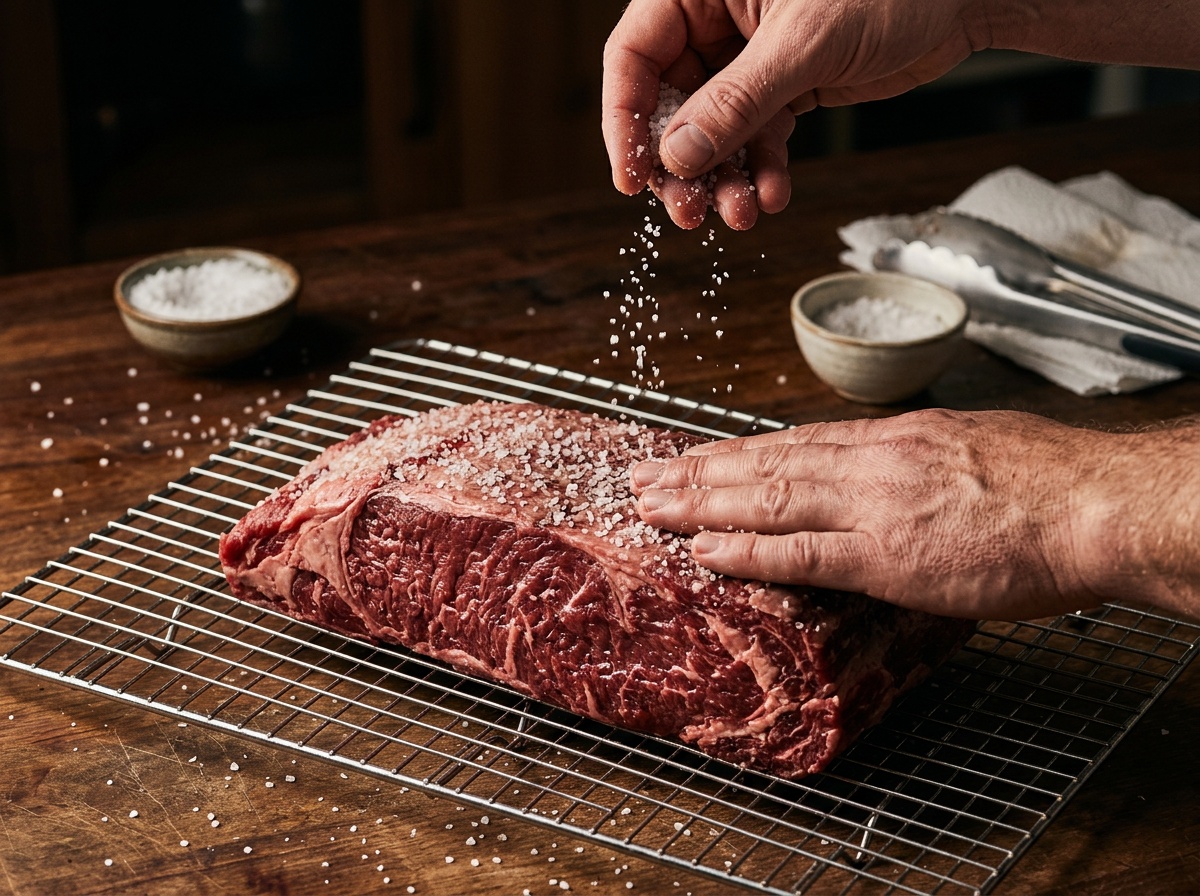
I begin by removing the beef from the packaging and patting it completely dry with paper towels, which helps get a better sear later. I liberally coat the entire surface with kosher salt and black pepper, pressing the seasoning into the meat with my hands to ensure it sticks. I let the roast sit on a rack at room temperature for at least 45-60 minutes before I even turn the oven on. If you try to cook it while it is cold, the center will stay raw while the edges become dry. This step also gives the salt time to draw out surface moisture, which makes the searing process much faster.
2Sear the Surface
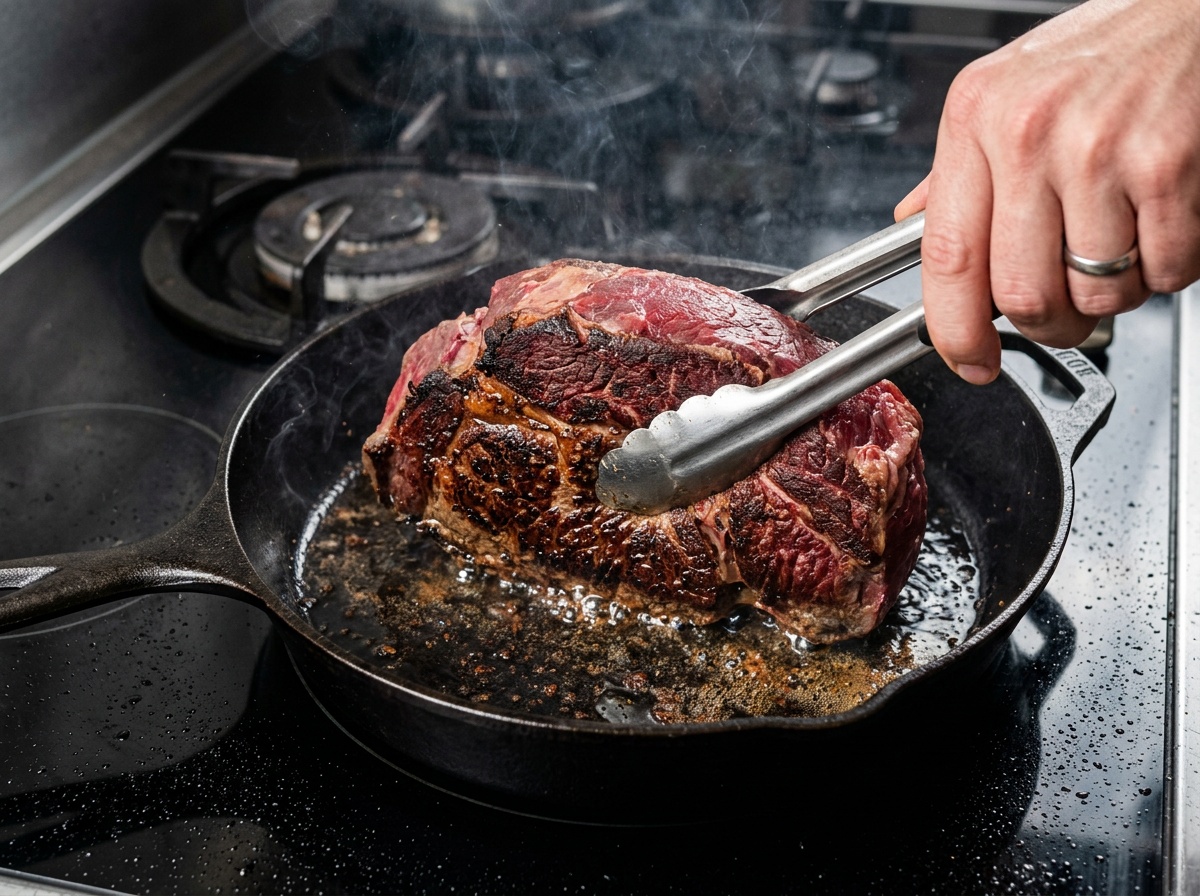
I preheat my oven to 325°F and simultaneously heat a heavy cast-iron skillet over high heat with the grapeseed oil. Once the oil begins to shimmer and produce wisps of smoke, I carefully place the roast into the pan. I sear each side for about 2-3 minutes, rotating it until the exterior is browned and crispy. This step creates the foundation for a delicious beef striploin roast recipe that has real character. I make sure to sear the ends as well, holding the meat with tongs if necessary to get every inch covered. Once it has that dark, caramelized crust, I remove it from the skillet.
3Roast and Monitor
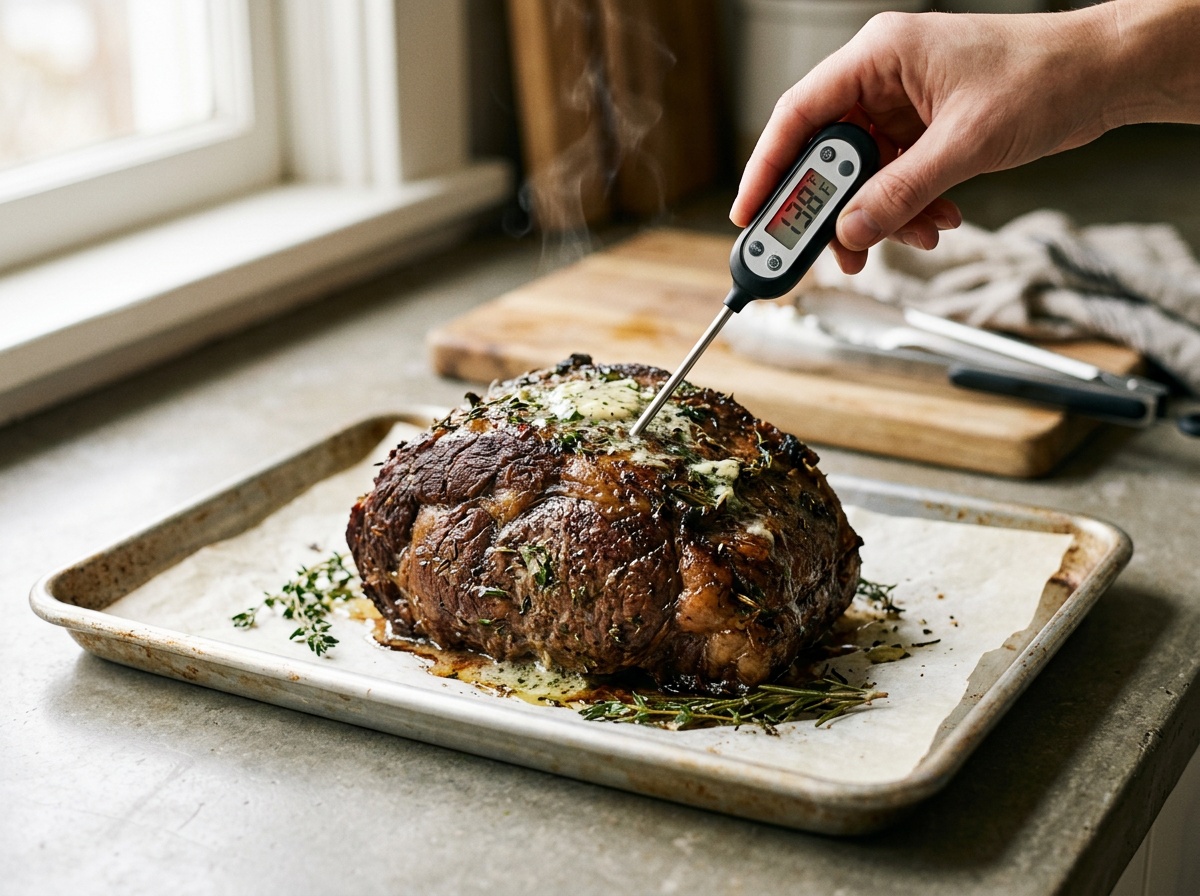
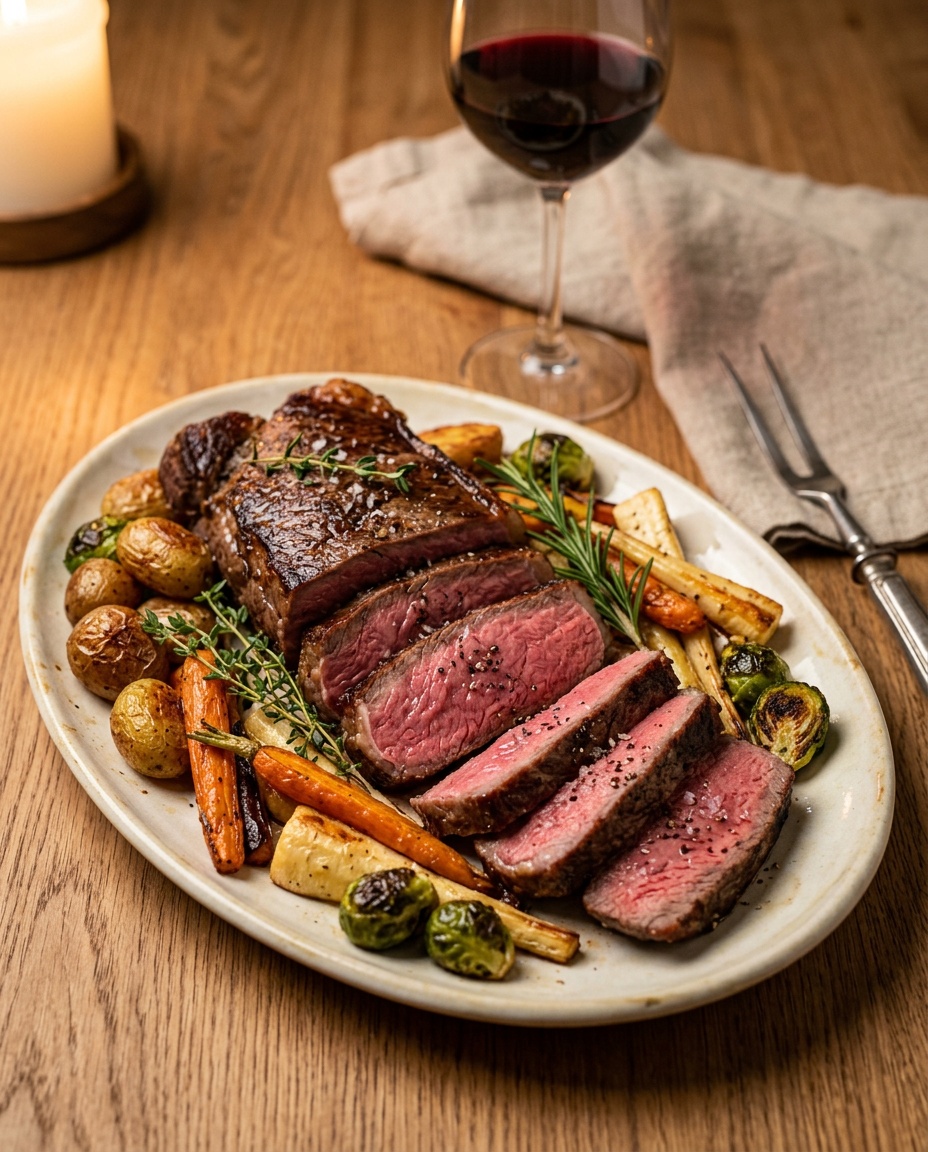
I transfer the seared roast to a rimmed baking sheet or roasting pan and spread the garlic-herb butter mixture over the top. I insert a probe thermometer into the thickest part of the meat, setting the alarm to pull it at 125°F for a perfect medium-rare. I slide it into the 325°F oven and roast for about 35-45 minutes, depending on the thickness of the cut. Using proper meat thermometer tips is how I avoid overcooking; I never rely on the clock alone. When the thermometer hits 125°F, I take it out of the oven immediately and transfer it to a warm platter. I tent it loosely with foil and let it rest for 20 minutes before carving.
Tips & Variations
The Thermometer Rule: Never guess the doneness of your beef; always use an instant-read thermometer to check the center. For a medium-rare beef striploin, pull the roast at 125°F because the temperature will climb another 5-10 degrees while it rests.
Reverse Sear Variation: If you have extra time, try a reverse sear beef method. Roast the beef at 225°F first until the center hits 115°F, then remove it, crank the heat to 500°F, and sear it in a hot skillet for 1 minute per side.
Resting Importance: I set a timer for 20 minutes the moment the beef leaves the oven. Cutting into the meat too soon causes the juices to run out, leaving you with dry slices, so patience here really pays off in texture.
Pan Sauce Idea: Don’t wash that cast iron skillet after searing! Deglaze the pan with a splash of red wine or beef broth while the meat rests, scrape up the browned bits, and simmer until reduced to make a simple, flavorful jus.
Slicing Technique: When you are ready to serve, always look for the direction of the muscle fibers. I slice against the grain—perpendicular to the lines running through the meat—to ensure every bite is tender rather than chewy.
Nutrition Information
Per serving (approximate values)
| Nutrient | Amount |
|---|---|
| Calories | 420 |
| Protein | 32g |
| Carbohydrates | 1g |
| Total Fat | 31g |
| Fiber | 0g |
| Sugar | 0g |
Frequently Asked Questions About beef striploin roast recipe
How long should I cook a beef striploin roast recipe to get medium-rare?
▼
For an oven-roasted beef striploin at 325°F, you should plan for about 15-20 minutes per pound. However, exact roast beef cooking time varies by shape, so I always rely on a meat thermometer. Pull the roast from the oven when the internal temperature reaches 125°F for medium-rare results.
Can I prep this roast ahead of time?
▼
You can absolutely season the meat with salt up to 24 hours in advance and keep it uncovered in the refrigerator. This process, called dry brining, draws moisture to the surface and then reabsorbs it, deepening the flavor of the meat. Just make sure to bring it to room temperature for one hour before you start searing.
What is the best way to reheat leftovers?
▼
To reheat without drying it out, I slice the cold roast and arrange it on a baking sheet. I drizzle a small amount of beef broth over the slices and cover them tightly with foil. I put them in a 300°F oven for about 10-15 minutes until they are just warmed through, avoiding the microwave which toughens the protein.
Can I use dried herbs instead of fresh ones for the butter?
▼
Yes, you can use dried herbs, but you need to adjust the ratios because dried herbs are more potent. I recommend using 1 teaspoon of dried thyme instead of 1 tablespoon of fresh. Mix the dried herbs with the softened butter and let them sit for ten minutes so the dried leaves hydrate slightly before you spread them on the beef.
My roast didn’t brown well, what happened?
▼
If your roast didn’t develop a good crust, the surface was likely still damp. Beef must be bone-dry before it hits the hot pan to trigger the Maillard reaction. Next time, use fresh paper towels to pat the meat thoroughly and ensure your pan is screaming hot before you drop the meat in to cook.