Introduction
I’ve spent years trying countless beef stir fry recipes, but I found that most of them either resulted in chewy meat or mushy, overcooked vegetables. I remember the night I finally figured out the secret — a small bowl, some cornstarch, and just enough patience to prep the meat correctly. It was a weeknight, and I was exhausted, but one bite of that perfectly caramelized beef changed how I cook dinner for my family forever.
Now, this dish stays in my regular rotation because it hits the table faster than takeout and actually tastes better. I usually whip this up on busy Tuesday evenings when I have a fridge full of random produce to clear out. It honestly works better than any other meal I know for using up leftover broccoli or carrots, and it never fails to satisfy that specific craving for something savory, salty, and slightly sweet.
In the steps below, I’m going to show you exactly how to handle the heat, how to treat your protein, and how to get that glossy sauce that coats every single piece. You’ll learn the technique of velveting, which ensures your beef stays tender, and how to sequence your vegetables so they remain crisp-tender rather than soggy. By the end, you will have a restaurant-quality meal that proves simple home cooking is better than ordering out.
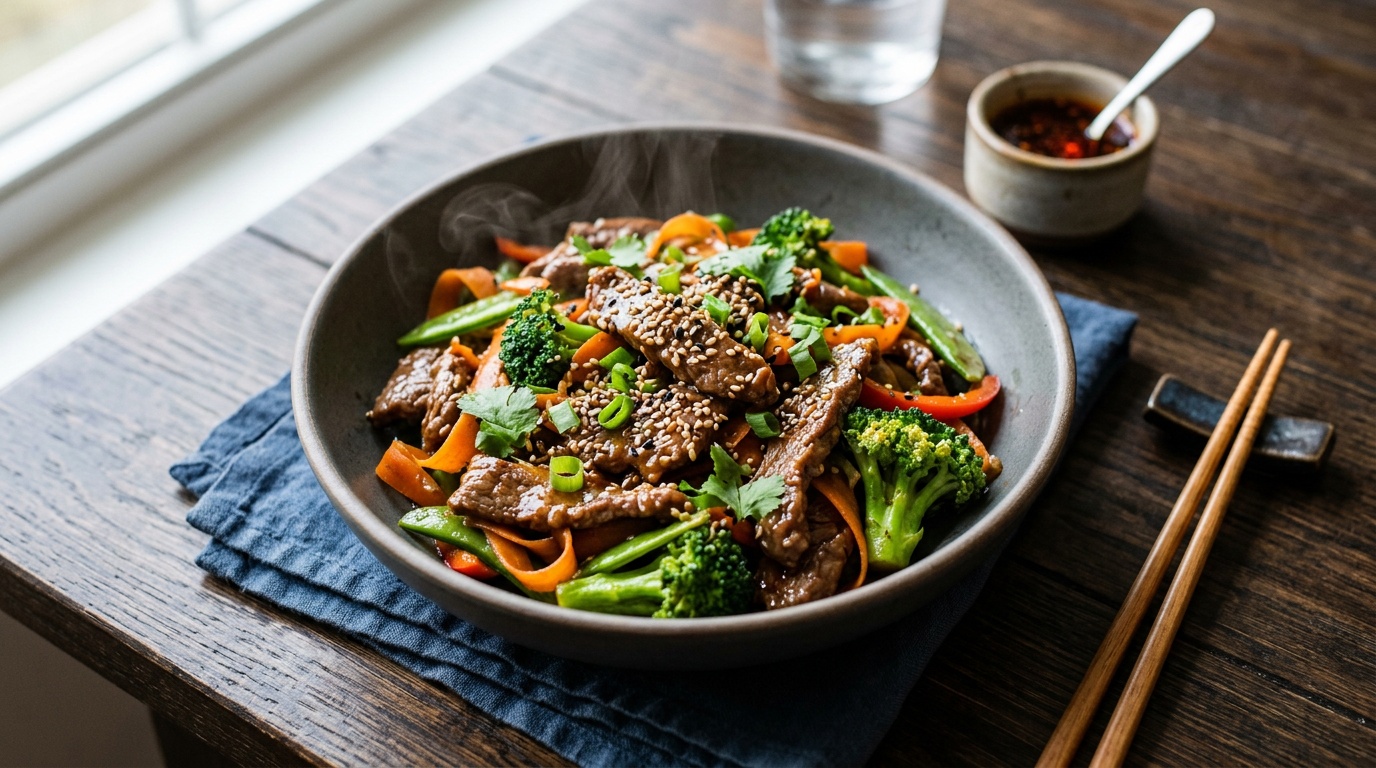
Why This Recipe Works
The Velveting Technique: Velveting beef is the method of marinating thinly sliced steak in cornstarch, oil, and a splash of soy sauce before cooking. This creates a protective barrier that seals in moisture, ensuring the meat stays tender while the exterior sears quickly. When I use this technique, I notice the beef never turns rubbery, even over high heat.
High Heat Wok Cooking: Wok cooking requires intense heat to create a charred, smoky flavor known as ‘wok hei.’ By heating your pan until it smokes before adding the oil, you initiate a rapid sear that browns the meat in seconds. I’ve found that using a flat-bottomed carbon steel pan on a standard stove gives me the best results for this rapid sear.
Staggered Vegetable Cooking: Different vegetables have different water contents and cooking times, so throwing them in at once leads to uneven results. I add harder vegetables like carrots or broccoli first, and save leafy greens or tender peppers for the final minute of cooking. This ensures every piece of the vegetable medley maintains its structure and crunch.
Ingredients
For the Beef
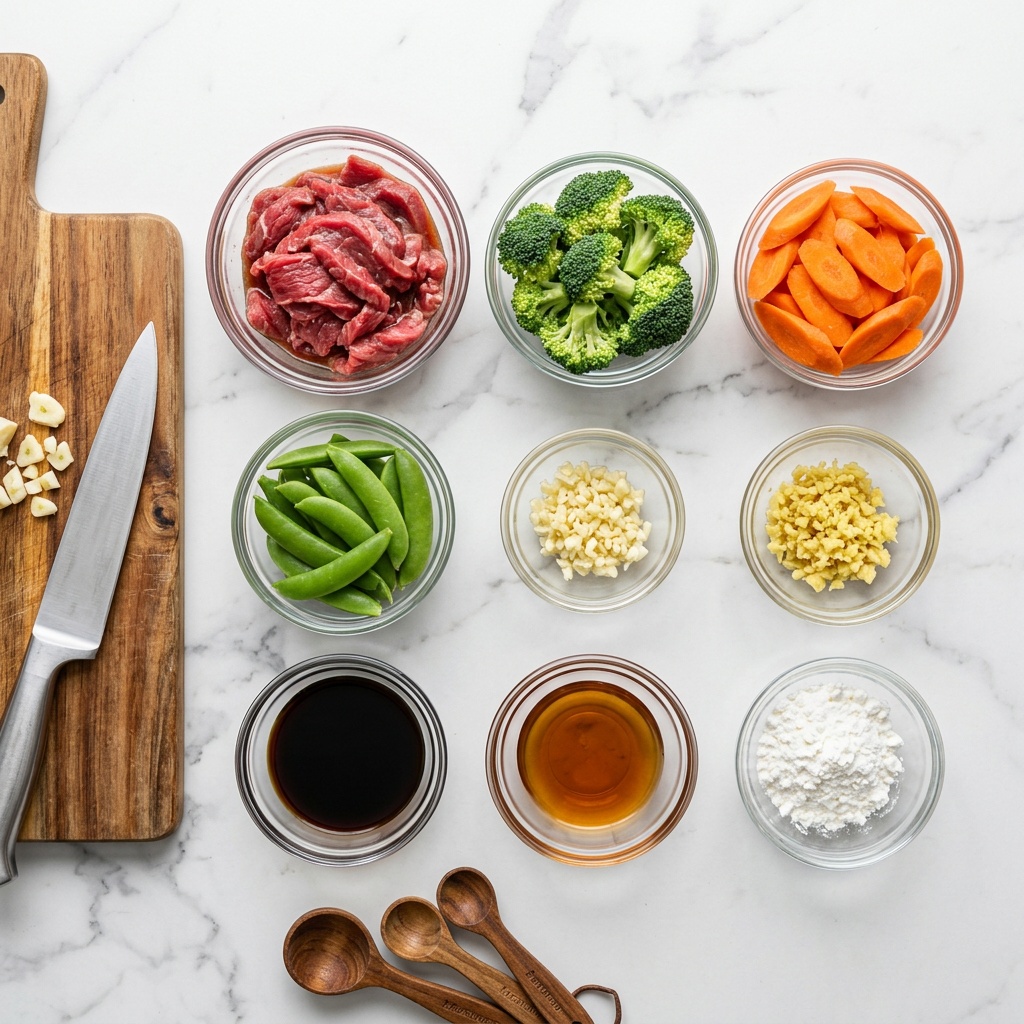
- 1 lb flank steak (sliced thinly against the grain)
- 1 tbsp soy sauce
- 1 tbsp cornstarch
- 1 tsp sesame oil
For the Sauce
- 1/4 cup soy sauce
- 1 tbsp ginger garlic paste (freshly minced)
- 1 tbsp brown sugar
- 1 tsp cornstarch (mixed with 1 tbsp water)
For the Stir Fry
- 2 cups vegetable medley (broccoli florets, sliced carrots, snap peas)
- 2 tbsp neutral oil (grapeseed or vegetable oil)
Instructions
1Slice and Velvet the Beef
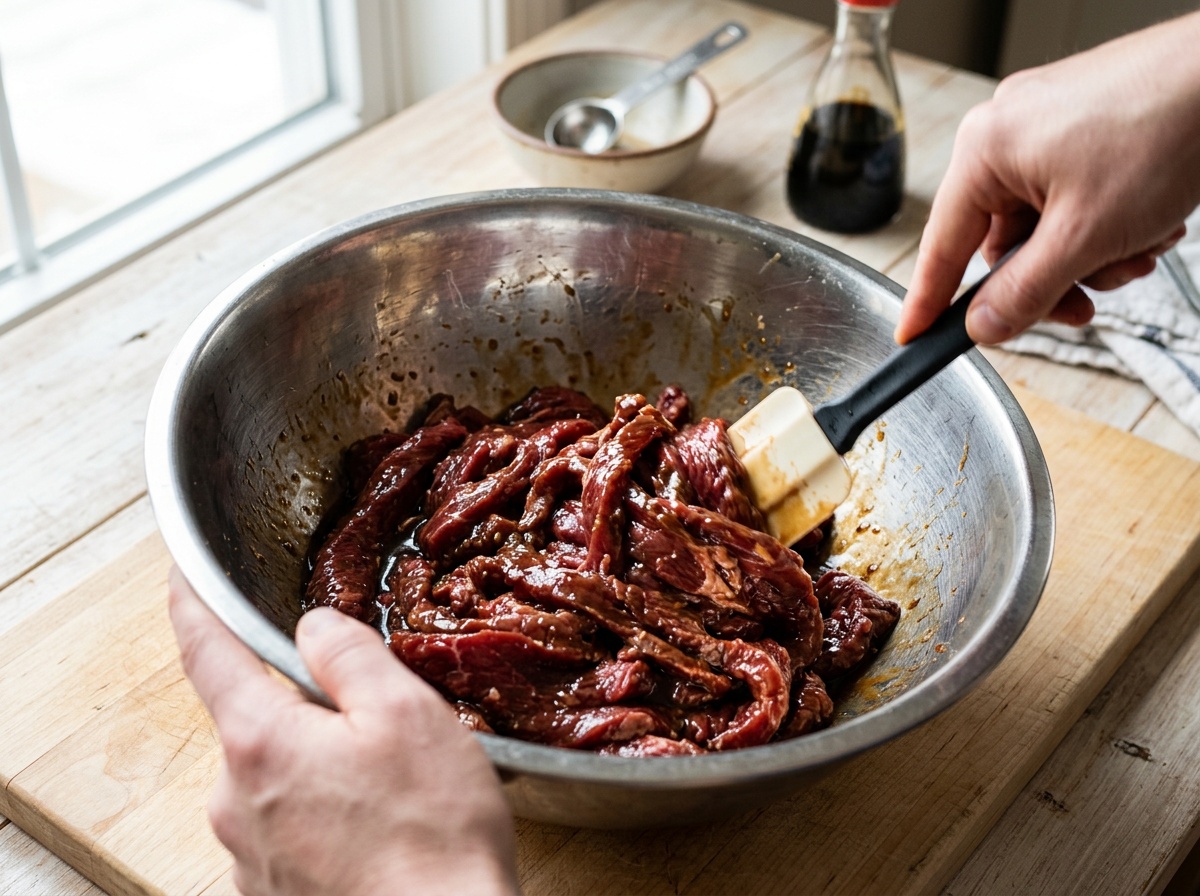
I begin by slicing the flank steak against the grain into thin, bite-sized strips. This is the most important step for tenderness, as slicing with the grain leaves the meat chewy. I toss the beef in a bowl with the soy sauce, cornstarch, and sesame oil, mixing well until the starch has absorbed into the meat. I let it sit for 15 minutes; this velveting beef process tenderizes the fibers. While it sits, I have time to prep my vegetables and mix my sauce ingredients in a small jar.
2Sear the Beef
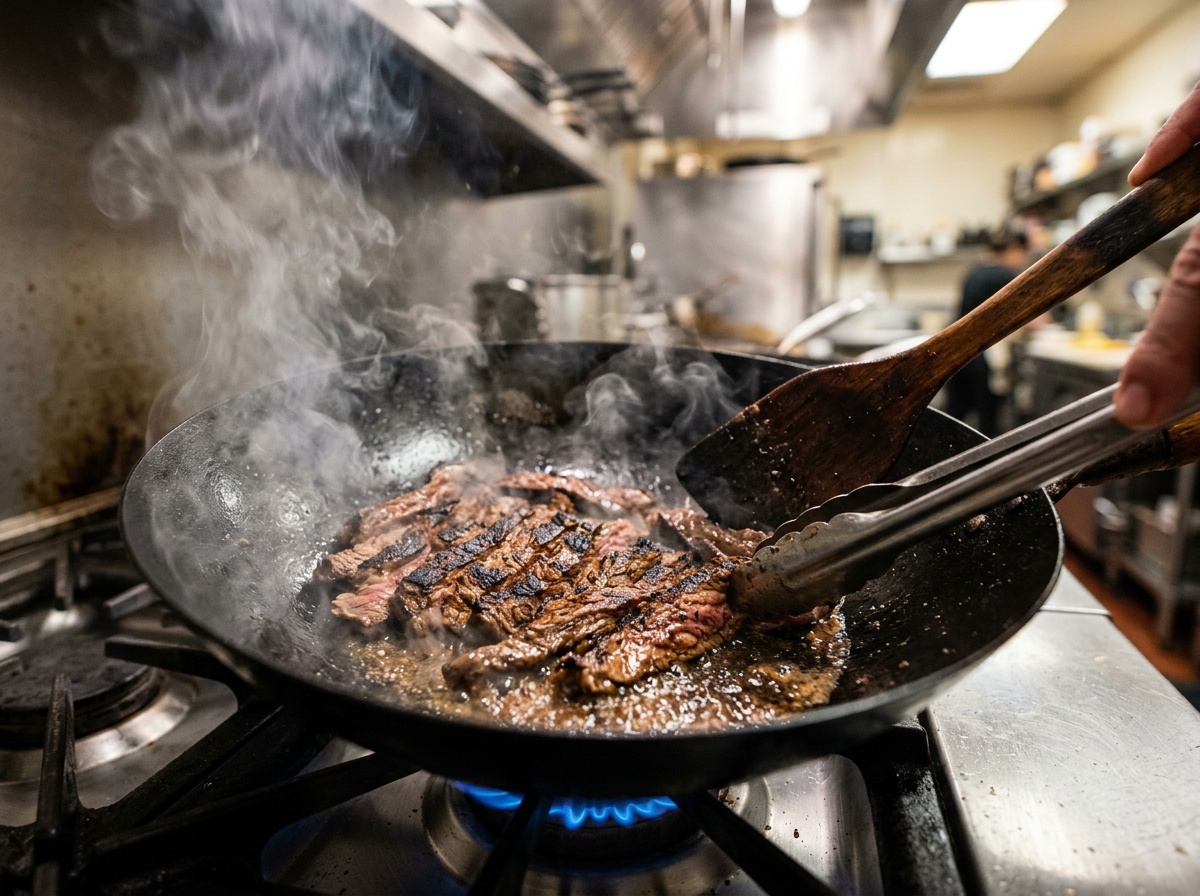
I place my wok over high heat and let it get smoking hot before adding the oil. I add the beef in a single layer, spreading it out to ensure it sears rather than steams. I let it sit undisturbed for about 90 seconds until a deep, dark brown crust develops on the bottom. Then, I give it a quick toss and cook for another minute until just browned, then remove it from the pan. The beef should still be slightly pink inside, as it will finish cooking later.
3Flash-Fry the Vegetables
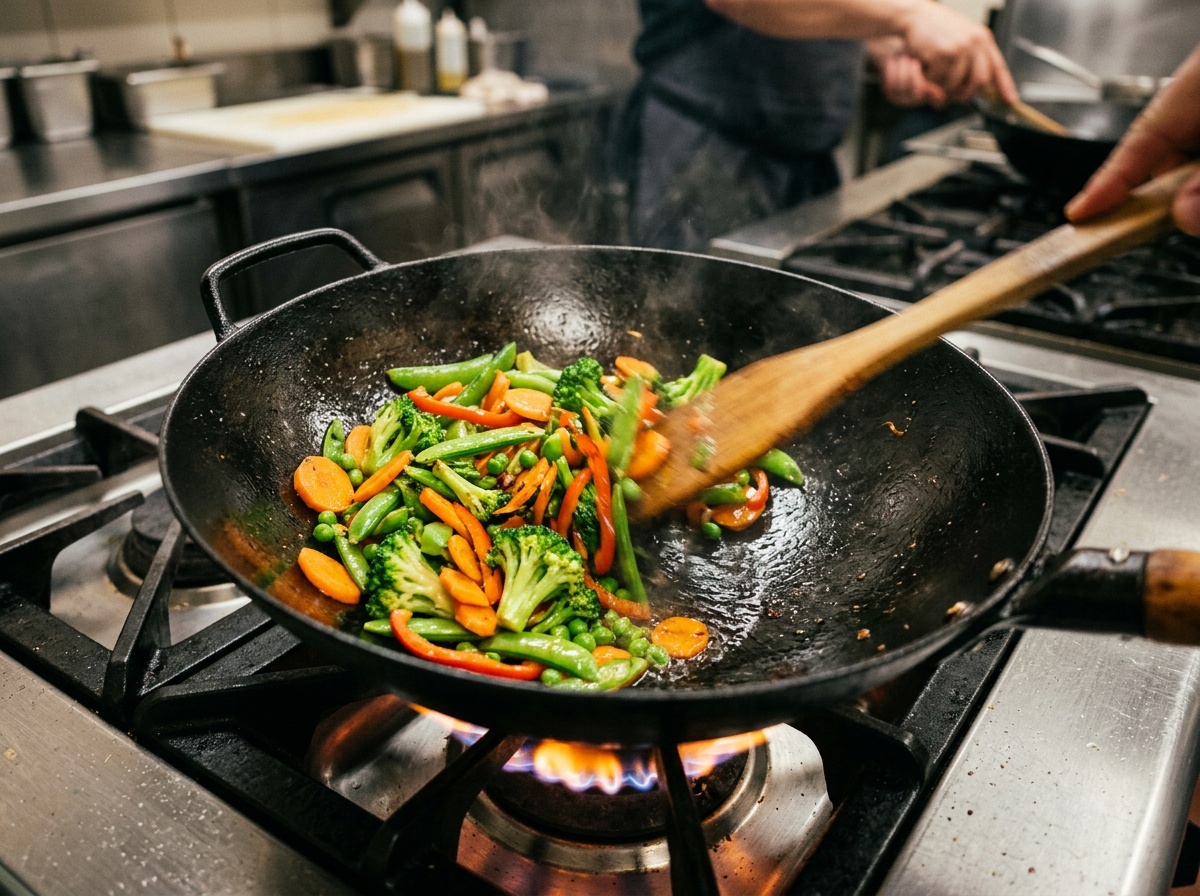
Using the same hot pan, I toss in my harder vegetables like broccoli and carrots with a splash of water to steam-fry them quickly. I stir continuously to keep them moving, which is the hallmark of proper wok cooking. After about 3 minutes, when the vegetables are bright green and starting to soften, I add the softer items like snap peas. I continue cooking for another 60 seconds until everything is tender but still has a firm bite, making sure not to crowd the pan.
4Combine and Glaze
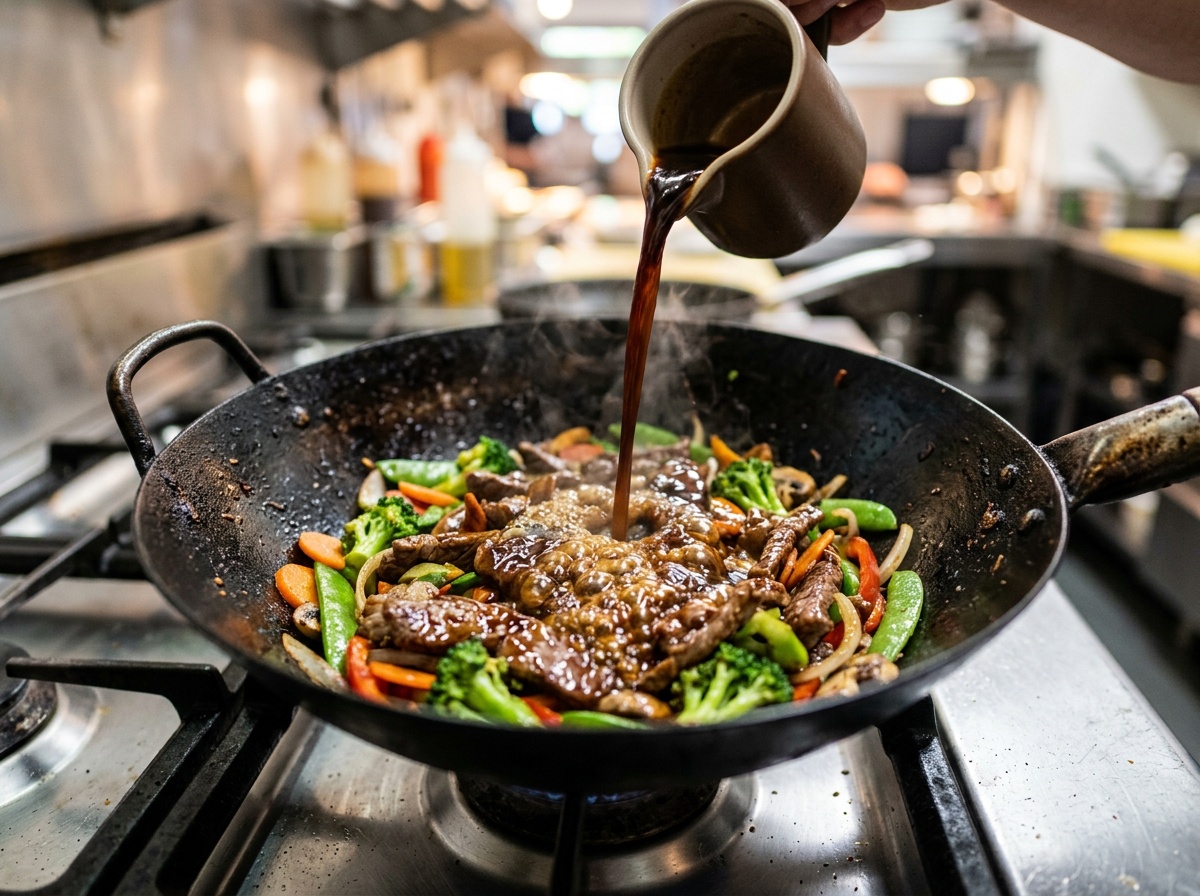
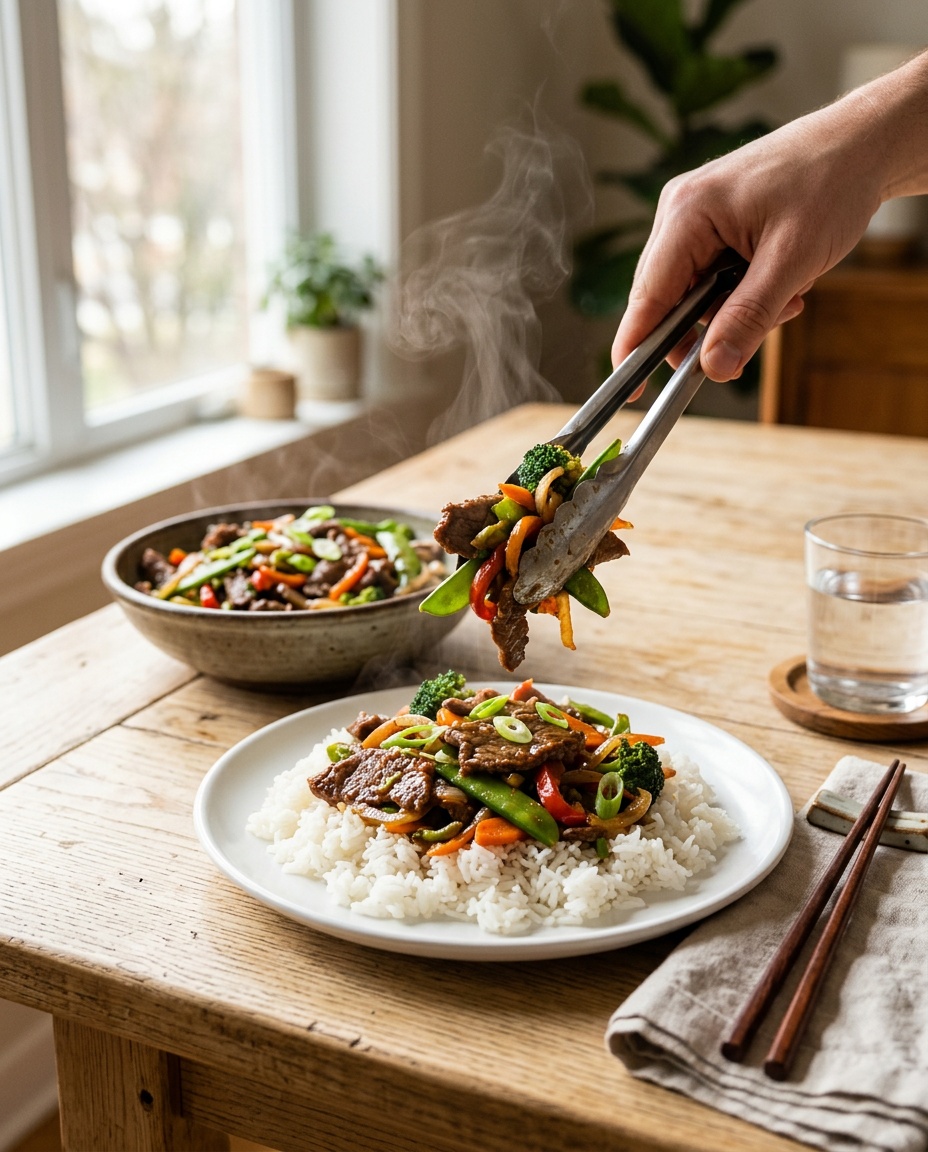
I return the beef to the pan with the vegetables, pouring the stir fry sauce over everything. As the sauce hits the hot pan, it will bubble and thicken almost instantly thanks to the cornstarch slurry. I toss everything together for 30 seconds to ensure the beef is heated through and the vegetables are evenly coated in that glossy, savory glaze. Once everything is glistening and smells fragrant, I turn off the heat immediately so the sauce doesn’t break down.
Tips & Variations
Cold Steak Slicing: I find that freezing the beef for 20 minutes before slicing makes it much easier to get those paper-thin strips. It firms up the muscle fibers, allowing your knife to glide through without the meat sliding around the board.
Mastering the Sauce: Don’t skip the cornstarch slurry in your stir fry sauce, as it provides the body needed to cling to the meat. I always mix my cornstarch and water thoroughly before adding it, otherwise, you might end up with clumps.
Beef Stir Fry Recipes Storage: This dish is best fresh, but if you have leftovers, store them in an airtight container for up to 3 days. When reheating, I add a tiny splash of water to the pan to loosen the sauce without overcooking the beef.
Avoid Overcrowding: If you are doubling the recipe, cook the beef in two batches. If the pan is too full, the temperature drops, and the meat will boil in its own juices instead of getting that nice, seared crust.
Aromatics Timing: I add the minced ginger and garlic right at the end of the vegetable cooking step. If you add them too early, they tend to burn and turn bitter in the high heat of a stir fry.
Nutrition Information
Per serving (approximate values)
| Nutrient | Amount |
|---|---|
| Calories | 340 |
| Protein | 32g |
| Carbohydrates | 18g |
| Total Fat | 16g |
| Fiber | 3g |
| Sugar | 6g |
Frequently Asked Questions About Beef Stir Fry Recipes
Why do my beef stir fry recipes often turn out chewy?
▼
The most common reason for chewy beef is slicing with the grain instead of against it, or not velveting the meat properly. By cutting across the muscle fibers and using a cornstarch marinade, you break down the toughness. I suggest cooking in small batches to ensure high heat, as low heat allows the meat to steam rather than sear.
Can I use a different cut of steak for this?
▼
While flank steak is the standard, sirloin or skirt steak also works well. The key is ensuring the cut is lean and tender enough to handle a quick, high-heat sear. Regardless of the cut, always slice it thinly against the grain, otherwise, the meat will be difficult to chew even if you cook it perfectly.
How do I keep the vegetables from getting soggy?
▼
The secret to crisp vegetables is adding them in order of density and never overcooking them. I start with hard vegetables like carrots and broccoli, and add softer ones like snow peas or bok choy in the last minute. Keep the pan at high heat and stir constantly so they flash-cook rather than stewing in the pan.
Is it possible to make this dish ahead of time?
▼
I don’t recommend cooking the entire dish ahead of time, as the vegetables will lose their crisp texture. However, you can prep the beef and marinate it in the fridge for up to 24 hours, and chop all your vegetables in advance. When it is time to eat, the actual cooking only takes about 10 minutes.
What is the best way to get a glossy sauce?
▼
The glossiness comes from the cornstarch slurry, which acts as a thickening agent when heated. I mix exactly one teaspoon of cornstarch with one tablespoon of water before pouring it into the hot pan with the sauce ingredients. It is vital to let the liquid bubble and thicken for 30 seconds before serving to get that perfect restaurant-style consistency.