Introduction
When I first started trying to cook for my family, I was honestly terrified of buying a lean, cheap cut of meat. I remember grabbing a bottom round roast recipe online, thinking it would be simple, only to end up with a dry, tough piece of leather that was nearly impossible to chew. I learned the hard way that this lean cut requires more respect than a fatty ribeye, but once I nailed the timing, it became a weekly staple for me.
The reason I keep coming back to this specific method is the pure versatility of it; it’s a reliable comfort food dish that doesn’t cost a fortune. I’ve noticed that when I cook this slowly, it develops a depth of flavor that rivals much more expensive cuts, making it a great choice for those chilly Sunday afternoons. Compared to a high-heat quick sear, this slow roasted beef approach keeps the muscle fibers from tightening up and becoming rubbery, so the texture stays consistent throughout.
In this guide, I am sharing the exact techniques that fixed my early failures, like how to properly sear the exterior and why using a thermometer is required for success. You will learn how to break down the connective tissue without overcooking the lean muscle, resulting in a meal that feels special but actually requires very little active time. Expect a dish that is tender, aromatic, and ready to feed a crowd whenever you need a hearty, filling meal on the table.
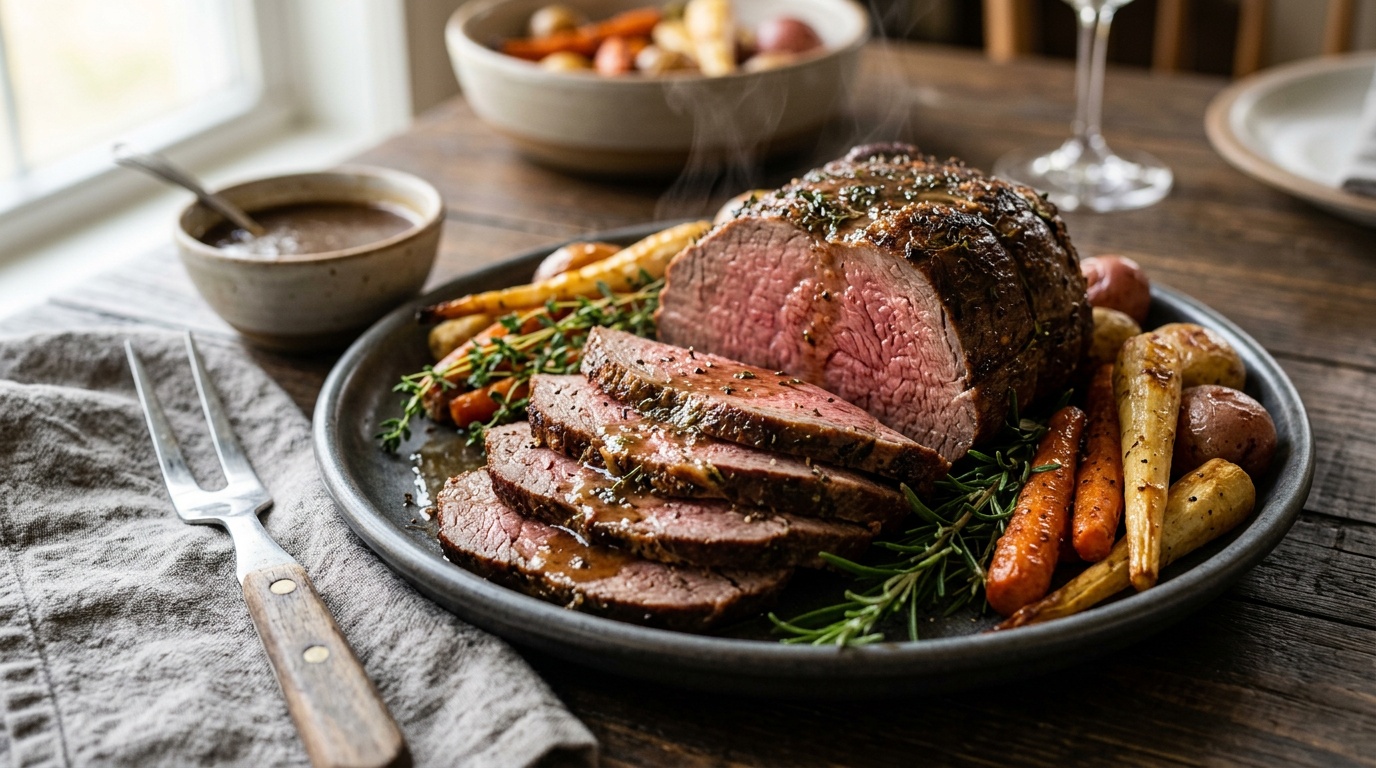
Why This Recipe Works
The Searing Process: When I sear the beef in a heavy cast iron roast pan, I am aiming for the Maillard reaction. This chemical process happens when the amino acids and reducing sugars in the meat brown at high heat, creating complex, savory flavors that you cannot get with oven roasting alone. I make sure the surface of the meat is bone-dry before it touches the hot oil, which allows a deep, crusty exterior to form quickly.
Low and Slow Transformation: This bottom round roast recipe relies on low oven temperatures to break down connective tissue, specifically collagen, which turns into gelatin over several hours. Unlike higher heat cooking that creates a tough exterior, a gentle, sustained heat environment allows the meat to soften gradually. I find that maintaining the oven temperature below 300°F prevents the muscle fibers from contracting too quickly, which is what usually leads to dry, chewy beef.
Moisture Retention Techniques: By adding aromatics like onions, carrots, and a small amount of liquid to the roasting pan, I create a steam-filled environment that helps cook the meat evenly. The liquid serves a dual purpose: it prevents the bottom of the roast from burning while the connective tissue renders, and it creates the base for a natural gravy. I keep the lid tight to ensure that the moisture stays inside, which is the secret to a moist result.
Ingredients
The Roast
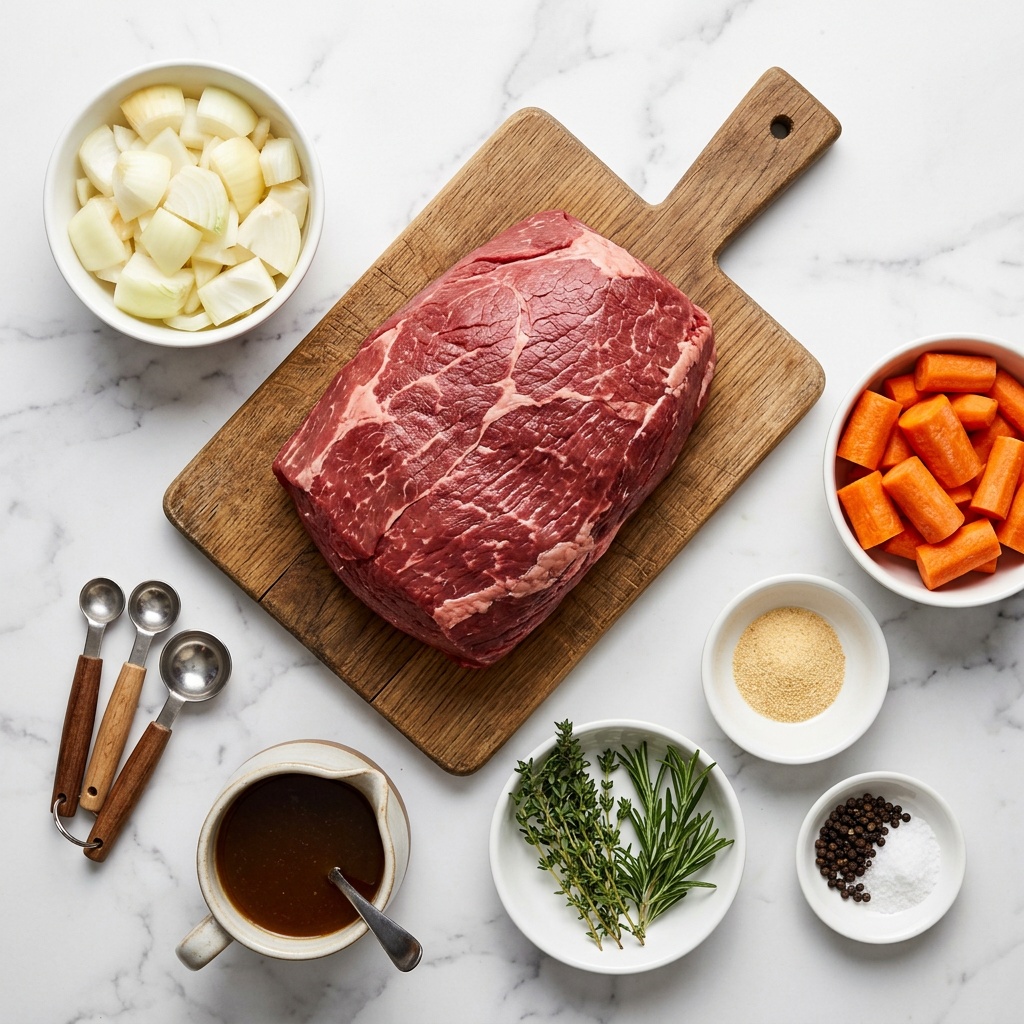
- 3 lbs bottom round roast (trimmed of excess fat)
- 2 tbsp vegetable oil (for searing)
Pot Roast Seasoning
- 1 tbsp kosher salt
- 1 tsp black pepper (freshly cracked)
- 1 tbsp dried thyme
- 1 tsp garlic powder
Vegetable Base
- 2 large yellow onions (thickly sliced)
- 4 large carrots (peeled and cut into 2-inch chunks)
- 1 cup beef broth (low sodium)
Instructions
1Season and Temper
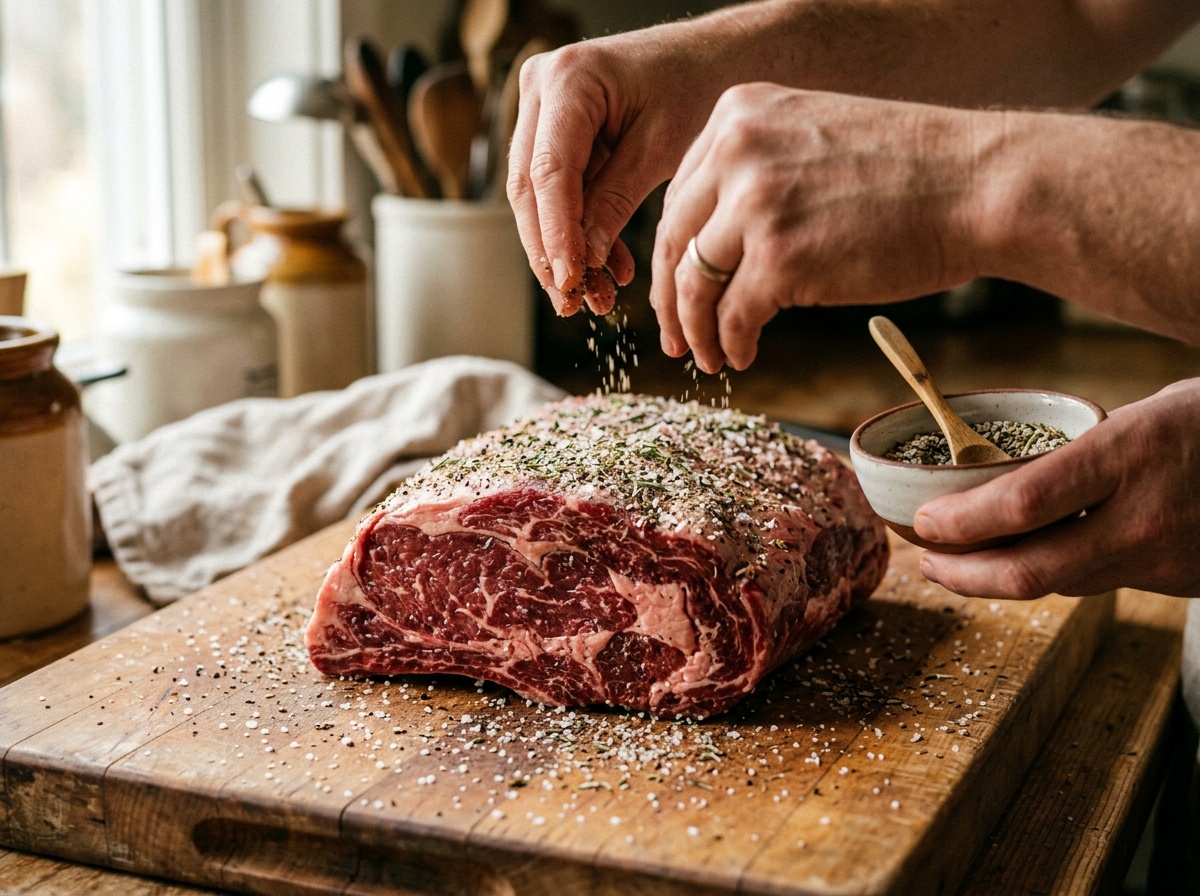
I always pull my roast out of the refrigerator about 45 minutes before I plan to cook it. Cold meat hitting a hot pan causes the temperature to drop drastically, leading to uneven browning, so this temperate start makes a difference. I mix my pot roast seasoning—the salt, pepper, thyme, and garlic powder—in a small bowl and rub it all over the beef, pressing it firmly into the flesh. I find that using my hands works best to ensure every nook and cranny is covered, which builds a great flavor profile on the surface of the meat.
2Searing the Exterior
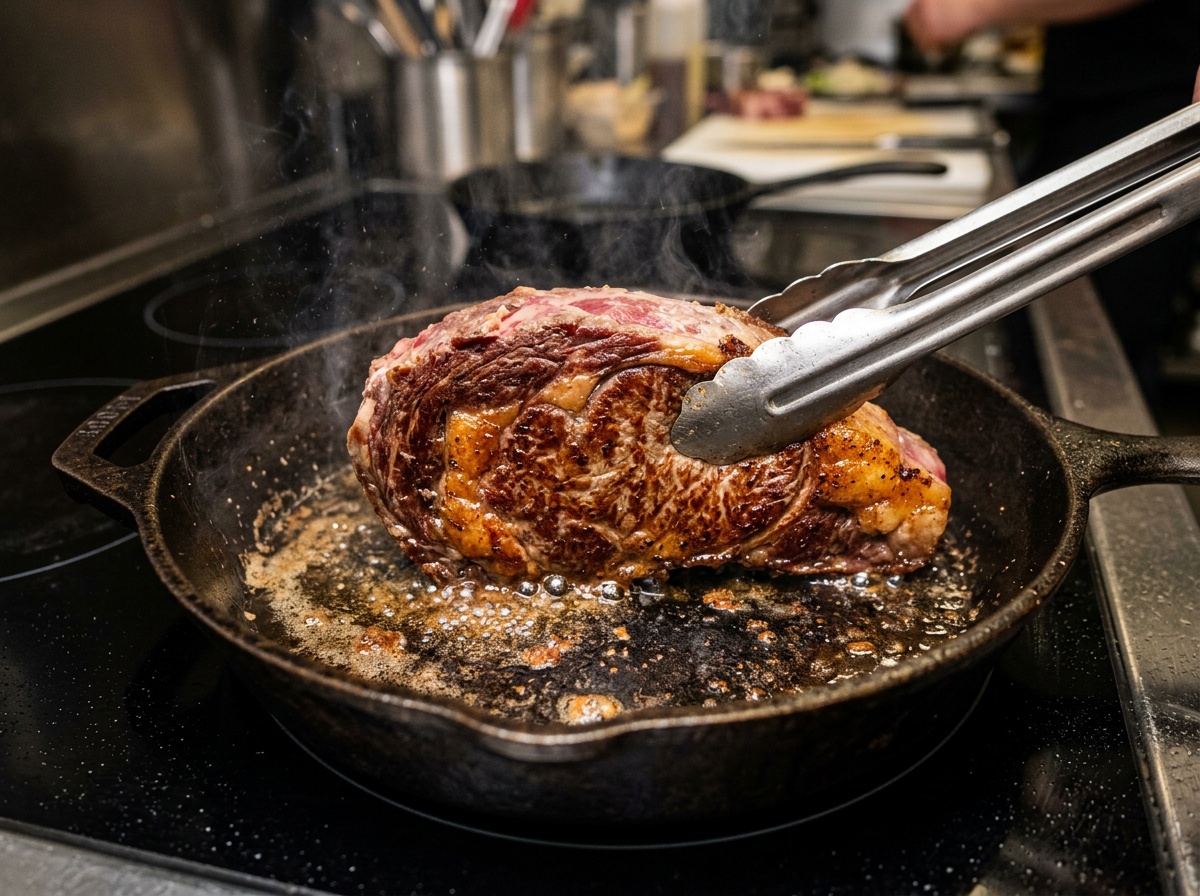
I heat the vegetable oil in a heavy-duty Dutch oven or heavy cast iron pan over medium-high heat until it shimmers. This pan searing meat step is non-negotiable for a good bottom round roast recipe because it creates that deep, savory crust that provides contrast to the tender interior. I sear each side for about 3-4 minutes until it develops a dark, caramelized brown color. I am careful not to crowd the pan, using tongs to turn the roast slowly so the sides don’t tear while they crust up.
3Slow Roasting Process
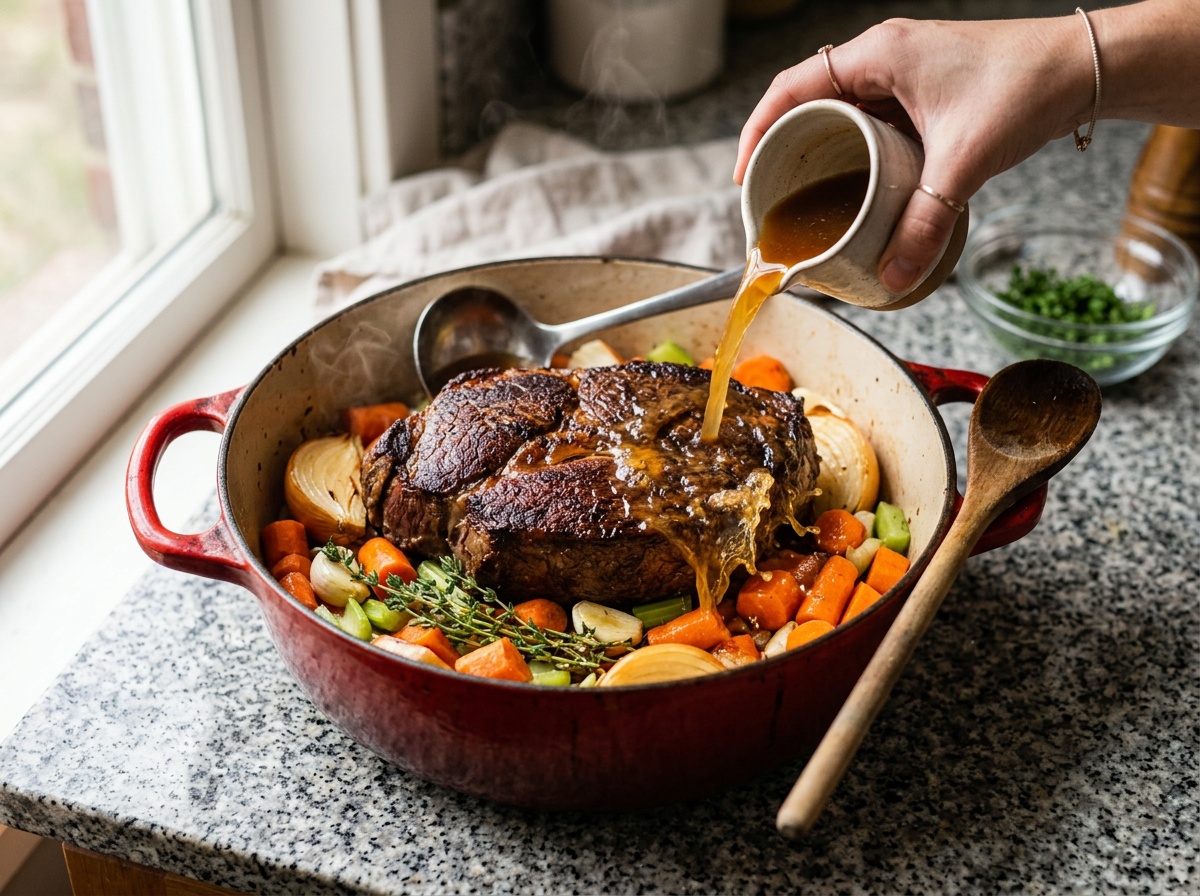
I remove the roast momentarily to toss the onions and carrots into the bottom of the pot, creating a bed for the meat. I place the seared beef on top, pour the beef broth around the sides, and cover the pot with a tight-fitting lid. I slide the pot into an oven preheated to 275°F and let it cook for about 2.5 to 3 hours. I check the beef roasting temperature periodically; I pull the roast out when the internal temperature hits 195°F, which is when the collagen has fully broken down and the meat yields easily to a fork.
4Resting and Serving
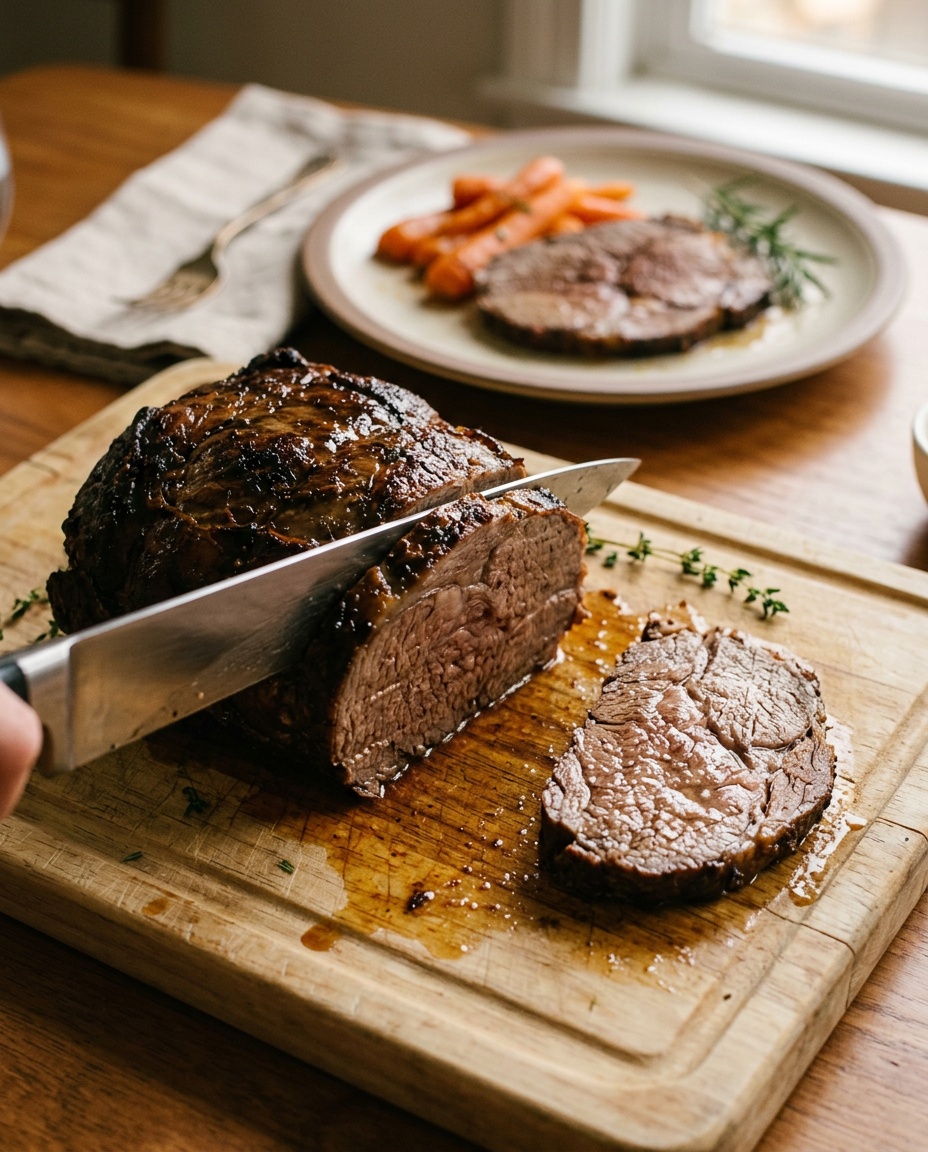
Once the roast hits the right temperature, I move it to a cutting board and tent it loosely with aluminum foil. This resting cooked meat step is the most commonly skipped part of the process, but it is necessary for the juices to redistribute back into the muscle fibers. I let it rest for at least 20 minutes while I strain the liquid in the pan to make a quick gravy. When slicing, I always cut against the grain, which shortens the muscle fibers and ensures that every piece feels tender and melts in your mouth.
Tips & Variations
Use a Meat Thermometer: I never guess with this bottom round roast recipe; I always use an instant-read thermometer. For this cut, pulling it at 195°F to 200°F internal temperature is the sweet spot for tenderness, anything less will be too chewy.
Cutting Against the Grain: Take a close look at the roast before you slice it—you will see lines of muscle fibers running in one direction. Always slice perpendicular to those lines, which shortens the fibers and makes the beef much easier to chew.
Vegetable Texture: If you prefer your carrots and onions to maintain some texture, I recommend adding them to the pot during the last 90 minutes of cooking. Adding them at the beginning will cause them to essentially dissolve into the gravy.
Don’t Rush the Searing: I often see people turn the meat too early; patience is required here. Let the meat sit in the hot pan undisturbed until it releases naturally from the surface, which indicates a good crust has formed.
Gravy Enrichment: After removing the meat, I take the pan juices and whisk in a small cornstarch slurry over medium heat to thicken it. This makes a rich, glossy gravy that highlights the beefy flavors developed during the long roast time.
Nutrition Information
Per serving (approximate values)
| Nutrient | Amount |
|---|---|
| Calories | 310 |
| Protein | 38g |
| Carbohydrates | 8g |
| Total Fat | 14g |
| Fiber | 2g |
| Sugar | 3g |
Frequently Asked Questions About bottom round roast recipe
Can I use a slow cooker for this bottom round roast recipe?
▼
Yes, you can absolutely adapt this bottom round roast recipe for a slow cooker. Follow the searing steps in a skillet first, then place the meat and vegetables into the slow cooker, pour in the broth, and cook on low for 6 to 8 hours. The low, moist heat environment mimics the oven method effectively.
What is the best way to get a tender beef roast without it drying out?
▼
The trick to achieving a tender beef roast is to never exceed 300°F for the oven temperature and to cook until the internal temperature reaches 195°F to 200°F. If you try to cook this cut quickly at high heat, the muscle fibers will seize up, making it extremely tough and dry. Slow, steady heat is your friend here.
How should I store leftover roast beef?
▼
I store leftovers in an airtight container in the refrigerator for up to 3 days. To reheat, I place the slices in a small baking dish with a splash of beef broth or water, cover it tightly with foil, and warm it in a 300°F oven for about 15 minutes to keep it from drying out.
Can I substitute a chuck roast for the bottom round?
▼
Yes, you can substitute a chuck roast, but you will notice a difference in texture and fat content. A chuck roast has significantly more marbling and connective tissue, which means it will likely turn out even more tender than a bottom round roast. You do not need to adjust the cooking time or temperature when making this specific swap.
Why is my roast tough even though I cooked it for a long time?
▼
If your roast is still tough, it usually means it hasn’t reached the temperature required to break down the collagen. Check your oven temperature with a separate thermometer, as many ovens run cooler than the dial indicates. You need that internal heat to sustain 195°F for the connective tissue to melt into gelatin.