Introduction
There was one Tuesday night last winter when I stood in my kitchen, staring at a package of ground beef and a bag of rice, feeling completely drained from a long day. I wanted something filling but didn’t have the energy for a complicated meal, so I started experimenting with chop meat and rice recipes that I could pull together in one pan. That night, I stumbled upon a simple combination of textures and flavors that has stayed in my rotation ever since, especially on those evenings when comfort food is non-negotiable.
I keep coming back to this dish because it is remarkably forgiving and uses pantry staples I almost always have on hand. It sits right in the middle of a weeknight dinner and a lazy weekend lunch; it’s substantially more satisfying than a standard ground beef and rice skillet, yet it doesn’t require constant attention while it simmers. My family prefers this to takeout on nights when the weather is cold, as it feels substantial and warm without being heavy.
In this post, I will share how to manage the browning process to get deep flavor without burning the aromatics, and how to balance your liquid ratios so the rice cooks through without turning mushy. You will learn the exact visual cues to look for, like when the beef has released enough fat to properly toast the garlic. By the time we are done, you will have a dependable, one-pan meal that consistently delivers that savory, home-cooked taste.
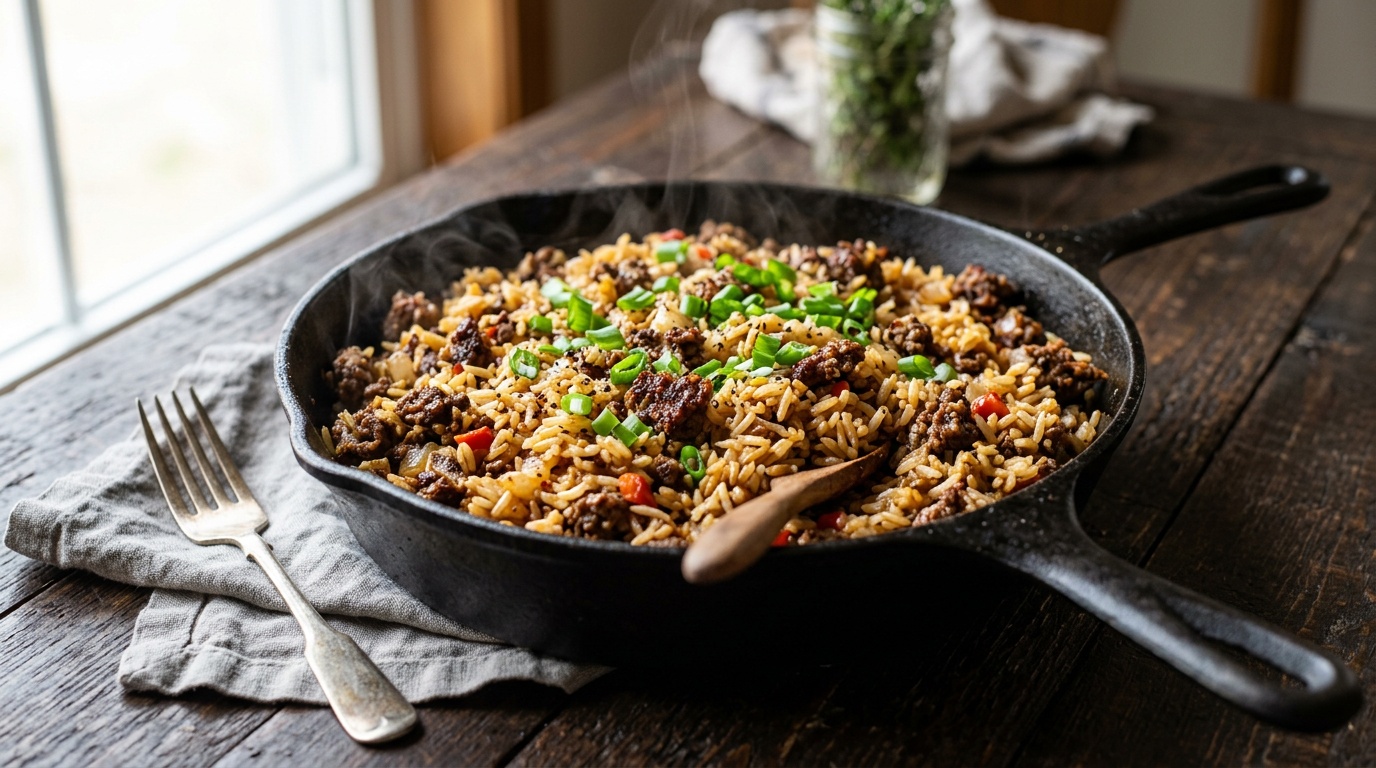
Why This Recipe Works
Controlled Browning: I prioritize browning the meat without crowding the pan, which allows the proteins to undergo the Maillard reaction properly. Instead of steaming the meat in its own juices, spreading it out in a heavy-bottomed skillet ensures the edges get crispy and caramelized. This chemical reaction creates complex, savory flavor compounds that simple boiling or simmering cannot achieve.
Absorption Cooking: Cooking the rice directly in the seasoned broth rather than boiling it separately ensures every grain absorbs the flavor of the beef juices and aromatics. As the liquid reduces, the starches are released into the sauce, giving the final result a creamy, cohesive texture that binds the meat and rice together. This one-pan technique is a cornerstone of effective meat and rice dinner preparation.
Aromatic Layering: Starting with an aromatic base of onions and garlic, sautéed until translucent before adding the meat, builds a foundational depth that permeates the entire dish. I wait until the onions are soft and slightly golden, which indicates they have released their natural sugars and are ready to support the savory notes of the beef. This step prevents raw onion bites and creates a smooth flavor profile.
Ingredients
The Main Skillet
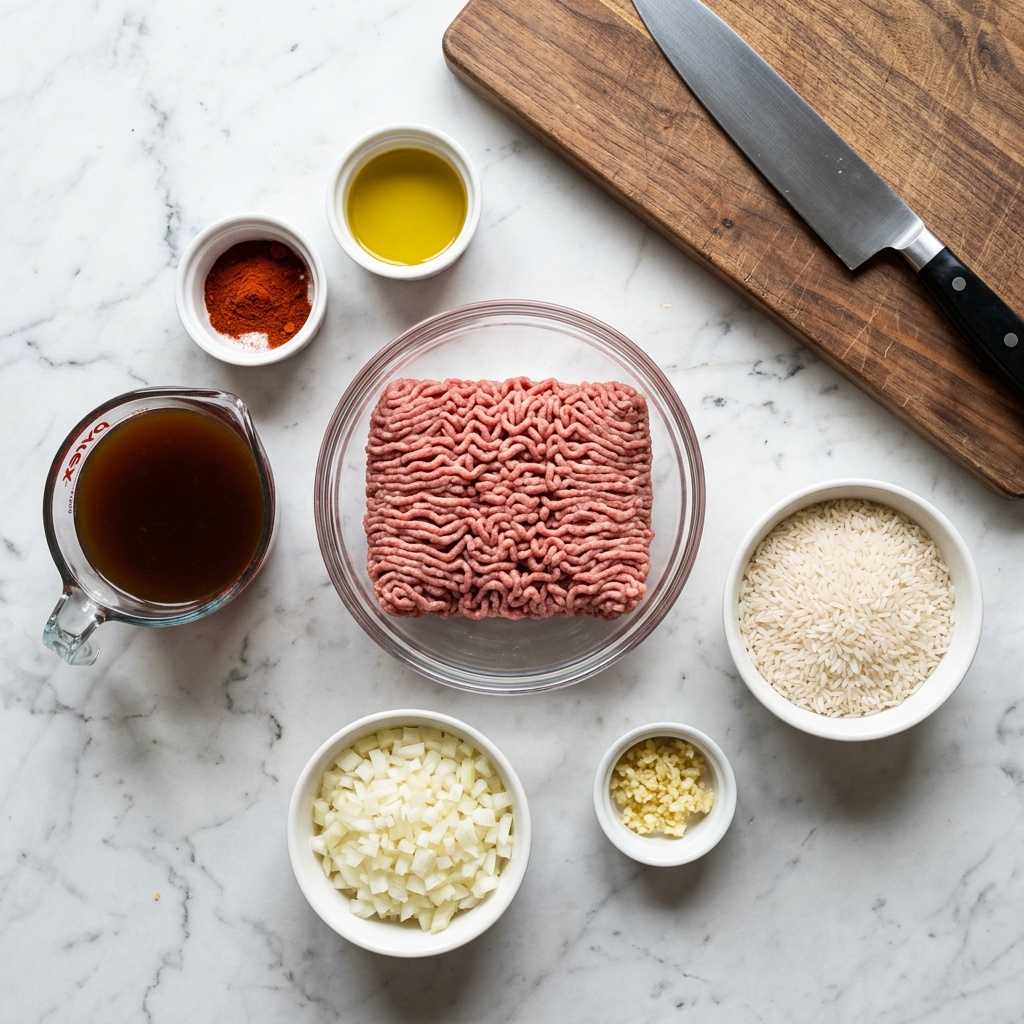
- 1 lb ground beef (85/15 lean-to-fat ratio)
- 1 cup long grain white rice (uncooked, rinsed)
- 2 cups beef broth (low sodium preferred)
- 1 medium yellow onion (finely diced)
- 3 cloves garlic (minced)
- 2 tbsp soy sauce
- 1 tsp smoked paprika
- 1 tbsp olive oil
Instructions
1Sauté the Aromatics
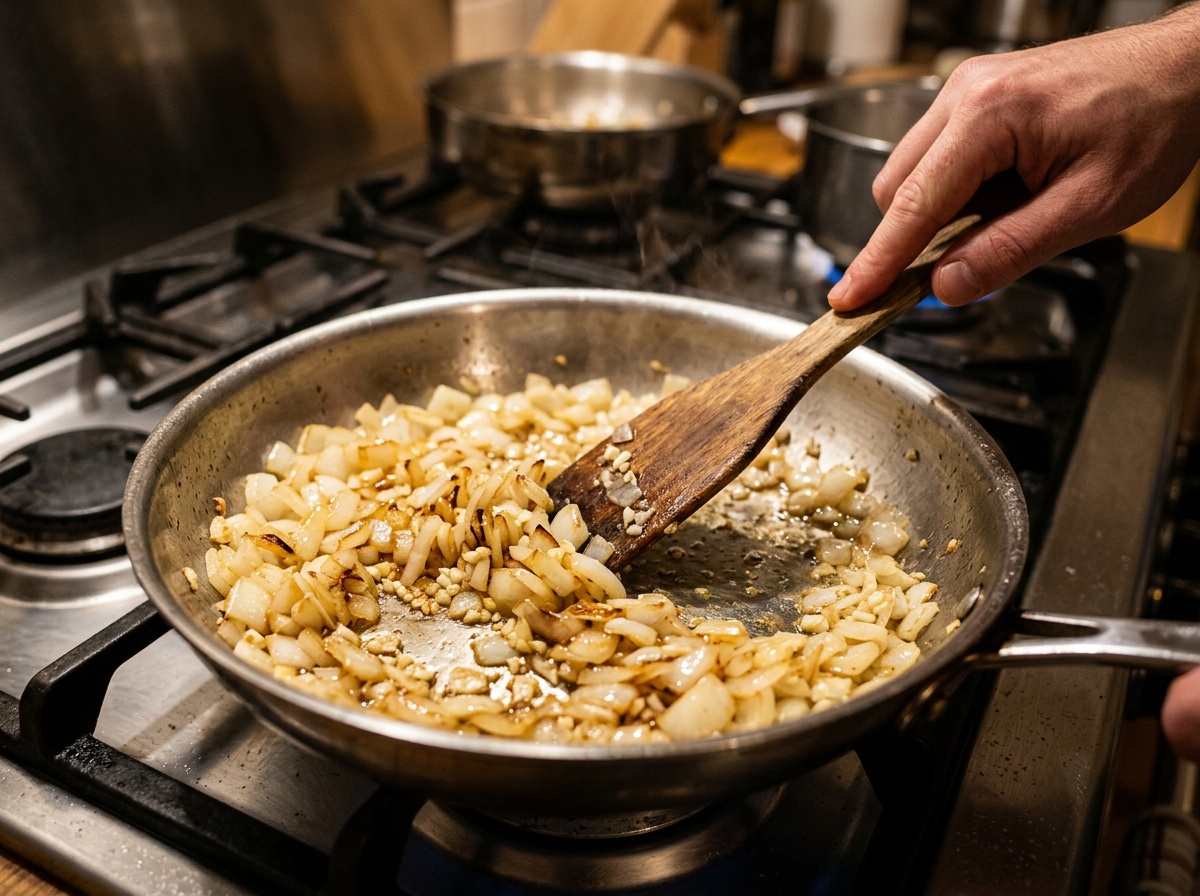
I begin by heating a large 12-inch skillet over medium-high heat with the olive oil. Once the oil shimmers, I add the diced onions and cook them for about 5-6 minutes, stirring frequently with a wooden spatula until they are translucent and just beginning to show a golden edge. I add the minced garlic during the last 30 seconds of this process, stirring constantly until it smells fragrant — be careful not to let the garlic brown too quickly, or it will turn bitter. This initial step builds the aromatic foundation for your one-pan savory ground beef and is the first step in ensuring a flavorful meal.
2Brown the Meat
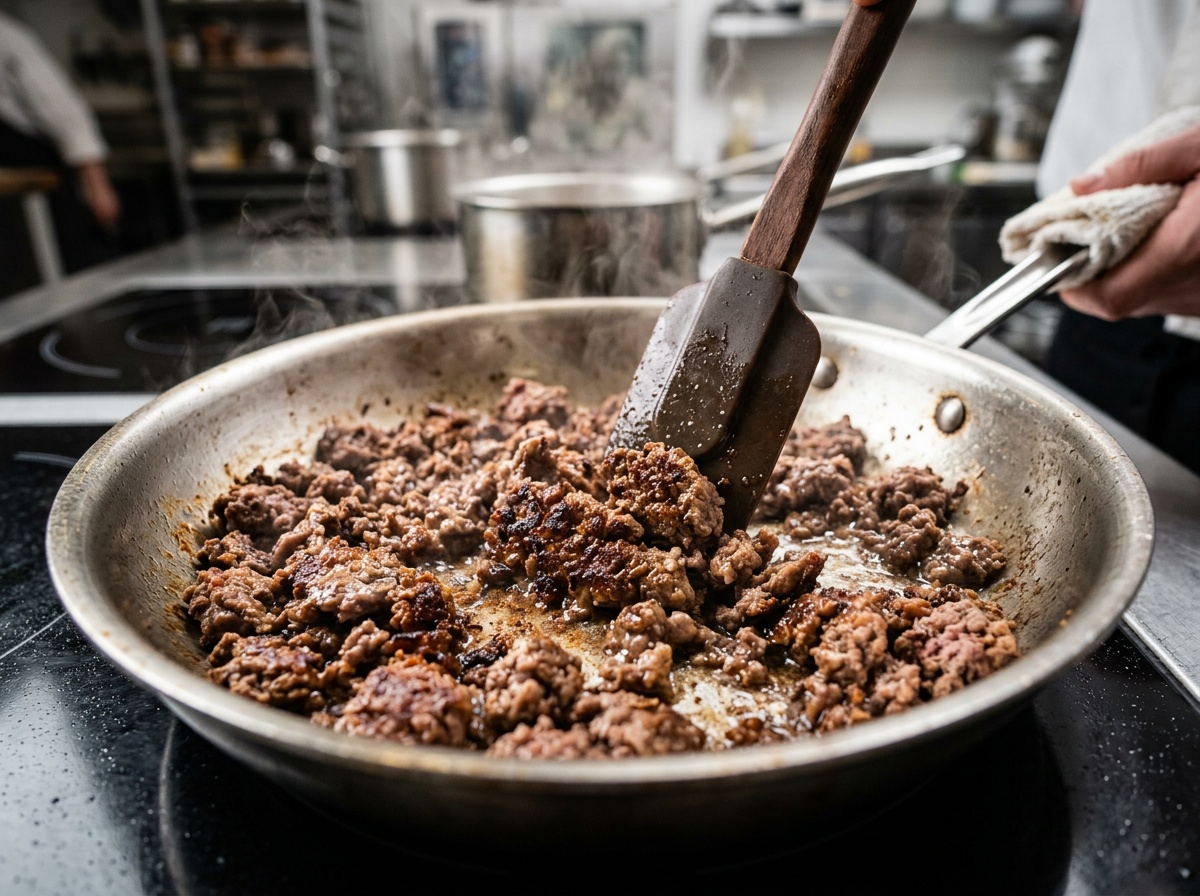
I push the onion and garlic mixture to the perimeter of the skillet and add the ground beef to the center. I let it sit undisturbed for about 2 minutes to allow a crust to form on the bottom, then I break it up with my spatula, incorporating the aromatics back into the meat. I continue cooking until the beef is deep brown and no pink remains, making sure to scrape up any browned bits from the bottom of the pan. This browning stage is where the depth of flavor comes from, so I make sure not to rush this, as it is a technique common in many quick ground meat recipes.
3Simmer with Rice
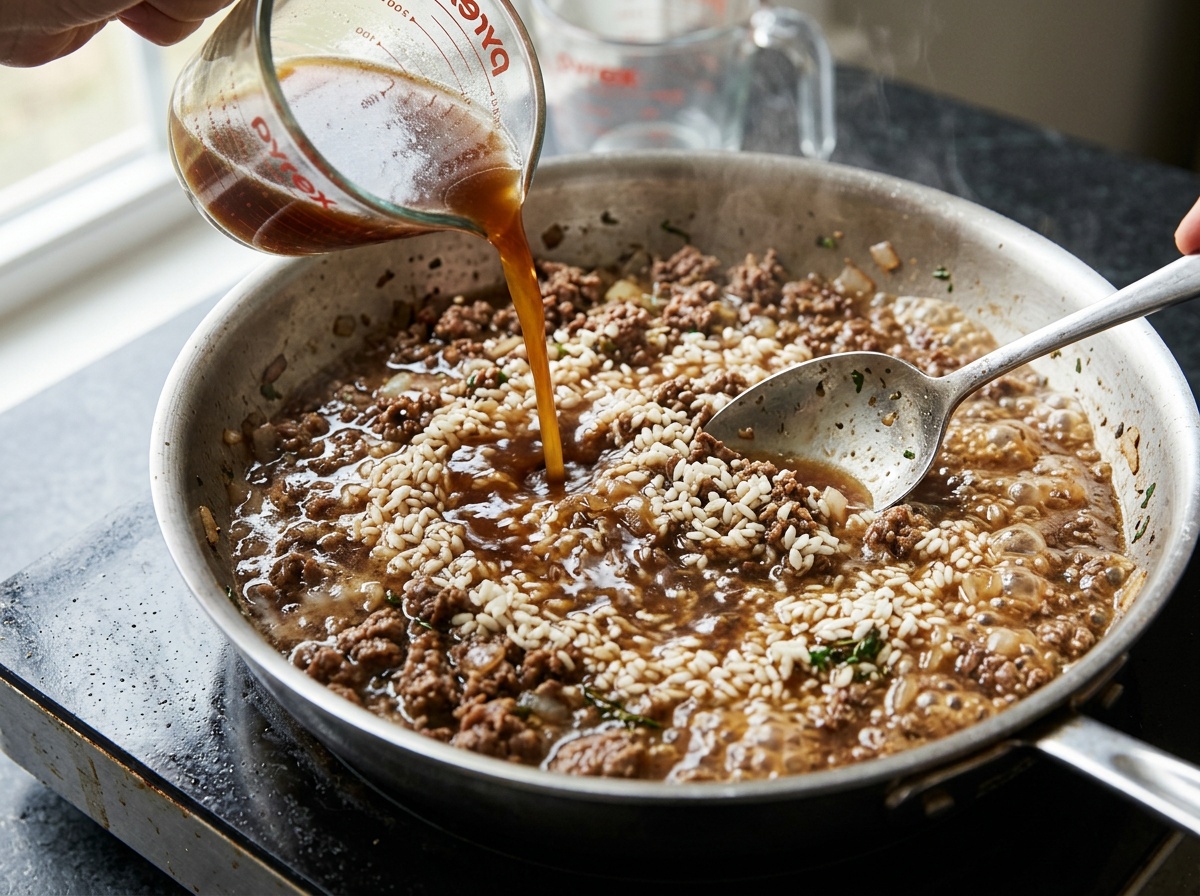
I add the rinsed rice to the skillet, stirring it into the beef mixture for 2 minutes until the edges of the grains look slightly translucent and toasty. I pour in the beef broth and soy sauce, scraping the pan thoroughly to release any fond stuck to the bottom, then stir in the smoked paprika. I bring the liquid to a gentle boil, then immediately turn the heat to the lowest setting and cover the pan with a tight-fitting lid. I let it simmer undisturbed for 18-20 minutes — I resist the urge to lift the lid, as that releases the steam needed to cook the rice evenly.
4Fluff and Serve
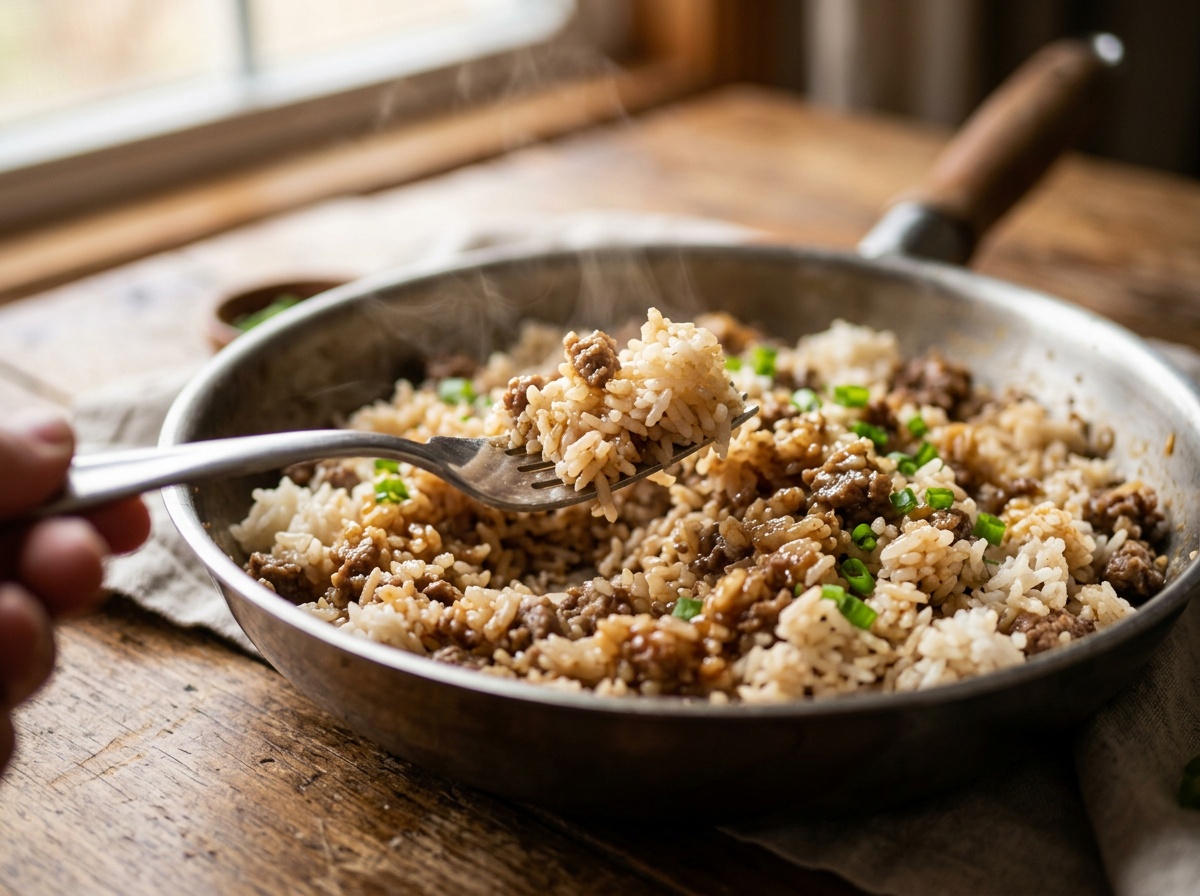
After 20 minutes, I remove the skillet from the heat, keeping the lid on for an additional 5 minutes to let the residual steam finish cooking the grains. I carefully lift the lid, allowing the steam to dissipate, and use a fork to gently fluff the rice and meat mixture, combining everything into a unified dish. I look for tender rice that is neither crunchy nor mushy, and the moisture should be mostly absorbed. If it looks a little dry, I might add a splash of warm broth, but generally, this ratio works perfectly every time I make this savory beef and rice dish.
Tips & Variations
Rinsing the Rice: Always rinse your white rice in a fine-mesh strainer under cold water until the water runs clear before adding it to the skillet. This removes excess surface starch that can cause the grains to clump together, ensuring you get light, fluffy results in your chop meat and rice recipes instead of a gummy texture.
Storage and Reheating: Store leftovers in an airtight container in the refrigerator for up to 3 days. To reheat, I add a tablespoon of water or broth to the dish before microwaving or heating on the stove, which helps restore the moisture to the rice that inevitably dries out in the fridge.
Substitution Tip: You can easily swap ground turkey or chicken for the beef, but because they are leaner, you may need an extra tablespoon of oil to prevent them from drying out. I recommend using chicken broth instead of beef broth if you make this switch to keep the flavors balanced.
Avoid Mushy Rice: The most common mistake is lifting the lid to peek while the rice is simmering, which releases essential steam. I trust my timer and leave the lid sealed until the very end, which guarantees the rice absorbs the liquid properly without burning on the bottom of the pan.
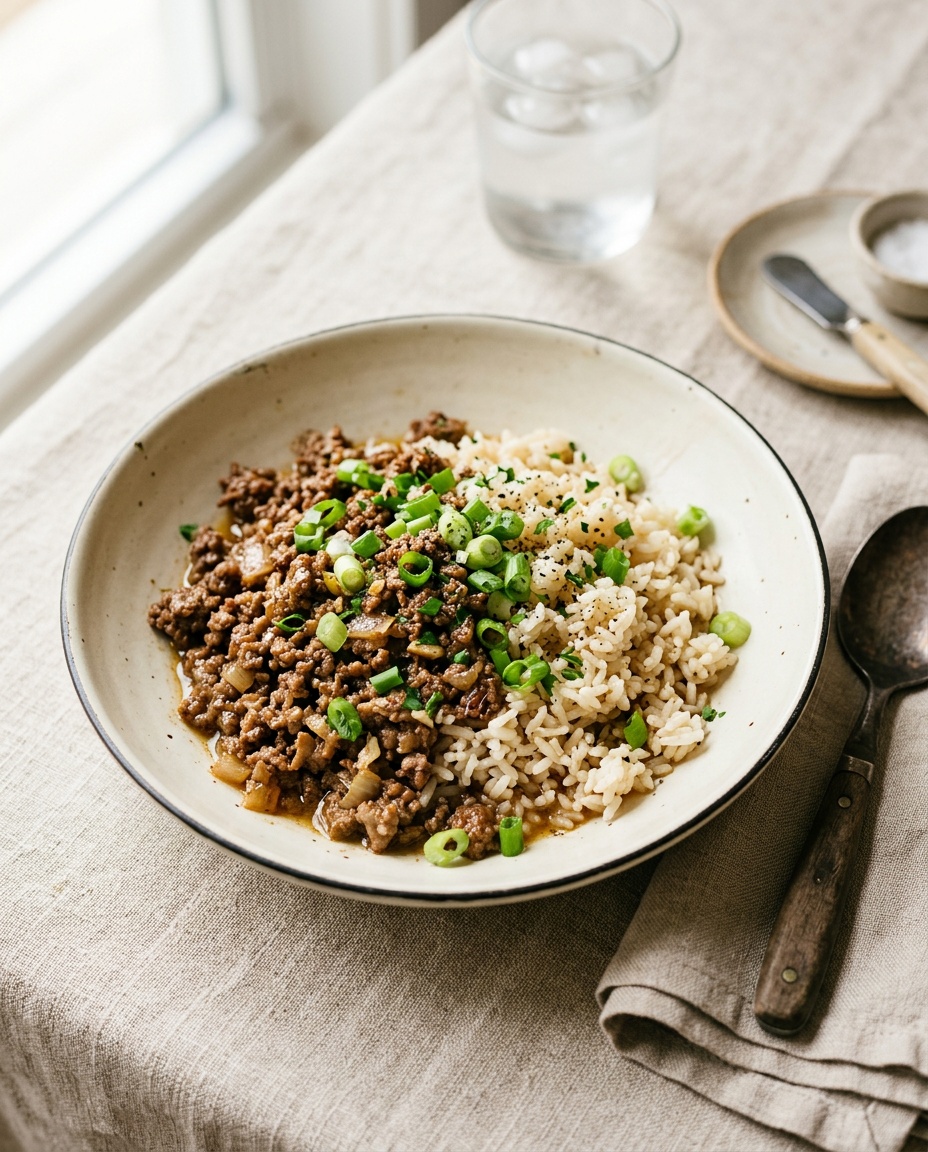
Serving Suggestion: I like to serve this with a splash of hot sauce or a drizzle of sesame oil to brighten the heavy, savory notes of the beef. Fresh chopped green onions or parsley scattered over the top right before serving adds a fresh contrast that really makes the dish pop.
Nutrition Information
Per serving (approximate values)
| Nutrient | Amount |
|---|---|
| Calories | 420 |
| Protein | 28g |
| Carbohydrates | 45g |
| Total Fat | 14g |
| Fiber | 1g |
| Sugar | 2g |
Frequently Asked Questions About chop meat and rice recipes
Are there specific types of rice that work best for chop meat and rice recipes?
▼
For these types of recipes, I consistently find that long-grain white rice, such as Jasmine or Basmati, works best because it stays separate and absorbs liquids efficiently. Avoid arborio rice, which is intended for risotto and will turn into a porridge-like consistency, or parboiled rice which requires significantly different liquid ratios. Stick to a 1:2 ratio of rice to liquid for best results.
Can I add vegetables to this skillet to make it a more complete meal?
▼
Yes, adding vegetables is a great way to boost the nutrition of this easy rice bowl ideas concept. I recommend adding frozen peas or diced carrots at the very beginning when sautéing the onions, or stirring in fresh baby spinach at the very end until it wilts. Make sure any additional vegetables are either quick-cooking or added early enough to soften.
How do I prevent the meat from getting tough when simmering with the rice?
▼
The trick to keeping the meat tender is to brown it thoroughly in the first step and then treat it gently once the liquid is added. Do not over-agitate the pan once the broth and rice are simmering, as this can break the meat down too much. By browning well initially, you develop flavor that holds up well during the steaming process.
Can I use brown rice instead of white rice for this recipe?
▼
You can use brown rice, but you must adjust the liquid and time significantly because brown rice takes longer to cook. You will need to increase the beef broth to about 2.5 cups and extend the simmering time to 40-45 minutes on low heat. Ensure your pan has a very tight lid to keep the moisture inside during that longer cook time.
Is it possible to make this ahead of time for meal prep?
▼
This dish is excellent for meal prep and holds up well for 3 to 4 days in the refrigerator. When portioning out, I let it cool completely to room temperature before covering it, which prevents condensation from making the rice soggy. When reheating, add a small splash of water to loosen the grains and microwave in 1-minute intervals until hot.