Introduction
I still remember the first time I picked up a pack of chuck eye steaks from my local butcher. I was looking for a budget-friendly option for a Tuesday night dinner, and honestly, the price tag was the first thing that caught my eye. Since I started experimenting with various chuck rib eye steak recipes, I haven’t looked back at standard ribeyes as often. It’s that rare intersection of affordability and incredible flavor that makes this cut a absolute staple in my kitchen, especially when I’m feeding a family on a weeknight budget.
I keep coming back to this cut because of the incredible marbling that gives the meat a rich, beefy flavor that rivals cuts twice the price. It’s slightly tougher than a premium ribeye, so the way you handle it matters, but the payoff is worth it. I find myself reaching for these steaks even on weekends when I’m craving a hearty, restaurant-quality meal at home. It’s one of those dishes that feels like a splurge without the actual expense.
You will learn exactly how to transform this humble cut into a tender, juicy masterpiece using a few straightforward kitchen techniques. I’ll share the mistakes I made when I first started—like not letting the meat come to temperature—and the specific pan-searing cues that lead to that deep, mahogany crust. By the end, you’ll have a steak that slices like butter and has that complex, caramelized exterior we all chase.
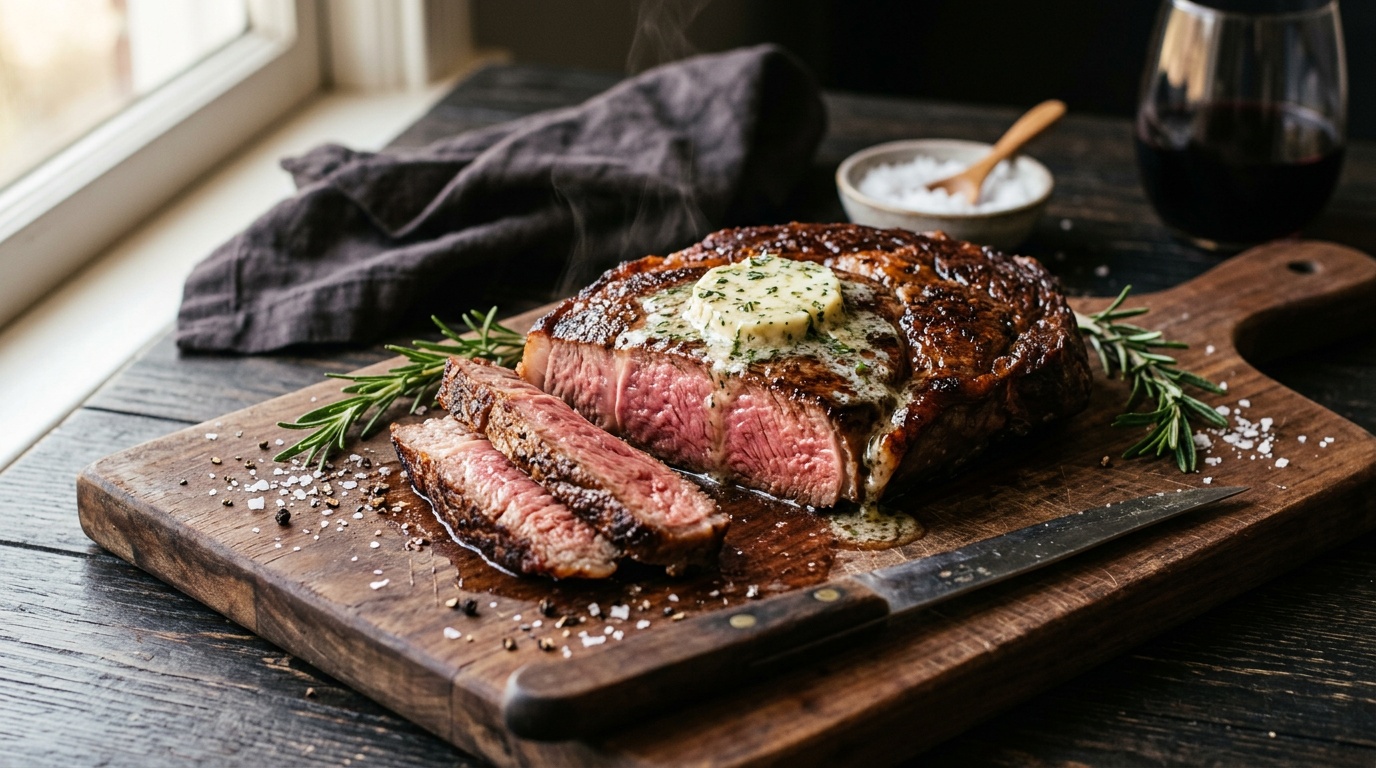
Why This Recipe Works
The Dry Brine Advantage: Salting the meat at least 45 minutes before cooking pulls moisture to the surface, dissolves it into a brine, and then reabsorbs it into the muscle fibers. This draws salt deep into the steak, seasoning it internally while simultaneously drying out the surface for a superior sear. I have found this simple step is more effective for flavor than any expensive marinade could ever be.
Cast Iron Heat Retention: Using a cast iron skillet is non-negotiable for me because of its incredible heat retention and even cooking properties. When you drop the meat into a ripping hot pan, the surface instantly undergoes the Maillard reaction, creating complex, toasted compounds that define a great crust. If the pan isn’t heavy and hot, the meat steams instead of searing, which is a mistake I see beginners make far too often.
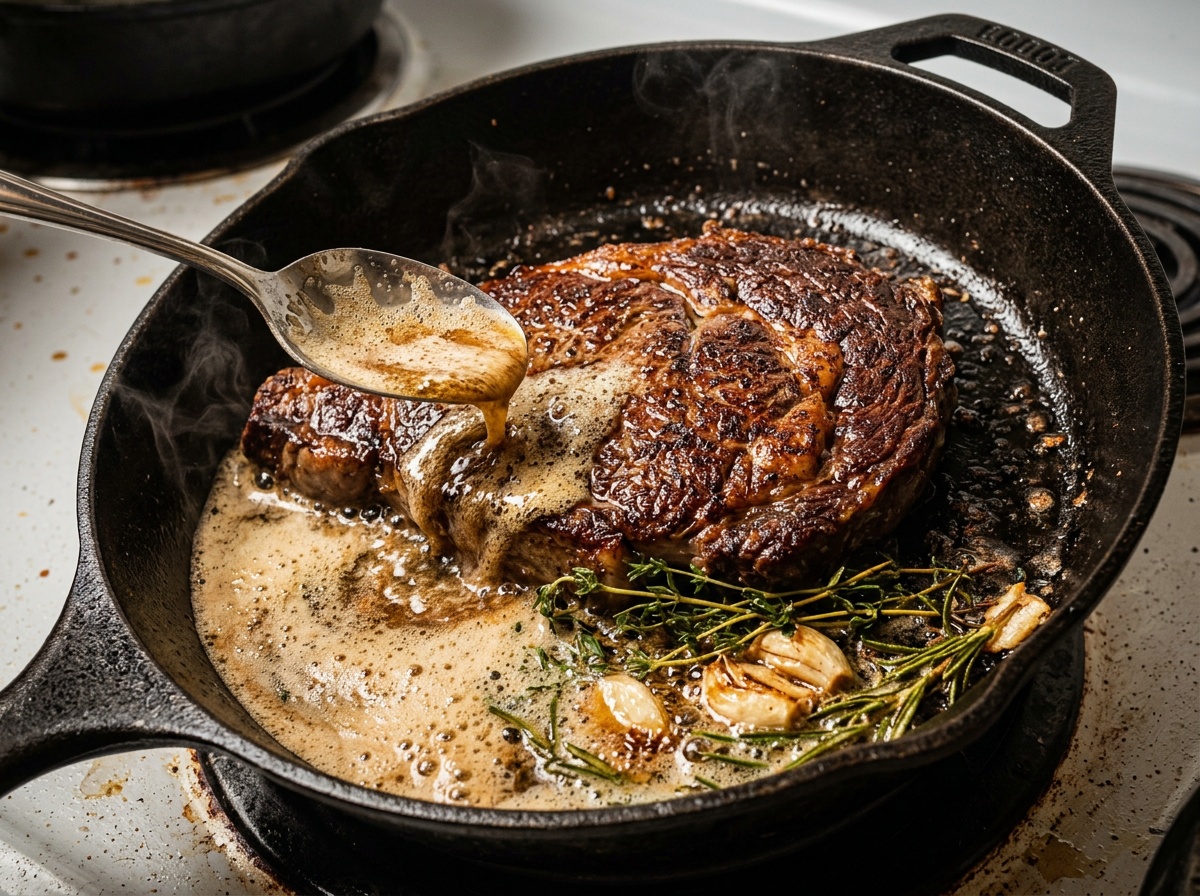
Aromatic Butter Basting: Adding garlic, thyme, and unsalted butter during the last two minutes of cooking adds a layer of richness that permeates the entire steak. The butter solids caramelize slightly, creating a nutty, silky sauce that pools in the pan and coats the meat beautifully. This technique, commonly referred to as butter basting steak, fills the kitchen with an incredible aroma and provides the finishing touch.
Ingredients
The Steak
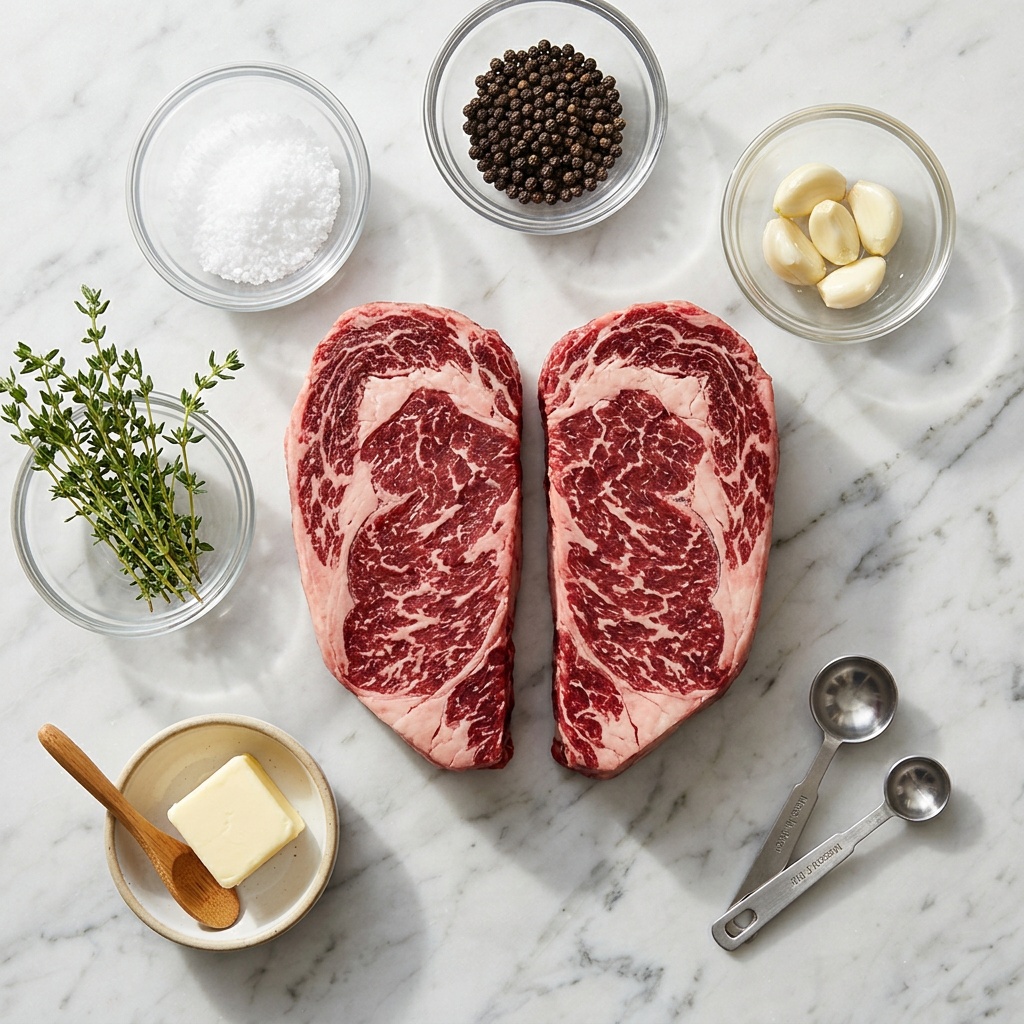
- 4 steaks chuck eye steaks (approx 1 inch thick)
- 1 tbsp kosher salt (divided)
- 1 tsp freshly cracked black pepper
The Aromatics & Pan
- 2 tbsp high smoke-point oil (avocado or grapeseed)
- 3 tbsp unsalted butter (cold, cut into cubes)
- 3 cloves garlic (smashed)
- 2 sprigs fresh thyme
Instructions
1Season and Temper
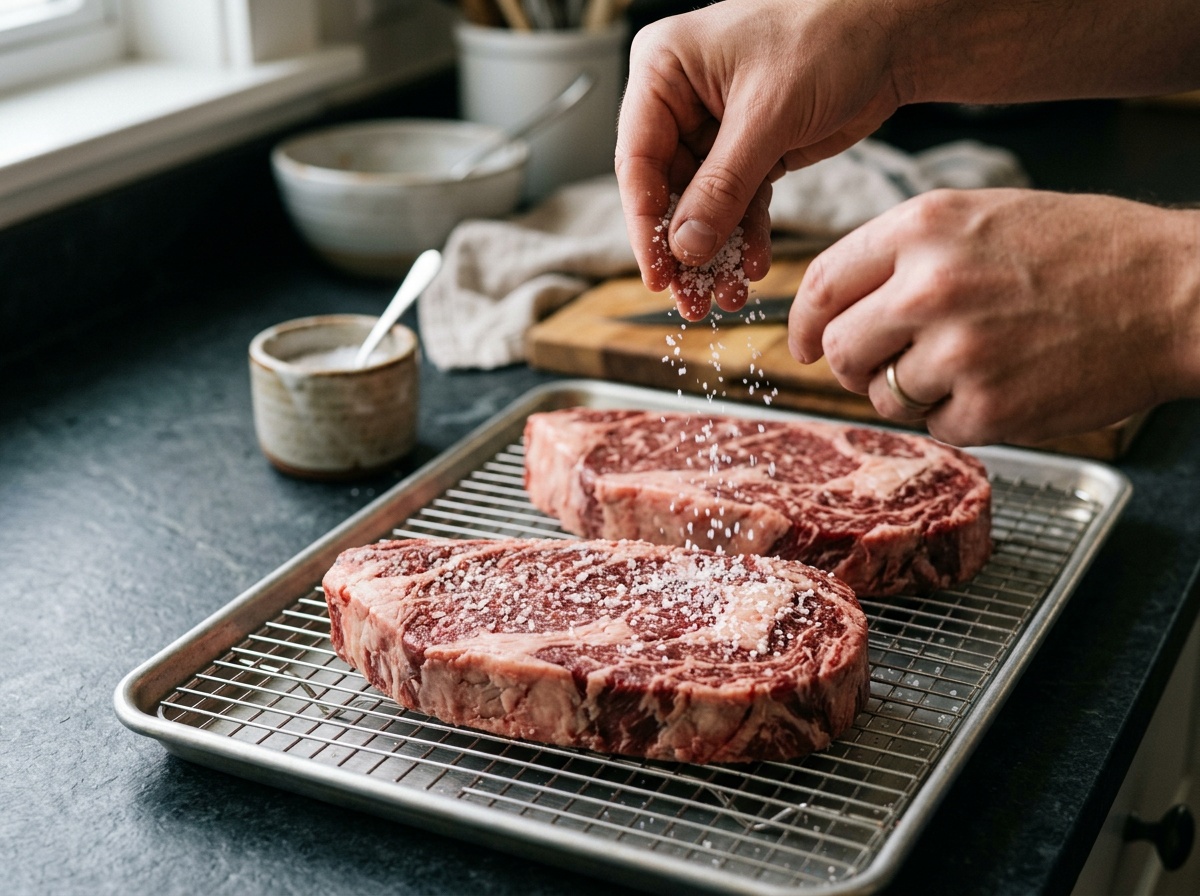
I always pull my steaks out of the refrigerator at least 45 minutes before I plan to start cooking. Cold meat hits the pan and drops the temperature immediately, which leads to uneven browning and grey bands of overcooked meat. I pat the steaks dry with paper towels—this is the most important step in all the chuck rib eye steak recipes I test because moisture is the enemy of a good crust. Once they are dry, I generously season both sides with kosher salt and black pepper, letting them sit on a wire rack to come to room temperature while I gather the rest of my ingredients.
2Sear in Cast Iron
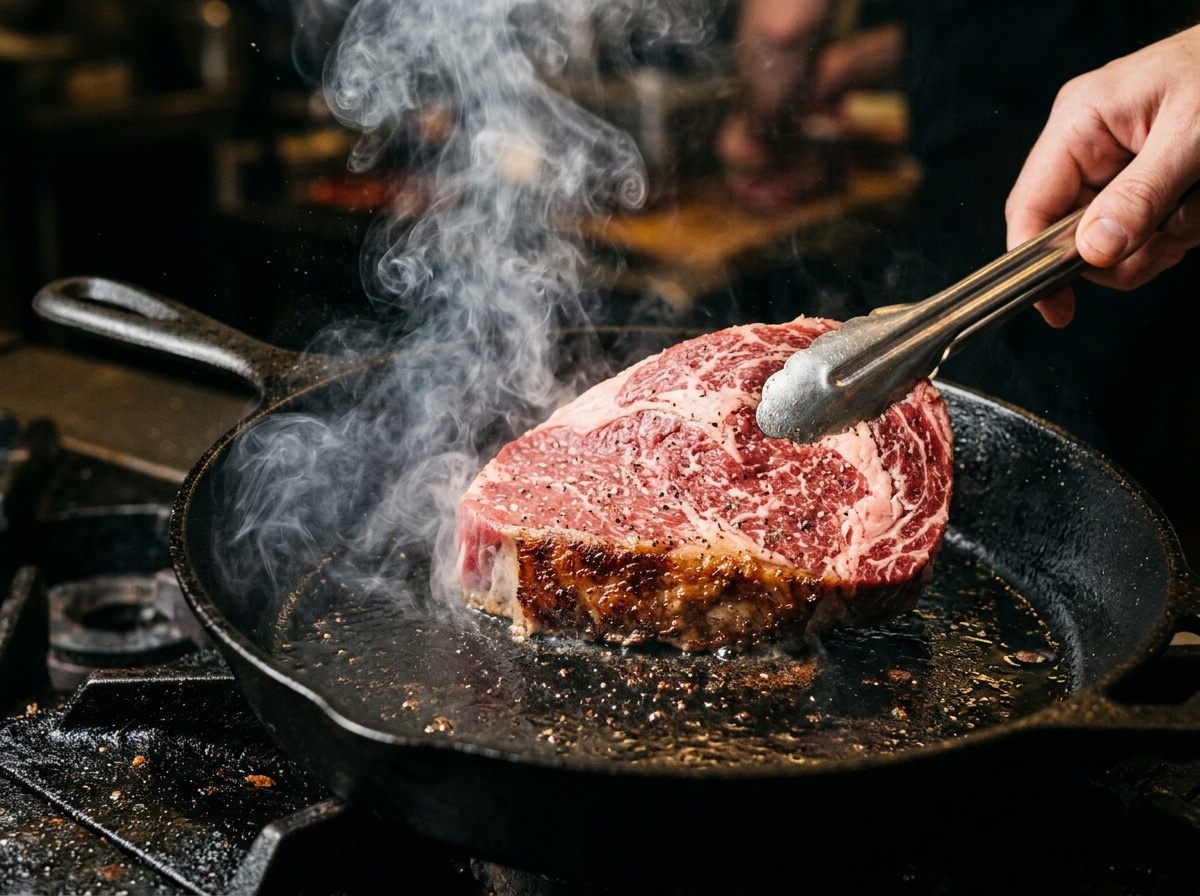
I place my heavy-duty cast iron skillet over high heat and let it get hot enough that a drop of water sizzles and evaporates instantly. I add the avocado oil, swirling it to coat the bottom, and carefully lay the steaks into the pan away from me to avoid splatters. I sear the first side for exactly 3 to 4 minutes without moving them—I want that deep, dark mahogany color to develop undisturbed. This creates the base of our seared beef chuck eye flavor profile. Once flipped, I cook the other side for another 3 minutes, or until the steak develops a similar golden-brown crust.
3Butter Baste and Rest
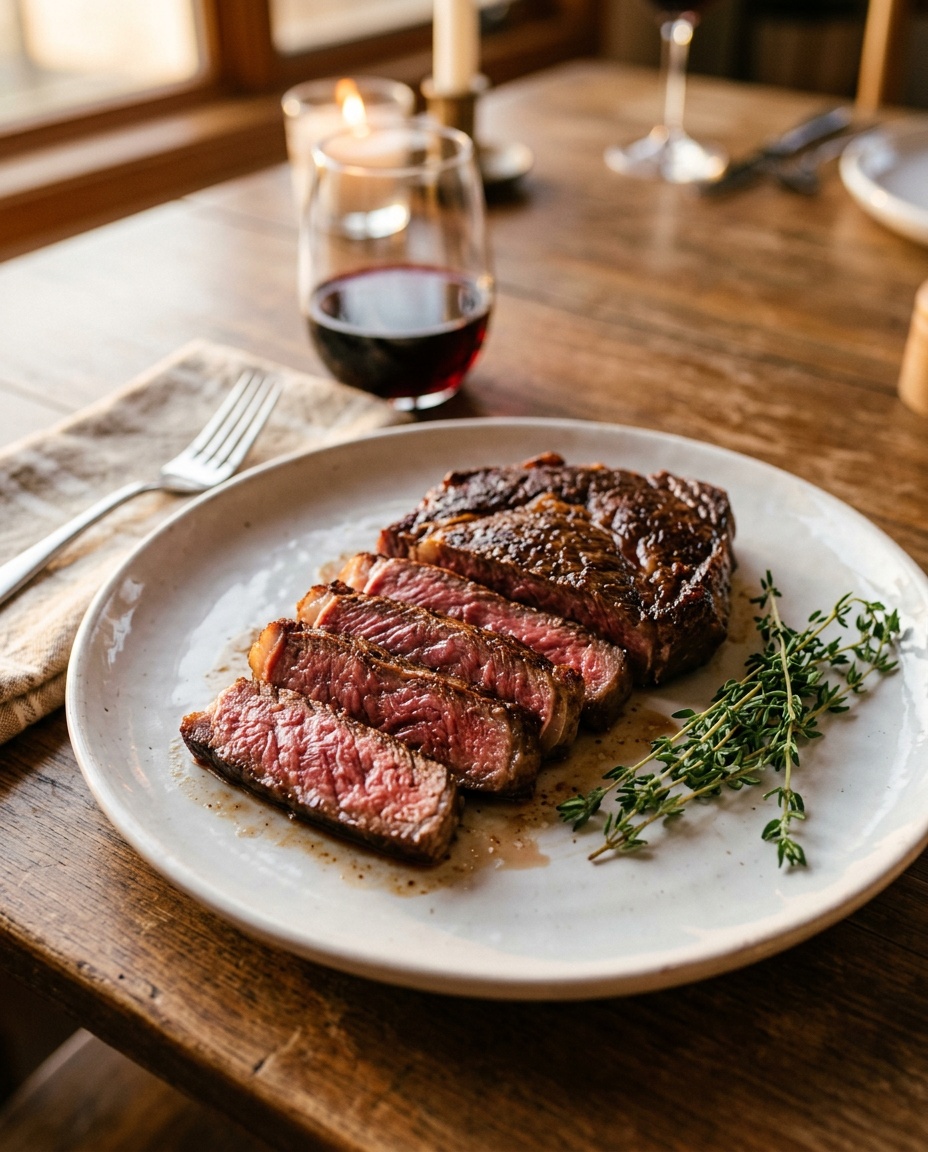
Once I’ve flipped the steaks, I turn the heat down to medium and toss in the butter, smashed garlic, and fresh thyme sprigs. As the butter foams, I tilt the pan slightly and use a large spoon to continuously baste the steaks with the hot, aromatic liquid for about 90 seconds. This adds depth and keeps the meat succulent. I remove the steaks to a cutting board once they reach an internal temperature of 130°F for medium-rare. I let them rest for at least 8 to 10 minutes—this allows the juices to redistribute throughout the muscle fibers instead of leaking out onto the board when I cut.
Tips & Variations
Don’t Rush the Rest: Resting is not optional, it is fundamental to the final result. If you slice into the meat immediately, all those flavorful juices will run out onto the board instead of staying inside the steak where they belong. I give mine at least 10 minutes, which results in a much more tender experience.
Choose the Right Oil: Avoid using olive oil for the initial sear, as it has a low smoke point and will taste burnt at the high temperatures required. I stick to avocado, grapeseed, or canola oil, which can handle the intense heat without filling the kitchen with acrid smoke. It’s one of those small adjustments that truly improves the best steak seasoning results.
Internal Temperature: I always use an instant-read meat thermometer to check for doneness, rather than relying on the finger-poke test. I pull the steaks off the heat when they hit 125°F to 130°F for medium-rare, as the temperature will continue to rise during the resting phase. This accuracy saves me from overcooking a perfectly good cut of meat.
The Garlic Trick: I smash the garlic cloves with the flat side of my chef’s knife rather than mincing them. This releases the essential oils without the risk of the small minced pieces burning and turning bitter in the hot pan. You get all the garlic flavor and aroma without the risk of acrid burnt bits.
Storage and Reheating: If you have leftovers, store them in an airtight container for up to three days. When reheating, I never use the microwave, which turns the meat rubbery and dry. Instead, I gently warm the slices in a skillet over low heat with a tiny splash of beef broth or butter until just warmed through.
Nutrition Information
Per serving (approximate values)
| Nutrient | Amount |
|---|---|
| Calories | 480 |
| Protein | 38g |
| Carbohydrates | 1g |
| Total Fat | 36g |
| Fiber | 0g |
| Sugar | 0g |
Frequently Asked Questions About Chuck Rib Eye Steak Recipes
What makes these chuck rib eye steak recipes so popular with home cooks?
▼
These chuck rib eye steak recipes are popular because they offer the rich, fatty marbling of a premium ribeye at a fraction of the cost. Because the chuck eye is actually a continuation of the ribeye muscle, it provides a similar texture and beefy flavor profile. When cooked using high-heat searing methods, it is nearly impossible to tell the difference between this cut and a more expensive ribeye.
Is a cast iron skillet necessary for cooking these steaks?
▼
While you can use a stainless steel pan, a heavy cast iron skillet is the gold standard for this type of cooking. Its superior heat retention ensures the pan stays hot when the cold meat is added, which is vital for achieving a hard, caramelized sear. If you try to cook this in a thin non-stick pan, the temperature will drop too quickly and you will end up steaming the meat instead of searing it.
How do I know when the steak is perfectly medium-rare?
▼
I recommend using a digital instant-read thermometer to remove the guesswork entirely. For a perfect medium-rare, pull the steak from the heat when it reads 125°F to 130°F, then let it rest on a cutting board for at least 8 to 10 minutes. During this resting period, the internal temperature will rise another 5 degrees to reach that ideal, juicy final temperature of 135°F.
What is the best seasoning to use for a beef chuck eye?
▼
Keep it simple to let the natural beef flavor shine. I stick to kosher salt and freshly cracked black pepper. If you want to experiment, you can add a touch of garlic powder or onion powder, but avoid rubs with sugar, as they will burn during the high-heat searing process. Apply the salt liberally at least 45 minutes before cooking for the best possible seasoning penetration.
Can I use the reverse sear method for this cut?
▼
Yes, you can absolutely use the reverse sear method, and it is actually fantastic for thicker cuts of meat. You would bake the steak in a low-temperature oven set to 225°F until the internal temperature reaches 115°F, then finish it in a screaming hot cast iron pan for 60 seconds per side. This ensures edge-to-edge pinkness and an incredible crust, although it does take longer than the traditional pan-searing method I usually use.