Introduction
I remember standing at the butcher counter feeling slightly confused by all the options, until I finally settled on trying this chuck eye steak recipe. I was looking for a budget-friendly cut that didn’t sacrifice flavor, and after that first bite, I realized I’d stumbled onto something special. My kitchen smelled like a high-end steakhouse, and the richness of the meat had my whole family asking if I had suddenly become a professional chef.
I keep coming back to this dish because it’s surprisingly forgiving compared to more expensive cuts, and it fits perfectly into a busy weeknight meal rotation. Whenever I’m hosting a last-minute dinner, this is the first thing I pull out because it feels indulgent without the heavy price tag of a ribeye. It shines best when the weather is too cold to grill outside, as the method I use replicates that deep, charred flavor you get from an open flame.
In this post, I’ll show you exactly how to achieve that deep, mahogany-colored crust without overcooking the center. You’ll learn about managing heat, the importance of timing your flip, and why resting the meat is non-negotiable for tender results. I made a few mistakes early on—mostly by trying to move the steak too soon—so I’ve included all my notes to help you avoid those same pitfalls for a restaurant-worthy dinner.
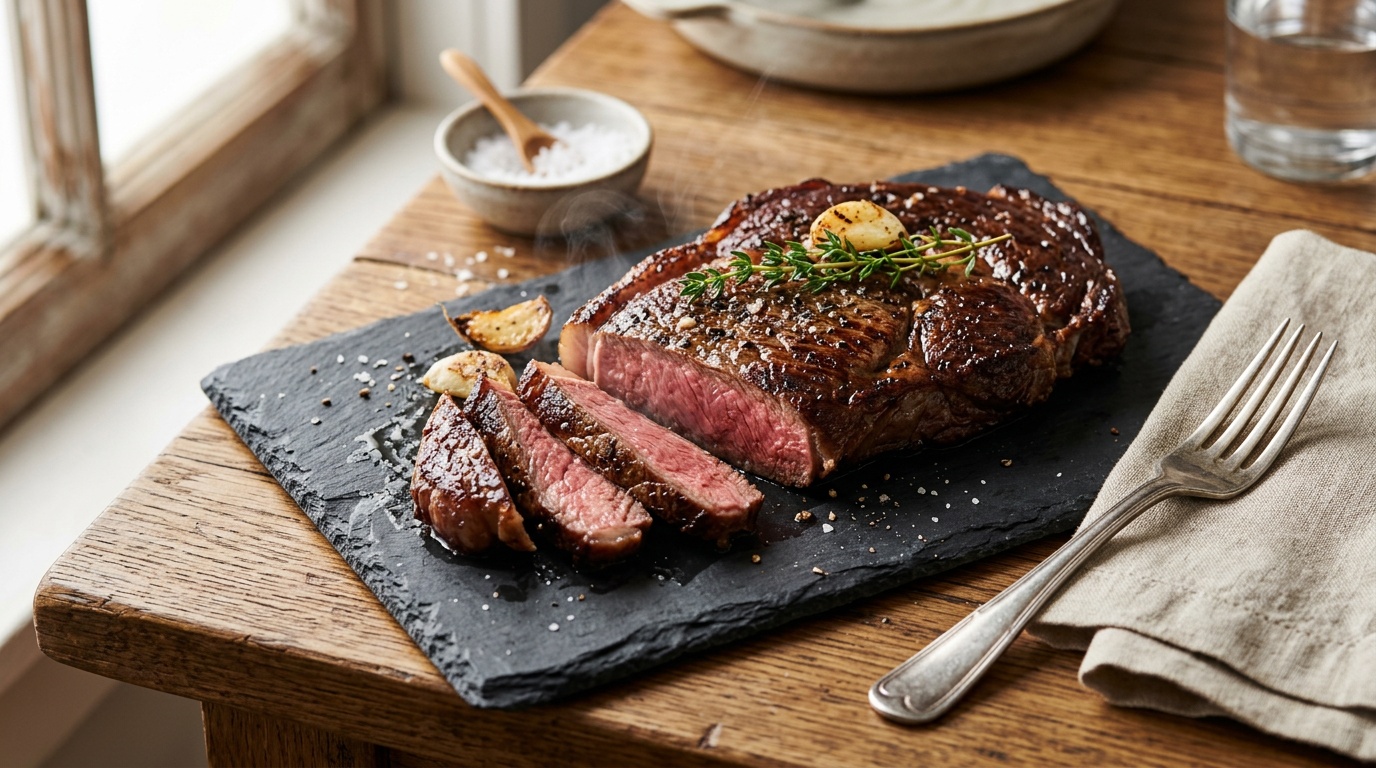
Why This Recipe Works
The Power of the Cast Iron Skillet: Using a cast iron skillet is the only way to get a proper pan-seared steak because of its incredible heat retention. When the metal hits high temperatures, it provides an even, consistent surface that forces the surface of the meat into a rapid Maillard reaction. This chemical process creates the complex, savory flavors that define a great crust, which thin pans just cannot replicate effectively.
Butter Basting Science: I finish every butter basted steak by adding aromatics like garlic and thyme to the hot fat near the end of cooking. The milk solids in the butter begin to toast, adding a nutty dimension that penetrates the meat as I continuously spoon it over the top. This technique acts like a warm oil bath, gently cooking the steak through while insulating the exterior from burning.
Temperature Control: The secret to this chuck eye steak recipe is letting the meat temper on the counter before it touches the heat. By bringing the beef up to room temperature, you reduce the time it spends in the pan, which prevents the outer edges from turning into shoe leather while the center stays rare. It’s a small detail, but it changes the final tenderness of the beef significantly.
Ingredients
The Steak
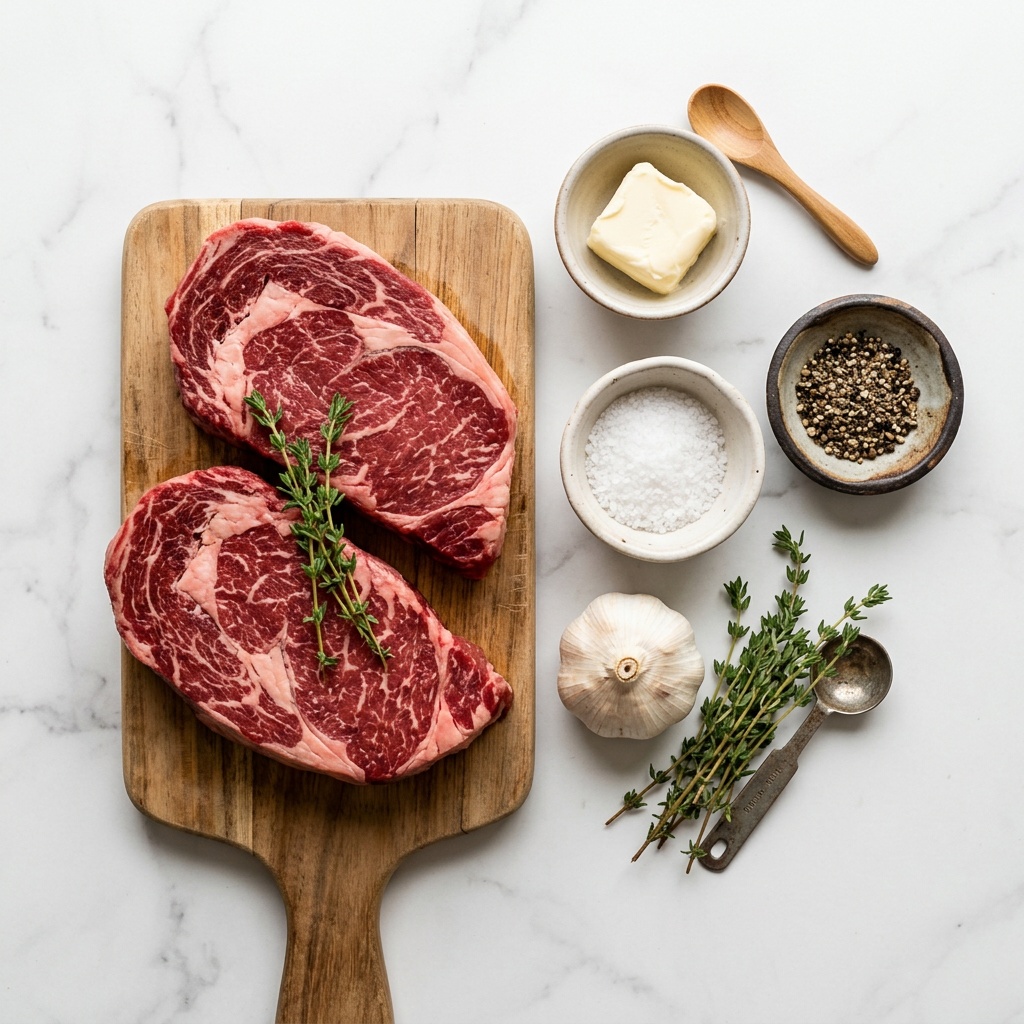
- 2 pieces chuck eye steaks (about 1 inch thick)
- 1 tbsp kosher salt (coarse grain)
- 1 tsp black pepper (freshly cracked)
The Baste
- 2 tbsp unsalted butter (high quality)
- 3 cloves garlic (smashed)
- 2 sprigs fresh thyme
- 1 tbsp neutral oil (like avocado or grapeseed)
Instructions
1Season and Temper the Beef
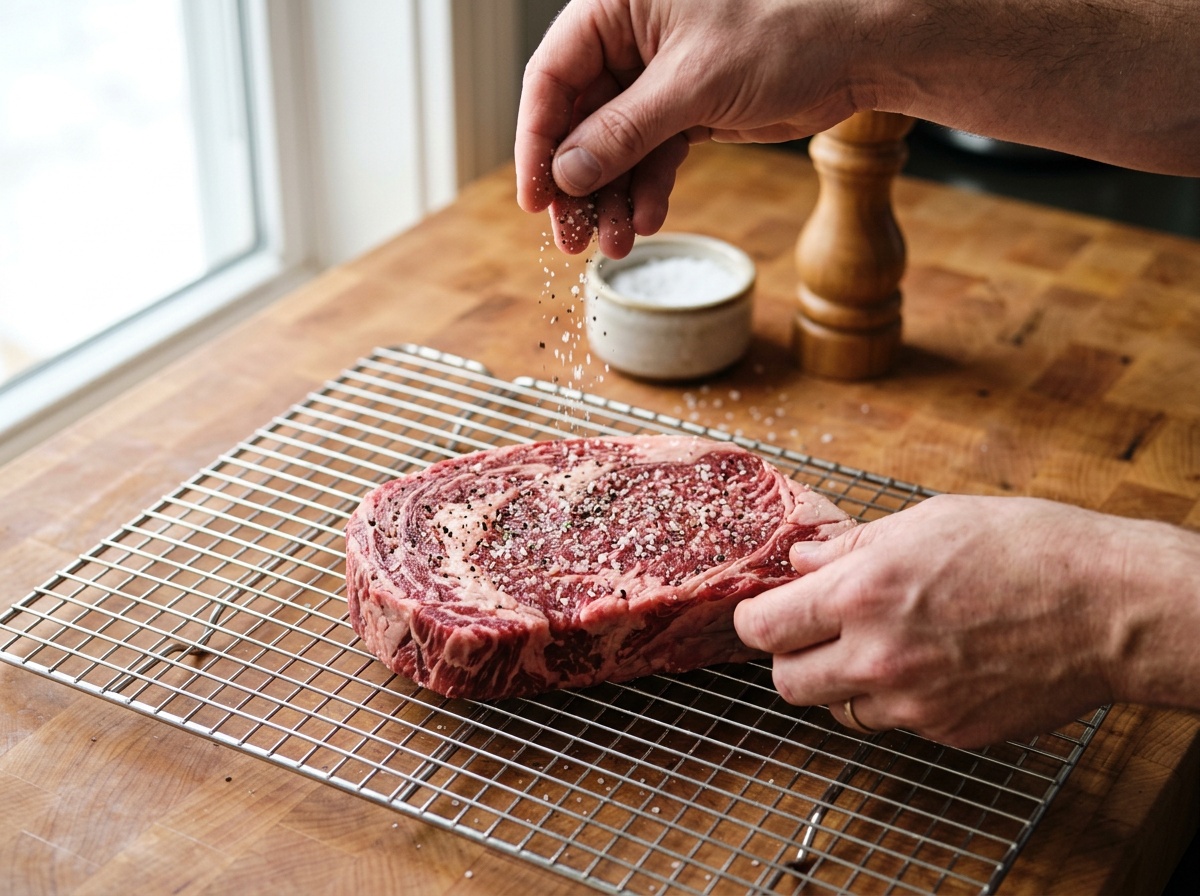
I take my steaks out of the refrigerator at least 45 minutes before I plan to start cooking. I pat them completely dry with paper towels — moisture is the enemy of a good crust, and a wet steak will steam instead of sear. Once dry, I season them generously on both sides with kosher salt and pepper, making sure to hit the edges too. You want to see a visible layer of seasoning that creates a flavorful crust during the searing process. I leave them on a wire rack at room temperature so the air can circulate freely, which is crucial for achieving the perfect pan-seared steak texture.
2Sear in Cast Iron
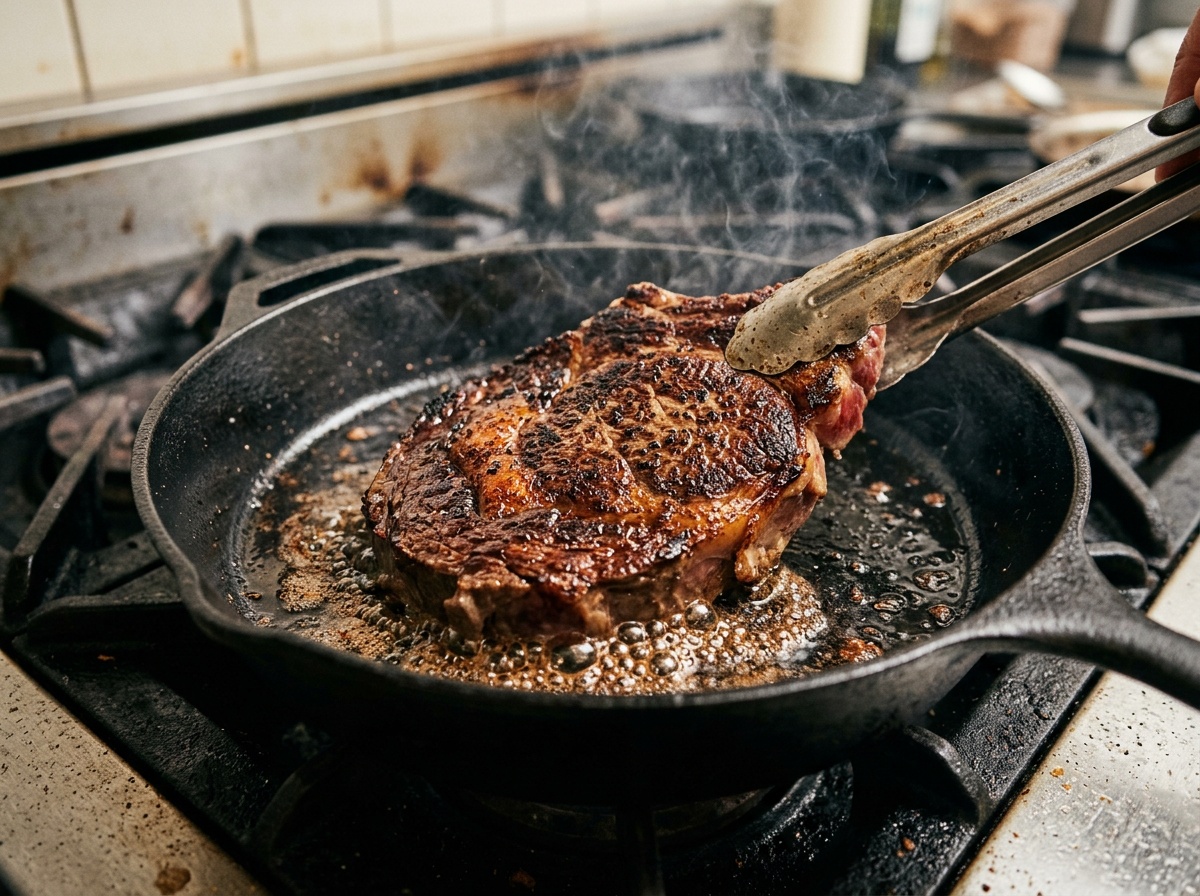
I place my heavy-duty cast iron skillet over high heat and let it get smoking hot for about 5 minutes. I add the neutral oil and wait until it shimmers and just begins to wisps of smoke appear before gently laying the steaks in. I don’t touch them for exactly 3 minutes; this patience allows the crust to develop and the meat to release naturally from the pan. You’ll see the edges turn a deep, golden brown, which is exactly what I look for before flipping. If they stick, I give it another 30 seconds; don’t force it or you’ll tear that beautiful sear.
3Butter Baste for Flavor
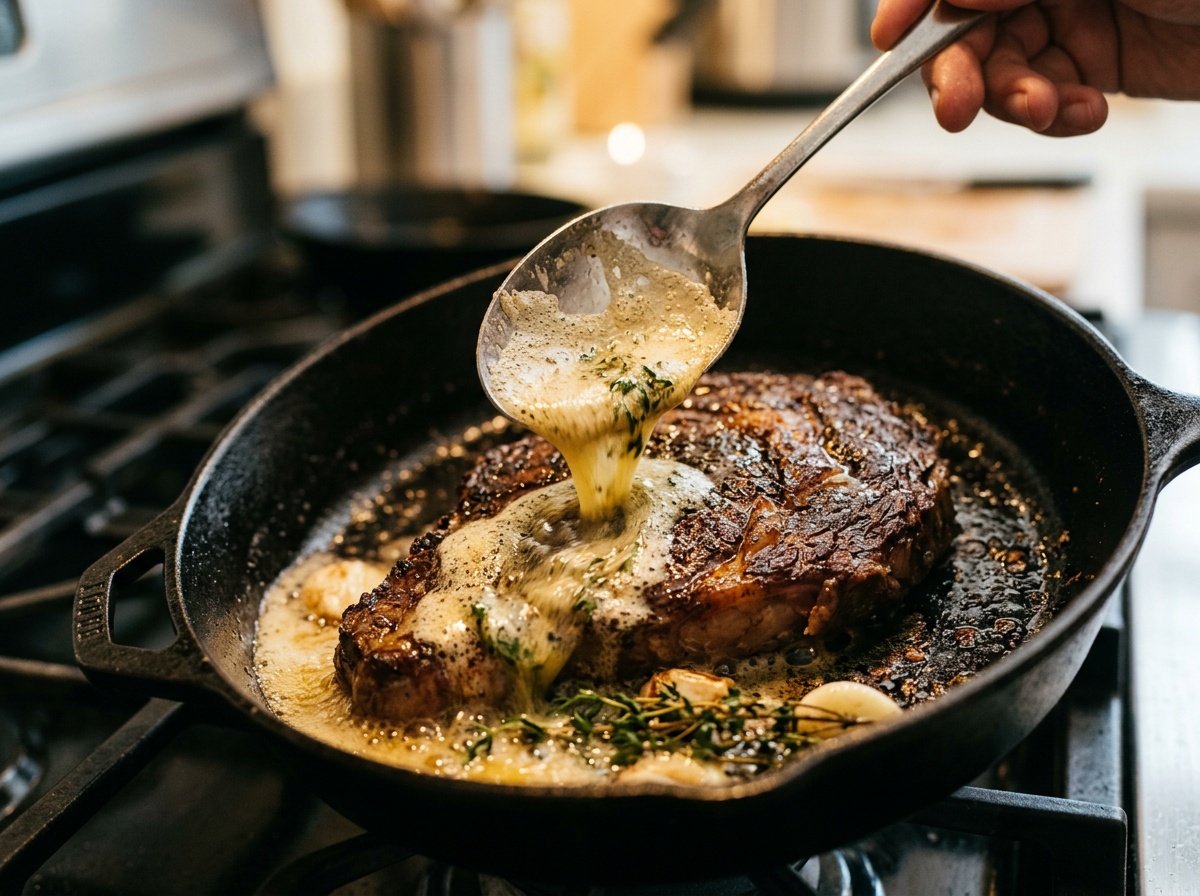
Once I flip the steaks, I immediately turn the heat down to medium and toss in my butter, smashed garlic, and fresh thyme. As the butter melts and begins to foam, I tilt the pan toward me so the hot, aromatic fat pools at the bottom. I use a large spoon to repeatedly drench the steaks with this liquid gold for the last 2-3 minutes of cooking. I watch for the butter to turn a light hazelnut color, which tells me the milk solids have toasted. This step turns a simple piece of meat into a luxury butter basted steak that tastes like it came from a high-end bistro.
4Resting for Juiciness
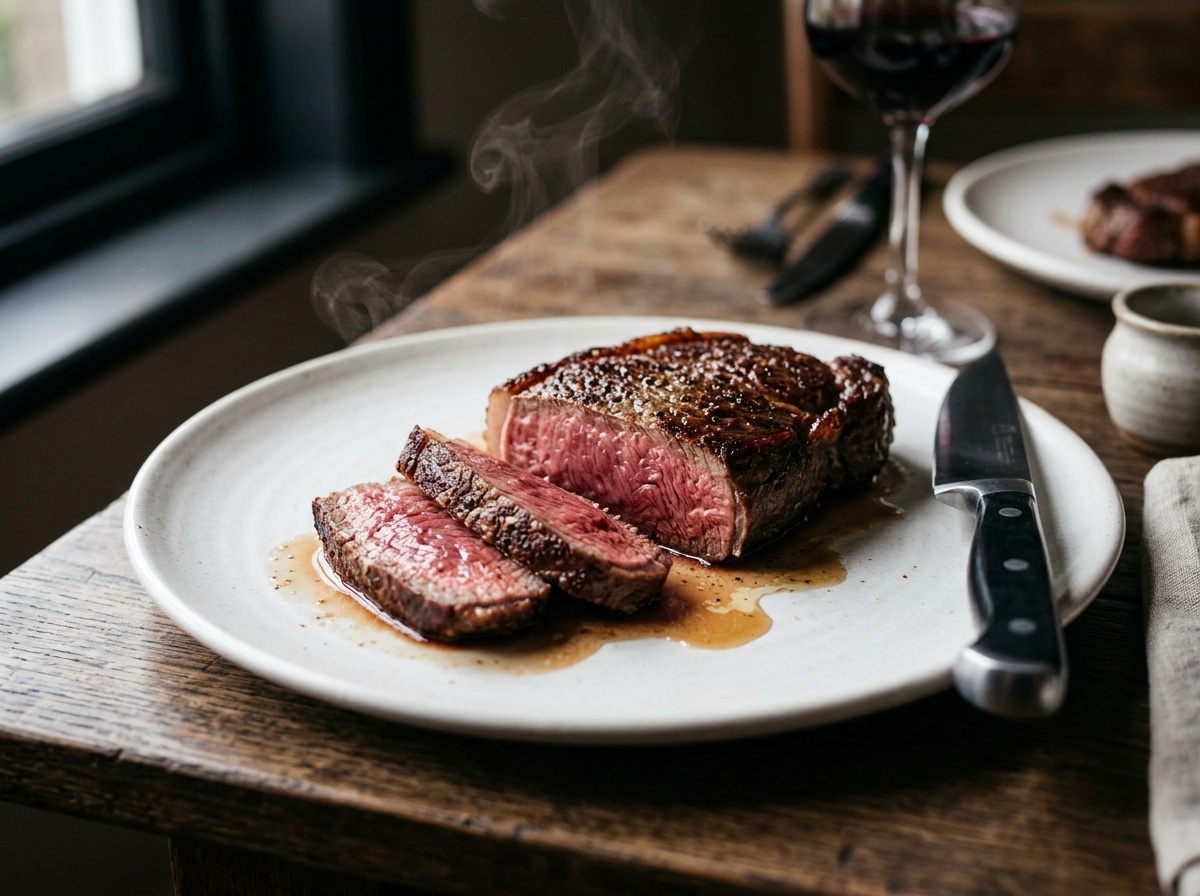
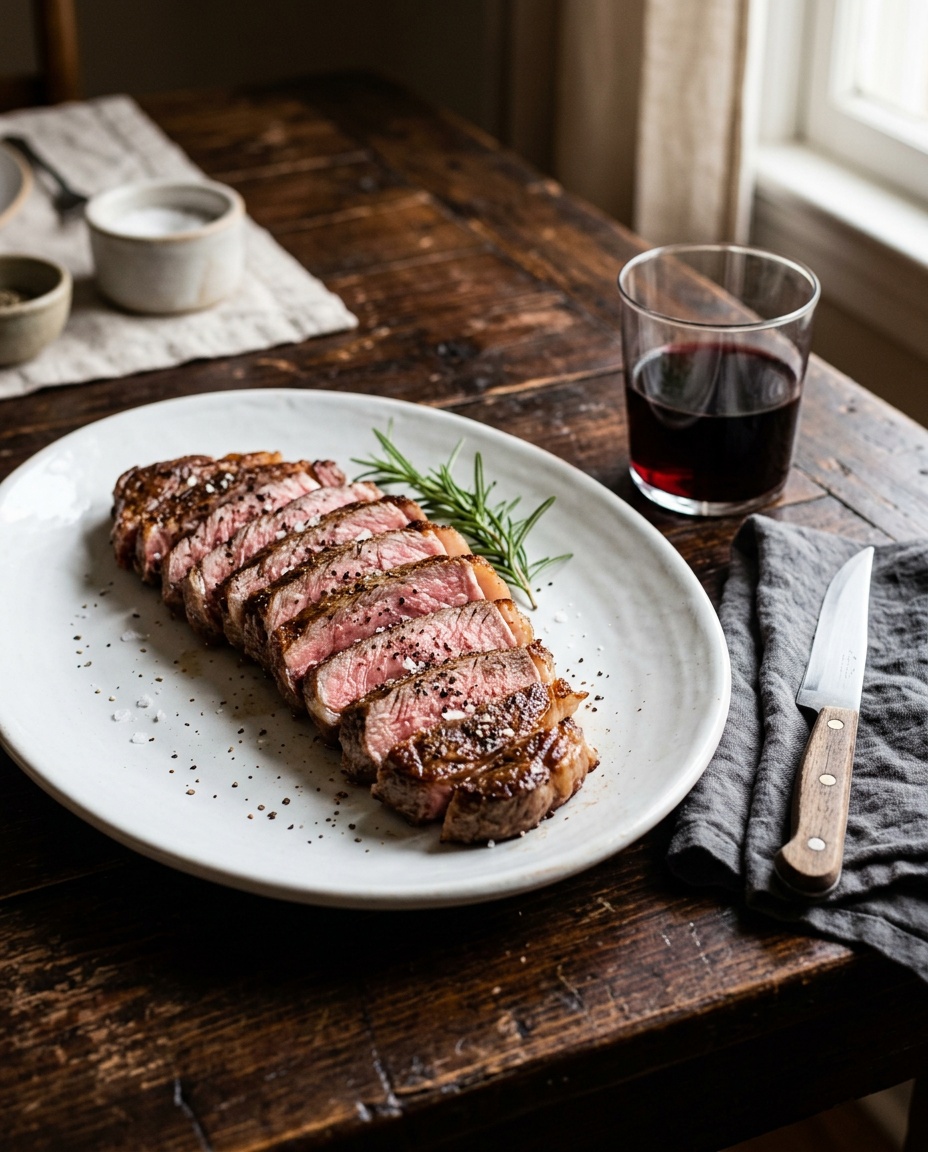
I pull the steaks off the heat when they reach 130°F for medium-rare, using an instant-read thermometer poked into the thickest part. I transfer them to a warm plate and pour the remaining juices from the pan over the top. This resting steak phase is non-negotiable; I let them sit undisturbed for 8 to 10 minutes. If you cut into them too early, all those flavorful juices will run onto your cutting board instead of staying in the meat. This short wait time allows the fibers to relax and reabsorb the moisture, ensuring every single bite is succulent and perfectly tender.
Tips & Variations
Avoid The Smoke Alarm: If you don’t have a strong vent hood, turn on a fan and open a window before you start. Since this is a high-heat method, a little smoke is inevitable, but keeping air moving prevents the alarm from going off.
Choosing Your Cut: When you are picking out your beef, look for good marbling, which is those little flecks of white fat inside the red muscle. Because this is a chuck eye steak recipe, that internal fat will render down and keep the meat from drying out.
The Thermometer Rule: I used to guess when my meat was done, but I’ve found that using an instant-read thermometer is the only way to be consistent. Take the guesswork out of the process; it’s the difference between a dry steak and a perfect one.
Proper Resting Time: I know it’s tempting to eat immediately, but resting your steak for at least 8 minutes is mandatory. It lets the internal temperature stabilize and ensures the juices redistribute throughout the muscle fibers.
Pan Choice: Stick to cast iron or stainless steel for this method. Non-stick pans simply cannot handle the high heat required to get a decent crust, and the coating can actually begin to degrade if you get it that hot.
Nutrition Information
Per serving (approximate values)
| Nutrient | Amount |
|---|---|
| Calories | 420 |
| Protein | 32g |
| Carbohydrates | 0g |
| Total Fat | 32g |
| Fiber | 0g |
| Sugar | 0g |
Frequently Asked Questions About chuck eye steak recipe
What makes this chuck eye steak recipe so tender?
▼
This chuck eye steak recipe relies on proper tempering and precise resting times to achieve tenderness. By bringing the meat to room temperature and allowing it to rest for at least 8 minutes after searing, you ensure the muscle fibers remain relaxed and juicy. These two steps prevent the meat from seizing up and becoming tough during the cooking process.
Can I use a cast iron skillet for other beef cuts?
▼
Absolutely, using a cast iron skillet is the gold standard for cooking almost any steak. The material holds heat exceptionally well, allowing you to get a hard, caramelized sear on the outside without overcooking the inside. Whether you are cooking a ribeye, strip, or even grass-fed beef cuts, this pan will always give you superior results.
How do I store leftovers and reheat them?
▼
Store any leftovers in an airtight container in the refrigerator for up to 3 days. When you are ready to eat them, I suggest reheating the steak in a pan over low heat with a tiny splash of beef broth or water. This method gently warms the meat through without turning it gray or rubbery, unlike the microwave.
Is it possible to over-season the steak?
▼
It is surprisingly hard to over-season a steak if you stick to kosher salt and coarse black pepper. Because the steak is thick, it needs a generous amount of salt to penetrate the surface and season the interior. If you are worried, start with a light dusting and add more to the plate once you have finished slicing the meat.
How do I know when the steak is done?
▼
The most reliable method is using an instant-read thermometer. Aim for 125°F to 130°F for medium-rare, or 135°F for medium. Remember that the temperature will rise about 5 degrees while the meat is resting, so pull it off the heat slightly early to account for that carry-over cooking.