Introduction
I remember staring at the clock on a rainy Tuesday, wanting something hearty but not having the energy for a complicated dinner. That was the night I started experimenting with different air fryer pork chop recipes, determined to find a method that didn’t leave the meat tasting like shoe leather. I had grown up with dry, overcooked pork, so I was skeptical that a little countertop appliance could actually produce something worth eating. I was wrong, and honestly, it changed the way I look at quick weeknight proteins.
What keeps me coming back to this specific method is the texture contrast. You get that beautiful, caramelized crust on the outside—almost like it was seared in a cast-iron skillet—while the inside stays incredibly moist and tender. It’s significantly faster than roasting in the oven and lacks the messy oil splatter you get from pan-frying. I make this on busy Mondays, slow Wednesdays, and pretty much whenever I want a high-protein dinner without standing over the stove for an hour.
In this post, you will learn the exact techniques that make the difference between a mediocre chop and a great one. We are going to cover the importance of drying the meat, how to season it properly, and why checking the internal temperature is the only way to guarantee success. You will see how simple adjustments, like not overcrowding your basket and giving the meat time to rest, result in perfectly cooked pork every single time.
Why This Recipe Works
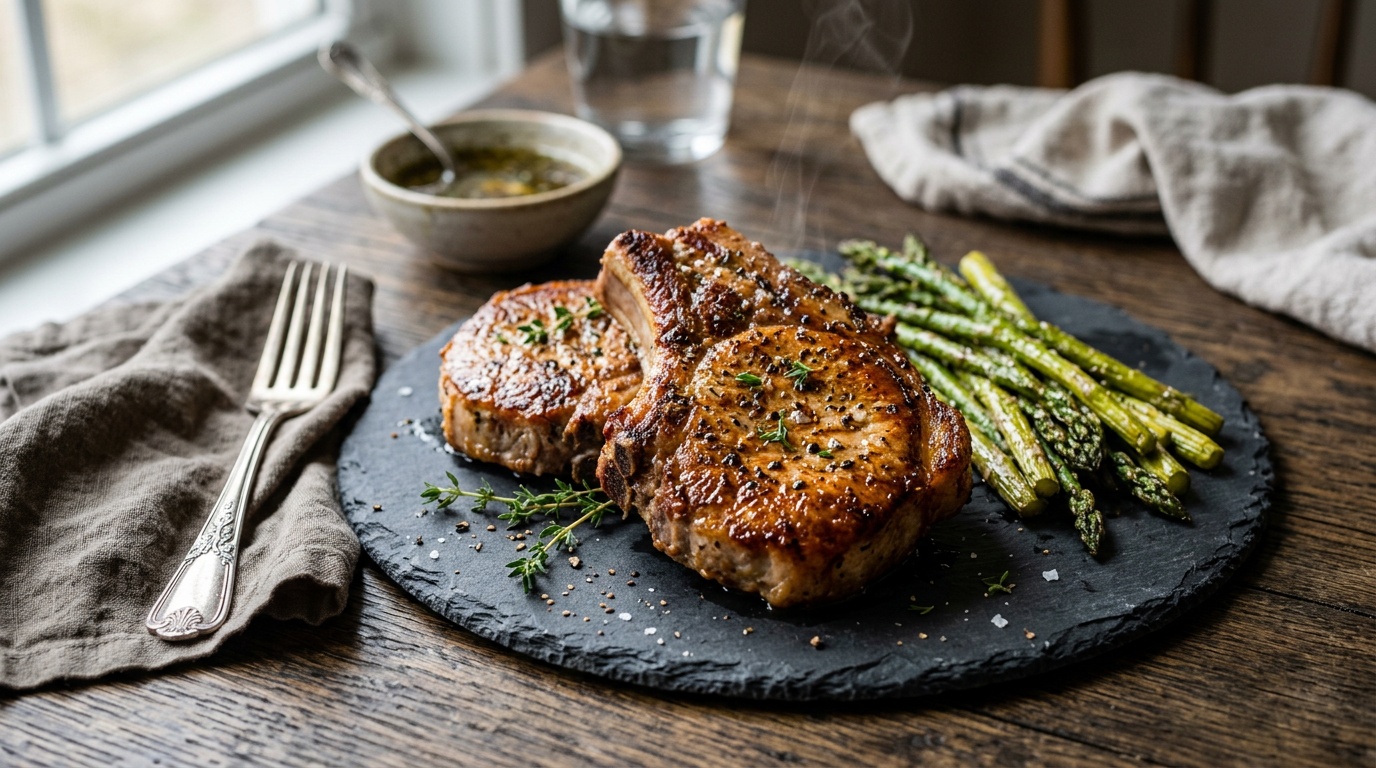
High-Velocity Heat Circulation: The air fryer works by blasting food with superheated air, which acts like a convection oven on steroids. This consistent, rapid airflow creates a Maillard reaction on the surface of the meat much faster than a standard oven could. By cooking at a high heat, the exterior sugars in the seasoning caramelize into a crispy crust before the interior has a chance to dry out.
The Importance of Surface Moisture: One of the biggest mistakes home cooks make is skipping the paper towel step. Moisture is the enemy of crispiness; if the surface of the meat is wet, the air fryer will steam the pork instead of searing it. By patting the chops completely dry before applying oil and seasoning, you ensure that the heat focuses on browning the surface immediately.
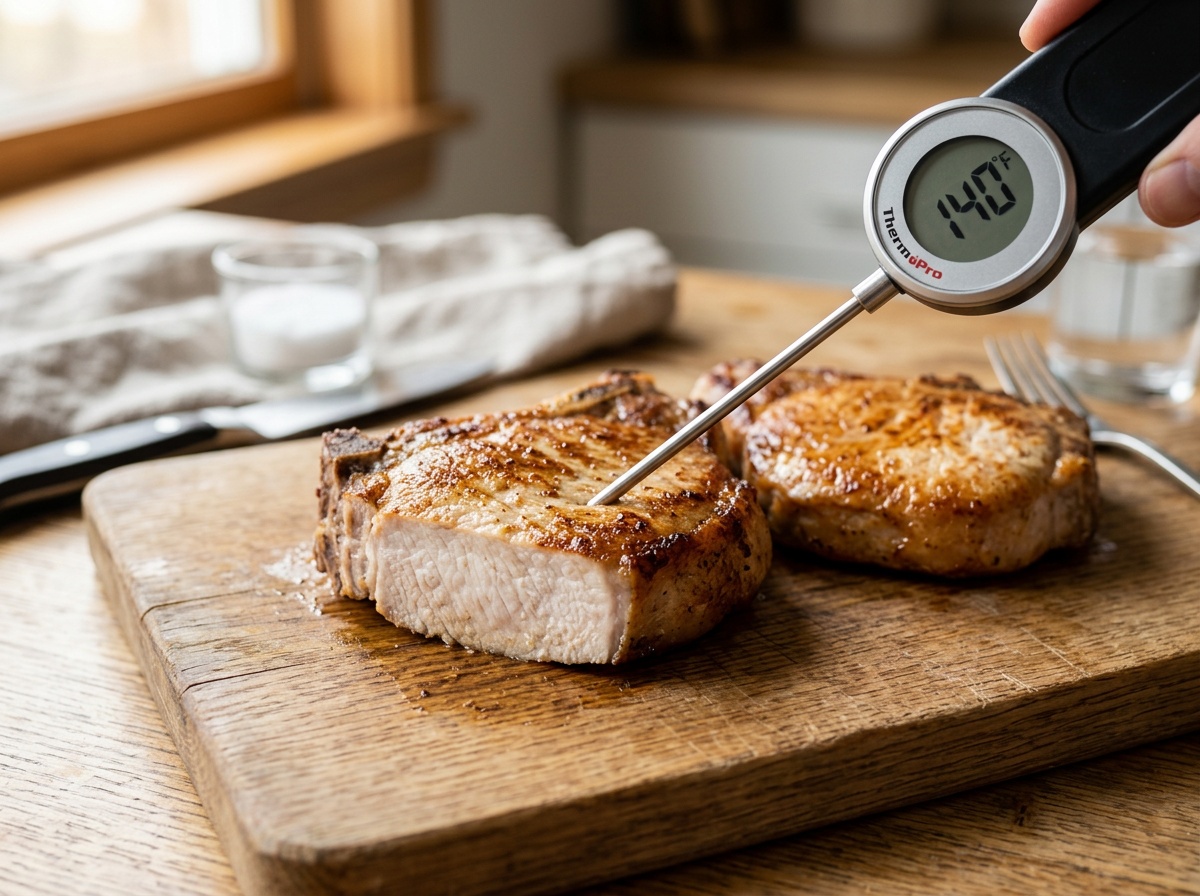
Controlled Carryover Cooking: Because the air fryer is so efficient, the residual heat inside the pork continues to cook the meat for several minutes after it leaves the basket. This is why I pull my chops out at 140°F rather than waiting for them to hit the final safe temperature. Letting the meat rest for five minutes allows the juices to redistribute, leading to that juicy air fryer pork everyone is looking for.
Ingredients
The Main Ingredients
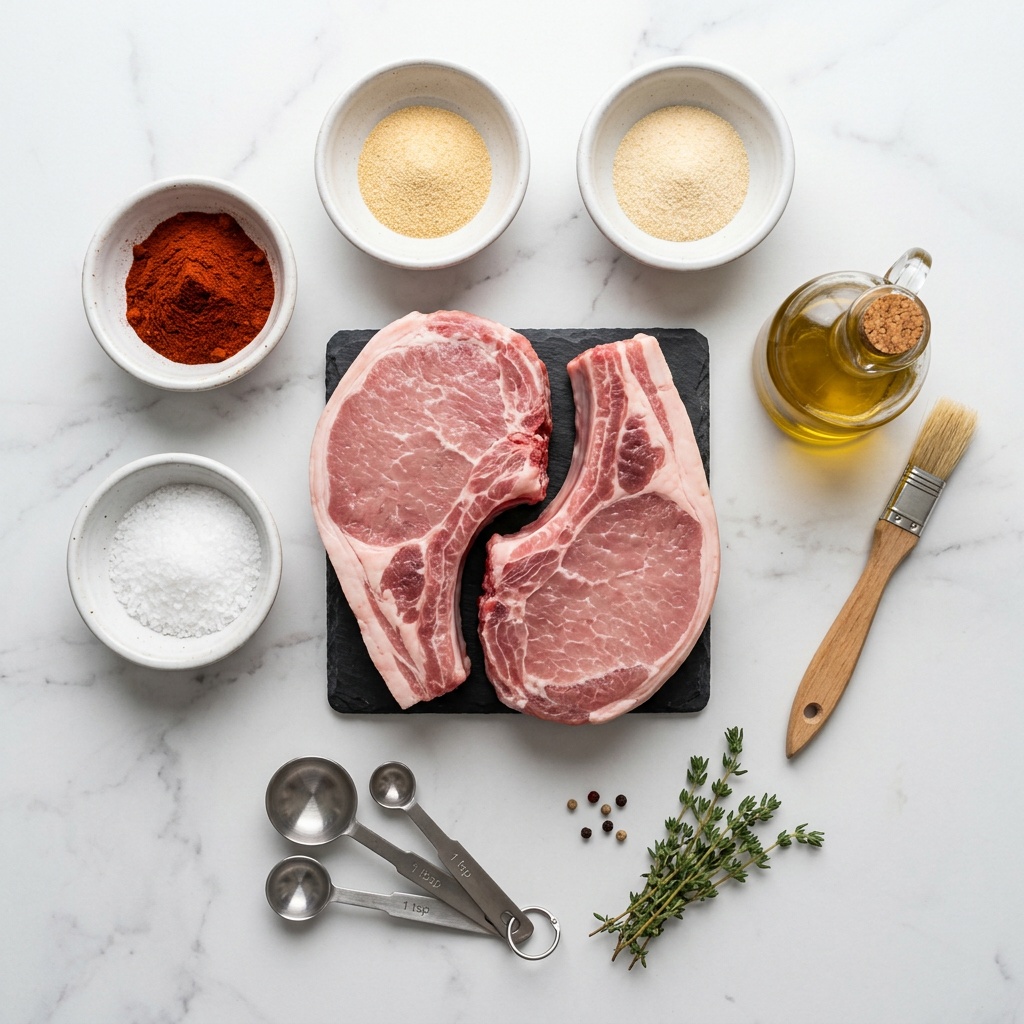
- 4 pieces bone-in pork chops (about 1-inch thick)
- 1 tbsp olive oil (or avocado oil)
Pork Chop Seasoning Blend
- 1 tsp smoked paprika
- 1 tsp garlic powder
- 1/2 tsp onion powder
- 1/2 tsp kosher salt
- 1/4 tsp black pepper (freshly cracked)
Instructions
1Prep and Season the Chops
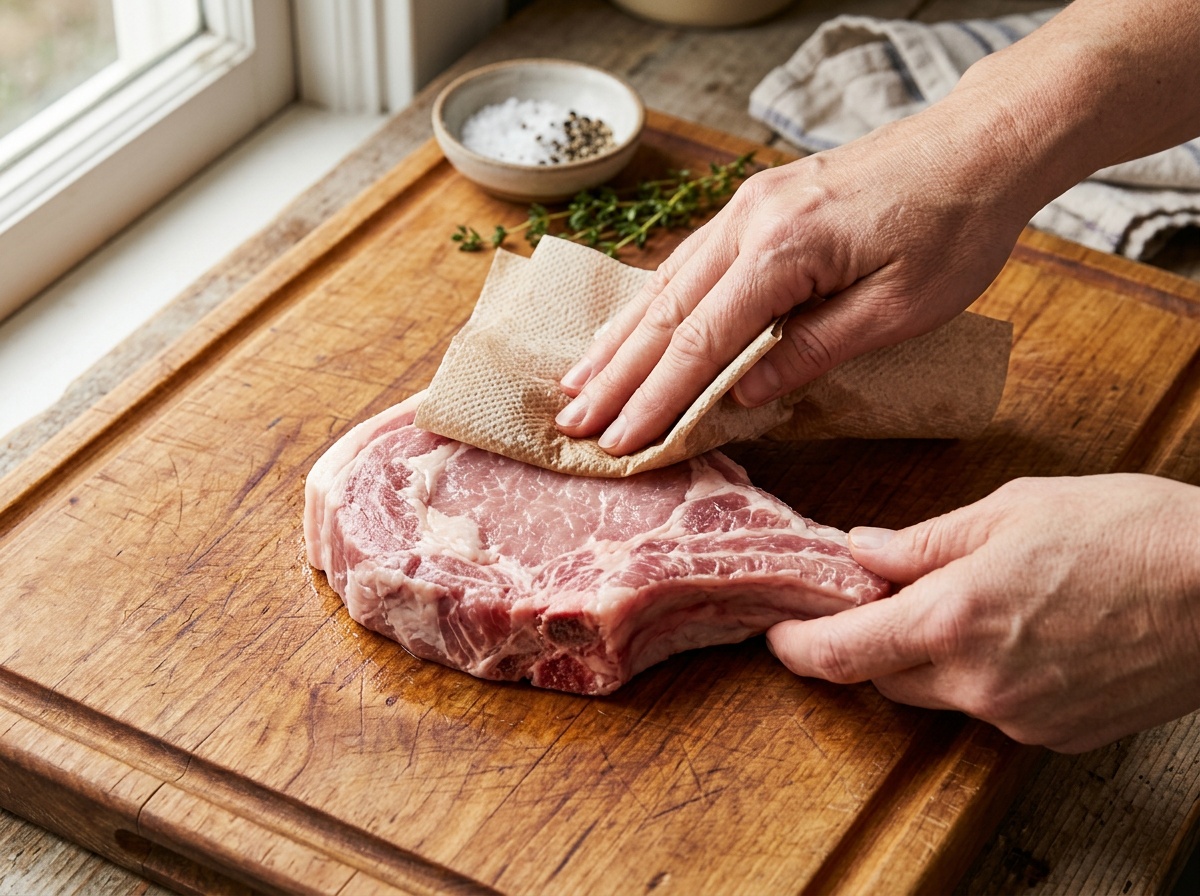
I start by taking my pork chops out of the refrigerator about 20 minutes before I plan to cook them so they aren’t ice cold, which helps them cook more evenly. I use paper towels to thoroughly pat every surface of the chops dry, making sure to get into the crevices around the bone. Once dry, I drizzle them with olive oil and rub it in well to ensure a good coat. In a small bowl, I mix my dry spices together, then apply the seasoning generously to both sides. Don’t be shy with the salt; it helps develop that savory crust that makes these air fryer pork chop recipes so popular.
2Air Fry to Perfection
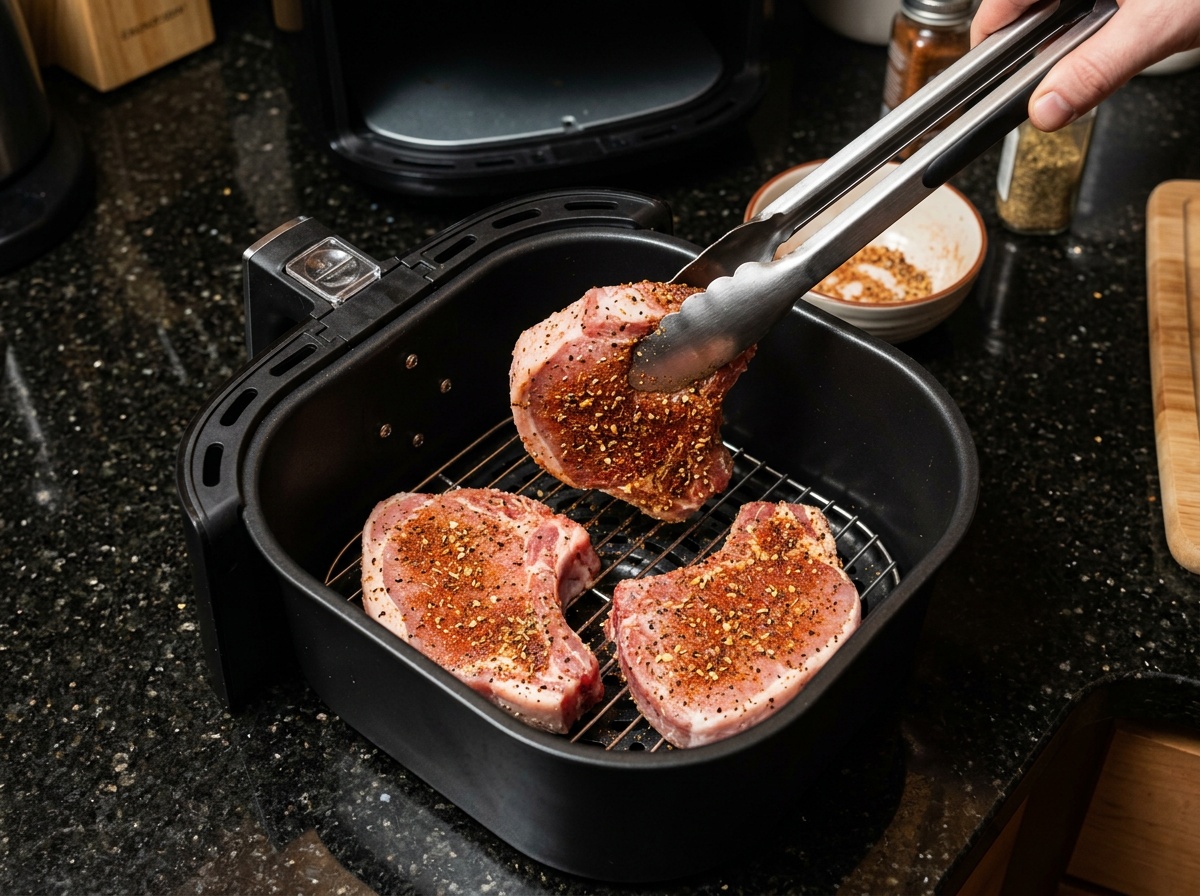
I preheat my air fryer to 400°F for about three minutes; I find this jump-start is better than putting cold food into a cold basket. I carefully arrange the chops in the basket, making sure they aren’t touching or overlapping. If the air can’t circulate around the sides of the chops, you won’t get that even browning we want. I cook them for 12 to 15 minutes, flipping them halfway through. You’ll see the edges turn a deep, mahogany brown, which is exactly the visual cue I look for to know the crust has formed properly.
3Check Temperature and Rest
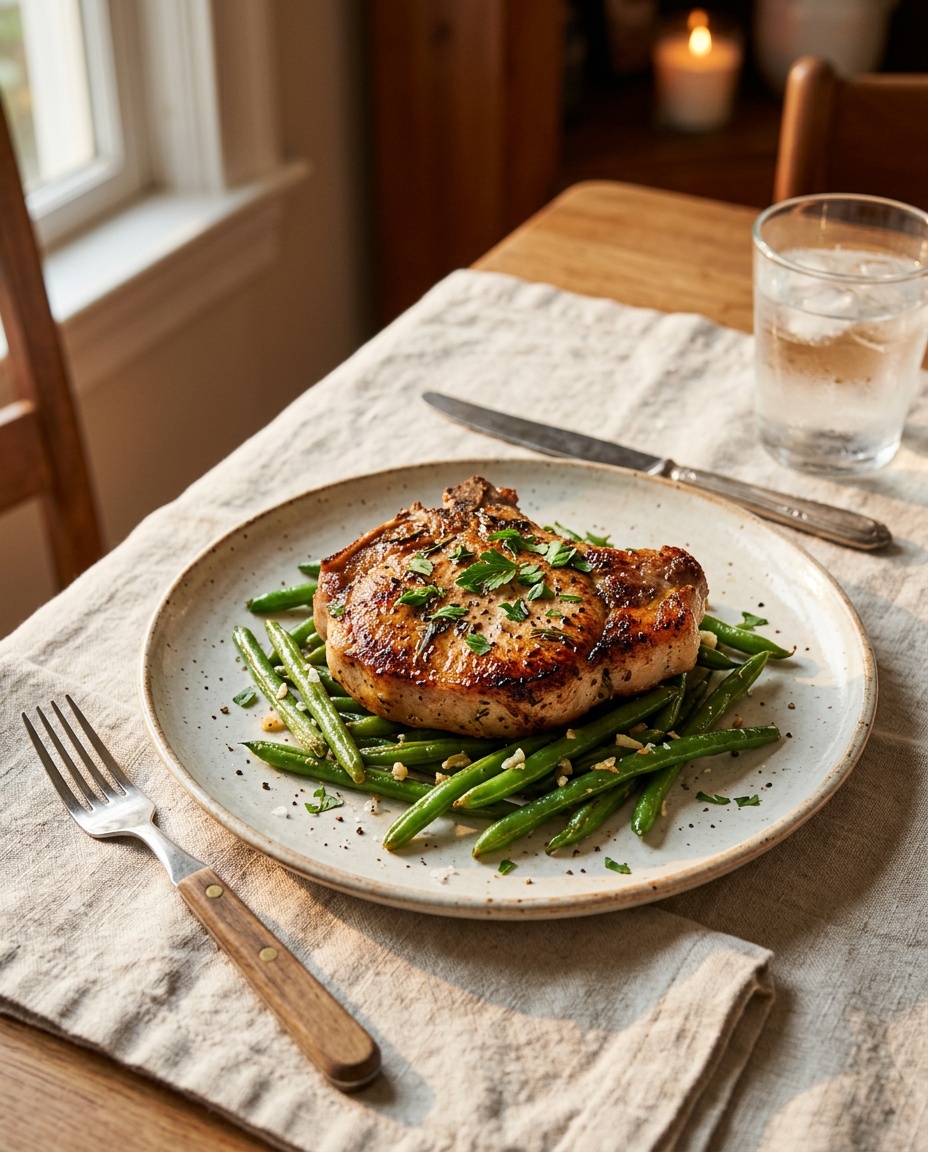
Using an instant-read thermometer is not optional for me; I stick the probe into the thickest part of the chop, being careful to avoid the bone. I am looking for an internal temperature of 140°F. Once they hit that mark, I pull them out immediately and transfer them to a cutting board. I tent them loosely with a piece of aluminum foil and let them rest for at least 5 to 7 minutes before serving. This rest period is where the temperature climbs to the safe 145°F and the juices settle back into the muscle fibers, resulting in that tender texture.
Tips & Variations
Don’t Overcrowd the Basket: Even if you have a large air fryer, it is better to cook in batches than to cram everything in at once. If the chops are touching, the sides will steam and turn gray rather than getting crispy. Always keep at least an inch of space between each piece for the air to flow.
Use a Meat Thermometer: Pork is lean, and it only takes a minute of overcooking to make it tough. Relying on time alone is risky because every air fryer runs a little differently. Invest in a digital instant-read thermometer and trust the reading over the timer on your machine.
Choosing the Right Cut: For the best results with my favorite air fryer pork chop recipes, stick to chops that are about one inch thick. If you buy super thin, supermarket-style chops, they will dry out before they get a chance to brown properly. If you can only find thin chops, reduce your cooking time by 3-4 minutes.
Storage and Reheating: Leftovers keep well in an airtight container in the fridge for up to three days. To reheat, I put them back in the air fryer at 350°F for about 3-4 minutes. This warms them through without cooking them further, keeping the meat moist.
Customizing the Rub: I often switch up the seasoning depending on what I have in the pantry. If I want something sweeter, I add a teaspoon of brown sugar to the rub. For a spicy kick, a pinch of cayenne pepper works wonders to wake up the flavor profile.
Nutrition Information
Per serving (approximate values)
| Nutrient | Amount |
|---|---|
| Calories | 290 |
| Protein | 32g |
| Carbohydrates | 2g |
| Total Fat | 16g |
| Fiber | 0g |
| Sugar | 1g |
Frequently Asked Questions About Air Fryer Pork Chop Recipes
Are air fryer pork chop recipes actually better than pan-seared ones?
▼
In my experience, air fryer pork chop recipes are often superior for weeknight meals because they deliver a similar level of crispiness without the heavy cleanup. While a cast-iron skillet gives a slightly deeper sear, the air fryer is much more consistent and makes it nearly impossible to burn the exterior before the inside is cooked through.
What is the correct internal temperature for pork chops?
▼
You should always aim for an internal temperature of 145°F (63°C). I recommend pulling the chops out of the air fryer when they hit 140°F, as the temperature will rise during the resting phase. This ensures the pork remains juicy rather than becoming tough, dry, or overcooked during the carryover cooking process.
Can I cook frozen pork chops in the air fryer?
▼
Yes, you can, but you will need to adjust your technique. You will need to cook them for about 5-8 minutes longer at 375°F to ensure they thaw and cook through. I usually season them after the first 5 minutes of cooking, once the surface has thawed slightly, so the spices actually stick to the meat.
Why did my pork chops turn out tough?
▼
The most common reason is overcooking or starting with meat that is too thin. If you cook them past 150°F, the proteins constrict and squeeze out the moisture, leading to a tough, leathery texture. Always use a thermometer, and if your chops are very thin, reduce the cooking time significantly to prevent them from drying out.
How do I make the crust crispier?
▼
The secret to getting a crispy crust is ensuring the pork is completely dry before adding the oil and seasoning. After patting the meat dry, let it sit for a few minutes on the counter to dry out further. Additionally, don’t skip the step of preheating the air fryer, as that initial blast of hot air helps set the crust immediately.