Introduction
When I first started experimenting with air fryer hamburger recipes, I admit I was skeptical that they could truly rival the flavor of a charcoal grill. I remember trying to feed a hungry crowd on a rainy Tuesday, desperate for a classic meal without standing outside under an umbrella, and the air fryer was my last resort. The result was so surprisingly tender that it immediately shifted how I plan my meals, turning a complex process into a simple kitchen task.
It quickly became a staple in my house because it delivers that caramelized, slightly crispy edge that usually takes much more effort to achieve. I have found that this method is significantly more consistent than pan-frying, especially when I want a quick, easy weeknight dinner that doesn’t result in grease splatter all over my stove. It is the kind of reliable meal that fits perfectly into a busy schedule without sacrificing quality or that deep, savory beef flavor I crave.
In this guide, I will share the specific techniques I have refined after dozens of attempts, including the exact internal temperatures you need and how to handle the seasoning to keep the meat tender. You will learn that the trick isn’t just the machine, but the preparation of the meat and how you structure the cooking time to keep them moist. By following these steps, you will end up with a burger that has a beautiful exterior char while remaining succulent on the inside.
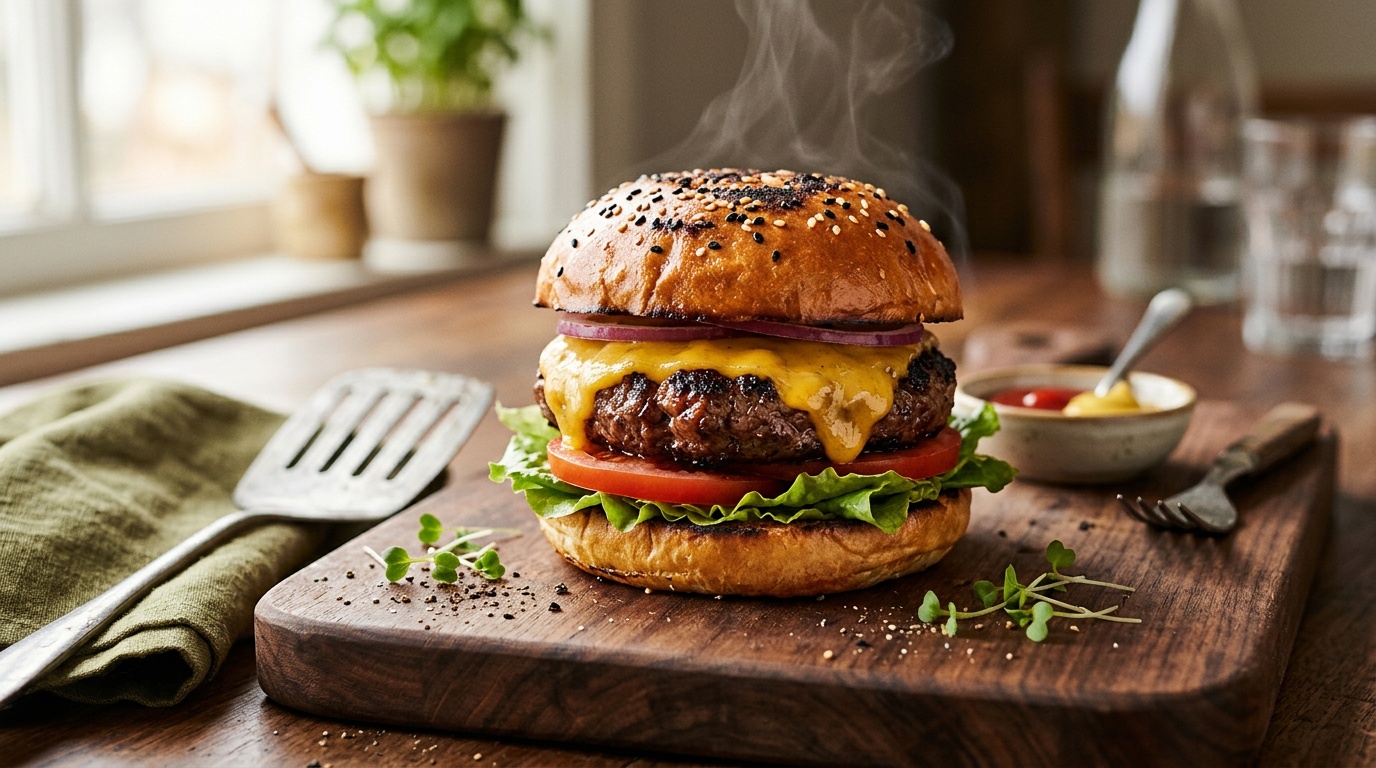
Why This Recipe Works
High-Heat Convection Circulation: The air fryer works by circulating intense, hot air around the meat, which mimics the effect of a convection oven at a smaller scale. This high-speed airflow creates a caramelized crust on the outside of the patty almost immediately, locking in the natural juices before they have a chance to evaporate during the cooking process. It allows for a sear that is difficult to achieve in standard non-stick pans.
Fat Rendering Efficiency: Because the basket allows for airflow on all sides, the fat renders down efficiently instead of pooling underneath the meat as it does in a skillet. I have noticed that this leaves you with a much cleaner, more refined taste, as the burger is not sitting in its own rendered grease throughout the entire cycle. This creates juicy ground beef burgers that feel lighter and cleaner on the palate.
Consistent Temperature Control: Using the air fryer provides a level of precision that is nearly impossible to achieve on a stove, where hot spots can cause uneven cooking. I set my unit to a specific temperature, ensuring that the ambient heat is constant, which results in a perfectly cooked patty from edge to center without the risk of charring the exterior while the inside remains raw.
Ingredients
The Patties
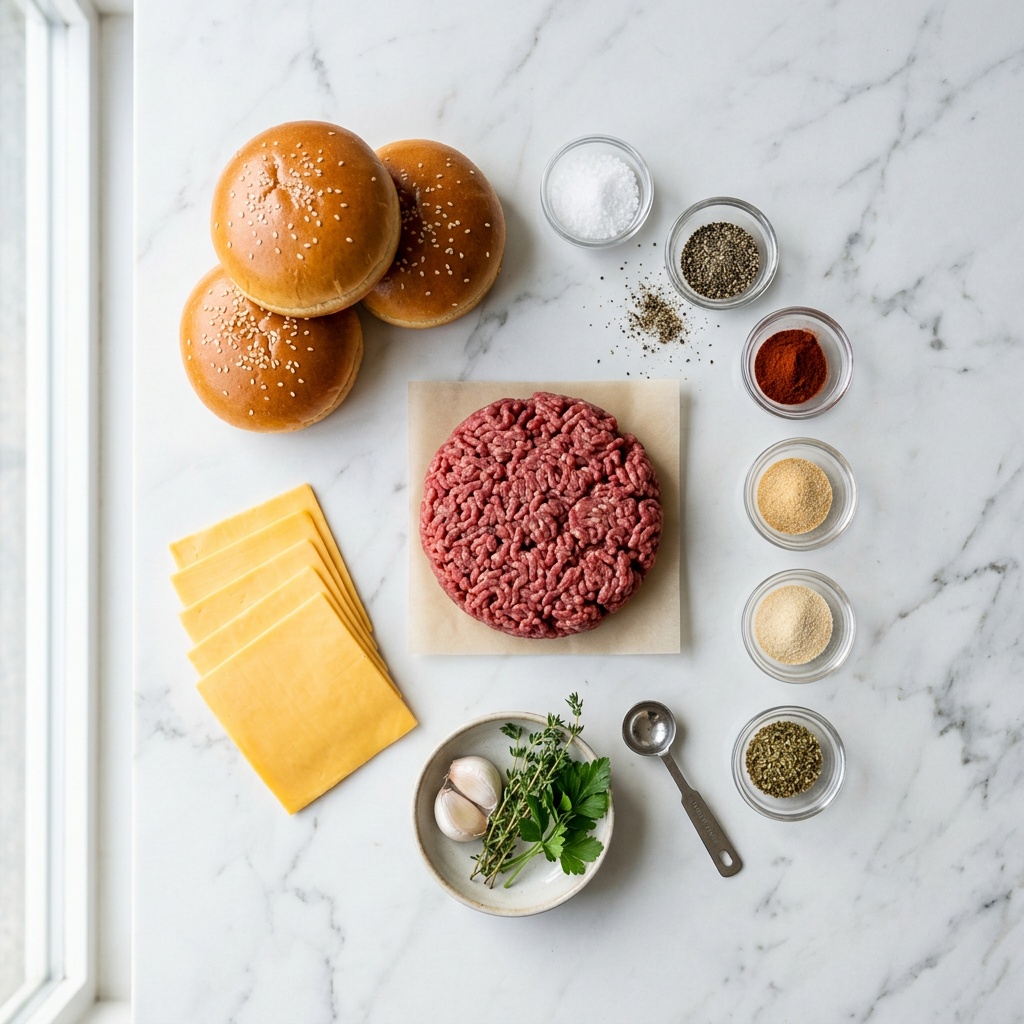
- 1 lb ground beef (80/20 lean-to-fat ratio)
- 1 tsp kosher salt
- 1/2 tsp black pepper (freshly cracked)
- 1 tsp garlic powder
- 1 tsp onion powder
- 1 tbsp Worcestershire sauce
For Serving
- 4 brioche buns (toasted)
- 4 slices cheddar cheese
Instructions
1Prep the Patties
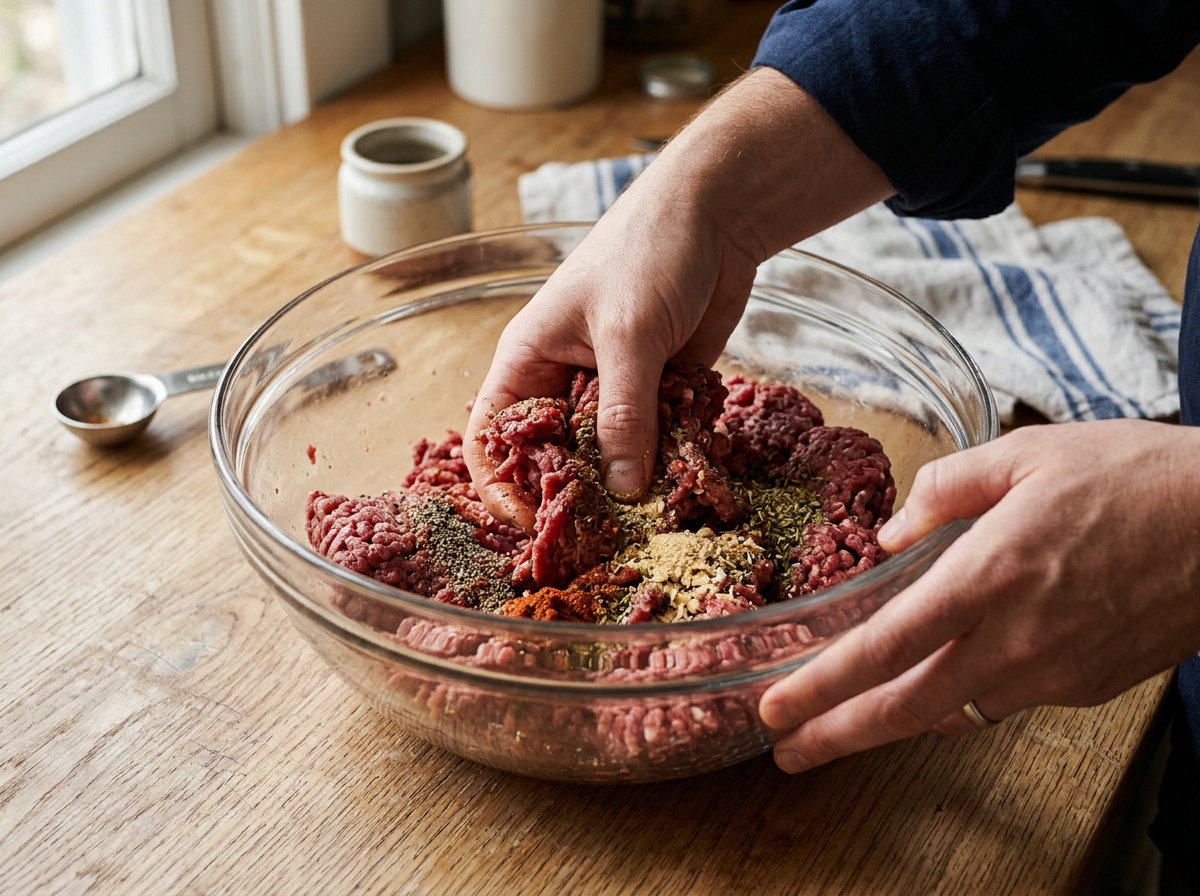
I start by gently combining the beef with the Worcestershire sauce and dry seasonings in a large glass bowl. I avoid overworking the meat, as I have found that compacting it too much leads to a dense, tough texture; I use my fingers to mix just until the spices are evenly distributed. I shape the mixture into four equal patties, making them slightly wider than my buns because they will shrink during cooking. I also press a small dimple into the center of each patty with my thumb, which helps them stay flat as they cook instead of puffing up into a ball. Once formed, I keep them in the refrigerator for about 10 minutes to help them hold their shape better when they hit the heat.
2Air Fry to Perfection
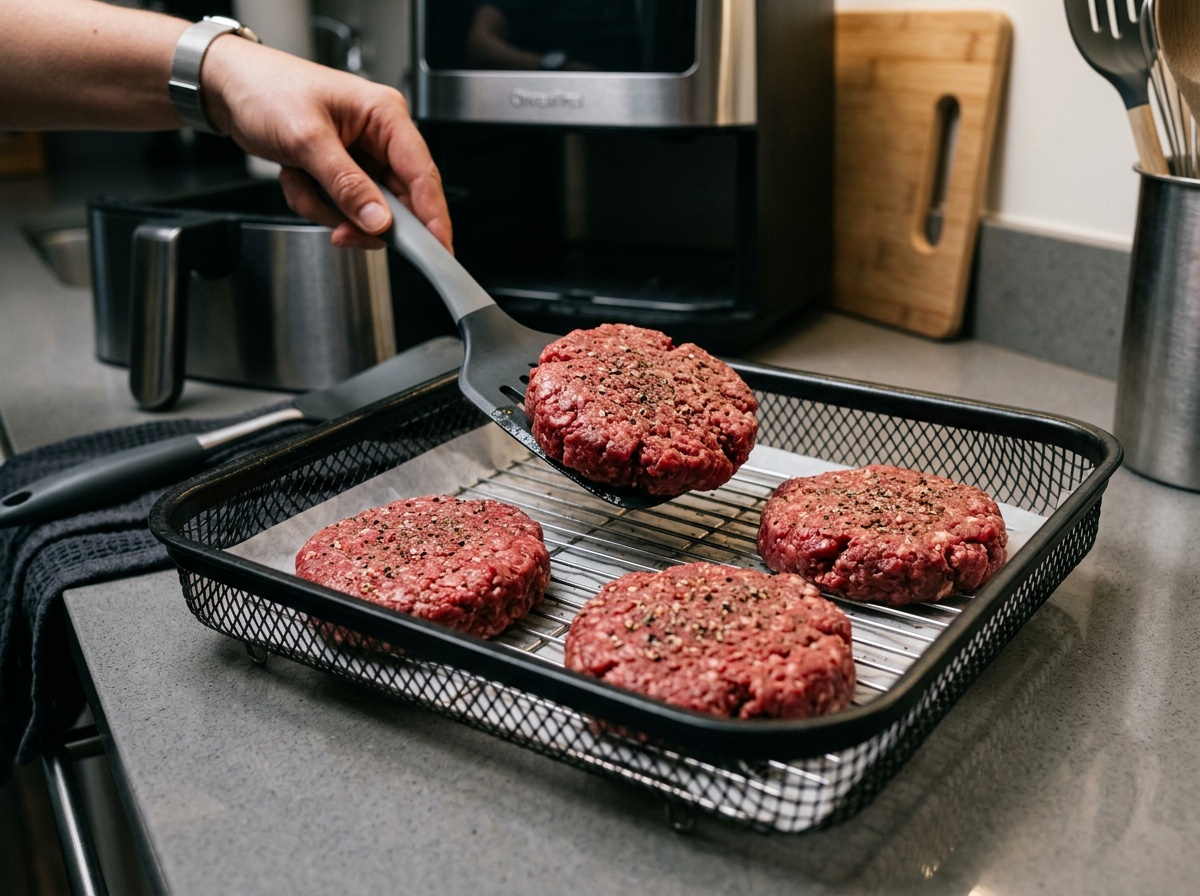
I preheat the unit to 375°F to ensure it is hot enough to sear the surface immediately. I place the patties in a single layer in the air fryer basket, ensuring they are not touching so the air can circulate freely around the edges; depending on the size of your machine, you might need to do these in batches. As I follow various air fryer hamburger recipes, I have determined that 8 to 10 minutes is usually the sweet spot for a medium-well burger. Halfway through the cooking time, I open the basket and flip them carefully with a spatula. If you want to melt cheese on top, I add the slice during the final minute of cooking, letting the circulating air melt it without blowing it off the meat.
3Rest and Serve
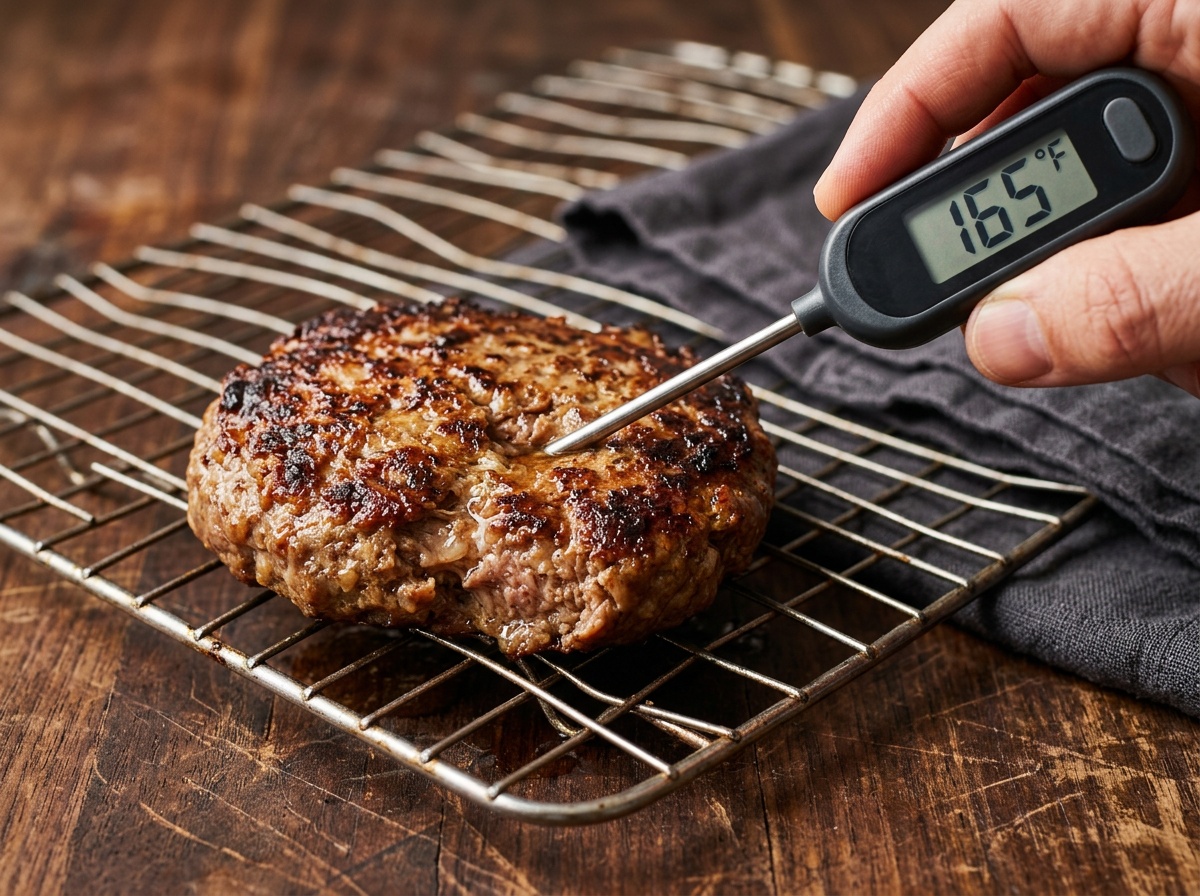
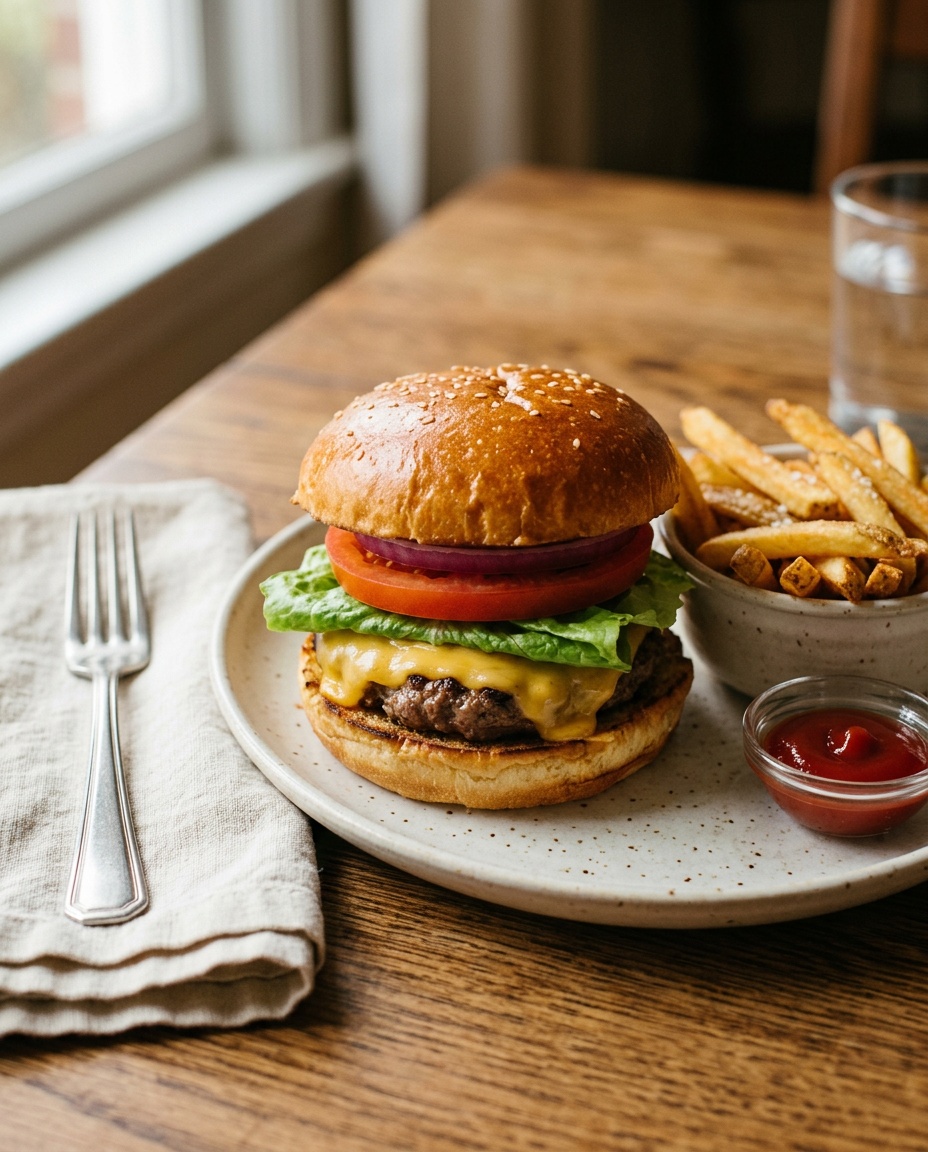
Once the cooking cycle finishes, I check the internal temperature with a digital probe thermometer to ensure they have reached at least 160°F for food safety. I transfer the patties to a plate and let them rest for at least 3 to 5 minutes before assembling my sandwich. This resting period is critical because it allows the internal juices to redistribute throughout the meat, preventing them from running out onto the bun the moment you take a bite. While the meat rests, I quickly toast my brioche buns in the residual heat of the air fryer for about a minute. Finally, I stack the patties with my favorite condiments and serve immediately while the cheese is still warm and gooey.
Tips & Variations
Use 80/20 Ground Beef: For the most flavor, I always stick to an 80/20 lean-to-fat ratio. The fat renders out during the cooking process and keeps the meat moist; using extra-lean beef will result in a dry, crumbly patty that lacks that rich, savory quality.
Don’t Overwork the Meat: When shaping your patties, handle the meat as little as possible. If you squeeze or pack the ground beef too tightly, you will end up with a tough, rubbery texture instead of a tender, flaky bite.
Check Internal Temp: I never rely on visual cues alone because air fryers vary in power. Using a meat thermometer is the best way to ensure your air fryer hamburger recipes turn out safe and juicy, pulling them off the heat at 160°F.
Manage Smoke: If you are cooking the burgers for a longer time, fat can sometimes drip into the bottom of the basket and smoke. I add a tablespoon of water or a slice of bread to the bottom of the basket tray to catch the grease and prevent it from burning.
Resting Time: Never skip the resting phase. Letting the meat sit for five minutes allows the muscle fibers to relax and reabsorb the juices, which is the difference between a dry burger and a succulent, restaurant-quality meal.
Nutrition Information
Per serving (approximate values)
| Nutrient | Amount |
|---|---|
| Calories | 420 |
| Protein | 28g |
| Carbohydrates | 24g |
| Total Fat | 22g |
| Fiber | 1g |
| Sugar | 3g |
Frequently Asked Questions About Air Fryer Hamburger Recipes
What is the best way to make air fryer hamburger recipes consistently juicy?
▼
To get the best results with air fryer hamburger recipes, start with 80/20 ground beef and don’t over-handle the meat when forming the patties. Ensure your air fryer is preheated to 375°F before adding the patties, and always use a meat thermometer to pull them at 160°F so they don’t overcook and dry out.
How long to cook burgers in air fryer for medium-rare?
▼
For medium-rare air fryer beef patties, you typically need to cook them for about 6 to 7 minutes at 375°F. Since air fryer models vary in strength, I always recommend checking the internal temperature with a digital thermometer; pull them off the heat at 135°F for medium-rare, keeping in mind they will rise a few degrees while resting.
Can I cook frozen patties in the air fryer?
▼
Yes, you can absolutely cook frozen homemade hamburger patties in the air fryer, though you will need to increase the cooking time by about 3 to 5 minutes. Preheat the unit to 375°F, and check the internal temperature after 10 minutes, flipping halfway through, to ensure they are fully cooked through to 160°F.
Does the cheese melt properly in the air fryer?
▼
Cheese melts wonderfully in the air fryer, but you have to be careful with the fan speed. I wait until the last minute of cooking to add the slice; if you add it too early, the convection fan might blow the cheese off the patty and into the heating element, causing a mess and potential smoking.
How do I prevent grease smoke when cooking burgers?
▼
Cooking fatty meat can create smoke in some air fryers when the fat drips into the heating element. To fix this, I place a small slice of bread or a teaspoon of water in the bottom of the basket tray underneath the rack, which absorbs the drippings and stops them from burning.