Introduction
The first time I tried to recreate a high-end bistro dinner at home, this ahi tuna steak recipe was my primary goal. I remember standing over my cast-iron skillet, nervous about overcooking such a beautiful, expensive cut of fish, but the results were better than any restaurant version I had tried. It was a special anniversary dinner, and the reaction I got when slicing into that perfectly crusted, ruby-red center made all the research worth it.
I keep coming back to this dish because it is shockingly fast and never fails to feel elegant. When I want something that feels luxurious but doesn’t require me to spend hours in the kitchen after a long workday, this is my go-to. It pairs beautifully with a simple cucumber salad or steamed bok choy, making it lighter than most steakhouse meals but just as satisfying.
You will learn exactly how to manage high heat without smoking out your kitchen, and why the thickness of your fish matters for that signature sear. I made the mistake early on of using an thin pan that didn’t hold heat well, resulting in grey fish instead of a nice crust, so I will show you what gear works best. By the end, you will have a restaurant-grade sear on the outside and that buttery, melt-in-your-mouth texture on the inside.
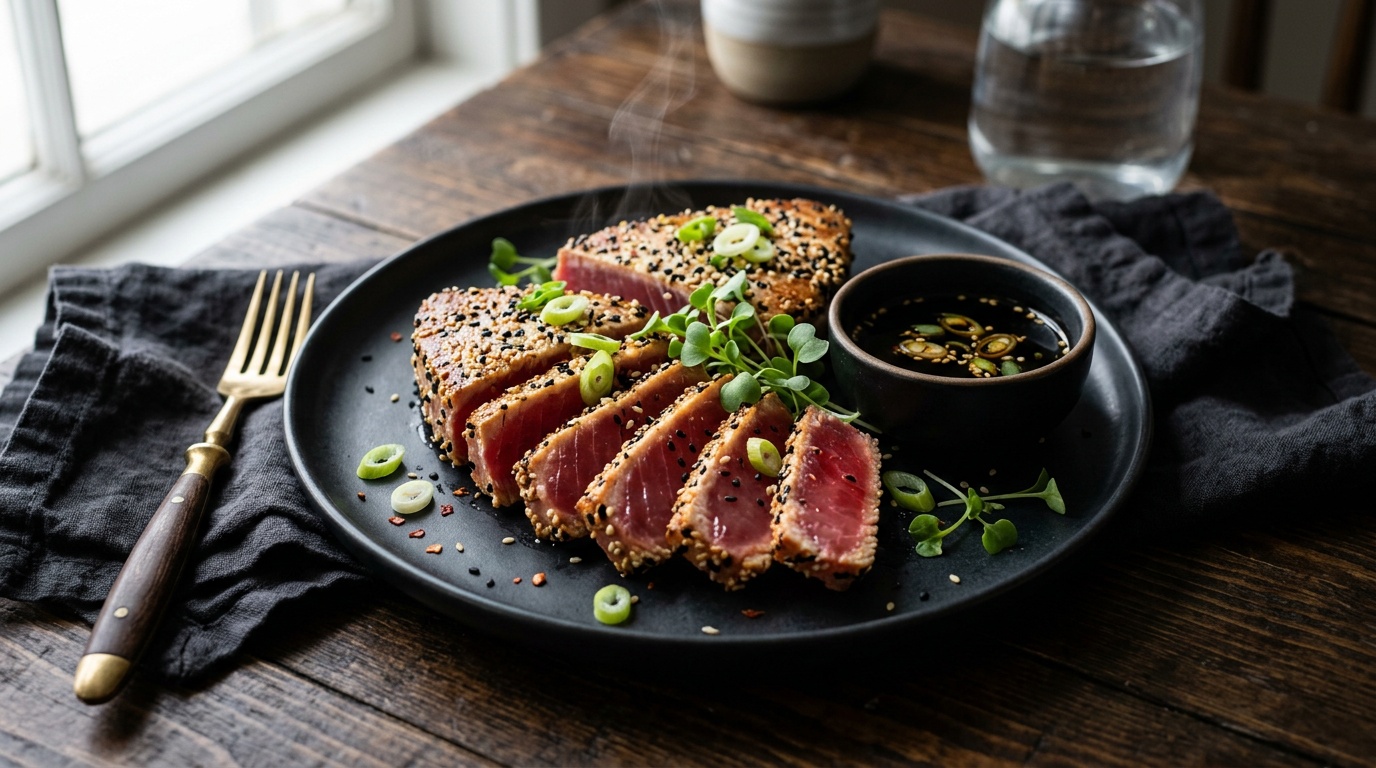
Why This Recipe Works
High-Heat Searing Science: Searing the fish in a smoking hot pan is not just for color; it creates a rapid Maillard reaction on the surface. This chemical process transforms the proteins and sugars, creating a nutty, toasted crust while leaving the center cool and raw. I use a heavy cast-iron skillet because it retains heat exceptionally well, ensuring the pan temperature doesn’t drop when the cold fish hits the surface.
Quality of Sushi Grade Tuna: Because we are only cooking the very exterior of the fish, starting with high-quality sushi grade tuna is non-negotiable. This ensures the fish is safe to consume rare and provides that clean, oceanic flavor without any ‘fishy’ aftertaste. When buying, I always look for a deep, vibrant red color and a firm texture that springs back when touched, indicating freshness.
Balanced Marinade Ratio: I avoid long marination times because the acid in the soy sauce and lime juice will start to ‘cook’ the fish chemically, turning it mushy. A quick 10-minute dip in the ahi tuna marinade is enough to infuse flavor without breaking down the structure of the delicate meat. This balance preserves the texture while providing a savory, salty foundation that complements the richness of the tuna.
Ingredients
For the Tuna
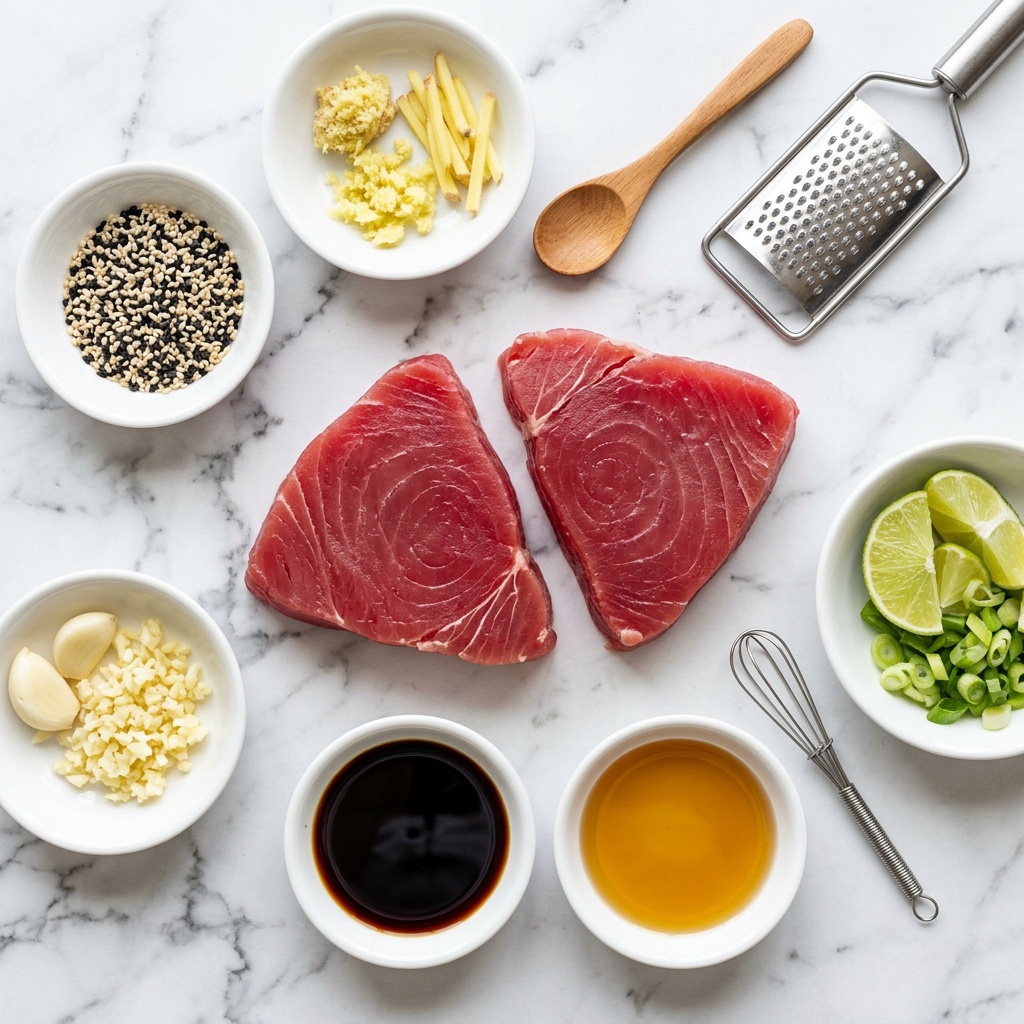
- 2 steaks sushi grade tuna (1-inch thick)
- 2 tbsp sesame seeds (mixture of white and black)
- 1 tbsp neutral oil (grapeseed or canola)
For the Marinade
- 2 tbsp soy sauce (or tamari for gluten-free)
- 1 tsp toasted sesame oil
- 1 tsp fresh ginger (finely grated)
- 1 clove garlic (minced)
Instructions
1Prepare the Ahi Tuna Marinade
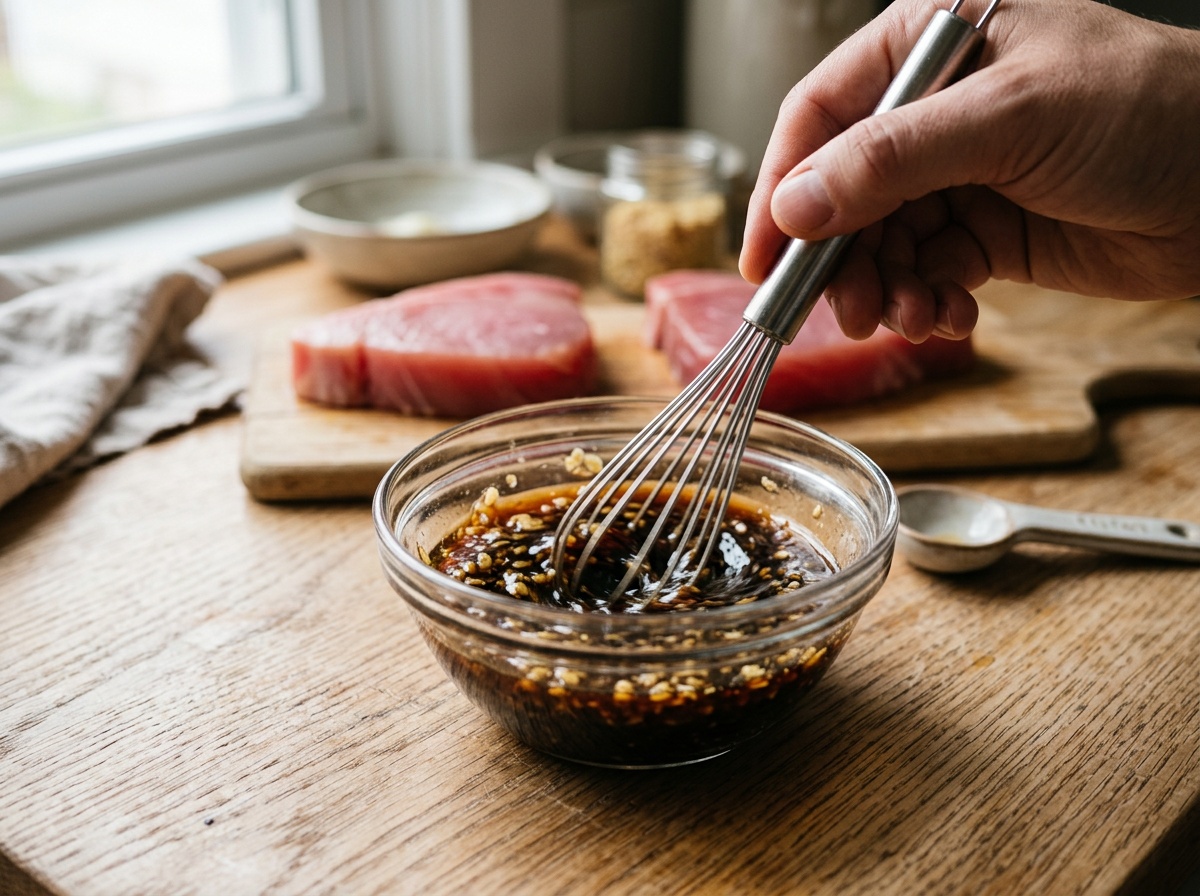
I begin by whisking together the soy sauce, toasted sesame oil, ginger, and garlic in a shallow dish wide enough to hold both tuna steaks. I pat the tuna dry with paper towels first because moisture is the enemy of a good sear—if the fish is wet, it will steam instead of crusting. I gently place the fish into the marinade, turning it once to coat, and let it sit for exactly 10 minutes at room temperature. This brief ahi tuna marinade adds depth without altering the delicate texture of the meat, ensuring a balanced flavor profile.
2Crust and Sear the Tuna
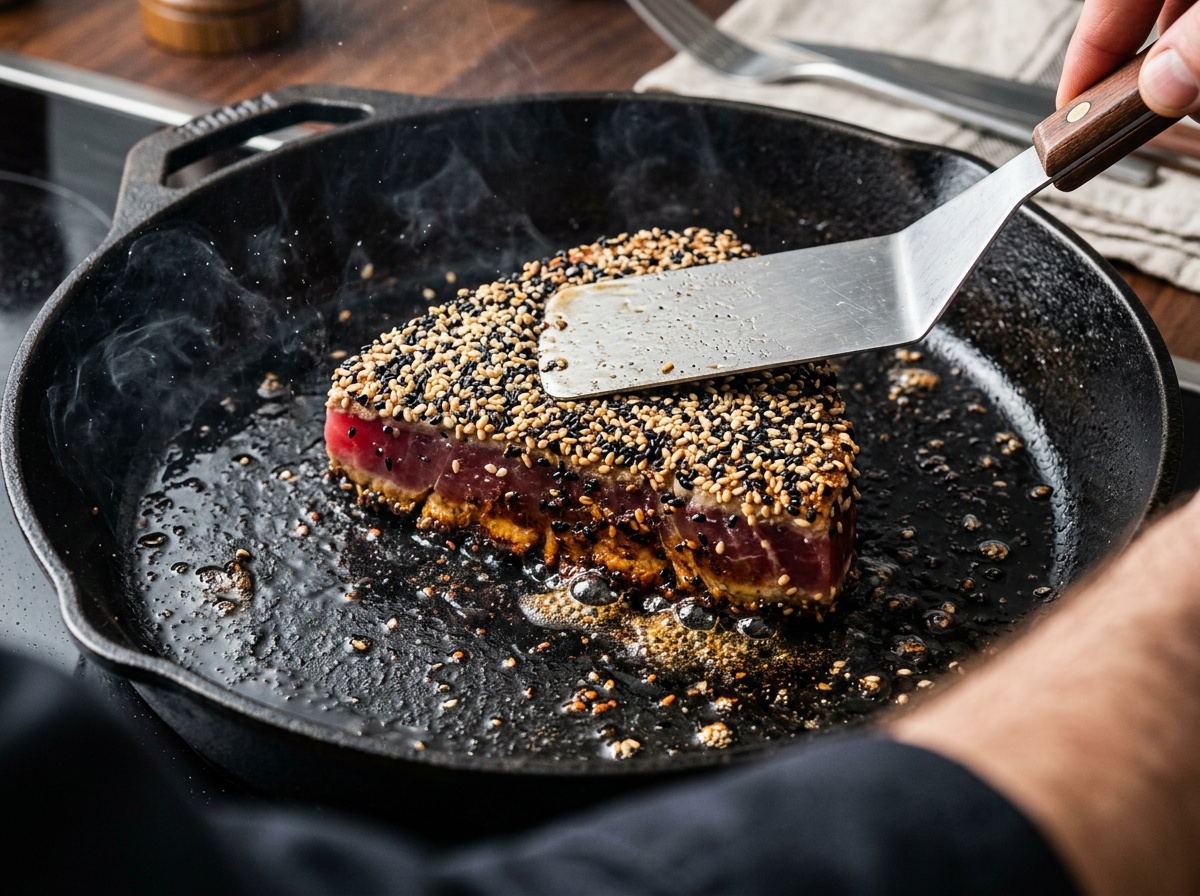
I pour the sesame seeds onto a small plate and press the sides of each tuna steak into the seeds until evenly coated, creating a sesame crusted tuna effect. I heat my cast-iron skillet over medium-high heat with the neutral oil until it starts to shimmer and just barely smoke. Searing this ahi tuna steak recipe requires your full attention, so I stay right by the stove. I place the steaks in the pan and sear for exactly 60 to 90 seconds per side, depending on the thickness, aiming for a deep golden-brown crust while the center remains cool.
3Slice and Serve Immediately
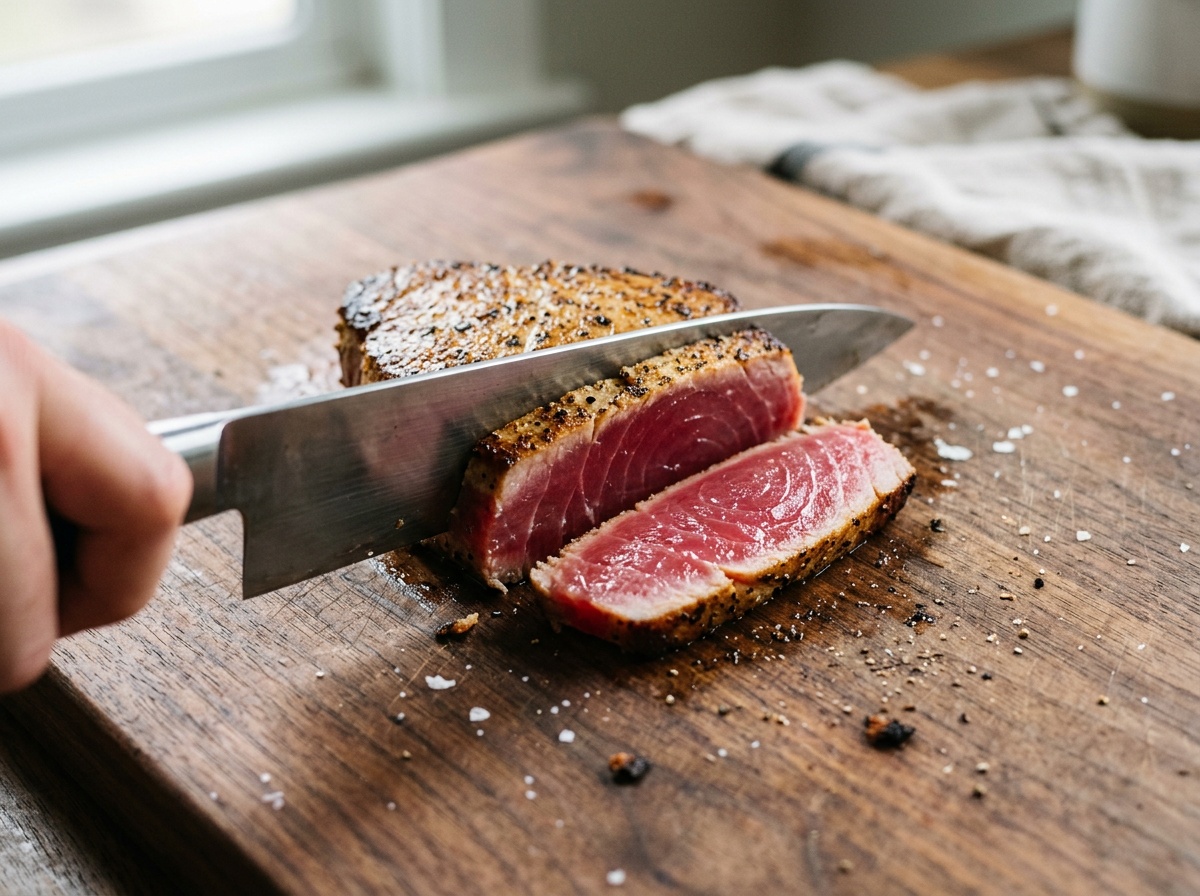
As soon as the sear is achieved, I remove the fish to a cutting board to rest for at least 2 minutes. I cannot stress enough how important this resting period is—it allows the juices to redistribute so they don’t bleed out when you slice. I use my sharpest slicing knife to cut the seared tuna against the grain into 1/2-inch thick slices. You should see a beautiful transition from the cooked outer ring to the vibrant raw interior. I serve these slices immediately while the crust is still warm and crisp, paired with a bit of soy sauce or spicy mayo.
Tips & Variations
The Right Pan Temperature: If the pan is too cold, the tuna will stick and overcook before it gets that crust. I test the heat by flicking a tiny drop of water into the skillet; if it dances and evaporates instantly, the pan is ready for the fish.
Don’t Overcrowd: I always cook the steaks one or two at a time depending on the size of my skillet. If you crowd the pan, the temperature drops rapidly, steaming the fish and turning it into a sad, grey slab instead of a beautiful, crusted sear.
Use a Sharp Knife: A dull knife will shred the fish rather than slicing it cleanly, which ruins the visual appeal. I sharpen my chef’s knife right before slicing the fish to ensure I get clean, effortless cuts that keep the rare center intact.
Storage and Leftovers: Honestly, this dish is best eaten the moment it is cooked. If you do have leftovers, keep them in an airtight container in the fridge for up to 24 hours, but treat it as cold sashimi rather than reheating it, as reheating will destroy the texture.
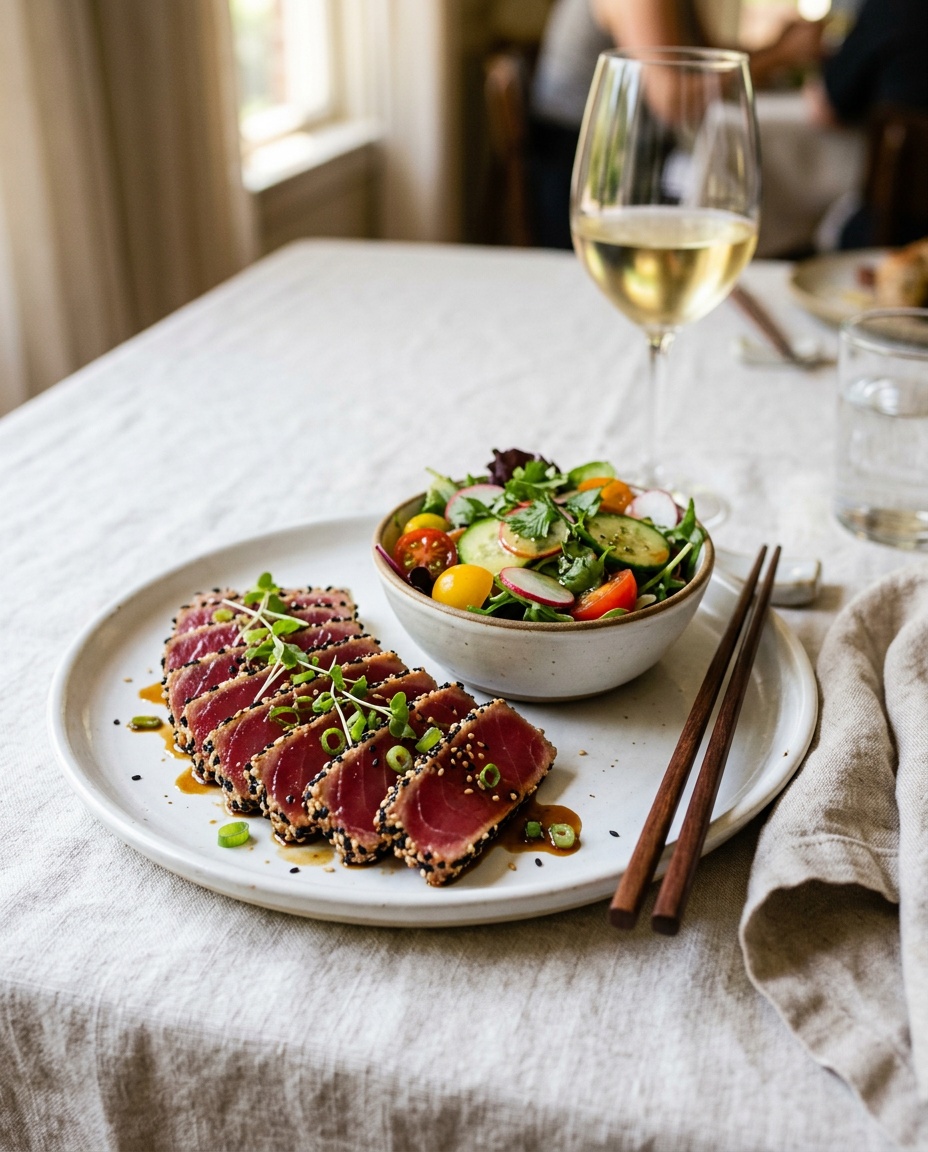
Sesame Seed Variety: I find that using a 50/50 mix of black and white sesame seeds makes the presentation look much more professional. The contrast against the red tuna and the golden-brown sear creates a visually stunning plate that looks like it came from a high-end kitchen.
Nutrition Information
Per serving (approximate values)
| Nutrient | Amount |
|---|---|
| Calories | 240 |
| Protein | 35g |
| Carbohydrates | 3g |
| Total Fat | 9g |
| Fiber | 1g |
| Sugar | 1g |
Frequently Asked Questions About Ahi Tuna Steak Recipe
Is this ahi tuna steak recipe safe for beginners to make?
▼
Yes, this ahi tuna steak recipe is actually very beginner-friendly because it requires so little active cooking time. The most important skill to master is controlling your heat, so make sure your pan is hot before adding the fish. As long as you have fresh, high-quality fish, you are setting yourself up for success.
How do I know if my fish is fresh enough for a rare tuna steak?
▼
When shopping, you should look for labels that specifically say ‘sushi grade’ or ‘sashimi grade.’ The fish should smell like the ocean, not fishy or sour, and the flesh should be firm with a deep, ruby-red color. If the fish is grey or brown on the edges, skip it, as it will not yield a good rare tuna steak.
Can I use frozen tuna for this recipe?
▼
Absolutely, as long as it is high-quality and vacuum-sealed for raw consumption. I recommend thawing the tuna slowly in the refrigerator for 24 hours rather than using a microwave, which will ruin the delicate structure of the meat. Pat it completely dry after thawing to ensure it sears properly.
What side dishes go well with seared tuna?
▼
I love serving seared tuna with sides that offer a textural contrast, like a crunchy cucumber salad with rice vinegar or some blanched bok choy with sesame oil. Since the tuna is rich and savory, lighter, acidic vegetables help cut through that richness and balance the meal perfectly.
How do I avoid getting smoke everywhere when cooking?
▼
The trick is to use an oil with a high smoke point, like avocado, grapeseed, or canola oil, rather than olive oil or butter. I also make sure my kitchen ventilation fan is on high before I even turn the stove burner on. Keeping the steaks cold until the last second also helps prevent the interior from cooking too fast.