Introduction
I remember the first time I realized that bigger isn’t always better when it comes to comfort food. My family was begging for a home-cooked dinner, but with just four of us, I didn’t want leftovers for days, so I set out to master a 1 lb meatloaf recipe. It took me a few attempts to get the ratio of breadcrumbs to beef just right without it turning into a dry, sad block of meat, but I eventually figured it out. There’s something so satisfying about pulling a perfectly formed loaf out of the oven, smelling that savory, caramelized aroma filling the kitchen.
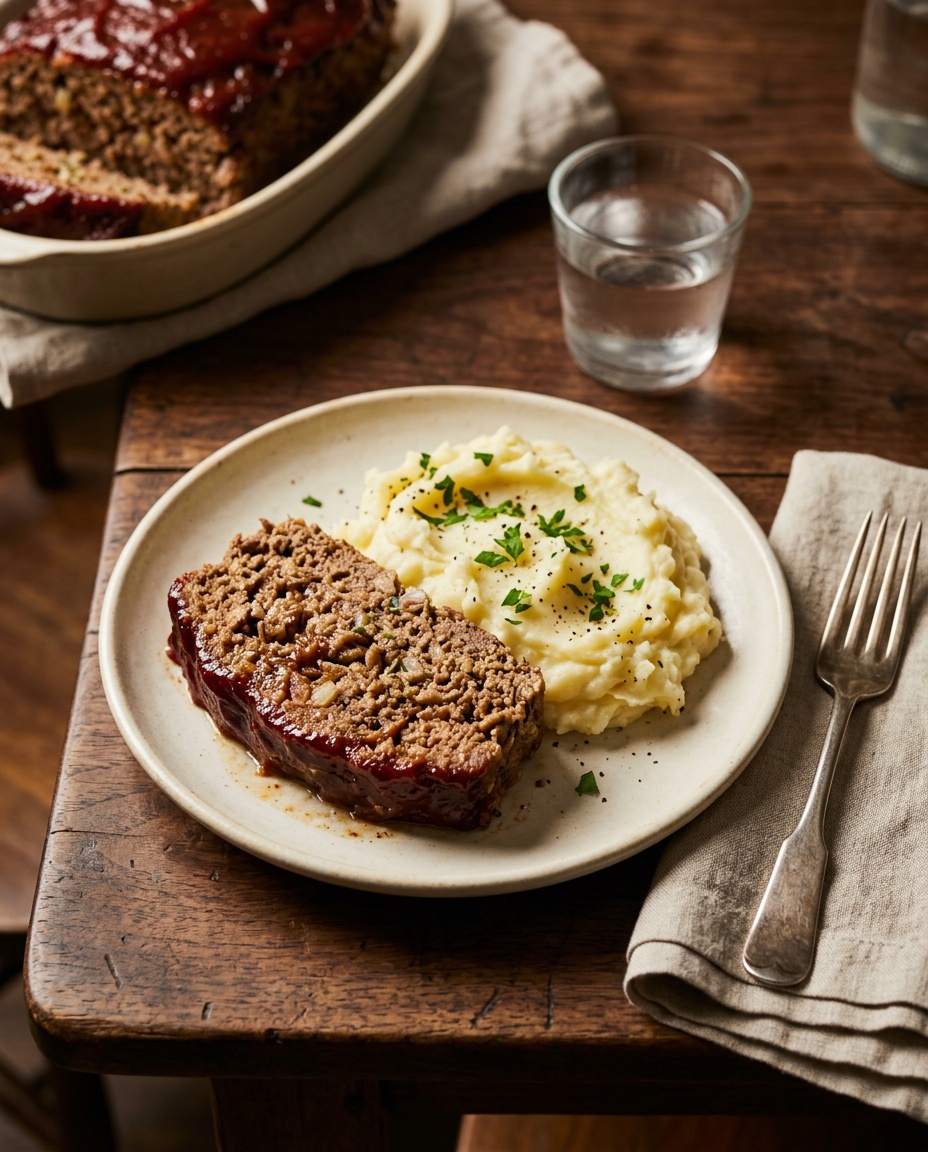
Since that first successful batch, this 1 lb meatloaf recipe is my absolute weeknight savior when I’m short on time. I’ve found that it pairs perfectly with mashed potatoes or a simple roasted vegetable, making it a reliable staple for busy Tuesdays. Unlike those massive loaves that take two hours to cook and often end up dense in the middle, this smaller size cooks relatively quickly and maintains a consistent texture throughout. It has become my favorite way to serve a classic ground beef dinner without the stress of managing a massive feast.
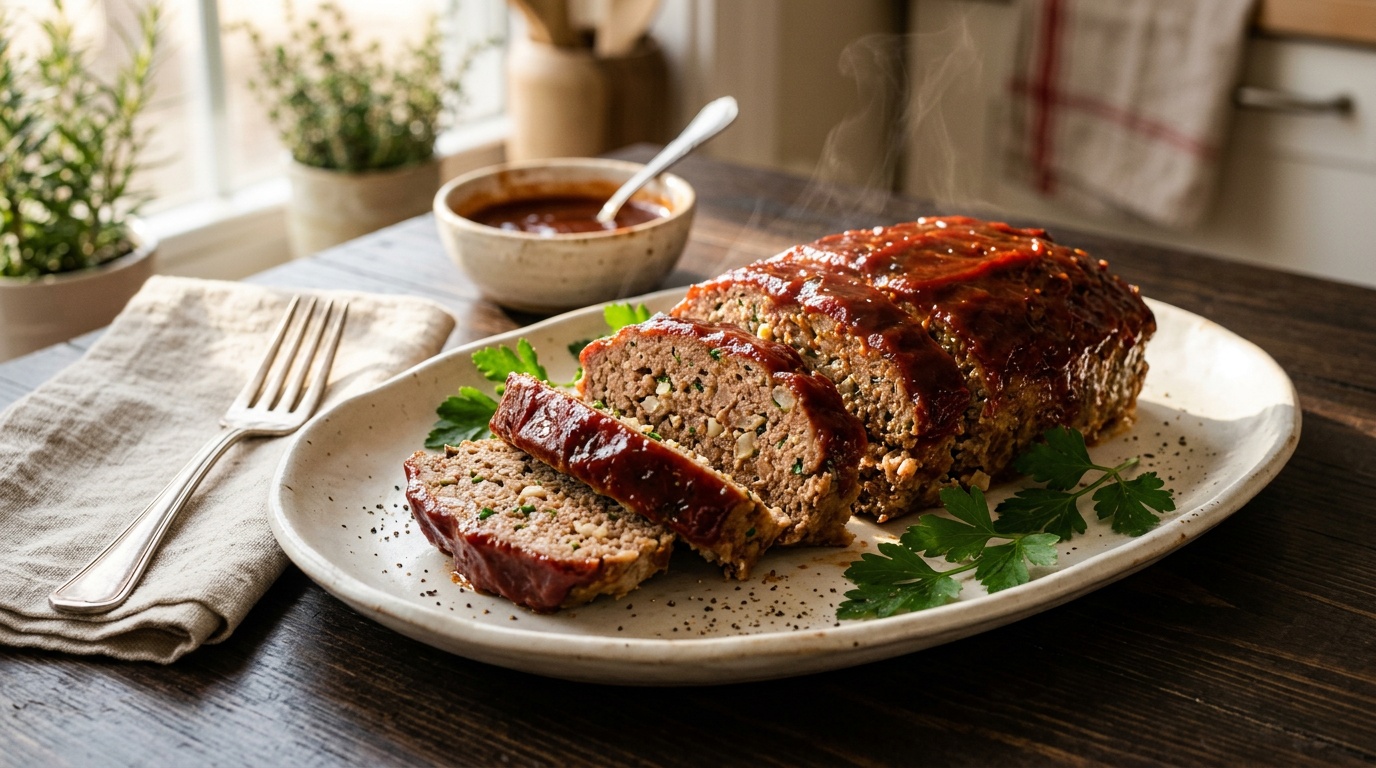
In this post, you’ll learn exactly how to balance your moisture levels so you never deal with dry edges again. I’ll show you how to mix the ingredients without overworking the meat, which is the biggest mistake I see most home cooks make. You’ll also learn the secret to a glaze that actually sticks and caramelizes rather than just sliding off the top. By the time this comes out of your oven, it should have a beautifully glossy, dark red crust and a tender, moist interior that holds its shape perfectly when sliced.
Why This Recipe Works
The Panade Technique: I always start by soaking my breadcrumbs in a splash of milk for a few minutes before mixing them into the meat. This mixture, called a panade, introduces extra moisture that would otherwise evaporate in the oven. It prevents the proteins in the ground beef from tightening up too much as they heat, which is how you get that classic meatloaf texture that is tender rather than dense or rubbery.
High-Heat Glaze Caramelization: Most glazes just sit on top, but I’ve found that applying half the glaze during the last 15 minutes of baking allows the sugars in the ketchup and brown sugar mixture to caramelize properly. This creates a sticky, savory crust that adheres to the meatloaf. It also ensures the sauce doesn’t burn, which can happen if you apply it right at the beginning of the cooking process.
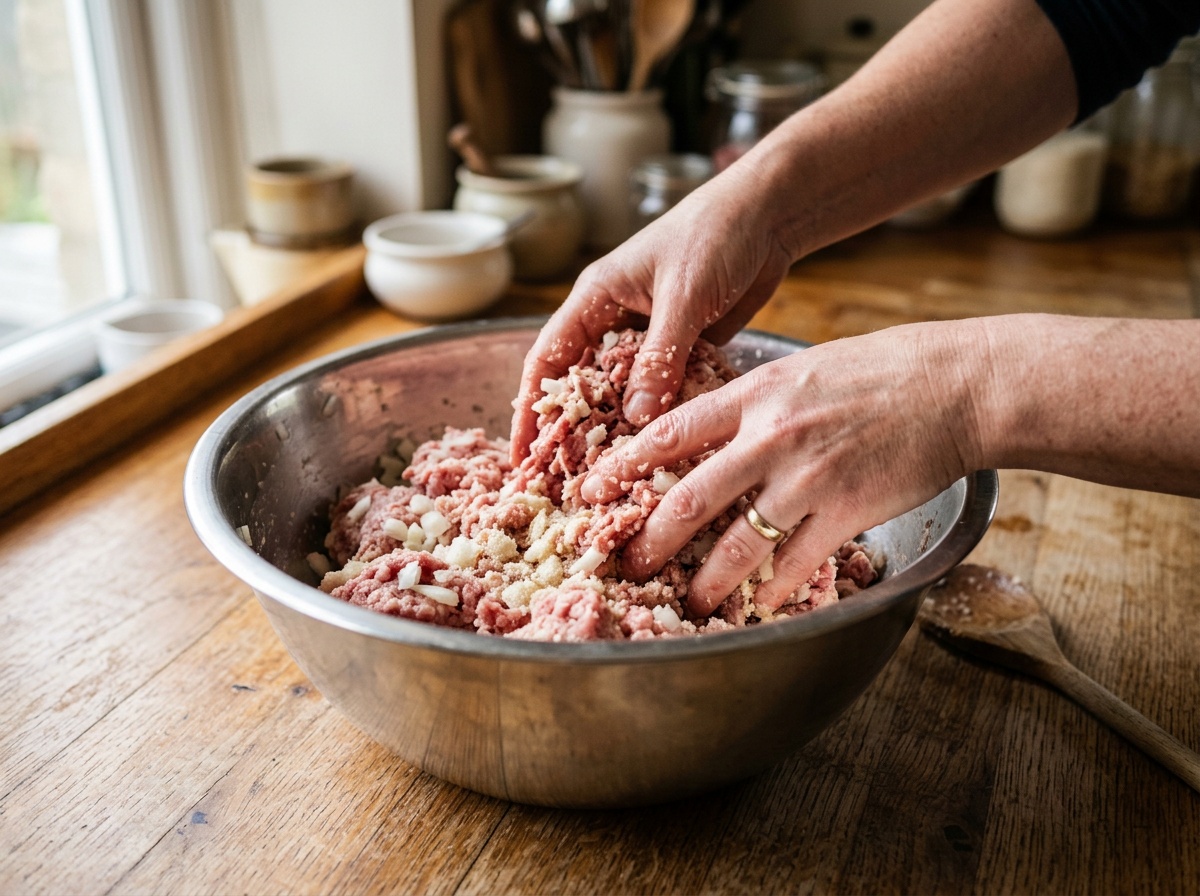
Avoiding Over-Mixing: When combining the beef with the aromatics and seasonings, I use my hands and mix just until the ingredients are distributed. Over-mixing the meat is the fastest way to get a tough, compact loaf, similar to how over-mixing pancake batter makes for chewy cakes. I stop immediately as soon as the onion and breadcrumbs are no longer visible, keeping the meat structure loose enough to remain juicy after baking.
Ingredients
For the Meatloaf
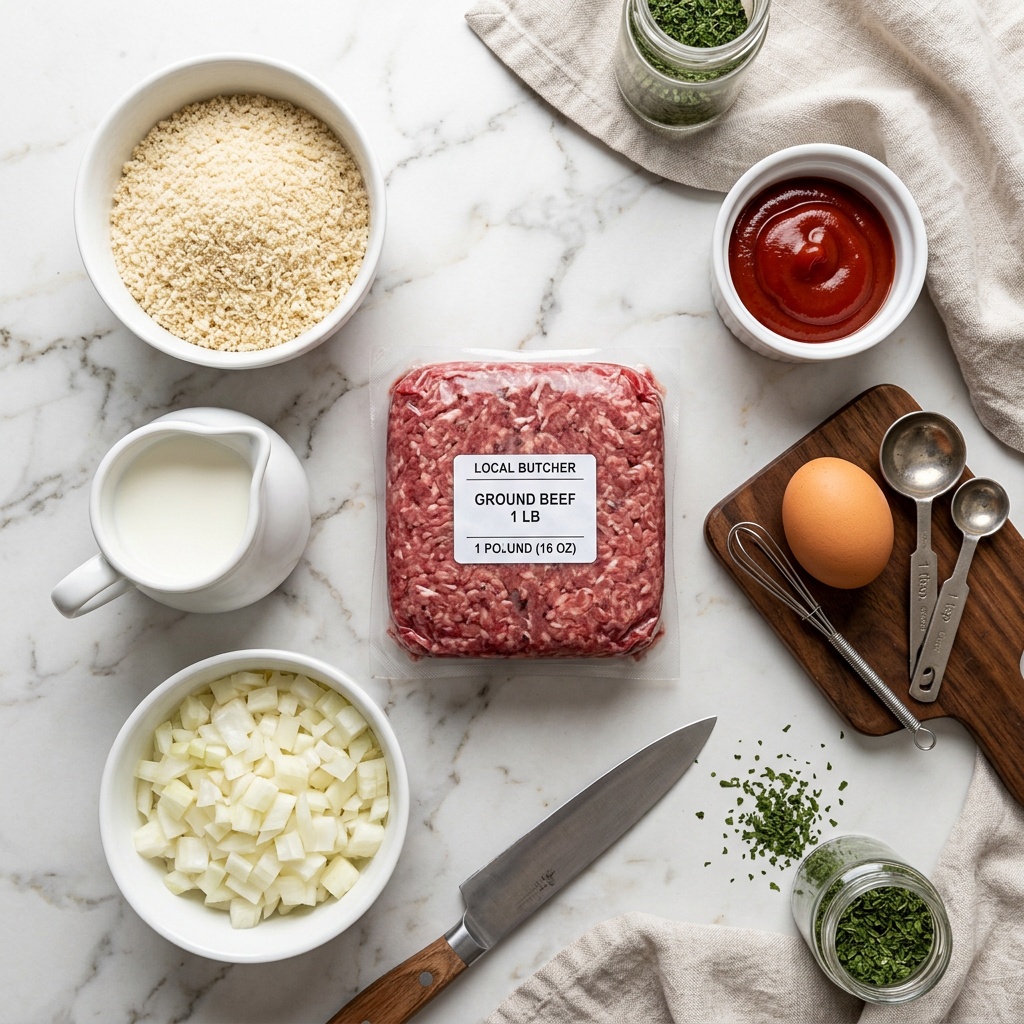
- 1 lb ground beef (80/20 lean-to-fat ratio recommended)
- 1/2 cup panko breadcrumbs (or regular dried breadcrumbs)
- 1/4 cup milk (whole milk works best)
- 1/2 cup onion (finely diced)
- 1 large egg (lightly beaten)
- 1 tsp salt
- 1/2 tsp black pepper (freshly ground)
- 1 tsp garlic powder
For the Glaze
- 1/3 cup ketchup
- 1 tbsp brown sugar (packed)
- 1 tsp apple cider vinegar
Instructions
1Prep the Base Mixture
When you are making this 1 lb meatloaf recipe, prep is everything. I start by preheating my oven to 375°F because a slightly higher heat helps the crust set without drying out the interior. In a small bowl, I combine the breadcrumbs and milk, letting them sit for about 5 minutes to fully hydrate — this is my trick for a moist finished product. In a large mixing bowl, I add the ground beef, finely diced onion, beaten egg, salt, pepper, and garlic powder, then I gently pour in the milk-soaked breadcrumbs. I use my hands to mix everything, being very careful to stop as soon as the onion is evenly distributed throughout the meat, usually about 30 seconds of gentle folding.
2Shape and Initial Bake
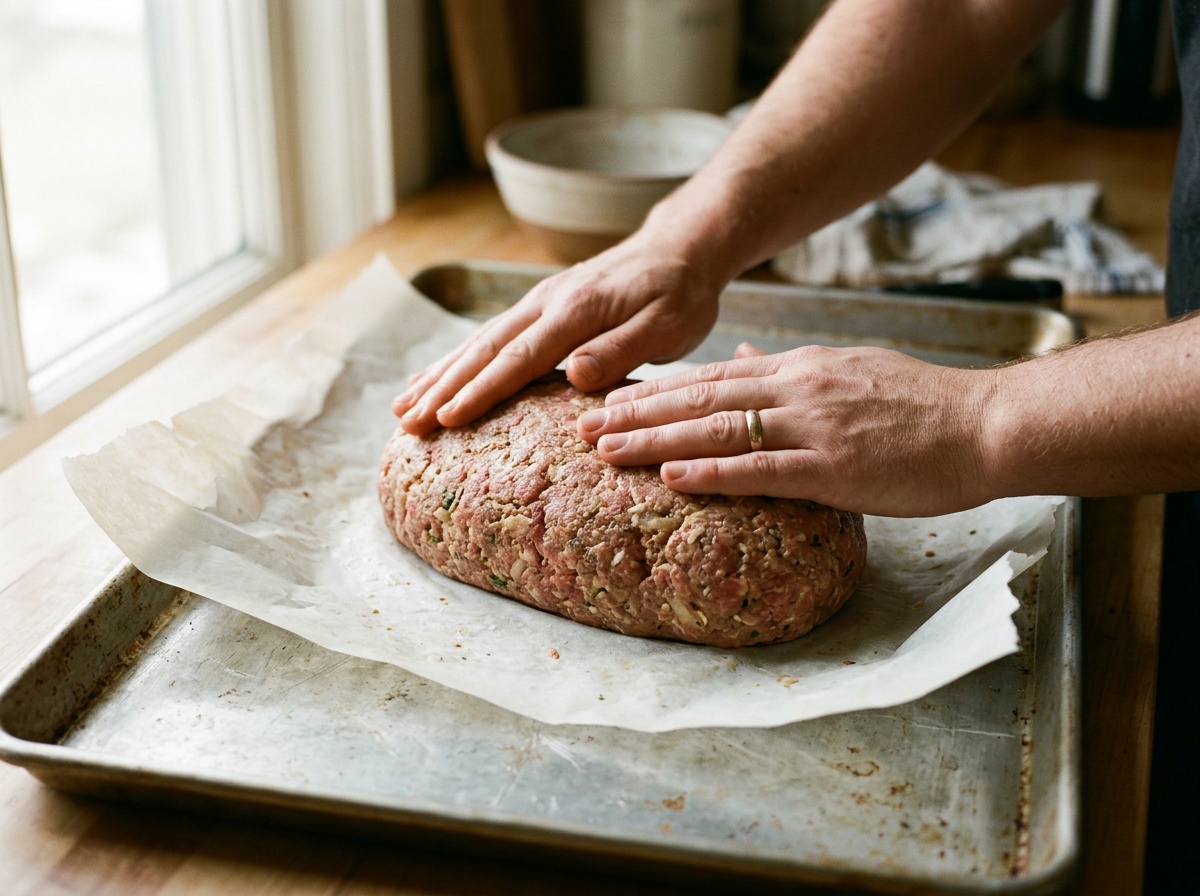
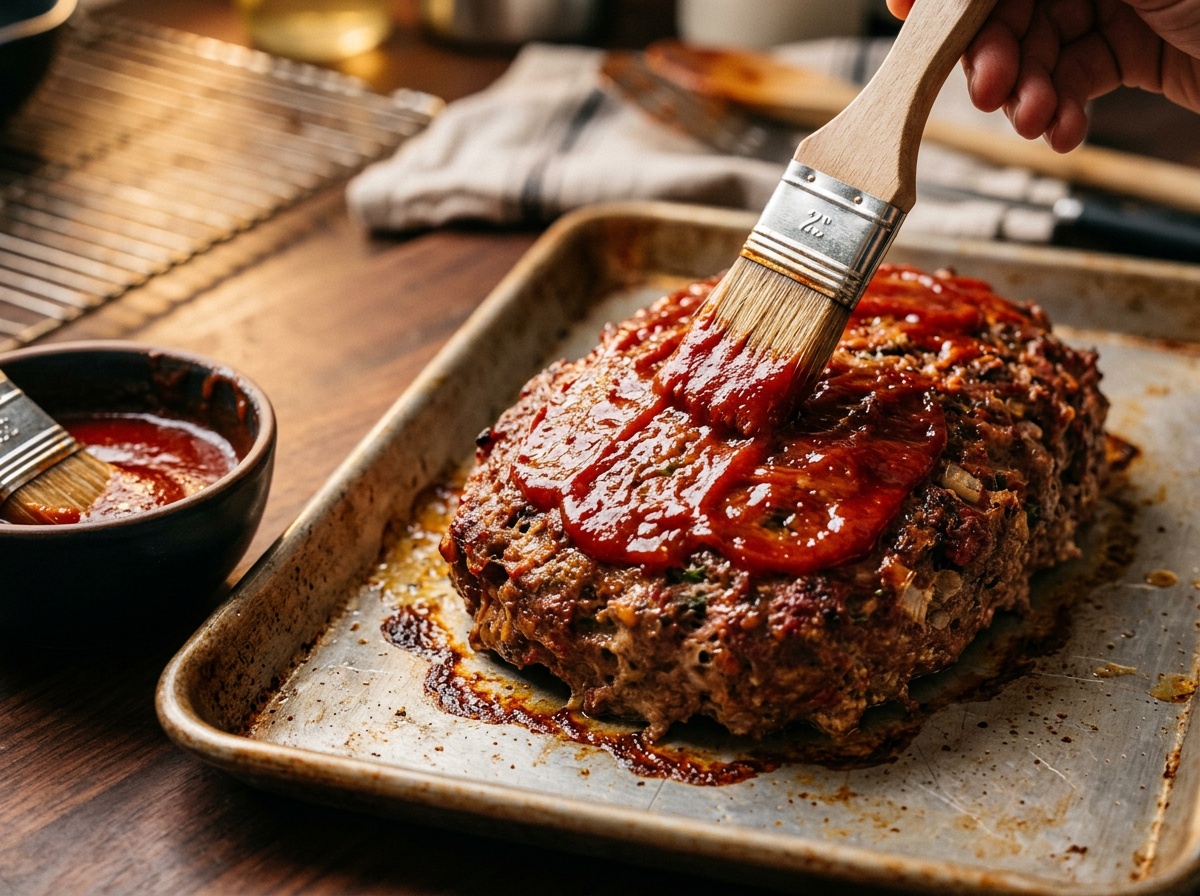
I take a parchment-lined baking sheet or a small loaf pan and turn the mixture out onto it. Using my hands, I shape the meat into a loaf, smoothing out any cracks on the surface so it cooks evenly. I place it in the center rack of the oven and bake for 30 minutes initially. While it bakes, I whisk together the ketchup, brown sugar, and apple cider vinegar in a small bowl until it’s completely smooth. This simple glaze adds a necessary tang that cuts through the richness of the beef. I check the oven after 30 minutes; the loaf should be firming up but nowhere near finished yet.
3Glaze and Finish
After that first 30 minutes, I carefully open the oven and brush about two-thirds of the glaze over the top and sides of the meatloaf. I return it to the oven for another 15-20 minutes, or until the internal temperature registers 160°F on a meat thermometer. You’ll see the glaze bubbling and darkening at the edges, which is exactly what you want for deep flavor. Once it’s done, I remove it from the oven and let it rest on the counter for at least 10 minutes before slicing. This resting period is non-negotiable; it lets the juices redistribute back into the meat rather than running out onto the cutting board, ensuring every slice stays juicy.
Tips & Variations
Watch the Fat Ratio: I always use 80/20 ground beef for this. The extra fat content is what keeps the loaf moist; if you use extra-lean beef, the meatloaf will likely turn out dry and crumbly, even if you follow the other steps perfectly.
Don’t Skimp on the Rest: I know it’s tempting to slice into it the second it comes out of the oven, but wait at least 10 minutes. If you cut it too soon, the proteins haven’t relaxed, and the whole loaf will fall apart into a pile of loose meat.
Storage and Leftovers: If you have leftovers, store them in an airtight container in the fridge for up to 3 days. To reheat, I prefer slicing it and pan-searing it in a little butter—it makes the edges crispy and tastes even better than the first night.
The Glaze Texture: If your glaze seems too thin, whisk in an extra teaspoon of brown sugar. You want a consistency that coats the back of a spoon; if it’s too runny, it will just pool at the bottom of the pan instead of staying on the loaf.
Easy Pan Cleanup: I always line my pan with parchment paper. Not only does it make cleanup a breeze, but it also allows me to lift the meatloaf easily off the pan without it tearing or sticking to the bottom.
Nutrition Information
Per serving (approximate values)
| Nutrient | Amount |
|---|---|
| Calories | 310 |
| Protein | 22g |
| Carbohydrates | 14g |
| Total Fat | 18g |
| Fiber | 1g |
| Sugar | 8g |
Frequently Asked Questions About 1 lb meatloaf recipe
Can a 1 lb meatloaf recipe feed a family of four?
▼
Yes, a 1 lb meatloaf recipe is perfectly portioned to feed a family of four when served with two standard sides, like mashed potatoes and green beans. Each person gets a hearty slice, which is usually enough for a standard dinner. If you have teenagers or very hungry eaters, you might consider doubling the ingredients to make two loaves.
How do I ensure my meatloaf doesn’t turn out dry?
▼
The secret to a moist meatloaf is using a mix of higher-fat beef (80/20) and not over-mixing the meat. Additionally, the panade—the milk and breadcrumb mixture—adds significant moisture that holds up during the baking process. Always use a meat thermometer to ensure you pull the loaf out at exactly 160°F so it doesn’t overcook.
Can I make this meatloaf ahead of time?
▼
You absolutely can. You can assemble the loaf, cover it tightly with plastic wrap, and keep it in the refrigerator for up to 24 hours before baking. When you are ready to cook, just uncover it and bake according to the recipe instructions; you might need to add 5 extra minutes of baking time since it starts cold.
What is the best substitute for breadcrumbs?
▼
If you are out of breadcrumbs, you can crush up plain crackers or even use quick-cooking oats. If you use oats, let them soak in the milk for an extra 5 minutes so they soften up properly. The texture will be slightly heartier and chewier, but it will still hold the meat together just as well as traditional breadcrumbs.
Is it better to use a loaf pan or a baking sheet?
▼
I prefer using a baking sheet lined with parchment paper because it allows the heat to circulate around the entire loaf, creating a nice crust on the sides. If you use a loaf pan, the meat tends to steam in its own juices and fat, which can result in a softer texture and a greasier product that doesn’t hold its shape as well when sliced.