Introduction
When I first started looking for reliable ahi tuna steak recipes, I was genuinely intimidated by the idea of buying expensive, raw fish only to potentially ruin it on my stovetop. I remember standing in the fish market, clutching a single block of deep red tuna, nervous that I’d overcook it into something resembling a hockey puck rather than the buttery, melt-in-your-mouth steak I’d had at my favorite local sushi spot. After a few failed attempts that were either too gray inside or raw on the outside, I finally settled on a method that consistently delivers that restaurant-style sear without the stress.
I keep coming back to this specific approach because it requires minimal effort but looks incredibly impressive on the plate. It is my go-to meal when I want something that feels fancy but actually takes less than ten minutes to prepare from start to finish. Unlike traditional pan-seared fish that might require a long resting period or complex sauce, this tuna thrives on speed and simplicity, making it perfect for a weeknight when I’m short on time but craving something fresh and light.
In this guide, I’ll walk you through how to properly prep the fish, how to handle the high heat required for searing, and exactly when to pull the steak from the pan. I’ve learned that the secret really lies in the temperature of the skillet and ensuring the surface of the fish is bone-dry before it touches the oil. By following these steps, you can expect a beautiful, golden-brown crust and a cool, vibrant pink center every single time you cook it.
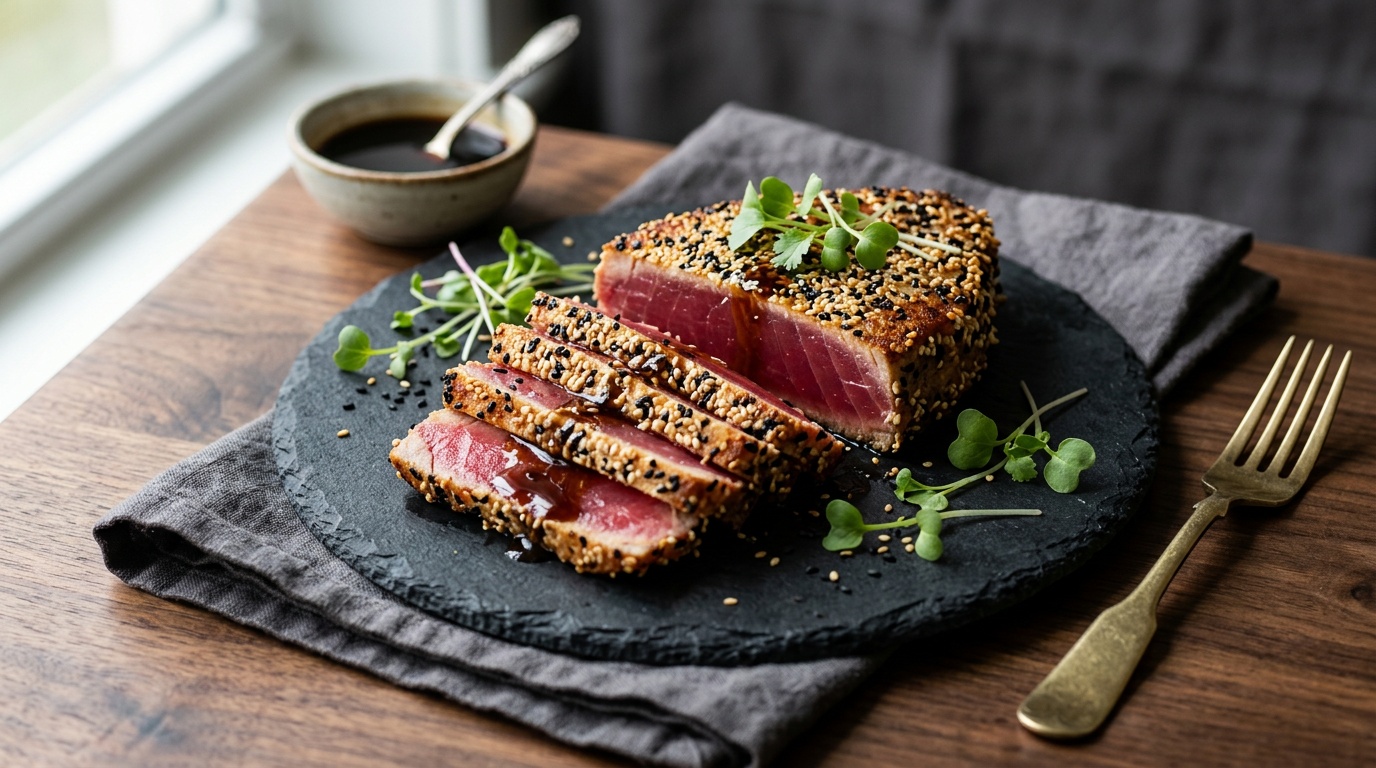
Why This Recipe Works
High-Heat Searing Technique: The Maillard reaction is responsible for that savory, caramelized crust we look for in good ahi tuna steak recipes. By heating the skillet until the oil is just beginning to smoke, we ensure the exterior browns in under 90 seconds, which preserves the cool, raw center. If the pan isn’t hot enough, the fish will steam rather than sear, resulting in a gray, rubbery texture that ruins the experience.
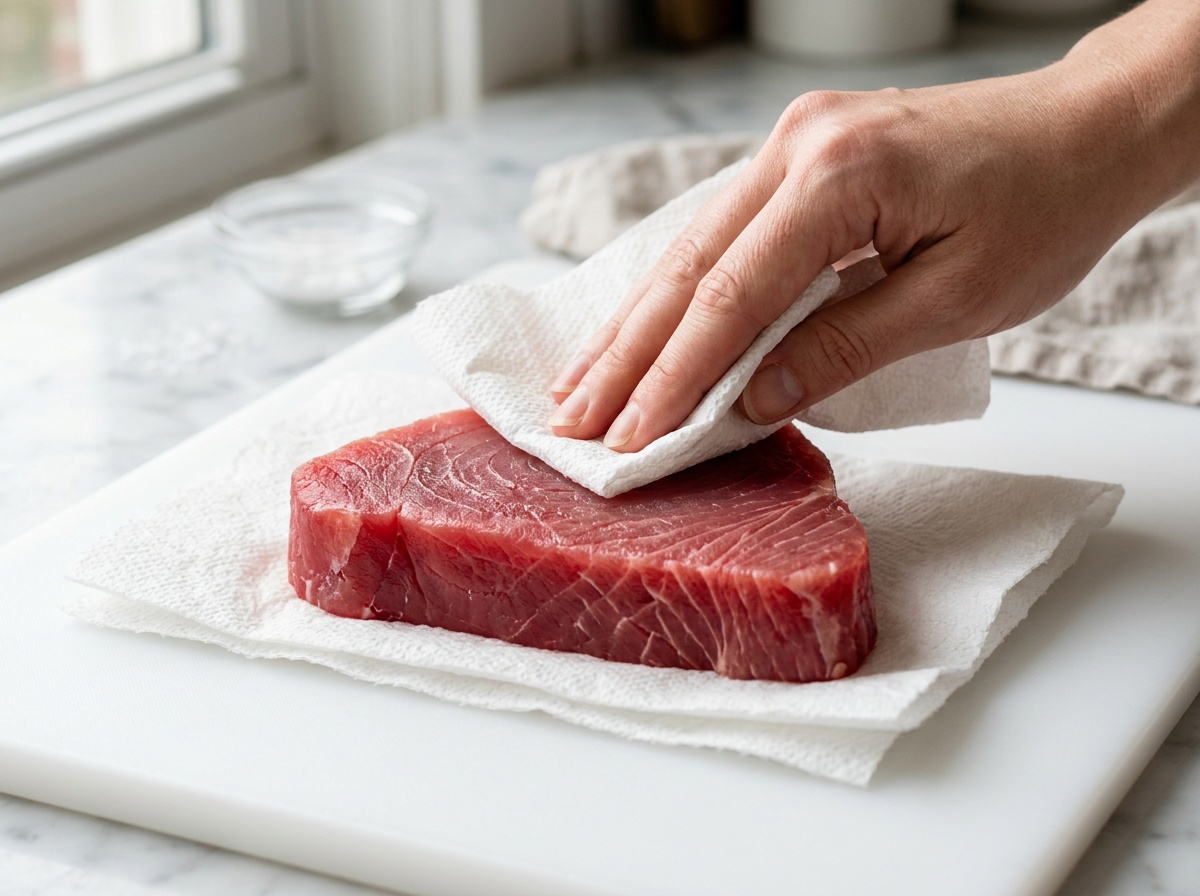
Surface Moisture Control: I’ve found that the biggest mistake people make is not patting the fish dry with paper towels before seasoning. Surface moisture creates steam in the pan, which prevents the crust from forming properly and can cause the sesame seeds to fall off. Using a dry surface ensures the seasoning adheres directly to the flesh, creating a tighter bond and a more intense flavor in every single bite.
Sesame Crust Barrier: Adding a layer of sesame seeds acts as a protective shield for the delicate tuna flesh during the searing process. This barrier prevents the direct heat of the cast-iron skillet from overcooking the outer layer of the fish too quickly. It also provides a satisfying crunch that contrasts beautifully with the tender, buttery texture of the interior.
Ingredients
The Tuna
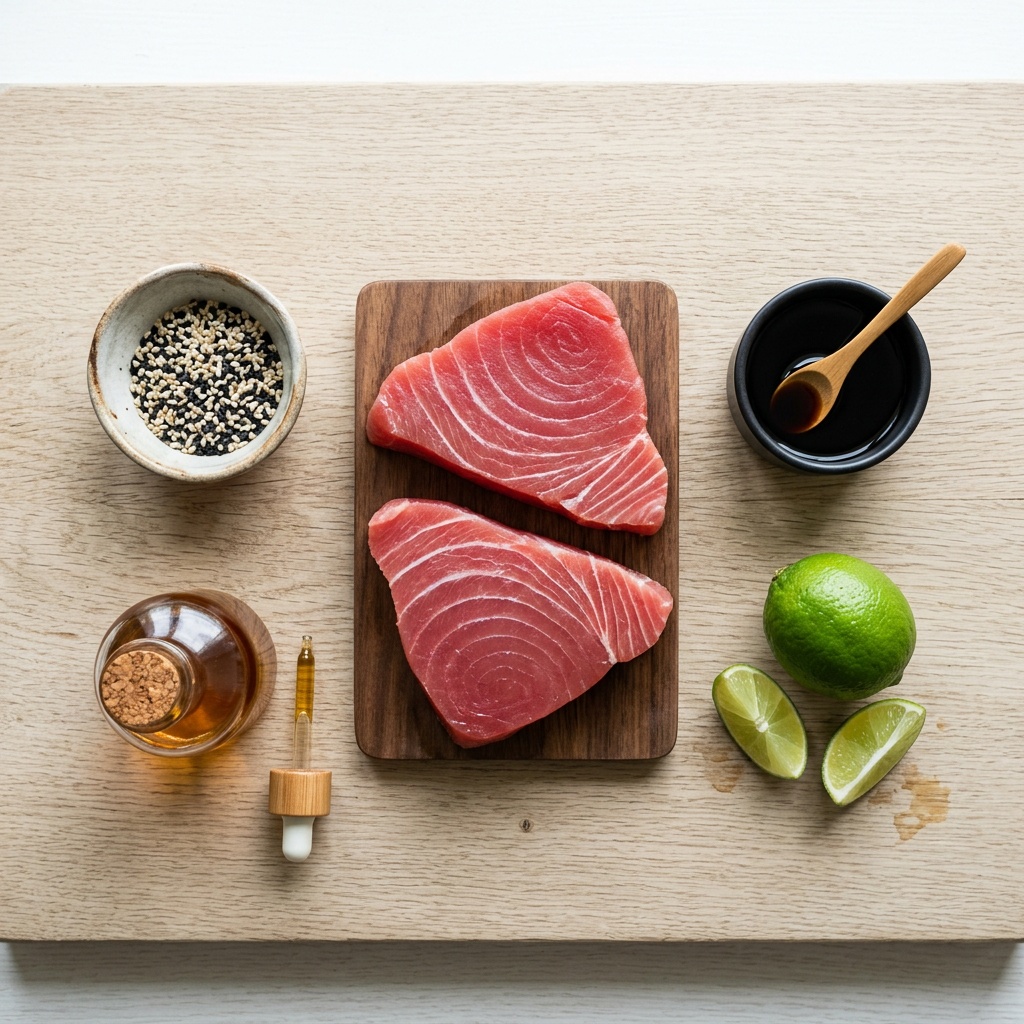
- 2 steaks sushi grade tuna (about 1-inch thick)
- 1/2 cup sesame seeds (mix of black and white)
- 1 tbsp avocado oil (high smoke point)
Seasoning & Marinade
- 2 tbsp soy sauce (or tamari for gluten-free)
- 1 tsp toasted sesame oil
- 1/4 tsp kosher salt
Instructions
1Season and Coat the Tuna
I start by taking my tuna steaks out of the refrigerator about 15 minutes before I plan to cook them, so they aren’t ice-cold in the center. I pat them completely dry with paper towels, which is the most critical step for getting a good sear. I brush each steak lightly with the soy sauce and toasted sesame oil, then sprinkle just a pinch of salt on all sides. I pour the sesame seeds onto a shallow plate, then press each side of the tuna into the seeds until they are evenly coated, including the edges. I use my hands to gently press the seeds into the fish so they don’t fall off in the pan.
2The Hard Sear
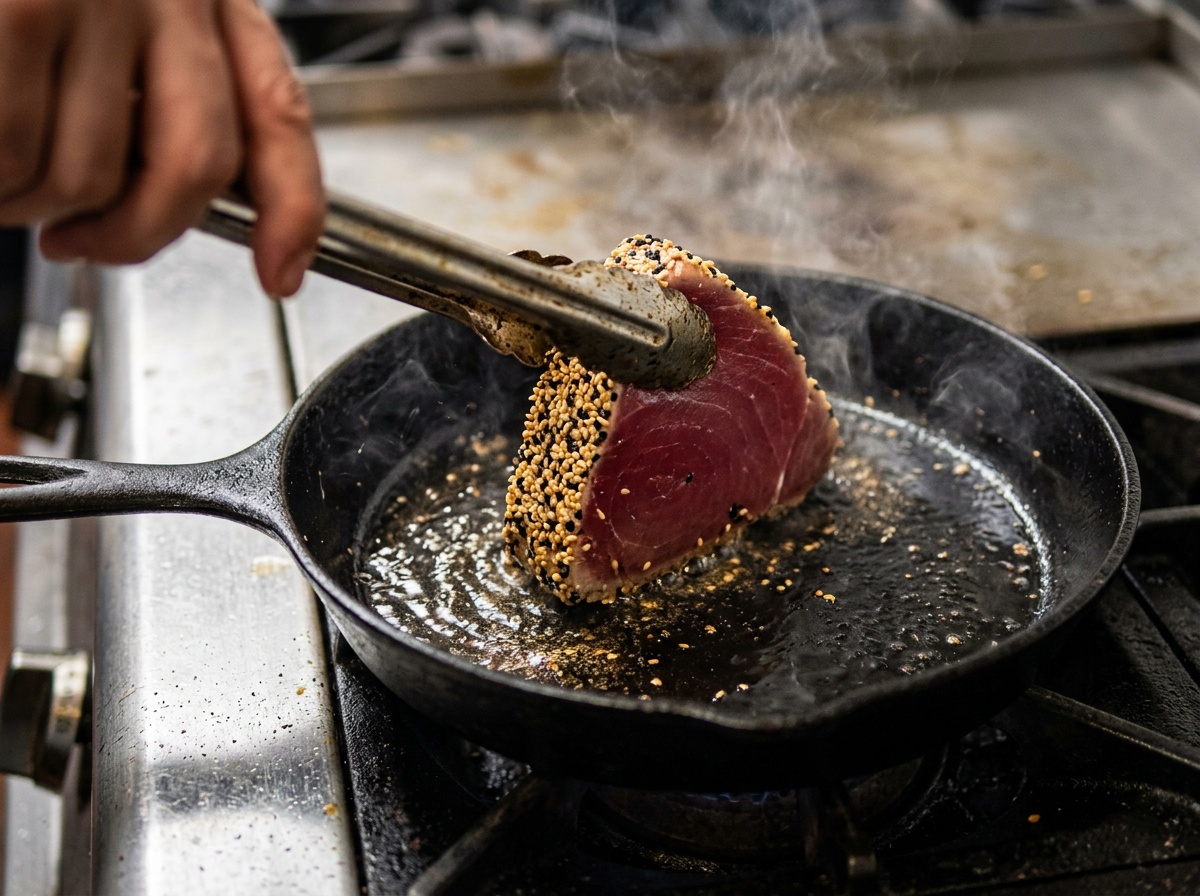
I place my heavy cast-iron skillet over high heat and let it get hot for about 3-4 minutes. I know it’s ready when the avocado oil shimmers and just barely begins to smoke. I carefully lay the steaks into the pan, ensuring they don’t touch each other. When preparing ahi tuna steak recipes, the goal is speed: I sear the first side for exactly 60 to 90 seconds. You are looking for the sesame seeds to turn golden brown and the edges of the tuna to turn opaque about 1/4 inch up the side. I flip them carefully with metal tongs, searing the other side for another 60 seconds.
3Rest and Slice
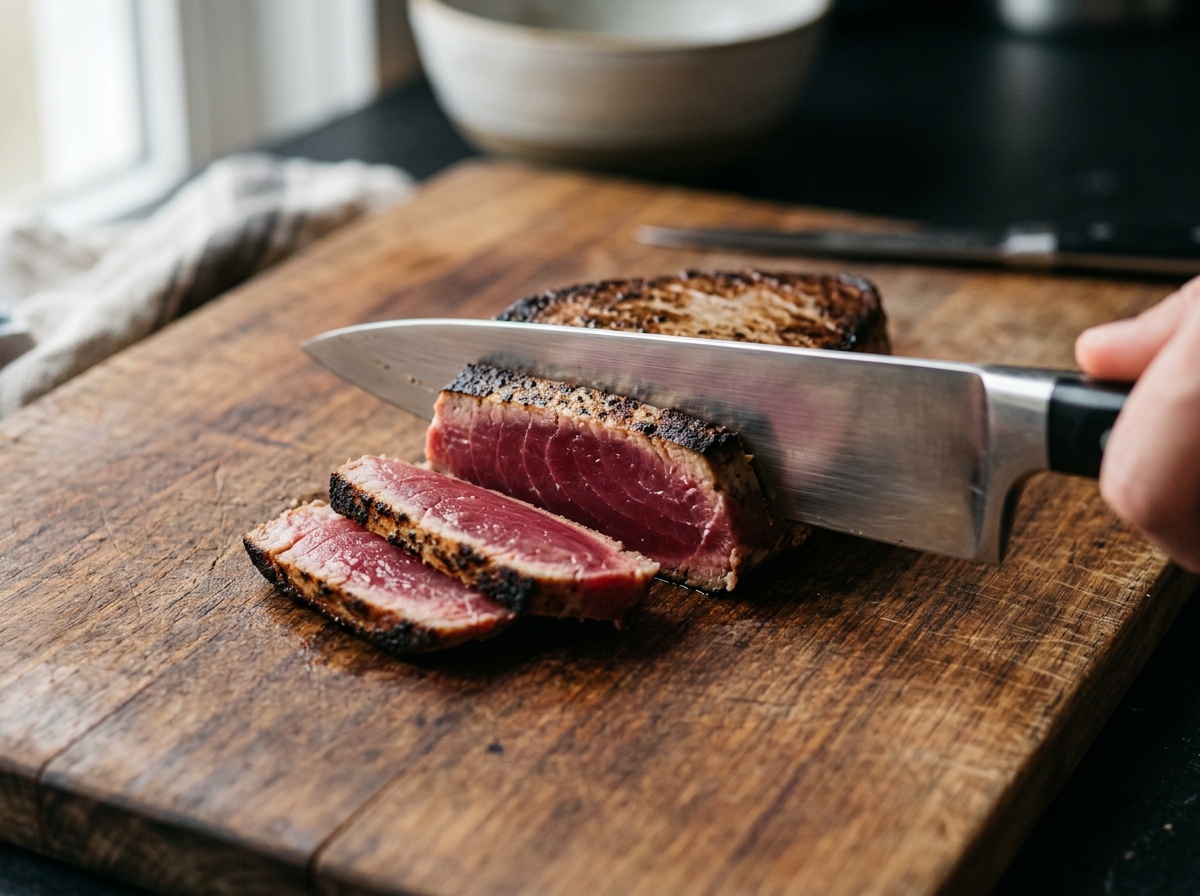
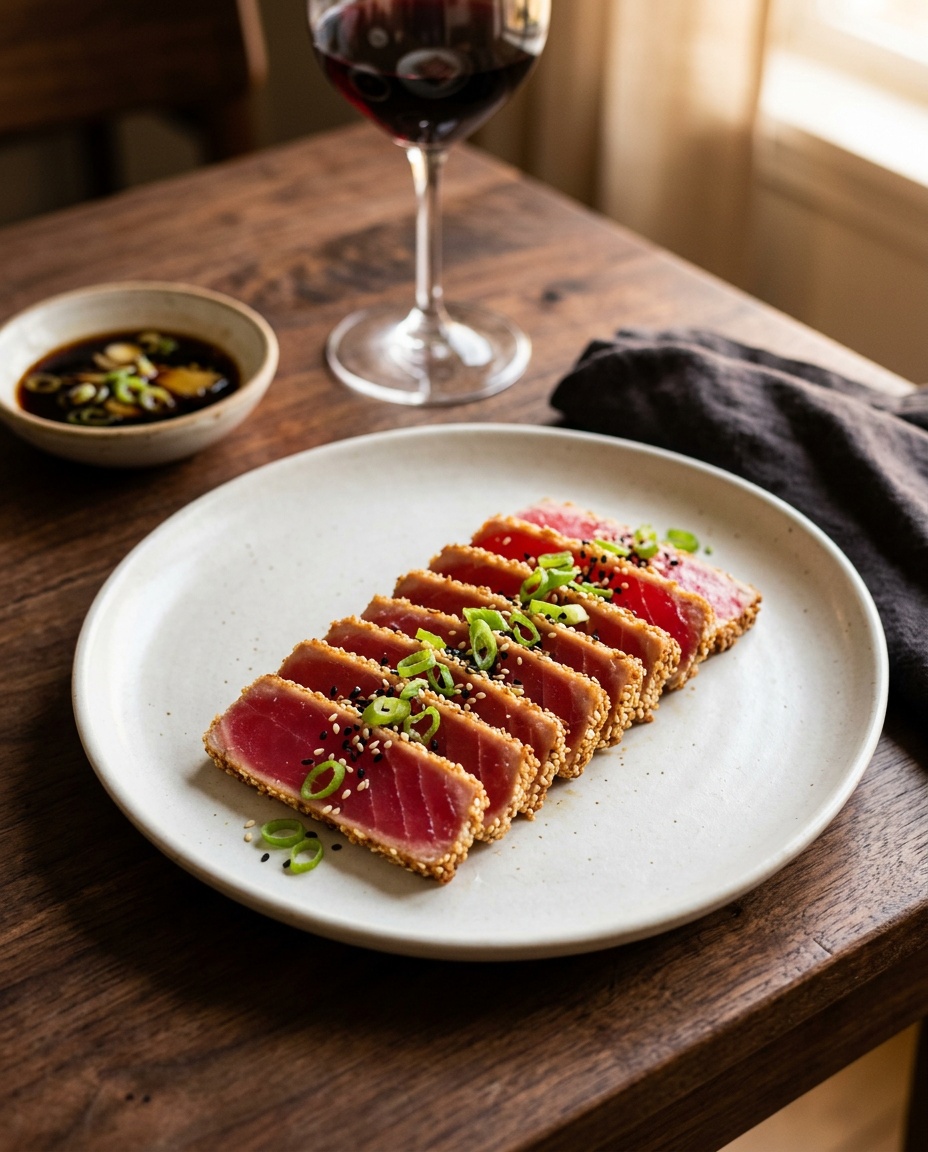
Once the searing is finished, I remove the steaks from the pan immediately and set them on a cutting board to rest for at least 3 minutes. This rest is necessary because it allows the internal temperature to stabilize, ensuring the tuna remains tender throughout. I use my sharpest chef’s knife to slice the tuna against the grain into 1/2-inch thick slices. A dull knife will drag the fish and ruin the texture, so I make sure to wipe the blade clean between slices. The result should be a dark, crunchy exterior with a vibrant, raw red center that melts in your mouth when you serve it.
Tips & Variations
Buying Sushi Grade: Always ask your fishmonger for ‘sushi grade’ or ‘sashimi grade’ tuna to ensure it’s safe to eat rare. If the fish smells ‘fishy’ or sour, skip it; fresh, high-quality tuna should have a mild, clean, ocean-like scent.
Choosing the Right Pan: I highly recommend using a cast-iron skillet or a heavy-bottomed stainless steel pan for these recipes. Non-stick pans often cannot handle the high heat required for a proper sear, and you won’t get that deep, crispy crust on the sesame seeds.
Avoid Overcrowding: If you are cooking for more than two people, cook the tuna in batches rather than cramming them all into one pan. Crowding the pan lowers the temperature too quickly, which results in steaming the fish rather than searing it.
Use Avocado Oil: Olive oil has too low of a smoke point and will burn and taste bitter at the high temperatures needed here. Avocado oil is my preference, but grapeseed oil or refined coconut oil are great alternatives that handle high heat.
Serving Suggestions: I love serving this alongside a simple cucumber salad dressed with rice vinegar and chili oil. The acid and crunch of the salad balance the richness of the tuna perfectly, making it a light but satisfying meal.
Nutrition Information
Per serving (approximate values)
| Nutrient | Amount |
|---|---|
| Calories | 290 |
| Protein | 38g |
| Carbohydrates | 5g |
| Total Fat | 13g |
| Fiber | 2g |
| Sugar | 1g |
Frequently Asked Questions About ahi tuna steak recipes
What is the secret to successful ahi tuna steak recipes?
▼
The secret to the best ahi tuna steak recipes is heat management and moisture control. You must ensure your pan is screaming hot before adding the fish, and you absolutely must pat the tuna completely dry with paper towels first. This prevents the fish from steaming, ensuring you get a perfect crust while keeping the interior cool and raw.
How do I know if my seared tuna is done?
▼
Visually, you know it is done when the sesame seed coating is golden brown and crispy. If you look at the side of the steak, the cooked, opaque layer should only extend about 1/4 inch into the fish from the top and bottom. The center should remain a vibrant, raw red color to ensure the best texture.
Can I store leftover tuna for later?
▼
Honestly, seared tuna is best eaten immediately while the crust is still crunchy. If you have leftovers, store them in an airtight container in the refrigerator for no more than one day. Note that the texture will change and the fish will not be as fresh, so I generally don’t recommend reheating it.
What is a good substitute for sesame seeds if I have an allergy?
▼
If you cannot use sesame seeds, you can coat the tuna in crushed black peppercorns or even finely chopped fresh herbs like cilantro or parsley. These will provide a similar texture and flavor profile without the allergen. Simply press the crushed pepper or herbs into the fish just like you would with the seeds.
Does the type of pan matter when cooking ahi tuna?
▼
Yes, the type of pan matters significantly for temperature retention. I recommend a cast-iron skillet because it holds heat extremely well, allowing the tuna to sear instantly upon contact. Avoid thin non-stick pans as they lose heat the moment the cold fish touches the surface, which causes the tuna to cook through and become tough.