Introduction
I remember when I first codified my personal au poivre steak recipe after visiting a small bistro in Lyon. I spent the entire meal trying to distinguish the notes in the sauce and how they managed to get that peppercorn crust to adhere so perfectly to the meat without burning. I sat there with my notebook, trying to capture the aroma of the cognac reduction hitting the hot pan, and I knew I had to recreate that intensity in my own kitchen as soon as I got home.
Since then, this dish has become my go-to for anniversaries or whenever I want a meal that feels intentional but doesn’t require a restaurant reservation. I have found that while it looks fancy, the process is straightforward once you understand how to manage your heat. It is a hearty, sophisticated dinner that pairs just as well with a quiet Tuesday night as it does a celebratory weekend. Unlike a standard grilled steak, the sauce here provides a dimension of flavor that balances the spice of the peppercorns perfectly.
In this post, I am going to walk you through the specific techniques I have learned to get the crust right every time. You will learn how to properly crush your spices, manage the heat in your cast iron skillet so the butter doesn’t break, and build a sauce that coats the back of a spoon. I have made plenty of mistakes with this dish—mostly burning the pepper or separating the sauce—and I will share exactly how to avoid those pitfalls so your final plate looks and tastes like a professional chef prepared it.
Why This Recipe Works
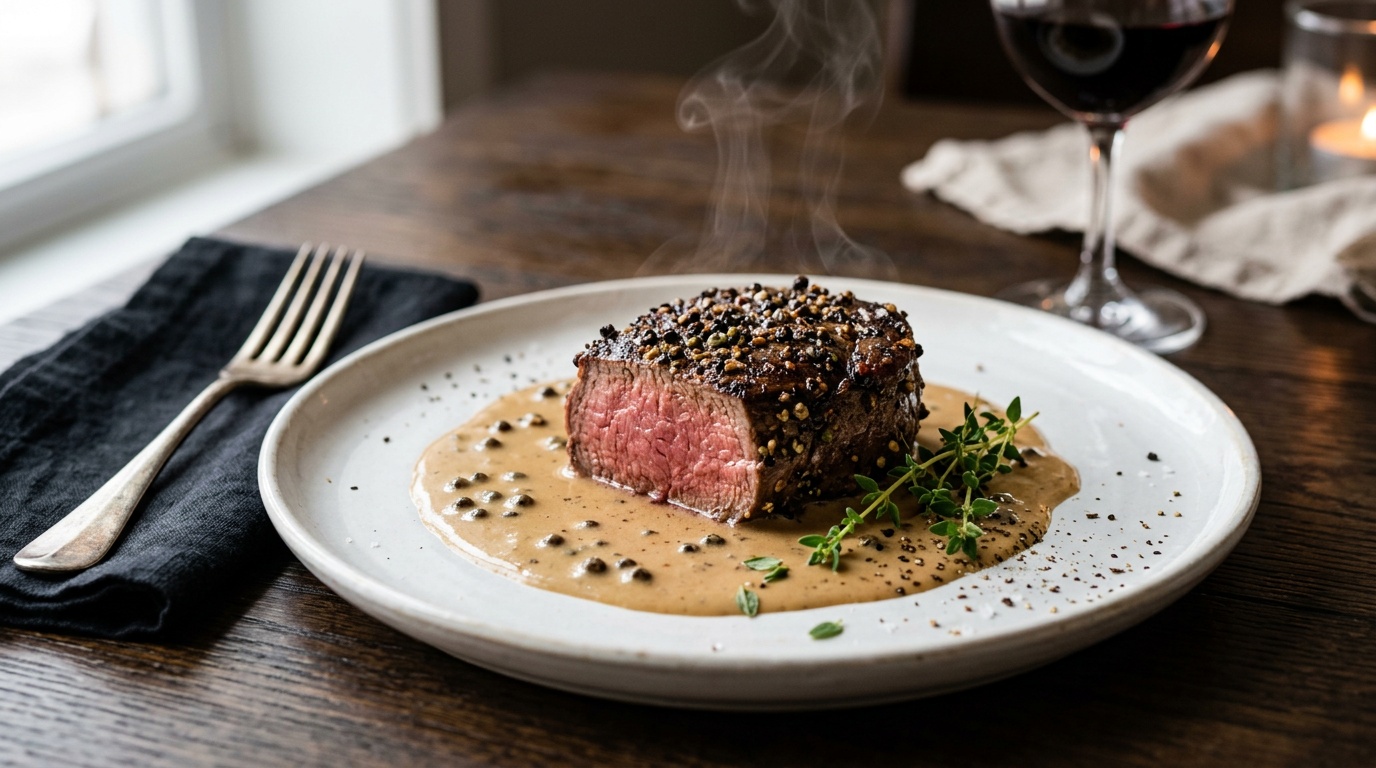
The Peppercorn Crust: Using coarsely cracked peppercorns rather than pre-ground powder is the secret to this au poivre steak recipe. When you press the meat into freshly crushed berries, they provide a sharp, pungent contrast to the rich fat of the beef. This physical texture creates a barrier that sears into a crust, sealing in the juices while the heat mellows the raw bite of the spice.
Cast Iron Heat Retention: I exclusively use a cast iron skillet for this task because of its superior heat retention. When you drop a room-temperature steak into a hot, preheated pan, the iron maintains that temperature, ensuring a consistent sear across the entire surface. This prevents the steak from steaming in its own juices, allowing the crust to develop properly.
Deglazing and Emulsification: Deglazing the pan with cognac releases the browned bits, or fond, which act as the flavor foundation for the creamy cognac sauce. By adding the heavy cream slowly and whisking, you emulsify the fat and liquids into a smooth, glossy sauce. This technique ensures the sauce clings to the steak rather than sliding off the plate.
Ingredients
For the Steaks
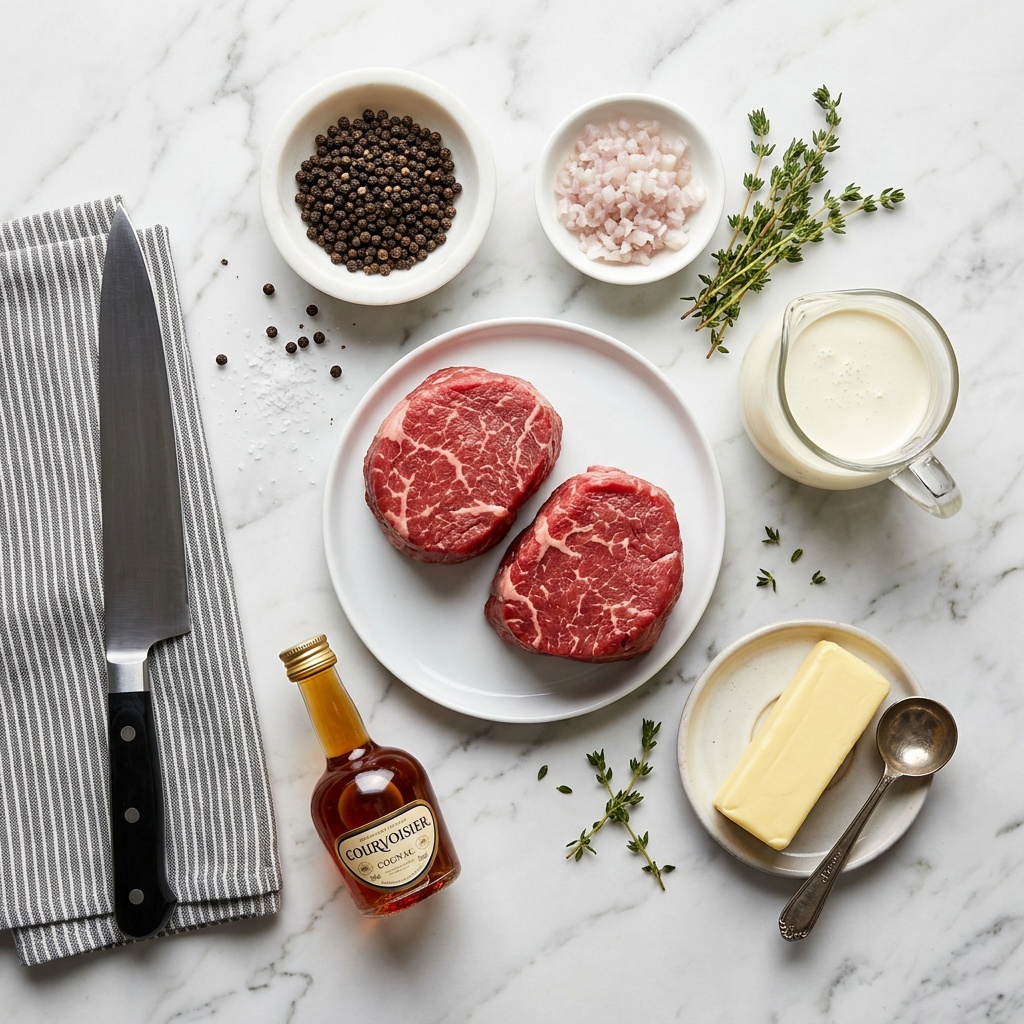
- 2 pieces filet mignon (6 oz each, room temperature)
- 2 tbsp whole black peppercorns (coarsely crushed)
- 1 tsp kosher salt
- 1 tbsp neutral oil (grapeseed or canola)
For the Sauce
- 2 tbsp unsalted butter (divided)
- 1 small shallot (finely minced)
- 1/4 cup cognac or brandy
- 1/2 cup heavy cream
Instructions
1Crush and Season Steaks
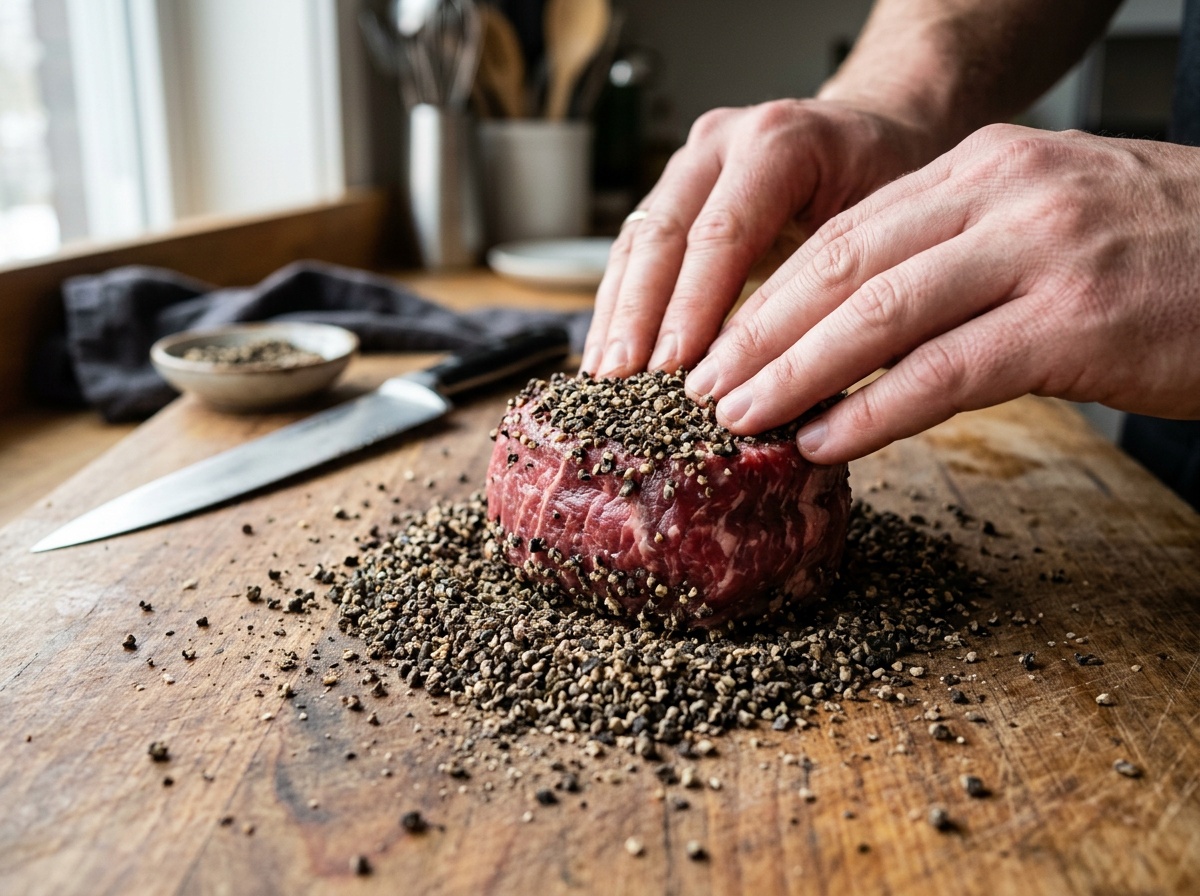
I start by taking my steaks out of the fridge at least 30 minutes before cooking — cold meat will not sear evenly. While they rest, I place my whole black peppercorns in a heavy-duty bag and crush them with a meat mallet or the bottom of a heavy skillet. You want coarse, irregular bits, not fine dust, so pulse or pound gently to avoid pulverizing them. I pat the steaks completely dry with paper towels to ensure the crust adheres, then I generously press both sides and the edges into the crushed pepper. I season with kosher salt right before the pan is hot, as salt draws moisture out too early if applied too soon.
2Sear the Beef
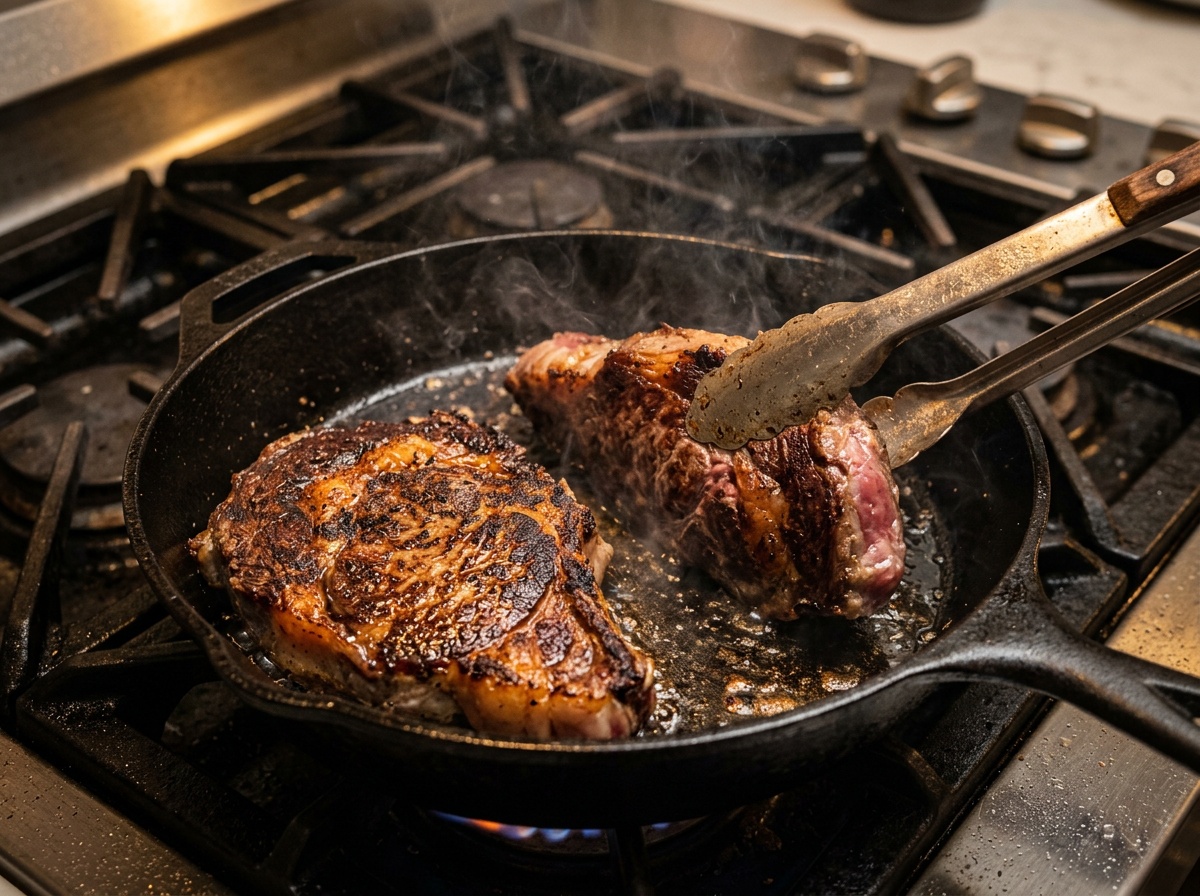
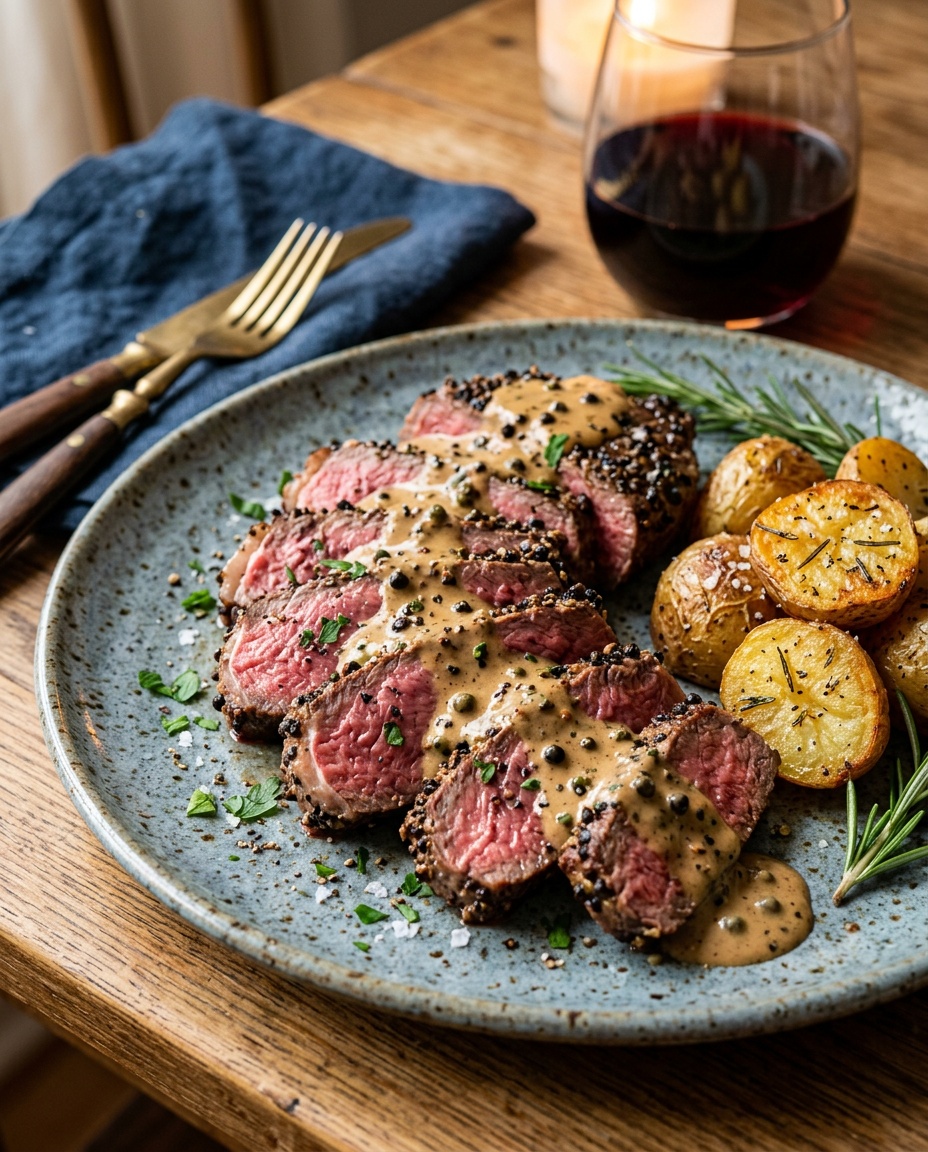
I heat my 10-inch cast iron skillet over medium-high heat until it is smoking slightly. I add the neutral oil and carefully lay the steaks into the pan, ensuring I don’t crowd them so the temperature doesn’t drop. Following my au poivre steak recipe method, I let them sear undisturbed for about 4 minutes on the first side to build that dark, peppery crust. I flip once and cook for another 3 to 4 minutes for medium-rare, or until an instant-read thermometer hits 130°F. I remove the steaks to a warm plate and tent them loosely with foil to rest, which is non-negotiable for tender, juicy meat.
3Create the Pan Sauce
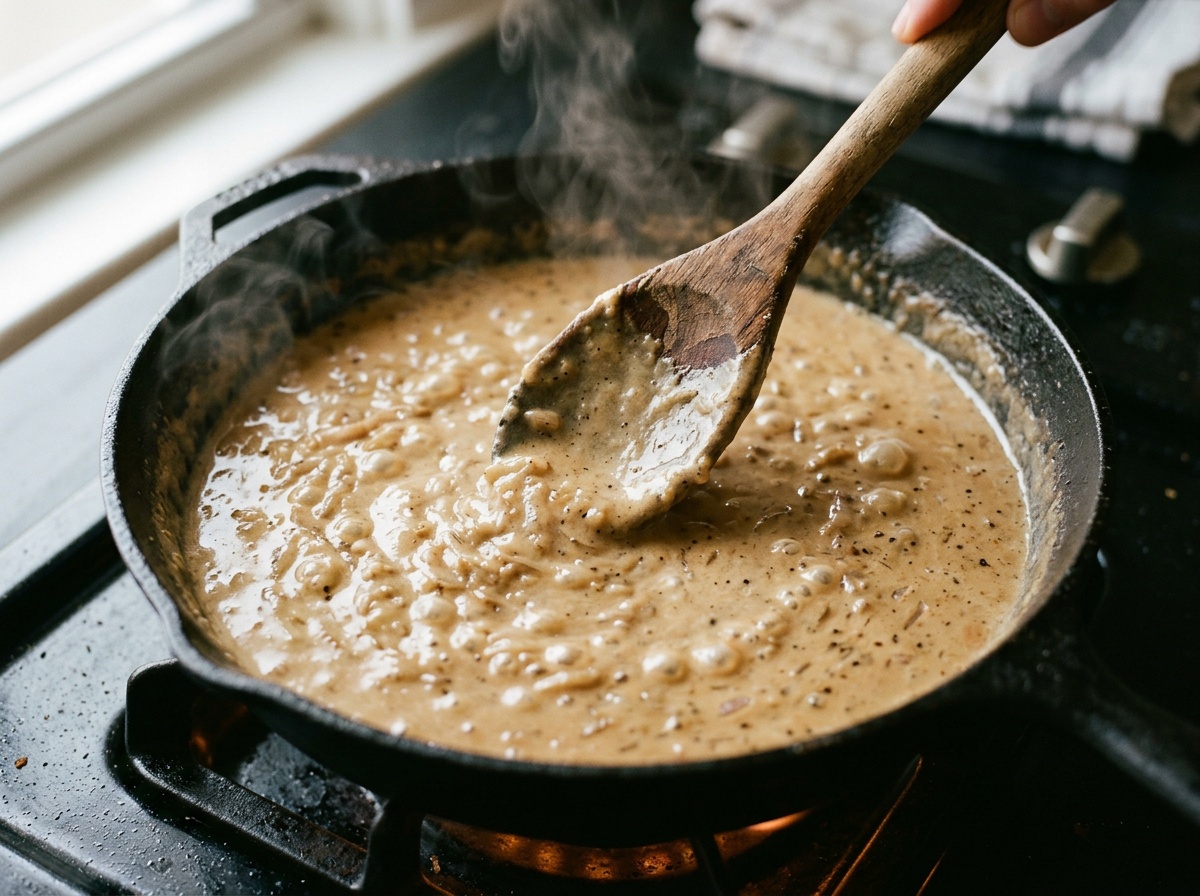
In the same skillet, I reduce the heat to medium and add a tablespoon of butter. I toss in the minced shallots, cooking them for about 2 minutes until they are translucent and soft. Next, I pour in the cognac to deglaze the pan — I scrape the bottom with a wooden spoon to lift all those flavorful browned bits. I let it bubble for a minute until the alcohol aroma dissipates, then I stir in the heavy cream and the remaining butter. I let the sauce simmer for 3 to 5 minutes, whisking occasionally, until it thickens enough to coat the back of a spoon. I pour this silky sauce over the rested steaks immediately and serve.
Tips & Variations
The Peppercorn Texture: Do not use pre-ground black pepper for this dish. You need the texture of cracked peppercorns; ground pepper turns the sauce muddy and loses the spicy bite that defines this classic preparation.
Cognac Safety: When you add the cognac, it may flare up if the pan is very hot. I always pull the pan off the burner or turn the heat to low before adding the spirit to keep the flame controlled and safe.
Meat Resting: I always let the meat rest for at least 8 to 10 minutes after searing. This allows the juices to redistribute back into the muscle fibers, ensuring every bite is moist rather than dry.
Don’t Salt Too Early: Salt draws moisture out of meat through osmosis. I wait until the exact moment I am ready to drop the steak into the hot oil before I apply the salt to keep the surface dry.
Sauce Consistency: If your sauce gets too thick, whisk in a tablespoon of warm beef stock or water. You are looking for a consistency that coats the back of a spoon, not a heavy paste.
Nutrition Information
Per serving (approximate values)
| Nutrient | Amount |
|---|---|
| Calories | 540 |
| Protein | 38g |
| Carbohydrates | 4g |
| Total Fat | 38g |
| Fiber | 1g |
| Sugar | 1g |
Frequently Asked Questions About the Au Poivre Steak Recipe
Is this au poivre steak recipe hard to make?
▼
This au poivre steak recipe is actually quite approachable if you follow the timing carefully. The main technique involves managing the heat to get a good crust without burning the peppercorns. I recommend having all your ingredients measured and ready, or ‘mise en place,’ before you turn on the stove, as the sauce comes together very quickly once the steak is finished.
What is the best type of pan for a pan-seared steak?
▼
For this recipe, a cast iron skillet is the best choice because it holds heat exceptionally well, which is necessary for a good sear. If you do not have cast iron, use a heavy-bottomed stainless steel pan. Avoid non-stick pans, as they generally cannot handle the high heat required to develop the crust on your pan-seared steak.
Can I make this dish ahead of time?
▼
I do not recommend preparing the steak in advance, as it is best served immediately after resting. However, you can mince the shallots and measure your cream and cognac beforehand to save time. The steak loses its texture if reheated, so it is a dish best cooked start-to-finish when you are ready to eat.
What can I substitute for Cognac in the sauce?
▼
If you prefer not to use Cognac, you can substitute it with a good quality brandy or even a dry sherry. If you need an alcohol-free option, you can use a high-quality beef stock mixed with a teaspoon of balsamic vinegar to mimic the depth of flavor, though the complexity of the sauce will be different without the alcohol for deglazing.
How do I know when the steak is done?
▼
The most reliable way to check for doneness is using an instant-read meat thermometer inserted into the thickest part of the filet mignon. For medium-rare, pull the steak at 130°F, as the temperature will rise slightly while it rests. If you do not have a thermometer, press the center of the steak with your finger; it should feel springy and soft, similar to the fleshy part of your palm below the thumb.