Introduction
I still remember the first time I attempted a beef sirloin tip roast recipe back in college; I was trying to impress friends and ended up with something that felt like shoe leather. It took a few years and a lot of trial and error for me to realize that sirloin tip is a lean cut that requires a little extra care and the right technique to keep it juicy. Since then, I have settled on this specific method that guarantees that deeply browned, savory crust I love, contrasted by a tender center that slices beautifully.
I keep this dish in my regular rotation because it feels fancy enough for Sunday dinner but is straightforward enough to handle on a busy weeknight. It reminds me of the traditional roasts my grandmother used to make, but I’ve adapted it to fit a modern kitchen where I don’t want to spend all day tending to the oven. When I serve this, people always ask how I managed to keep the meat so moist without turning it into a pot roast texture, and the secret is honestly just respecting the temperature.
In this guide, I will show you how to properly dry-brine and sear the meat, which are the two things I found make the biggest difference in the final result. You will learn how to read your oven and, more importantly, how to use a meat thermometer so you never have to guess whether the center is done. By the time we finish, you will have a roast with deep, complex flavors and a melt-in-your-mouth tenderness that will make this your new go-to for beef dinners.
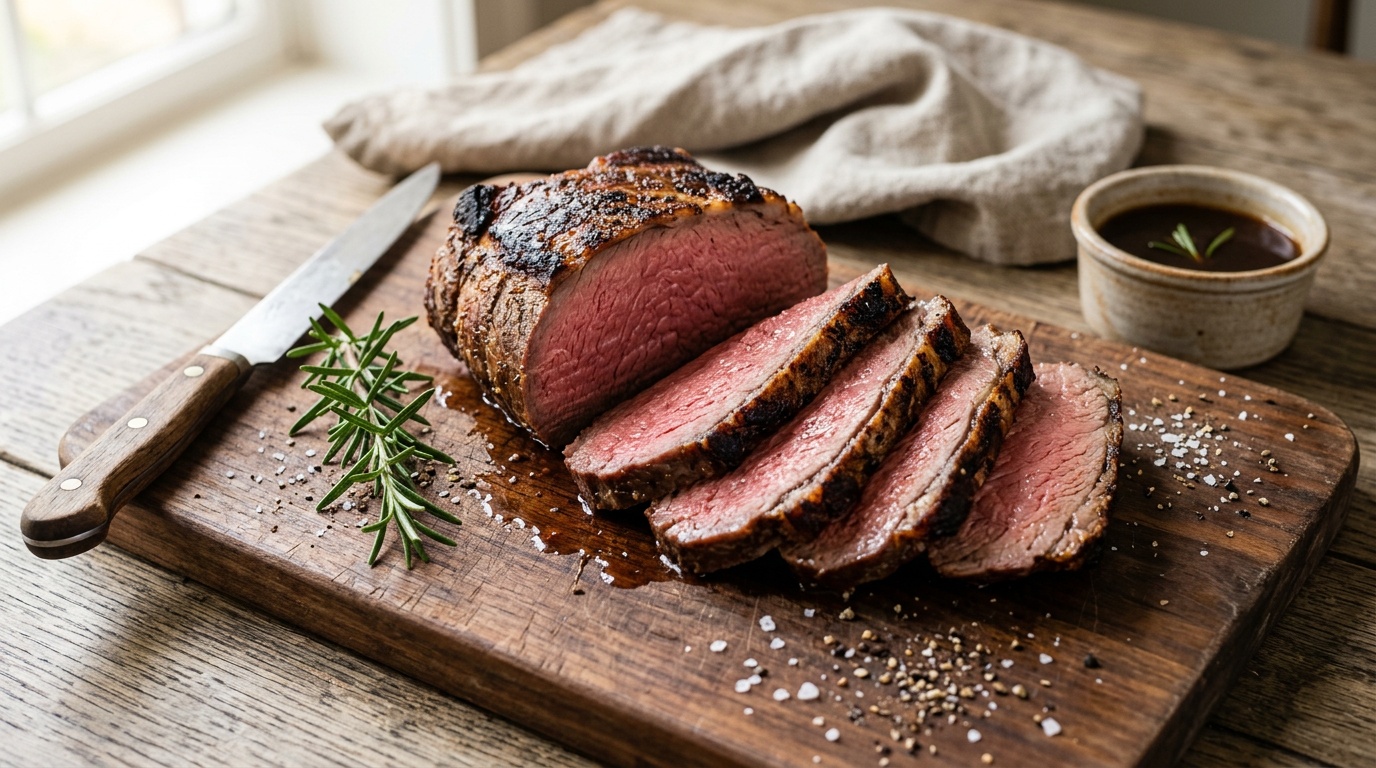
Why This Recipe Works
Dry Brining for Crust: Salting the meat at least an hour before cooking draws moisture to the surface, which then evaporates, leaving the surface dry and ready to sear. This process is essential for achieving a deep, caramelized crust rather than gray, steamed meat. I find that skipping this step prevents the Maillard reaction from happening effectively.
The Reverse Sear Technique: Starting with a high-heat sear in a heavy cast-iron skillet creates a distinct flavor profile that develops those rich, nutty notes. Once the crust is set, dropping the oven temperature allows the center to cook evenly without overheating the edges. I use a probe thermometer here, tracking the roast beef internal temperature to ensure the transition from the crispy exterior to the medium-rare center is seamless.
Controlled Resting: I never skip the rest period after pulling the meat from the oven, as it allows the internal juices to redistribute throughout the muscle fibers. If you slice into the beef immediately, the juices will run out onto the cutting board, leaving the meat dry. Waiting those 15 minutes is the difference between a tough roast and one that feels incredibly tender.
Ingredients
The Roast
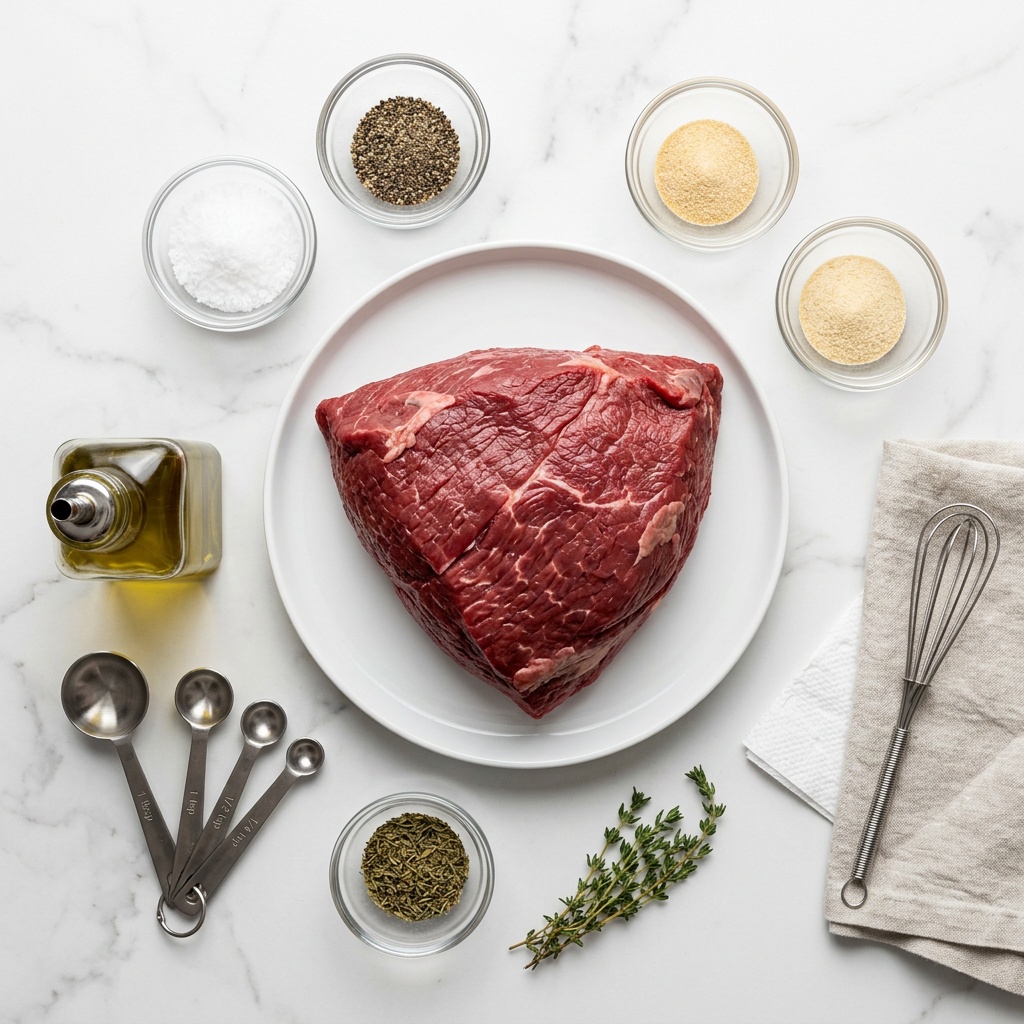
- 3-4 lbs beef sirloin tip roast (tied if possible)
- 1 tbsp kosher salt (or 2 tsp table salt)
- 1 tbsp black pepper (freshly cracked)
- 1 tbsp olive oil (for searing)
The Dry Rub
- 1 tsp garlic powder
- 1 tsp onion powder
- 1 tsp dried thyme
- 1 tsp smoked paprika (optional for color)
Instructions
1Season and Dry Brine
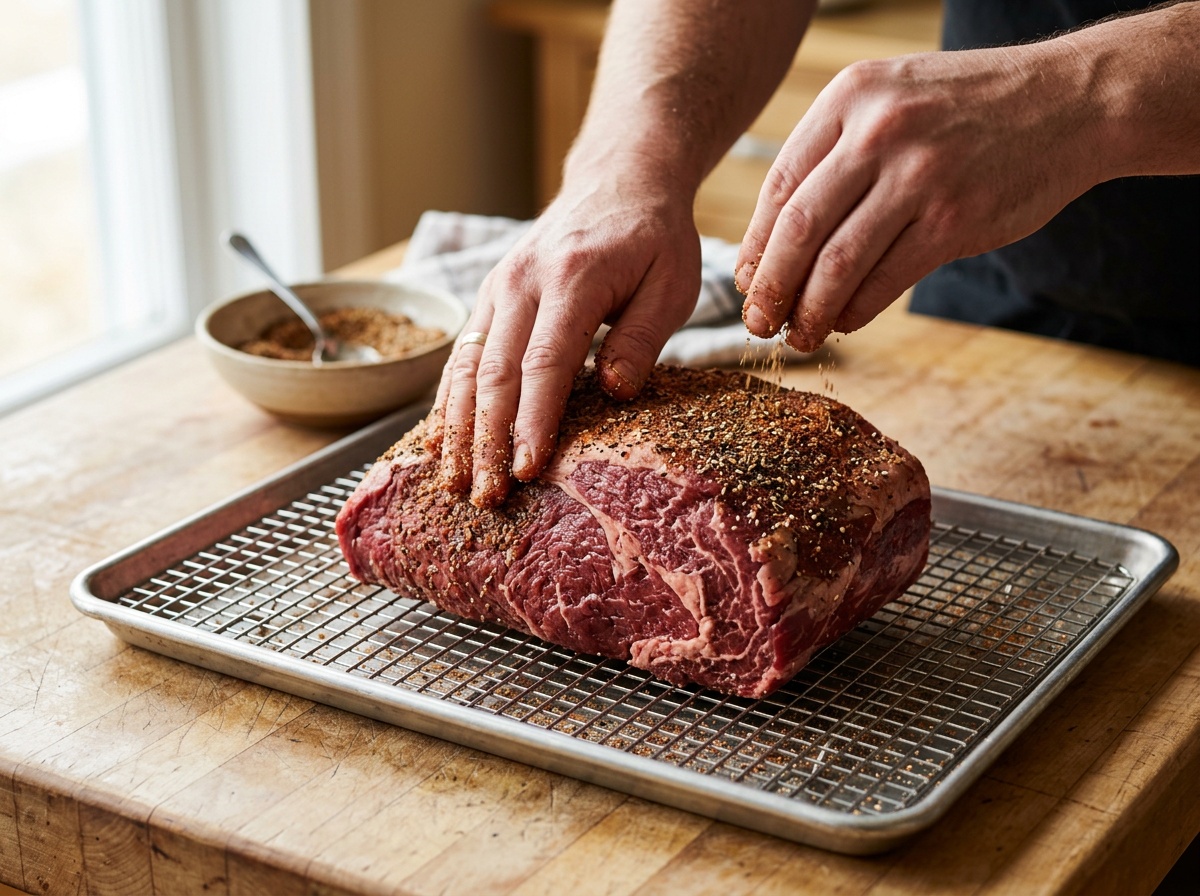
I begin by taking the meat out of the refrigerator about 45 minutes before I plan to cook it to take the chill off. I pat the surface extremely dry with paper towels; moisture is the enemy of a good sear, so I am thorough here. I mix the salt, pepper, garlic powder, onion powder, thyme, and paprika in a small bowl, then I massage this blend all over the beef sirloin tip roast recipe, ensuring every side is coated. I let it sit on a rack set over a baking sheet for at least 45 minutes to let the salt penetrate the surface. This is one of the most important steps in this whole process.
2Sear the Exterior
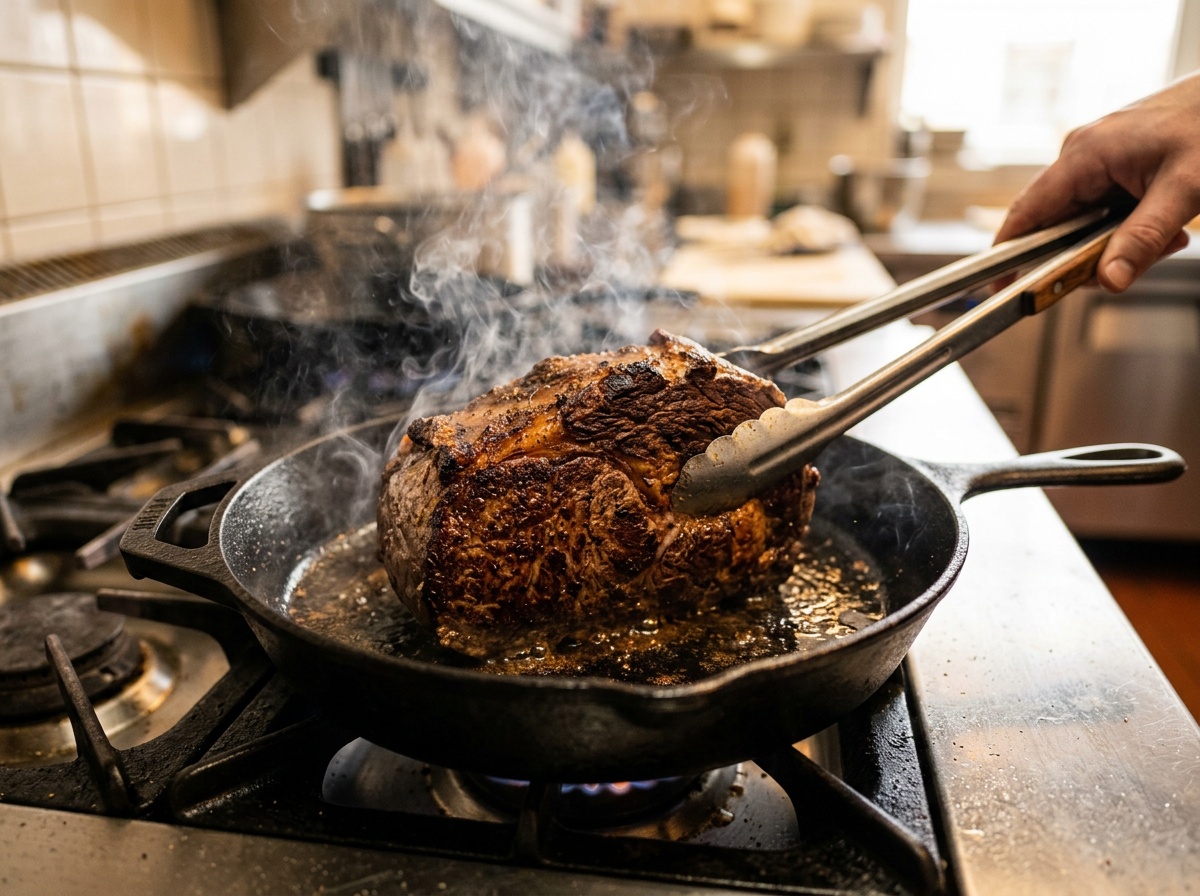
I preheat my oven to 300°F while I get a large cast-iron skillet ripping hot over medium-high heat. I add the tablespoon of olive oil, waiting until it shimmers and just starts to smoke slightly before carefully placing the roast into the pan. I sear it for about 2-3 minutes per side, rotating it until the entire surface is a deep, rich brown color. You have to be patient here; if the meat sticks, just wait another minute, it will release once the crust is properly formed. This browning step adds a depth of flavor you just cannot get in the oven alone.
3Slow Roast to Temperature
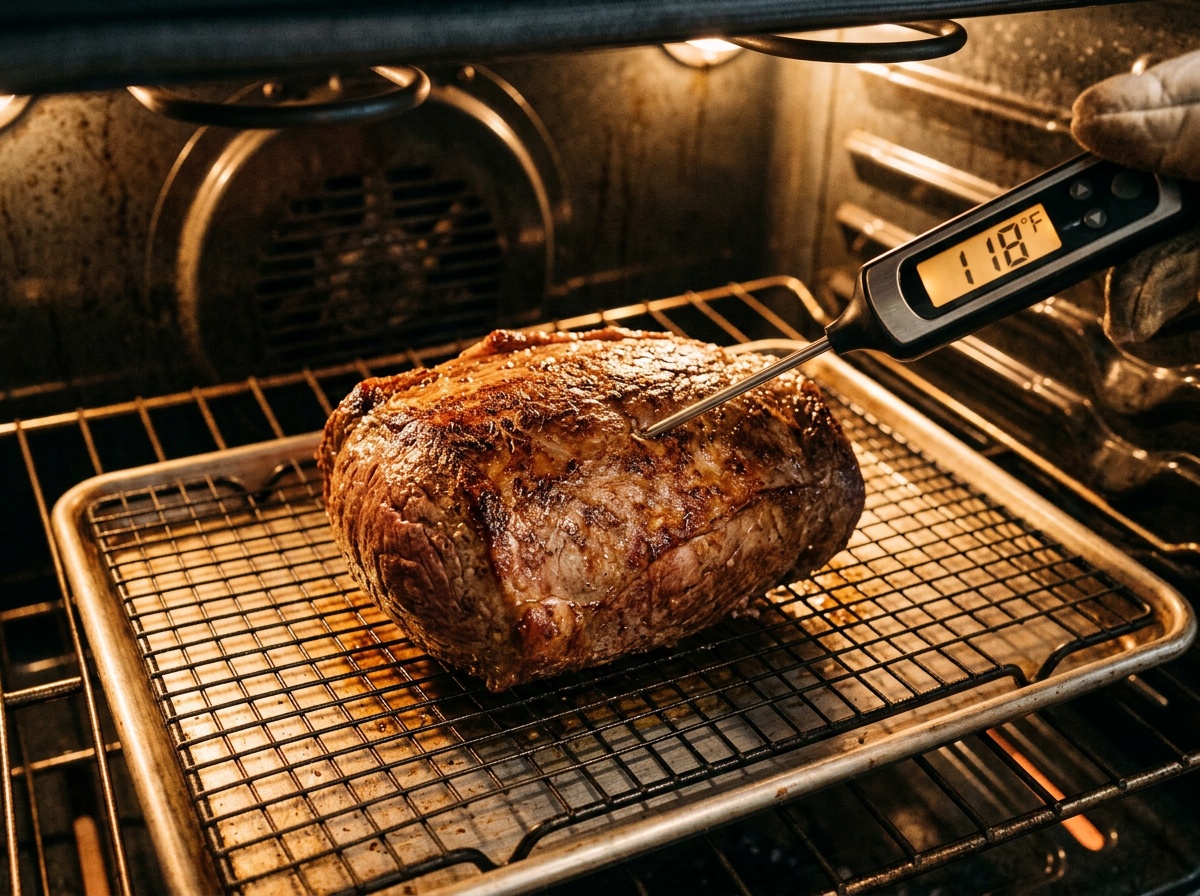
Once seared, I move the roast onto a wire rack set inside a shallow roasting pan or baking sheet. I insert an oven-safe probe thermometer into the thickest part of the meat to monitor the roast beef internal temperature accurately. I place it in the center rack of the oven and let it roast until the thermometer registers 125°F for medium-rare. I find that this usually takes about 45-60 minutes depending on the shape of the cut. I avoid opening the oven door too often because it fluctuates the heat and extends the sirloin tip roast cooking time unnecessarily.
4Rest and Slice
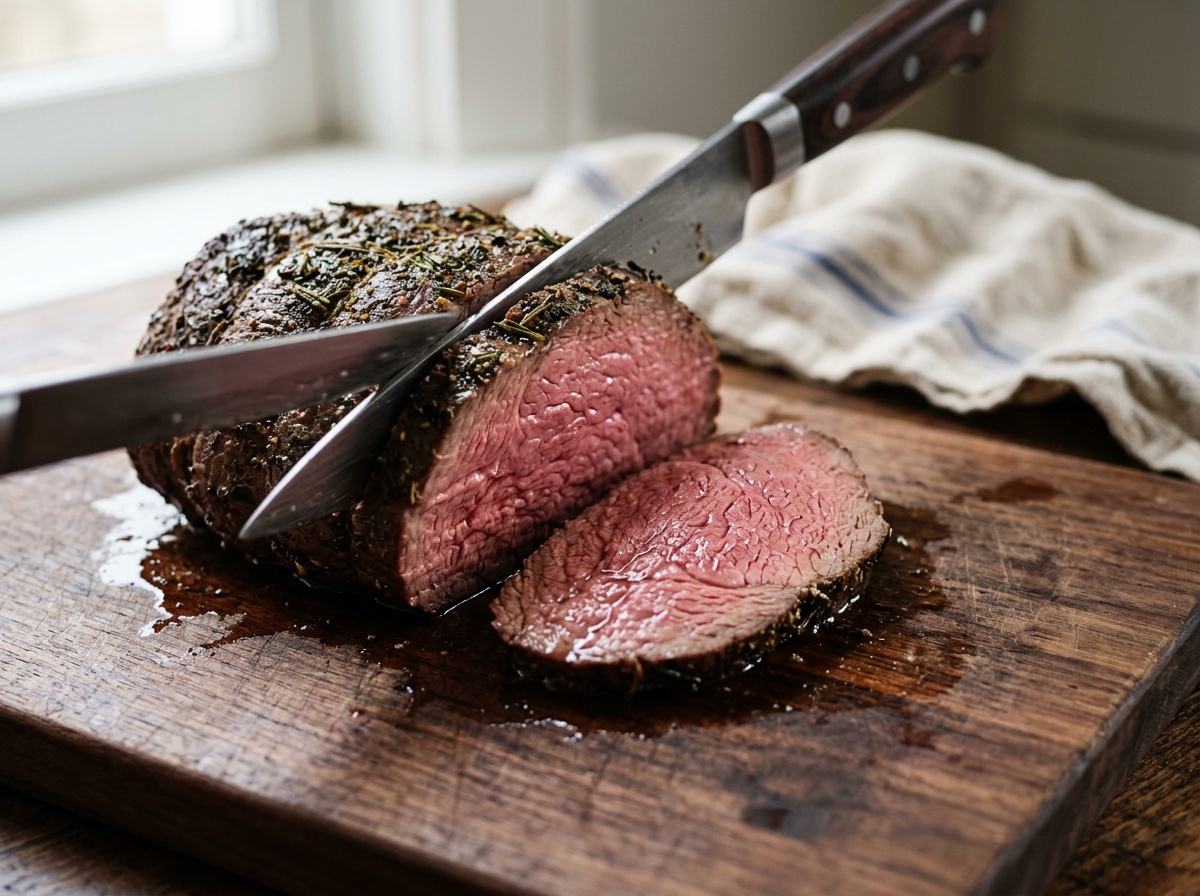
I pull the roast out as soon as it hits the target temperature, transfer it to a cutting board, and tent it loosely with aluminum foil. I let it rest for exactly 15 to 20 minutes; during this time, the carry-over heat will bring the center up to a perfect 130-135°F. Once rested, I use a sharp carving knife to slice against the grain. I always pay attention to the direction of the muscle fibers, as slicing perpendicularly is how I ensure every piece is as tender as possible for serving.
Tips & Variations
Don’t Skip the Rack: Using a wire rack inside your baking sheet is vital because it allows hot air to circulate underneath the meat. Without the rack, the bottom of your roast will sit in its own juices and get soggy, ruining the texture of a good beef sirloin tip roast recipe.
Thermometer Accuracy: I never rely on the clock for doneness; an instant-read probe thermometer is the only way to be sure. Pull the beef at 125°F for medium-rare, as the temperature will continue to rise during the resting phase while sitting on the counter.
Slicing Technique: Sirloin tip can be chewy if sliced with the grain. Always look for the direction the muscle fibers are running and cut perpendicularly to them, which shortens the fibers and makes the meat feel much more tender when you eat it.
Storage and Reheating: Store any leftovers in an airtight container in the fridge for up to 3 days. To reheat without drying it out, I slice the meat and warm it gently in a pan with a splash of beef broth over very low heat.
Herb Butter Finish: If you want a little extra decadence, finish the searing step by throwing a tablespoon of butter, a clove of garlic, and some fresh rosemary into the pan. Baste the roast with this melted fat for the last minute of searing to boost the aroma.
Nutrition Information
Per serving (approximate values)
| Nutrient | Amount |
|---|---|
| Calories | 240 |
| Protein | 32g |
| Carbohydrates | 1g |
| Total Fat | 11g |
| Fiber | 0g |
| Sugar | 0g |
Frequently Asked Questions About beef sirloin tip roast recipe
What is the best way to keep a beef sirloin tip roast recipe from getting tough?
▼
To keep your beef sirloin tip roast recipe from turning tough, the secret is to not overcook it and to slice it properly. I always pull the roast out of the oven at 125°F for medium-rare, then let it rest for 20 minutes, which ensures the meat stays juicy. Make sure you slice against the grain to keep the texture tender.
What is the correct roast beef internal temperature for sirloin tip?
▼
For a medium-rare roast, you are looking for an internal temperature of 125°F to 130°F after resting. I personally prefer pulling it at 125°F because the heat trapped inside will continue to cook the roast while it rests on the counter. Always use a digital probe thermometer to check the thickest part of the meat.
Can I prep this roast ahead of time?
▼
Yes, you can absolutely prep it ahead by applying the dry rub up to 24 hours in advance. If you salt the meat the night before, it acts as a dry brine, which actually improves the flavor and tenderness of the final dish. Just keep it uncovered in the fridge on a rack so the surface dries out.
What is the best dry rub for beef like sirloin tip?
▼
The best dry rub for beef sirloin tip usually includes coarse kosher salt, freshly cracked black pepper, garlic powder, onion powder, and dried thyme. I stick to these basics because they amplify the natural, savory beef flavor without overpowering it with too many competing spices. You can add smoked paprika if you want a deeper red color.
Do I need to sear the meat before roasting?
▼
Searing the meat in a cast-iron skillet before putting it in the oven is highly recommended for building flavor. This step creates a caramelized crust through the Maillard reaction, which is difficult to achieve with oven roasting alone at lower temperatures. It adds only about 10 minutes to your prep but makes a massive difference in quality.