Introduction
I remember the first time I bought a flank steak; I was exhausted after a long work week and just wanted something better than takeout. I wasn’t sure how to handle such a lean cut, but after a bit of trial and error, I realized that beef flank steak recipes are actually the perfect solution for quick, high-flavor meals. The kitchen smelled incredible—that savory, caramelized sear—and I finally felt like I had a go-to meal that didn’t require a special occasion to justify.
I keep coming back to this method because it creates a texture and depth of flavor that is hard to replicate with thicker, more expensive cuts. It works in the dead of winter when I’m pan-searing on the stove, or in the middle of summer when I want a grilled flank steak to slice up for a massive garden salad. My family asks for this specifically when they want a protein that tastes fresh rather than heavy.
In this post, I will share the exact techniques that fixed the tough, rubbery texture I used to get when I first started cooking this cut. You will learn the importance of the marinade, how to manage the heat so you get a deep crust without overcooking the center, and the specific way to slice the meat to ensure every bite melts in your mouth. Get ready to improve your weeknight dinner rotation.
Why This Recipe Works
Acid-Based Marinade: Using a base of soy sauce and lime juice effectively breaks down the surface proteins of the meat. This tenderizing beef technique is necessary because flank is a hardworking muscle that can be naturally tough. I let the steak sit for at least an hour, allowing the acid to soften the fibers just enough while the salt works its way into the center to season it thoroughly.
High-Heat Searing: When browsing through various beef flank steak recipes, you will notice that high heat is almost always recommended, and for good reason. Using a cast-iron skillet creates a thermal mass that doesn’t drop in temperature when the meat hits the pan, allowing for a deep, brown crust in under five minutes. This Maillard reaction provides a savory depth that just cannot be achieved with low-and-slow cooking methods.
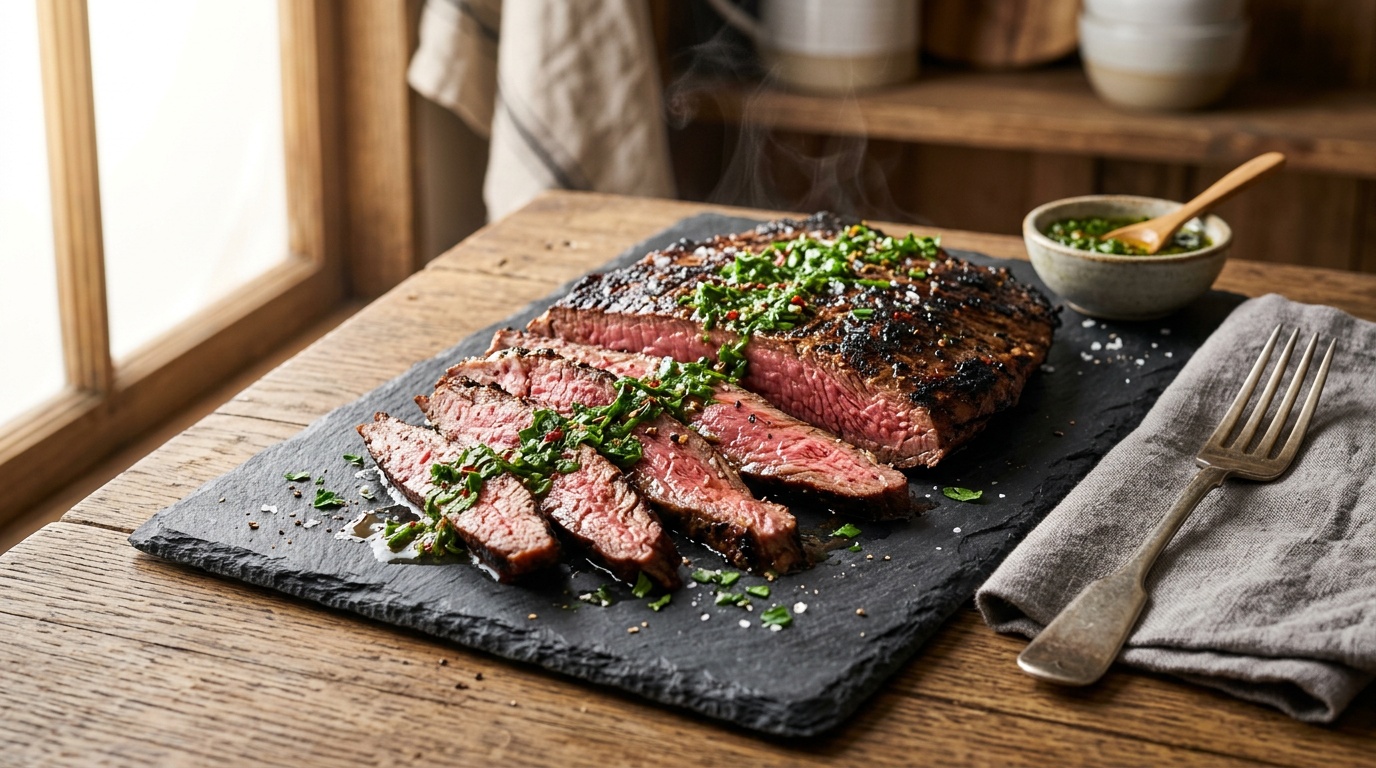
Resting and Slicing: Resting the meat for a full ten minutes is not optional; it allows the juices to redistribute back into the muscle fibers rather than spilling out onto the cutting board. When it comes time to serve, slicing against the grain is the final piece of the puzzle. This physically shortens the long muscle strands, so when you chew, you are biting through already severed fibers instead of tough strings.
Ingredients
The Steak
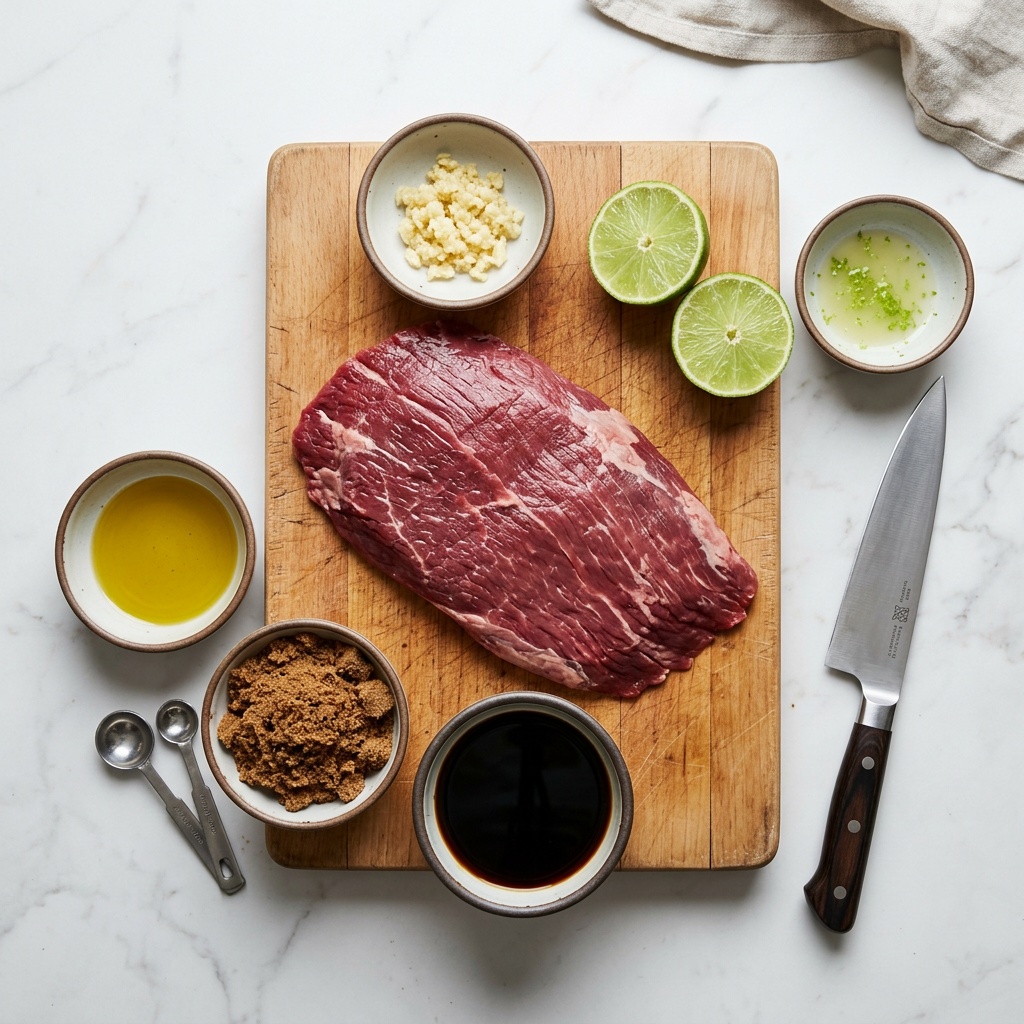
- 1.5 lbs flank steak (trimmed of excess fat)
The Marinade
- 1/4 cup soy sauce (low sodium)
- 2 tbsp lime juice (freshly squeezed)
- 1 tbsp olive oil
- 3 cloves garlic (minced)
- 1 tsp brown sugar
Instructions
1Marinate the Steak
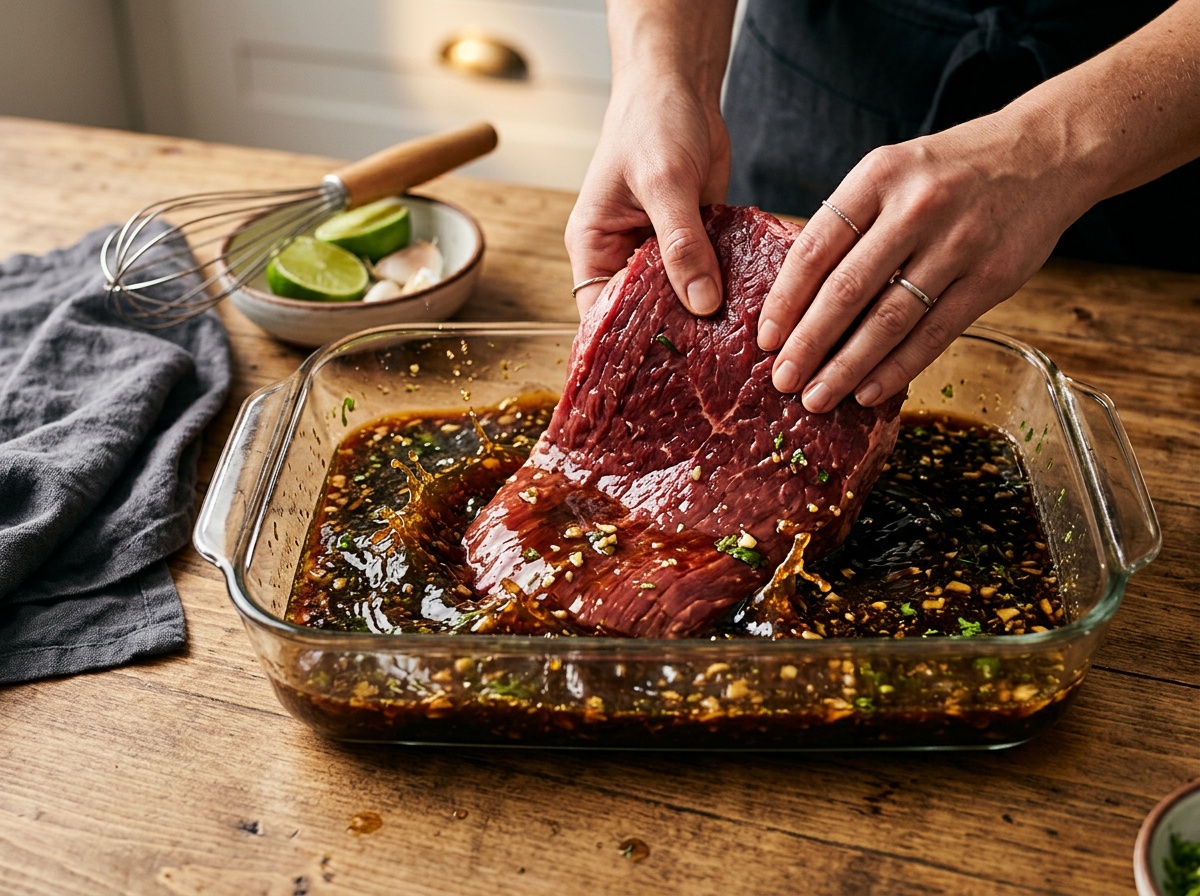
I begin by whisking together the soy sauce, lime juice, olive oil, garlic, and brown sugar in a shallow dish or a zip-top bag. When I’m testing different beef flank steak recipes, I find that a simple marinade is usually best because it doesn’t mask the natural beefy flavor. I place the flank steak into the marinade and coat it thoroughly, turning it a few times to ensure everything is covered. I let it sit at room temperature for about 30 to 45 minutes; you don’t want to go longer than an hour at room temperature for food safety reasons, though you can marinate for up to four hours if you keep it in the refrigerator. Taking the meat out of the fridge early helps it cook more evenly later.
2Sear in Cast Iron
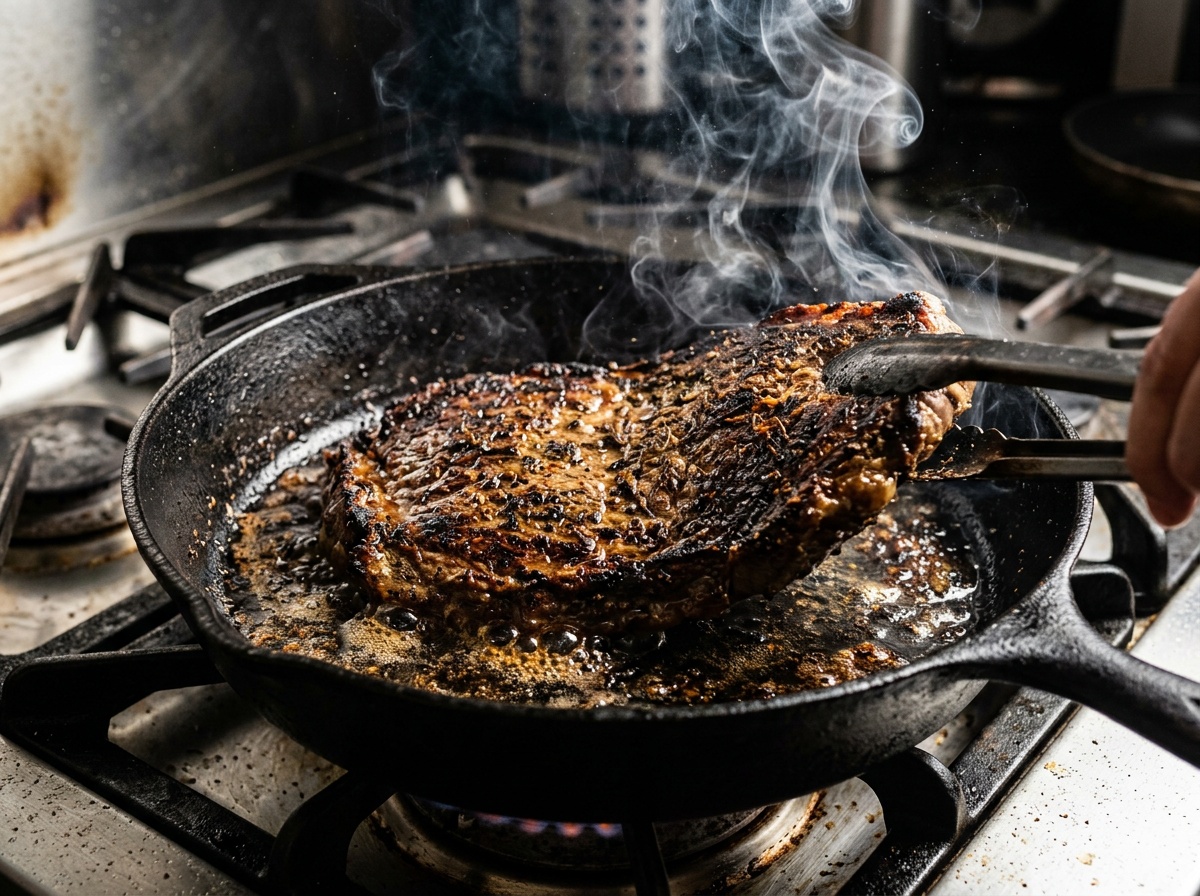
While the steak is marinating, I heat my heavy cast-iron skillet over high heat for about 5 minutes until it is smoking slightly. I remove the steak from the marinade and pat it completely dry with paper towels—this is a step I never skip because moisture creates steam, which prevents a nice golden-brown crust. I carefully place the steak into the hot pan; it should immediately hiss loudly. I let it cook undisturbed for about 4 minutes to get that deep, caramelized char. Then, I flip it once and cook for another 3 to 4 minutes on the other side. You’ll know it is ready when the internal temperature hits 130°F for a perfect medium-rare, which is where I find the texture is most buttery.
3Rest and Slice
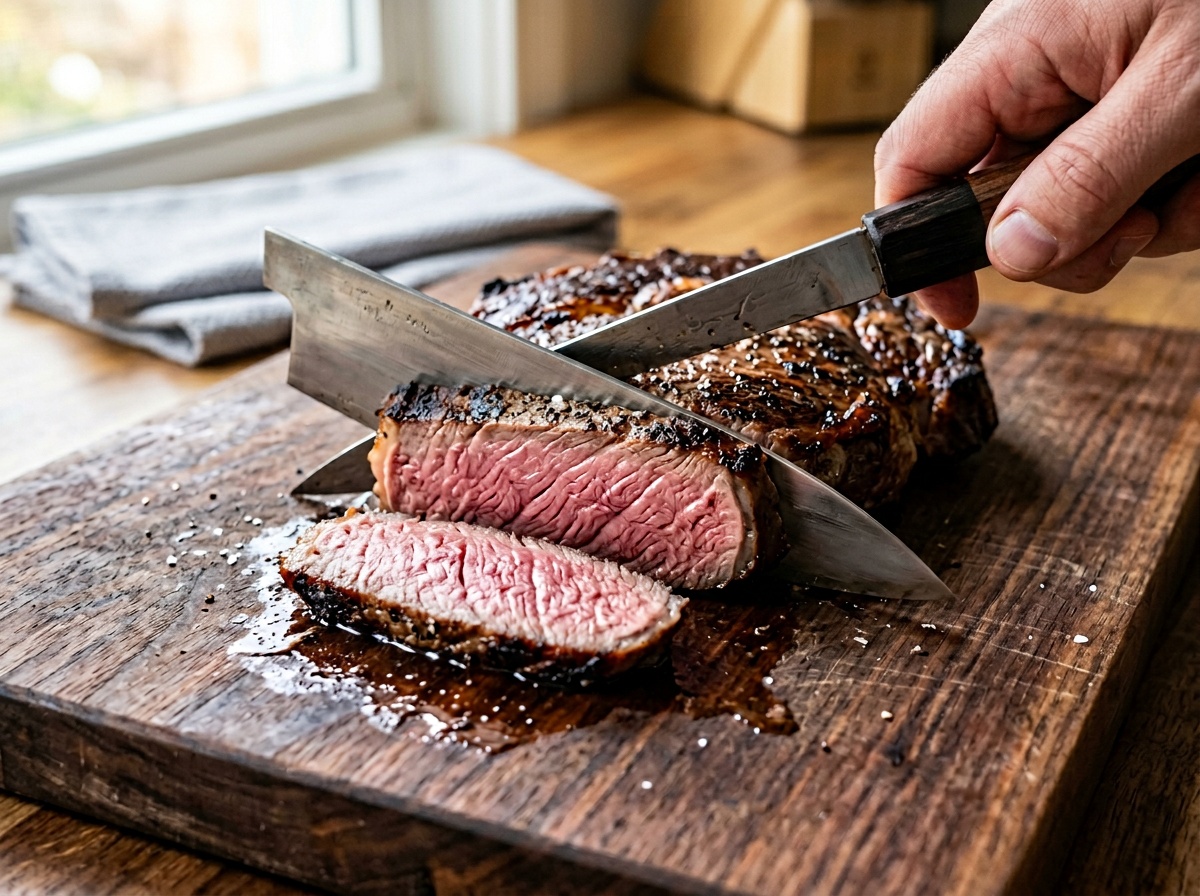
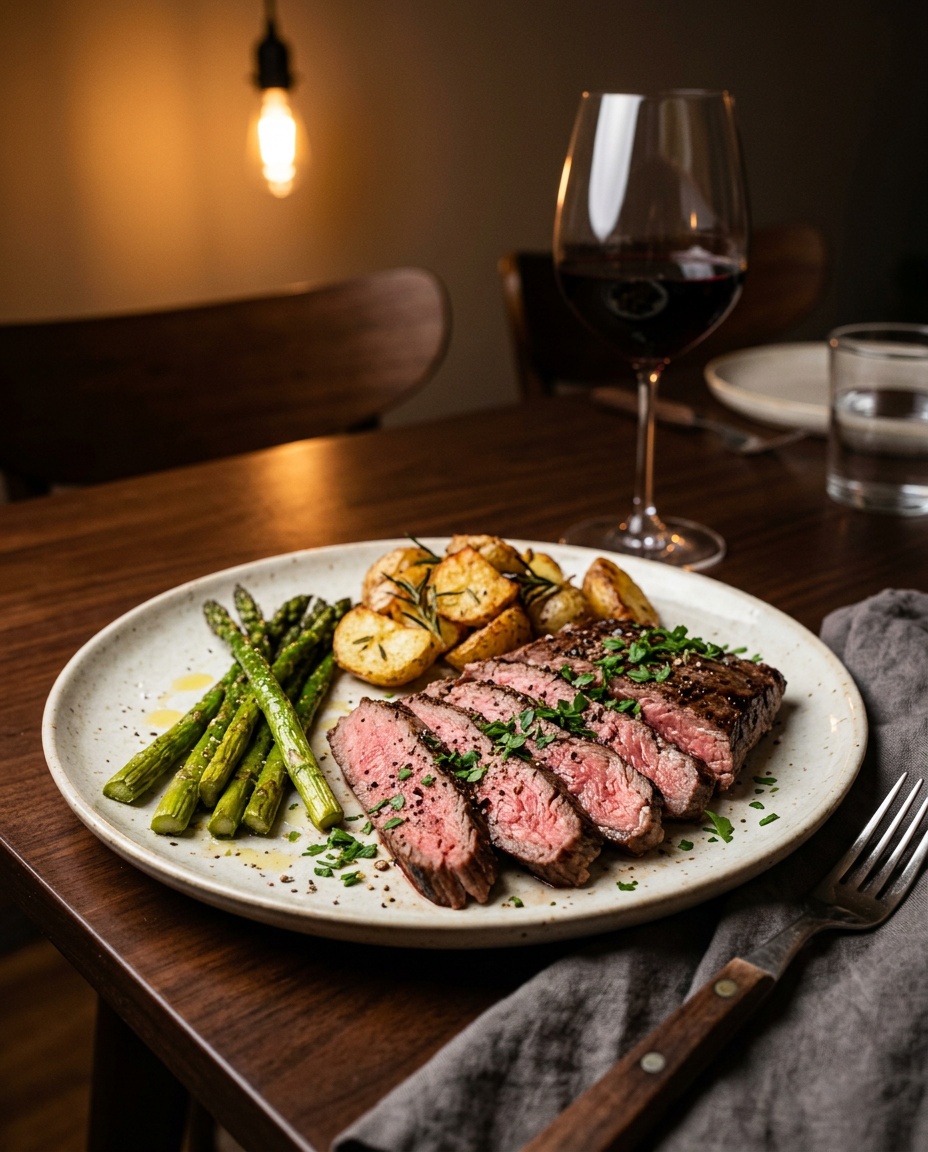
This final stage is where most people make the mistake of rushing. I remove the steak from the hot pan and place it on a clean cutting board, letting it rest for exactly 10 minutes; if you cut it too soon, all those delicious juices will run out onto the board instead of staying in the meat. Once rested, I look for the direction of the muscle fibers—the ‘grain’—and position my knife perpendicular to them. I slice the steak into thin, diagonal strips, ensuring I am cutting against the grain. This step is non-negotiable if you want tender results. The slices should look like beautiful, pink-centered ribbons that are easy to chew and ready to serve immediately.
Tips & Variations
The Grain Technique: Always look at the direction the lines of the meat are running before you start slicing. You want to cut across those lines, not with them, because cutting with the grain leaves you with chewy, rubbery strips that are difficult to eat.
Don’t Crowd the Pan: If you are cooking for a crowd, cook the steaks in batches rather than cramming them all into one pan. If the pan gets overcrowded, the temperature drops, and the meat will steam in its own juices instead of searing.
Storage and Leftovers: Leftover flank steak keeps well in an airtight container in the fridge for up to three days. I prefer to eat the leftovers cold, thinly sliced over a salad, because reheating it often pushes the meat past medium-rare.
Pan Choice Matters: A heavy cast iron or stainless steel skillet is better than non-stick pans for this recipe. Non-stick coatings usually can’t handle the high heat required to get that deep, flavorful char on the surface of the beef.
Serving Suggestions: I love serving this with a vibrant chimichurri for steak, which adds a bright, herbal contrast to the richness of the beef. Alternatively, keep it simple with roasted potatoes and a side of sautéed greens for a balanced meal.
Nutrition Information
Per serving (approximate values)
| Nutrient | Amount |
|---|---|
| Calories | 245 |
| Protein | 32g |
| Carbohydrates | 3g |
| Total Fat | 11g |
| Fiber | 0g |
| Sugar | 2g |
Frequently Asked Questions About beef flank steak recipes
What is the best way to tenderize beef when following various beef flank steak recipes?
▼
The most effective way to tenderize is by marinating for at least one hour and slicing against the grain. Acidic ingredients like lime juice or vinegar break down tough connective tissue, while the slicing technique physically shortens the long muscle fibers. Do not rely on mechanical meat tenderizers alone, as proper cooking and cutting are more impactful.
Can I use skirt steak instead of flank steak for this recipe?
▼
Yes, skirt steak is a fantastic alternative, though it is usually thinner and fattier than flank steak. Because of its thickness, you will need to reduce the flank steak cooking time by about 60-90 seconds per side. Both cuts benefit from the same high-heat searing method and the same rule of slicing against the grain to ensure the final dish is tender.
How long should I store leftover flank steak in the refrigerator?
▼
You can store your cooked flank steak in an airtight container for up to three days in the refrigerator. To keep it from drying out, I store it whole if possible and slice it only when I am ready to eat. If you must reheat it, do so gently in a pan with a splash of water over low heat.
What is the correct internal temperature for a medium-rare flank steak?
▼
For the best texture and flavor, I recommend pulling the steak off the heat when your digital thermometer reads 130°F. After resting for 10 minutes, the carry-over heat will bring it to a perfect 135°F. If you prefer your steak closer to medium, aim for an internal temperature of 140°F before resting, but be careful not to go higher.
Why is my steak chewy even though I cooked it correctly?
▼
If your steak is chewy, it is almost certainly because you sliced with the grain rather than against it. Even perfectly cooked meat will feel tough if the long muscle fibers are left intact. Always take a moment to look at the steak before slicing, identify the direction of the lines, and ensure your knife cuts across them at a 90-degree angle.