Introduction
When I think of the ultimate comfort food, this beef stew recipe stove top is the first thing that comes to mind. I remember learning this method from my grandmother in her slightly drafty kitchen, watching as she carefully seared every cube of meat until it had a dark, crusty exterior that smelled like home. That specific, slow-cooked patience was the first real lesson I learned about cooking—that good things genuinely take time.
I keep coming back to this specific version because it gives me absolute control over the texture of the meat and the consistency of the gravy. While I have used a slow cooker in the past, I find the stove-top method allows for a deeper flavor profile that develops through active monitoring and occasional stirring. It is my favorite dish to prepare on a rainy Sunday when I have nowhere to be and want the house to smell savory and rich all day long.
In this guide, I will share the exact techniques that took me years to refine, specifically why you must never overcrowd the pan when searing your beef. You will learn how to build a complex, layered flavor profile using simple ingredients that you likely already have in your pantry. By the time you finish reading, you will understand how to achieve a tender, melt-in-your-mouth texture that makes this dish shine, and you will know exactly what to look for at each stage of the process.
Why This Recipe Works
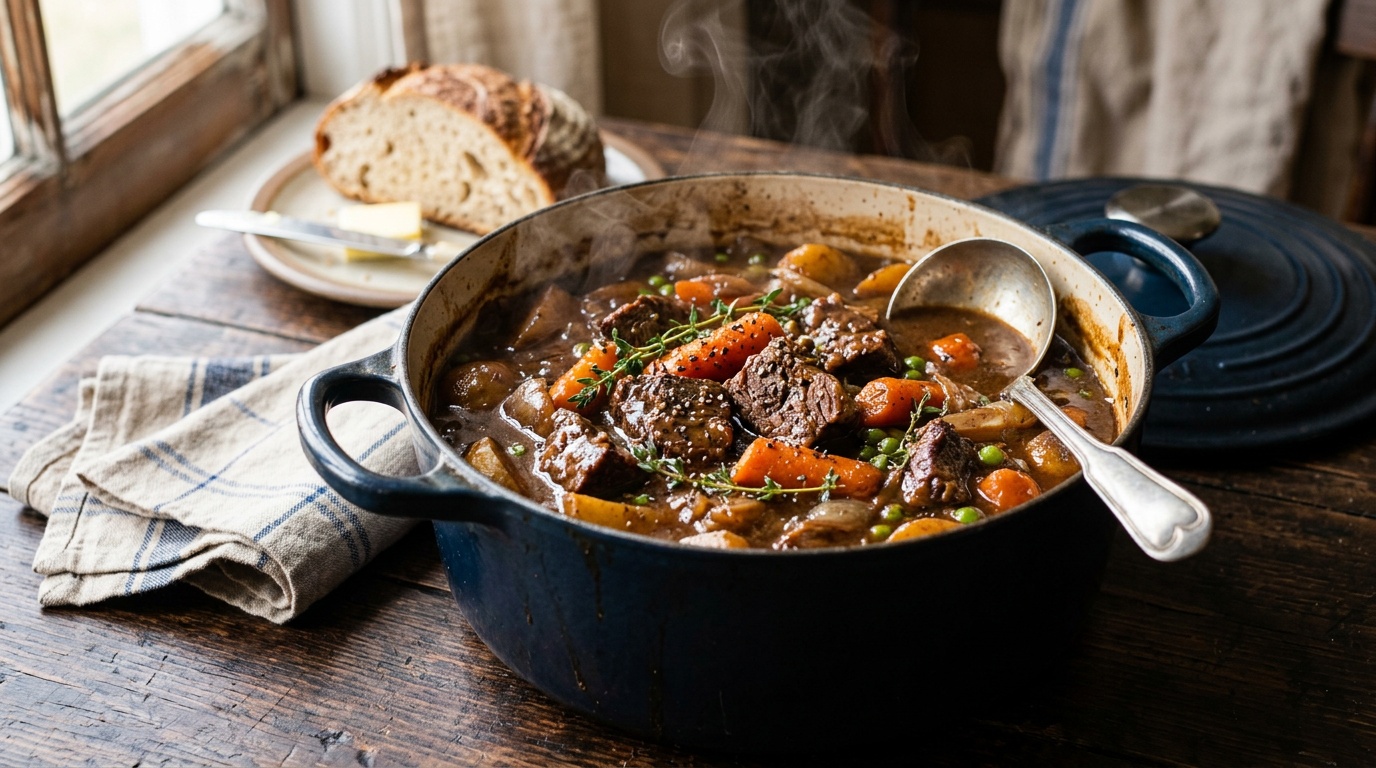
The Science of Searing: When you sear your beef before starting the liquid base, you trigger the Maillard reaction. This chemical reaction occurs between amino acids and reducing sugars at high heat, transforming the surface of the meat into a dark, flavorful crust that forms the foundation of any good beef stew recipe stove top. I always make sure the meat is bone-dry before it hits the oil, otherwise, the moisture steams the beef instead of browning it.
Deglazing the Fond: After searing, you will notice brown bits stuck to the bottom of the pot, known as fond. By adding red wine or beef broth, you dissolve these bits back into the liquid, effectively reclaiming that intense, caramelized flavor that would otherwise be lost. I use a wooden spoon to scrape the bottom vigorously for about two minutes while the liquid simmers, which gives the stew its depth.
Collagen Breakdown: Tough cuts like chuck roast contain significant connective tissue and collagen. When you simmer the meat at a gentle, consistent bubble for over two hours, this collagen breaks down into gelatin, which thickens the broth and makes the meat incredibly tender. I keep the heat low enough that it only breaks the surface occasionally; a violent boil will actually tighten the muscle fibers and make the meat tough.
Ingredients
The Meat and Aromatics
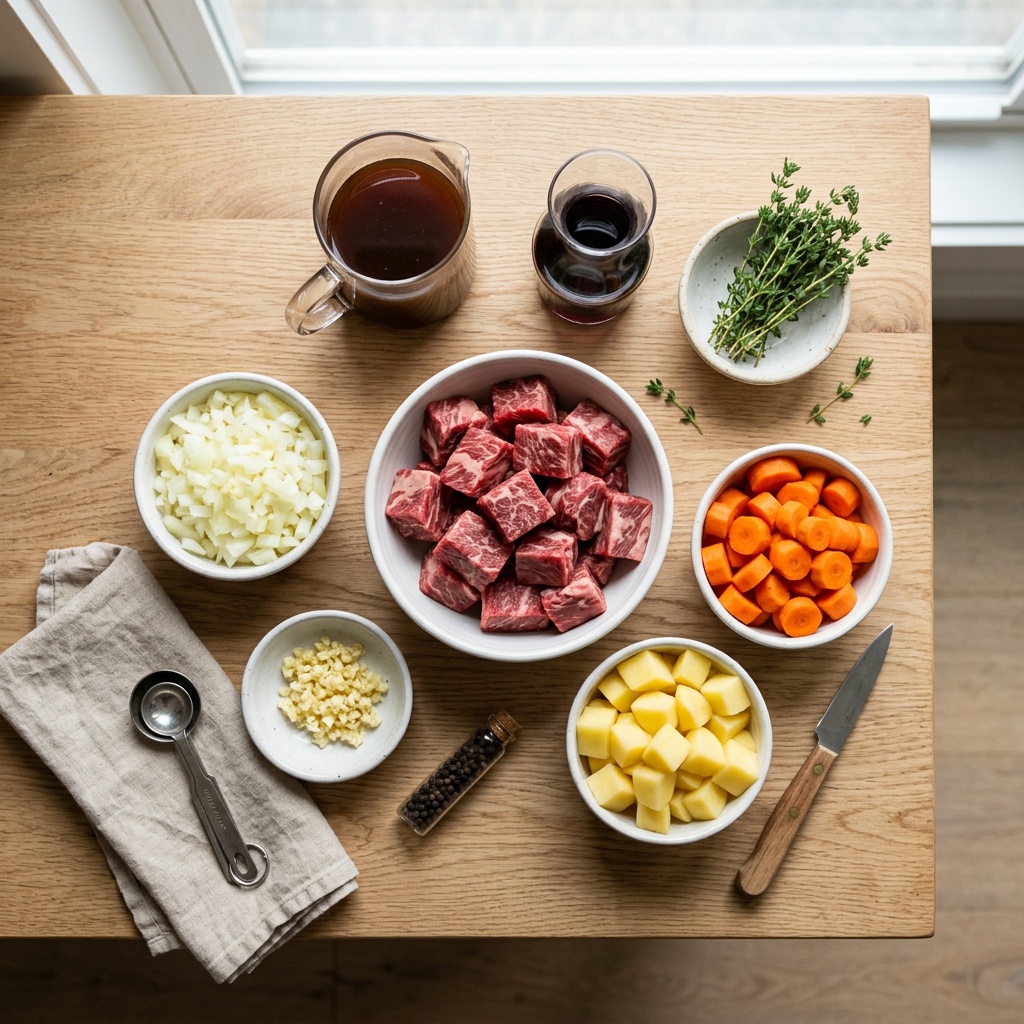
- 3 lbs beef chuck roast (cut into 1.5-inch cubes)
- 2 tbsp vegetable oil (or avocado oil)
- 2 large yellow onions (roughly chopped)
- 4 cloves garlic (minced)
The Stew Base
- 3 tbsp tomato paste
- 1/2 cup dry red wine (like cabernet or merlot)
- 4 cups beef stock (low sodium preferred)
- 3 sprigs fresh thyme
- 1 lb carrots (peeled and sliced into 1-inch rounds)
- 1.5 lbs potatoes (Yukon gold, cut into chunks)
Instructions
1Searing the Beef
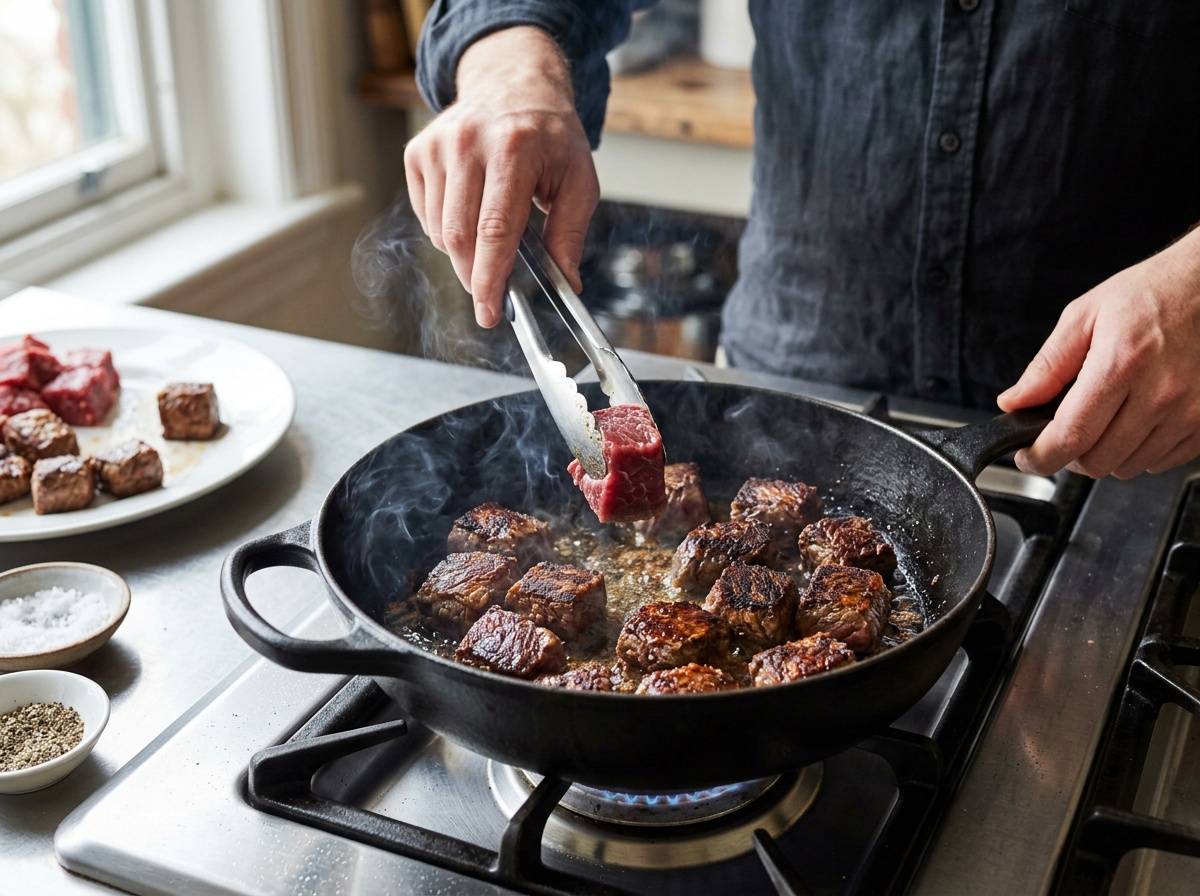
I begin by patting the beef chuck roast completely dry with paper towels—this is the most non-negotiable step for a great beef stew recipe stove top. I heat the oil in a heavy-duty Dutch oven over medium-high heat until it shimmers. Working in three separate batches to avoid overcrowding the pan, I sear the meat on all sides until it develops a deep, mahogany-brown crust. If you put too much meat in at once, the pan temperature drops and the beef will steam rather than sear, so be patient here. I remove the browned meat to a plate and set it aside, leaving the rendered fat in the pot.
2Building the Flavor Base
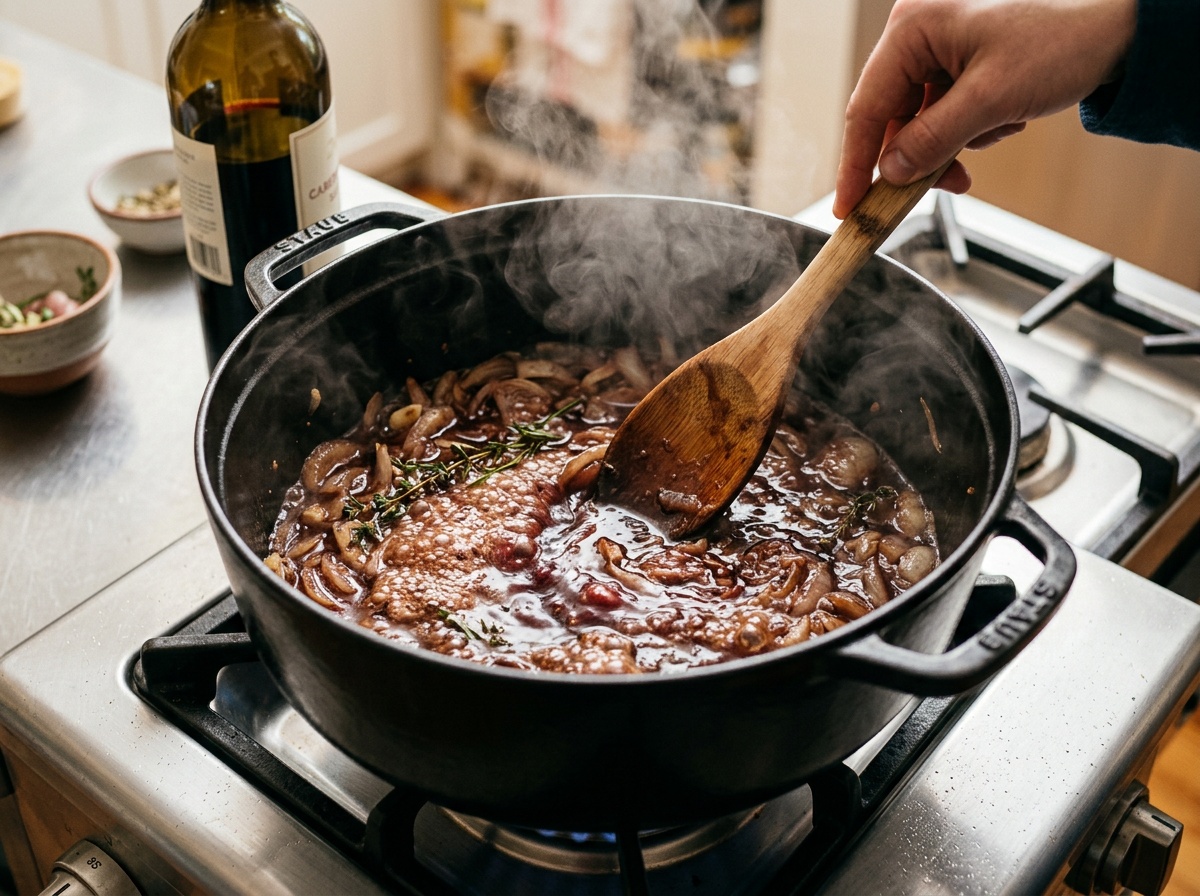
In the same pot, I add the onions and cook them over medium heat until they soften and start to turn translucent, which usually takes about five minutes. Then, I stir in the garlic and tomato paste, cooking for another two minutes until the tomato paste darkens slightly, which removes that raw, acidic edge. I pour in the red wine to deglaze, using a wooden spoon to scrape up the browned bits, or fond, from the bottom of the pot. Once the wine has reduced by half, I know the base of the stew is ready for the liquid.
3The Long Simmer
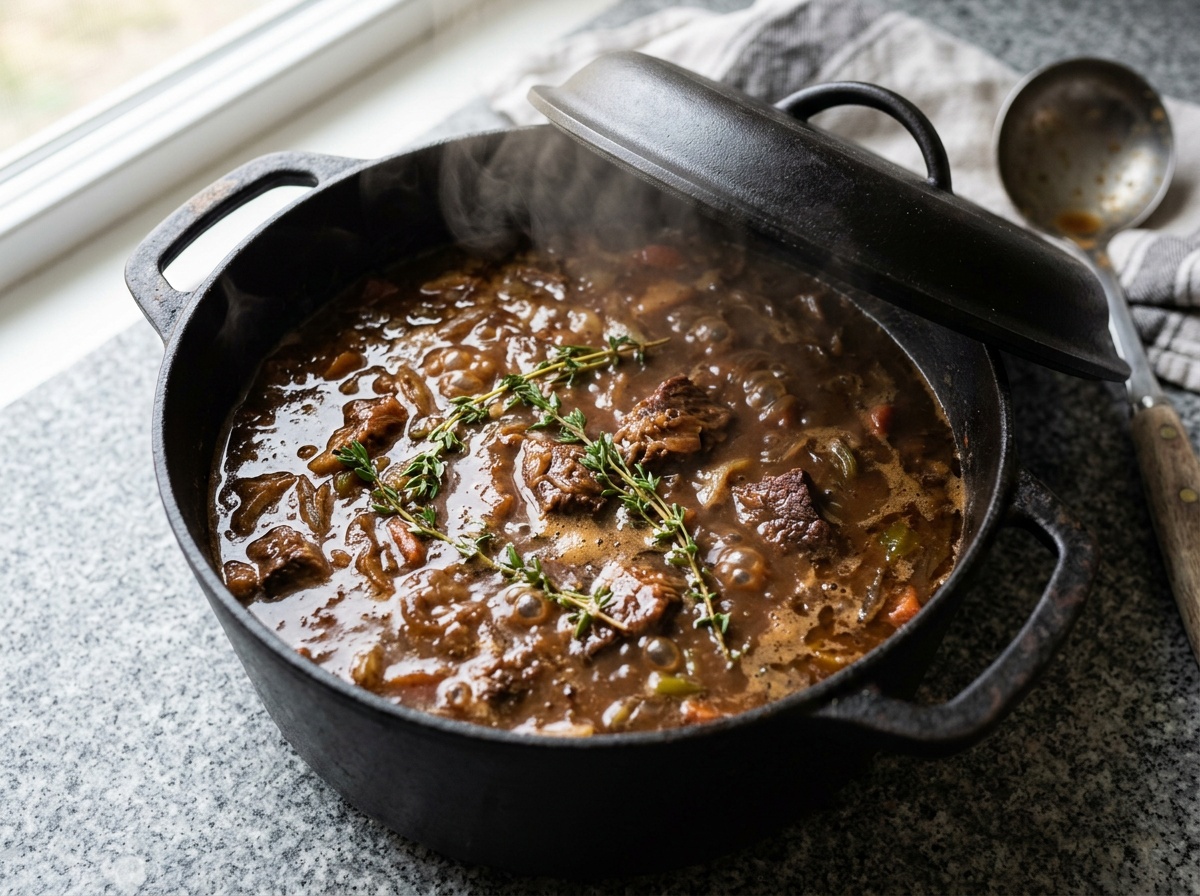
I return the browned beef and any accumulated juices on the plate back to the pot. I pour in the beef stock until the meat is almost completely submerged, then add the thyme sprigs. I bring the mixture to a very gentle boil, then immediately reduce the heat to low, cover the lid, and let it simmer for about 90 minutes. I check it every thirty minutes to ensure it is just barely bubbling—if it boils too hard, the meat can get dry. You are looking for the beef to be tender but not falling apart yet.
4Finishing with Vegetables
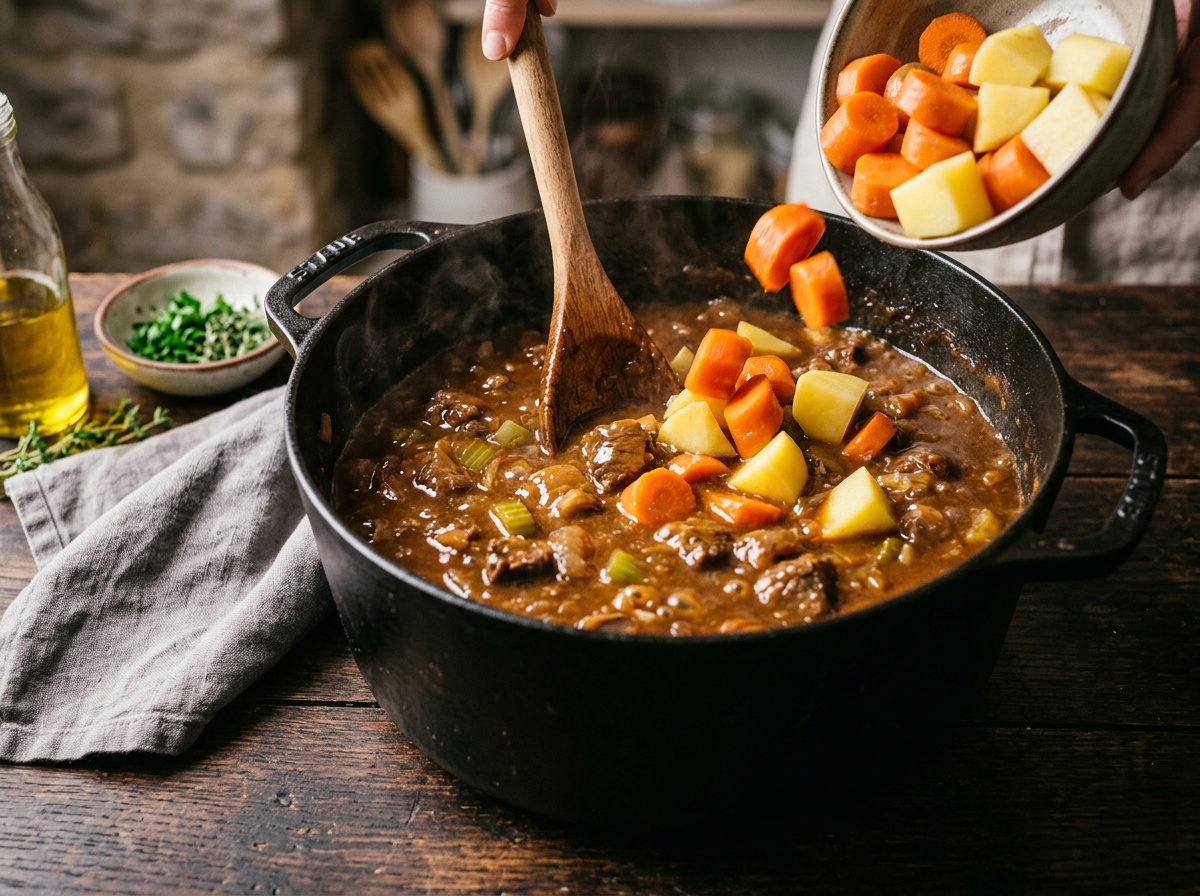
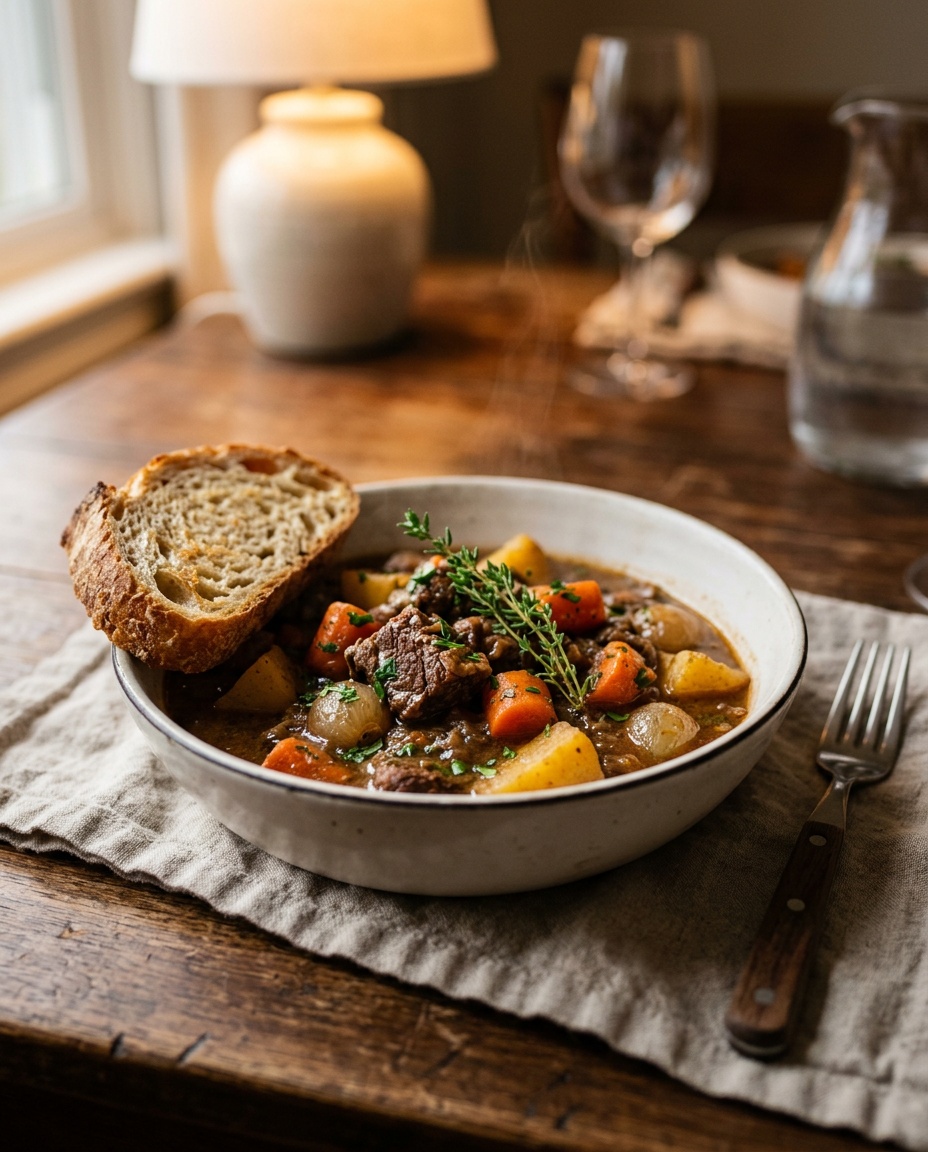
After 90 minutes, I add the carrots and potatoes to the pot. I continue to simmer, covered, for another 45 to 60 minutes until the vegetables are fork-tender and the beef is buttery soft. If the gravy looks too thin for your liking, I remove the lid during the last 20 minutes to reduce it down. Finally, I remove the thyme stems, taste the sauce, and season aggressively with salt and freshly cracked black pepper. I let the stew rest off the heat for 10 minutes before serving, as the flavors meld and settle significantly during this time.
Tips & Variations
Don’t Rush the Searing: Resist the urge to move the meat while it is searing. If you try to flip it too early, it will stick to the pan; wait until it releases naturally, which is a sign it has developed a proper, flavor-packed crust.
Meat Selection Matters: Always choose chuck roast for your stew. The high fat and collagen content is perfect for long, slow braising, whereas leaner cuts like round or sirloin will simply turn dry and stringy during the long simmer.
Vegetable Timing: I add my root vegetables about an hour before the end of cooking. If you throw them in at the beginning, they will turn to mush long before the beef is tender, resulting in a grainy sauce.
Storage and Reheating: This stew tastes even better the next day after the flavors have melded in the fridge. Store it in an airtight container for up to 4 days, and reheat slowly on the stove over medium-low heat.
Thickening the Gravy: If you prefer a thicker gravy, you can make a simple slurry by whisking 1 tablespoon of cornstarch with 2 tablespoons of cold water. Stir this into the simmering stew during the last 10 minutes of cooking.
Nutrition Information
Per serving (approximate values)
| Nutrient | Amount |
|---|---|
| Calories | 480 |
| Protein | 38g |
| Carbohydrates | 28g |
| Total Fat | 22g |
| Fiber | 4g |
| Sugar | 6g |
Frequently Asked Questions About beef stew recipe stove top
How long should I simmer my beef stew recipe stove top for the best results?
▼
For this beef stew recipe stove top, you should plan on a total simmer time of about 2.5 to 3 hours. After searing the meat and adding your aromatics and stock, you need to simmer the beef covered for roughly 90 minutes before adding vegetables, then another 45 to 60 minutes for everything to become tender.
Can I substitute red wine in this hearty stew?
▼
Yes, you can easily substitute the red wine with more beef stock or even a little bit of balsamic vinegar mixed into the broth. The wine provides acidity and depth, so adding a teaspoon of balsamic vinegar helps replicate that complexity without the alcohol, ensuring your sauce remains balanced and savory.
How do I know when the meat is done?
▼
You will know the beef is perfectly cooked when a fork slides into a cube of meat with zero resistance. It should be tender enough to pull apart easily, yet still hold its shape; if it is tough or chewy, it simply needs more time simmering over low heat.
What is the best way to reheat leftover stew?
▼
Reheat leftover stew on the stovetop over medium-low heat, stirring occasionally, until it reaches a gentle simmer. Avoid microwaving large portions, as this can heat the edges faster than the center, potentially drying out the meat; a slow, gentle reheat keeps the texture of the beef and potatoes perfect.
Why did my vegetables fall apart during cooking?
▼
Your vegetables likely fell apart because they were added at the same time as the meat or cooked for too long. Vegetables like potatoes and carrots should only be added to the pot during the final hour of cooking, which ensures they remain tender and hold their shape rather than dissolving into the sauce.