Introduction
I still remember the first rainy Tuesday I made this beef stew recipe dutch oven; the house smelled like warmth and comfort for hours. I was standing in my kitchen, trying to figure out how to coax the most flavor out of a few simple ingredients for my family. That day, I learned that patience is the primary ingredient when you are working with a heavy cast-iron pot.
This dish stays in my regular rotation because it delivers a depth of flavor you just cannot get from a slow cooker. I find that when I use the stove, the meat browns properly, which builds the foundation for the sauce. It is my go-to meal for cold autumn weekends when the schedule is clear and I want something satisfying that feels like a hug in a bowl.
In this guide, I will share exactly how to manage the heat and timing to get those tender chunks of beef. I made a few mistakes early on, like overcrowding the pot and steaming the meat instead of searing it, but I figured out how to fix that. By the end, you will have a rich, hearty stew where every root vegetable is cooked just right and the sauce is glossy.
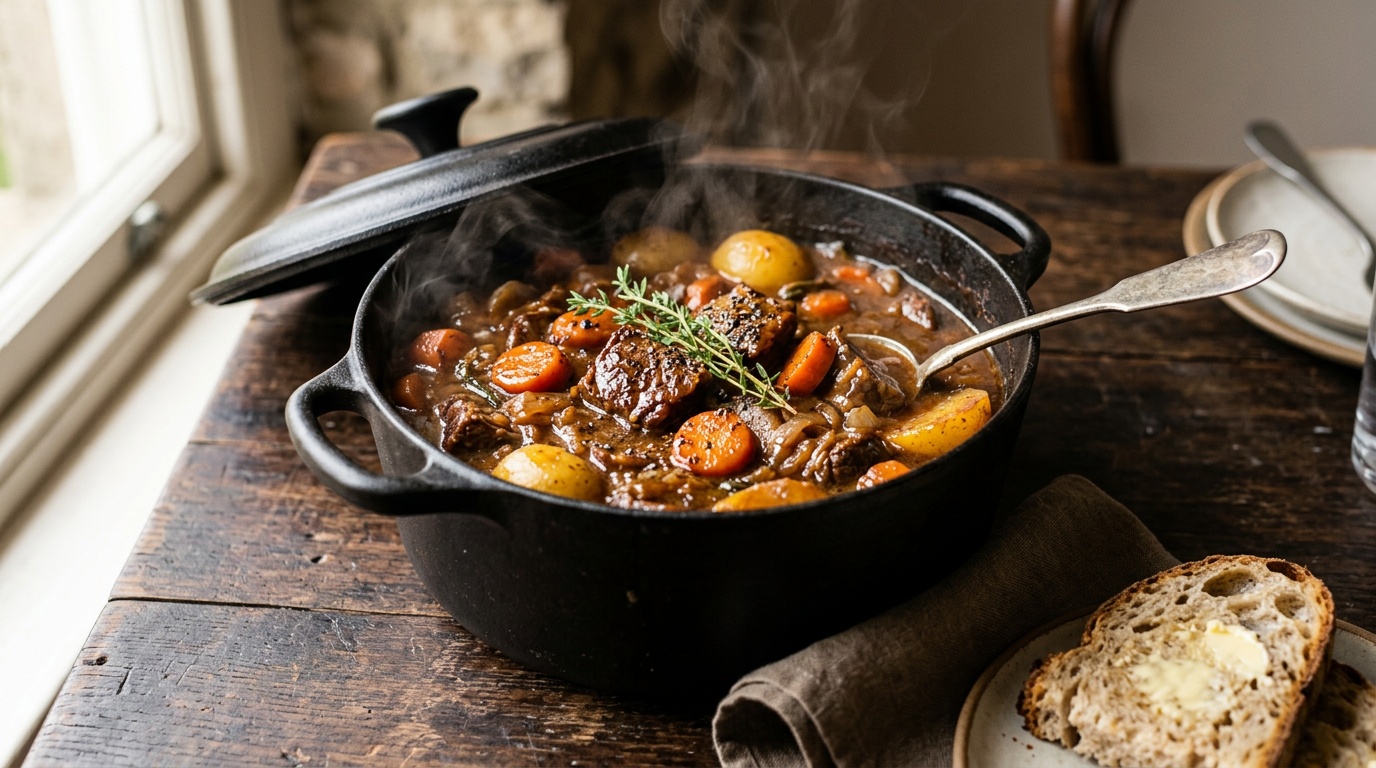
Why This Recipe Works
Searing for Depth: Browning the beef in batches is how I build the foundation for the entire flavor profile when using this beef stew recipe dutch oven. When the surface of the meat hits the hot oil, it creates a dark crust, which is a chemical reaction that provides a savory base for the gravy. If you crowd the pan, the temperature drops, and the meat releases its juices instead of browning, which is why I always do this in smaller, manageable portions.
The Science of Low and Slow Cooking: The secret to tender beef is the low and slow cooking process inside the dutch oven. By keeping the heat low, the tough collagen in the chuck roast slowly breaks down into gelatin, which thickens the sauce and gives the beef a soft texture. High heat would just toughen the protein, so I keep the liquid at a very gentle, barely-there simmer for the entire time to allow this breakdown to occur properly.
Building a Rich Sauce: Deglazing the pot with a splash of liquid is where I gather all the concentrated flavor left from the searing process. Those dark, stuck-on brown bits at the bottom of the pot are pure flavor, and once they dissolve into the wine or broth, they become the backbone of the stew. I scrape the bottom thoroughly with a wooden spoon to make sure every last bit of that crust is incorporated into the liquid for the best result.
Ingredients
The Stew
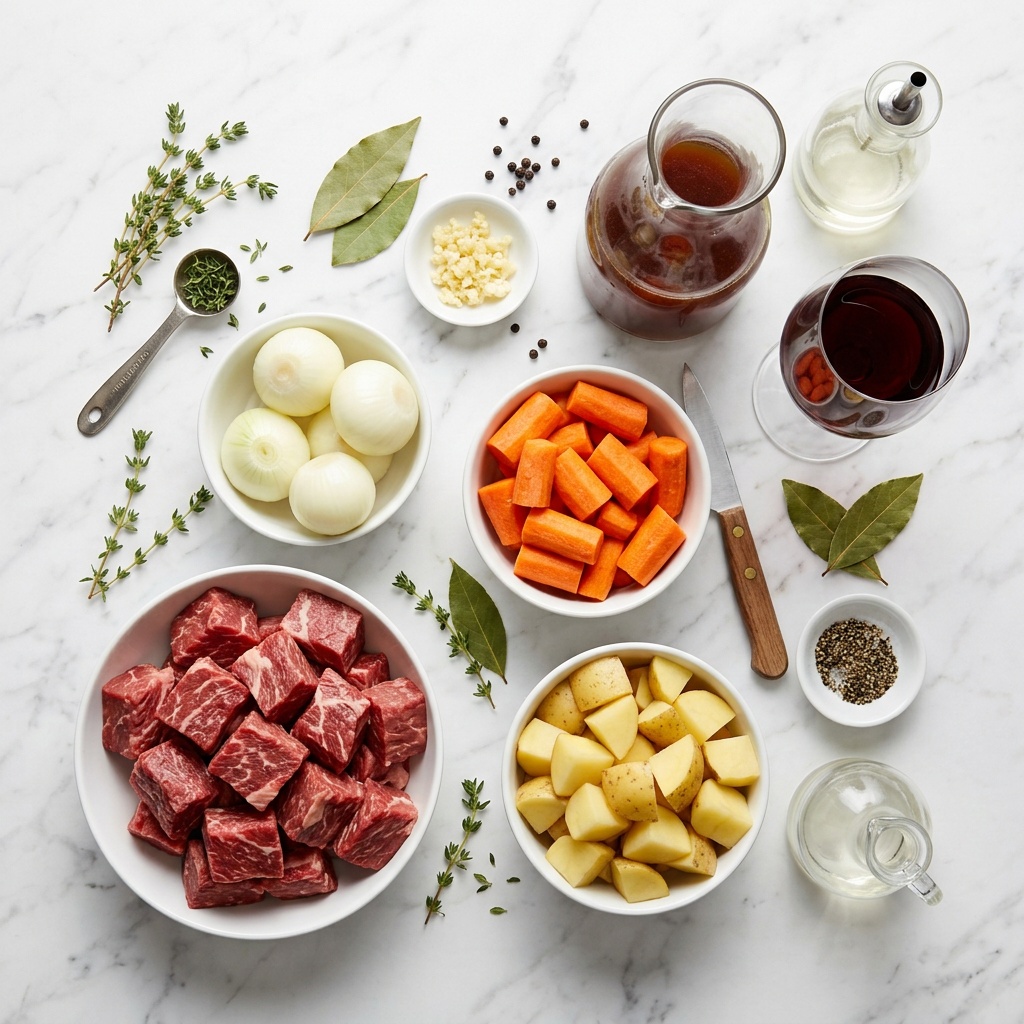
- 3 lbs beef chuck roast (cut into 1.5-inch chunks)
- 3 tbsp vegetable oil (for searing)
- 2 cups dry red wine (like Cabernet or Merlot)
- 4 cups beef broth (low sodium)
Vegetables and Aromatics
- 2 cups pearl onions (peeled)
- 4 large carrots (peeled and sliced into thick rounds)
- 1.5 lbs Yukon gold potatoes (cut into 1-inch chunks)
- 3 sprigs fresh thyme
Instructions
1Sear the Beef
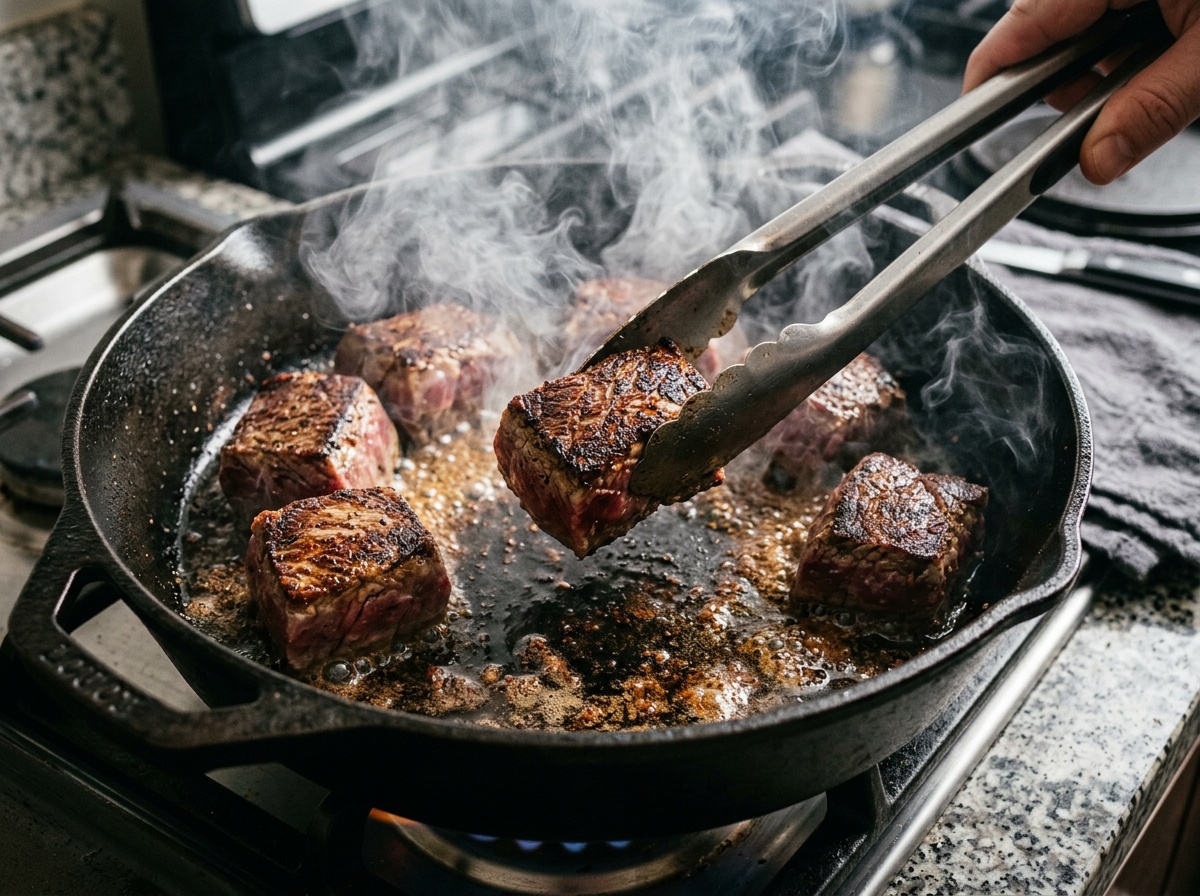
I start my beef stew recipe dutch oven by getting the pot very hot over medium-high heat. I pat the beef chunks completely dry with paper towels — if they are wet, they will steam instead of brown. I add the oil, wait until it shimmers, and place the meat in a single layer without crowding. I let the meat sear undisturbed for about 3-4 minutes per side until a deep brown crust forms. I work in two or three batches, removing the browned beef to a plate and ensuring I don’t steam the meat by overcrowding.
2Sauté and Deglaze
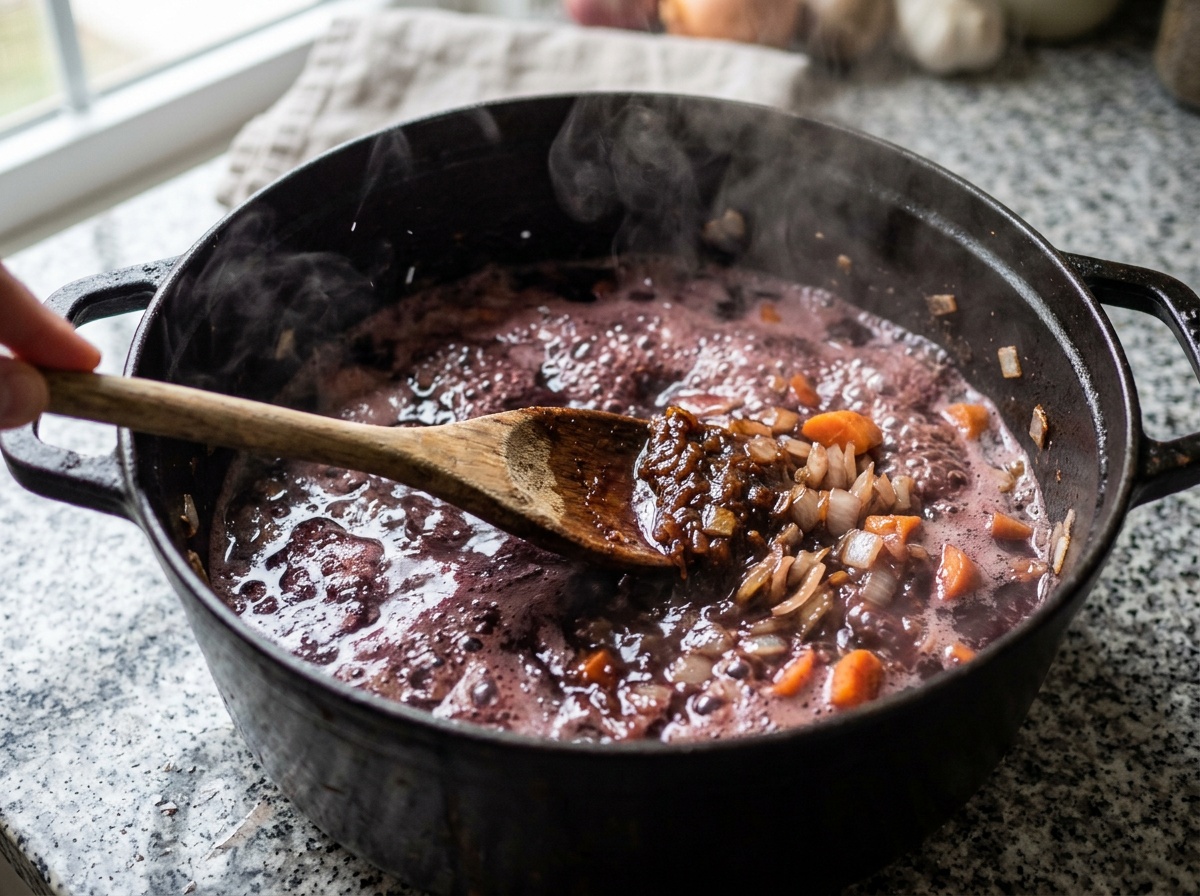
After the meat is out, I reduce the heat to medium and add my onions and carrots to the pot. I cook them for about 5 minutes until they soften slightly, then add the garlic for just 30 seconds until it smells fragrant. Now I perform the red wine deglazing: I pour in the wine and use a wooden spoon to scrape every dark brown bit off the bottom. This is where all the concentrated flavor lives, so I make sure the liquid is bubbling and the pot surface is clean before proceeding.
3Simmer the Stew
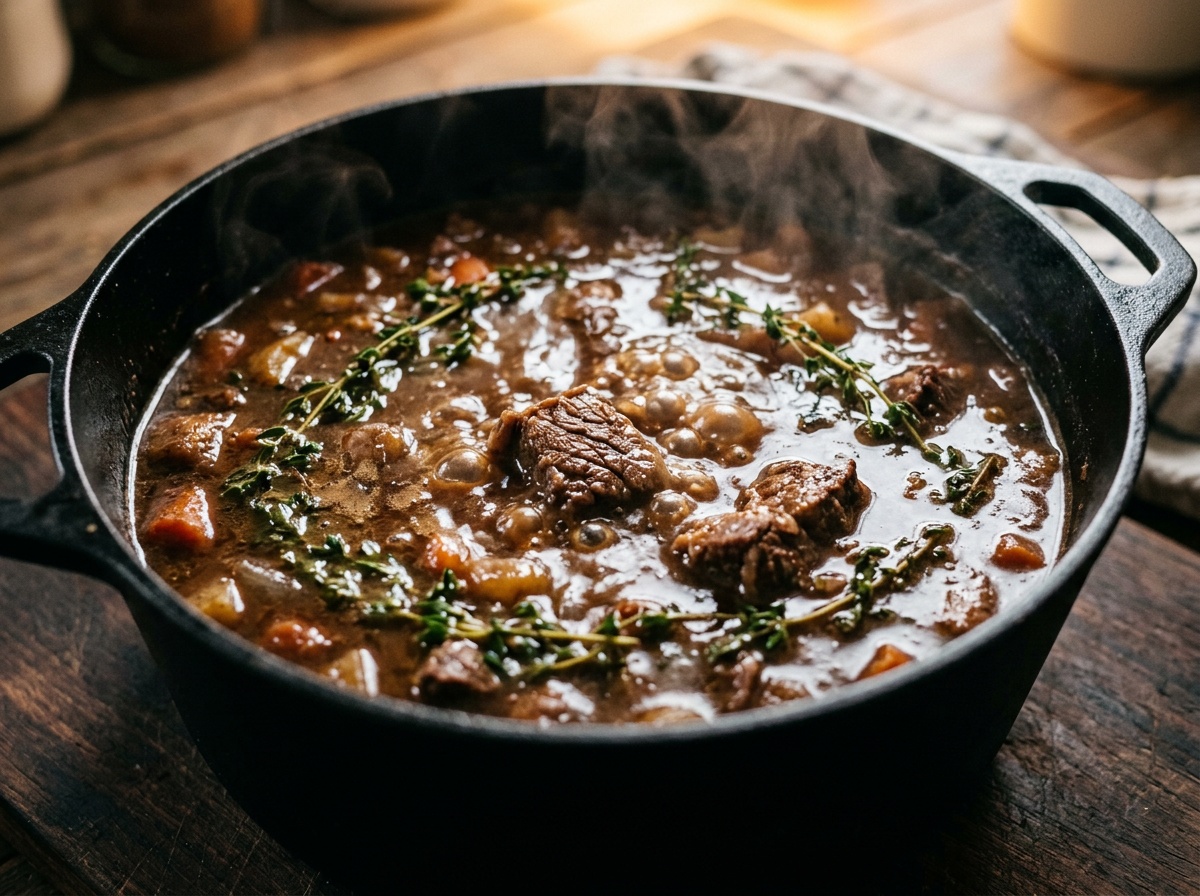
I return the browned beef and any accumulated juices to the pot, then pour in the beef broth until the meat is just covered. I add the fresh herbs and bring everything to a gentle, rolling boil. Immediately, I turn the heat down to the lowest setting, cover the pot with the lid, and let it go for 2 hours. I want to see just an occasional bubble rising to the surface, which indicates that low and slow cooking environment that yields the most tender results.
4Finish and Season
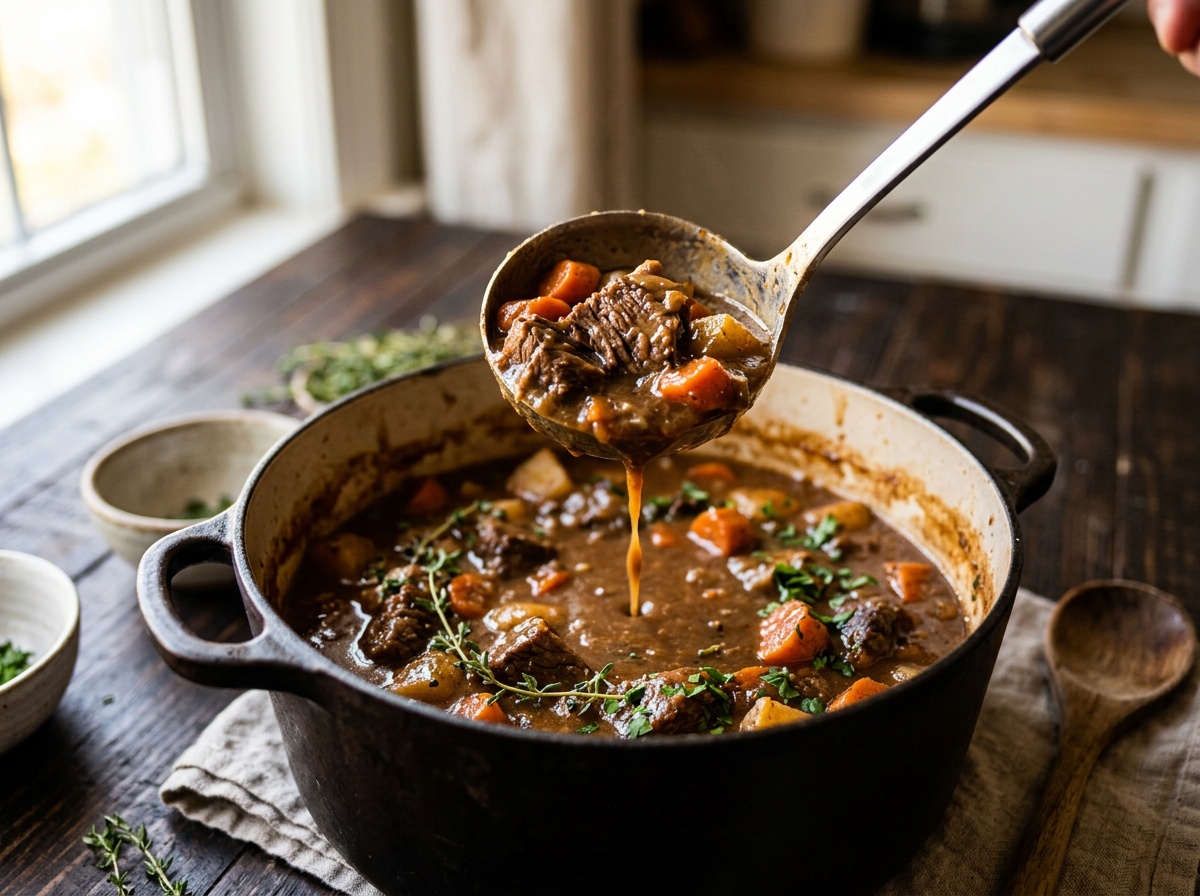
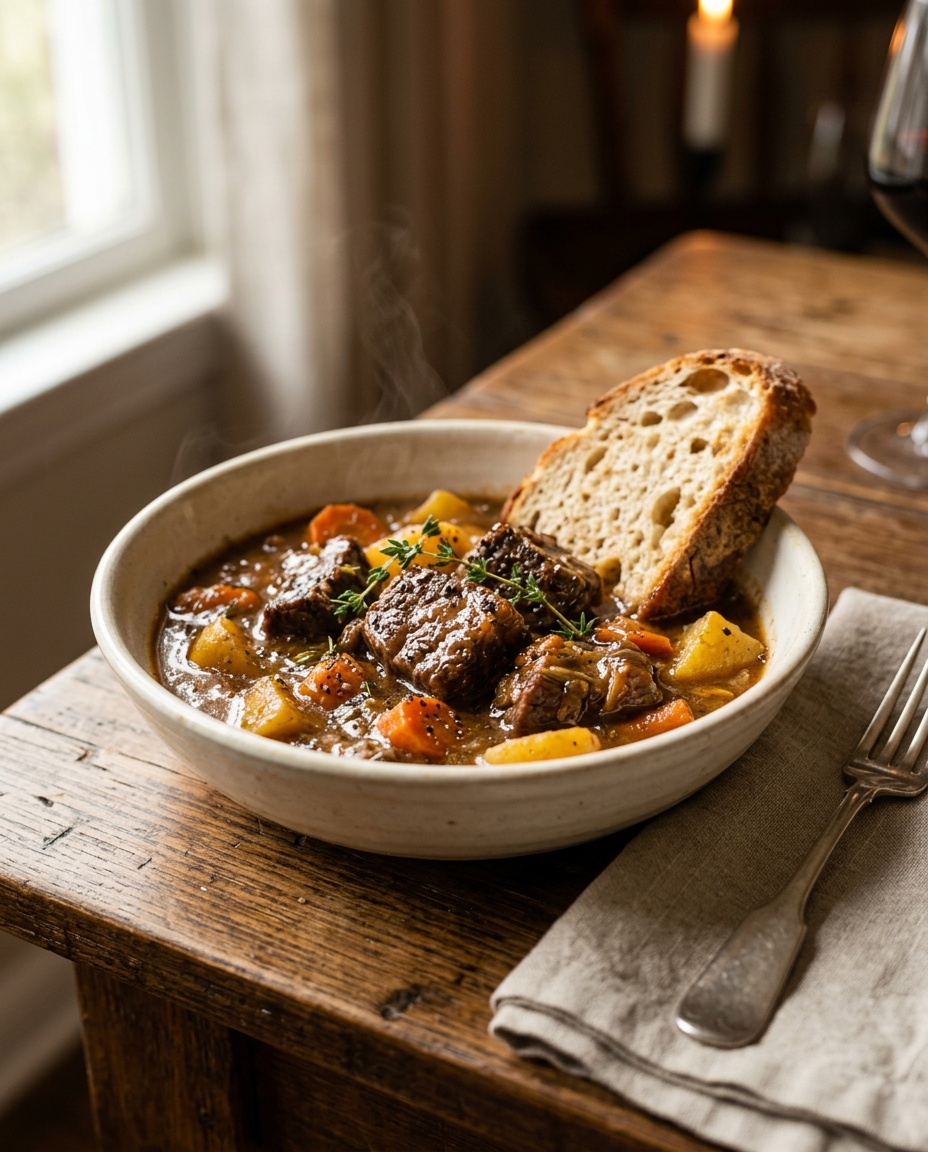
After 2 hours, I check the beef — it should be tender enough to pull apart with a fork. I add the chopped potatoes now so they have time to soften without turning into mush. I put the lid back on and simmer for another 45 minutes. Once the potatoes are fork-tender, I remove the lid to let the sauce reduce to a rich consistency. I taste for seasoning, adding salt and pepper as needed, and discard the herb stems before serving warm.
Tips & Variations
Proper Browning: Never skip the searing step. I have found that browning the meat in batches creates the deep, caramelized flavor profile that defines a good stew; if you crowd the pan, the moisture trapped between pieces prevents that crust from forming.
Wine Selection: When choosing a wine for red wine deglazing, pick something you would actually drink. I usually use a Cabernet Sauvignon or a dry Merlot, as these varieties have enough body to hold up to the beef without making the sauce overly sweet.
Storage and Reheating: Stew often tastes better the next day because the flavors have more time to meld. I store it in an airtight container in the fridge for up to 3 days and reheat it gently on the stovetop over low heat to keep the beef from drying out.
Potato Choice: I exclusively use Yukon Gold potatoes for this. They have a waxier texture than Russets, which means they hold their shape during the long simmer instead of disintegrating into the liquid and making the sauce grainy.
Herb Usage: Fresh herbs like thyme are much better than dried versions here. I leave the sprigs whole and add them to the pot during the simmer, then simply fish the woody stems out right before serving to keep the finished texture clean.
Nutrition Information
Per serving (approximate values)
| Nutrient | Amount |
|---|---|
| Calories | 480 |
| Protein | 35g |
| Carbohydrates | 32g |
| Total Fat | 22g |
| Fiber | 4g |
| Sugar | 5g |
Frequently Asked Questions About beef stew recipe dutch oven
How long does it take to cook this beef stew recipe dutch oven?
▼
This beef stew recipe dutch oven typically takes about 3 hours of total cooking time to achieve the right texture. The initial searing takes about 15 minutes, while the simmering process takes roughly 2.5 to 3 hours to break down the connective tissue in the meat. I always recommend checking at the 2.5-hour mark to see if the beef is fork-tender.
Can I use a different cut of meat for this stew?
▼
While I recommend using a tender beef chuck roast because of its fat marbling and connective tissue, you can also use brisket or bottom round. Keep in mind that leaner cuts might need more time to break down, so check the meat tenderness after 3 hours of simmering to ensure it is not chewy.
What is the best way to thicken the gravy?
▼
If you find your sauce is too thin after simmering, I recommend removing the lid for the final 20 minutes of cooking to let the liquid reduce naturally. Alternatively, you can mix 1 tablespoon of cornstarch with 2 tablespoons of cold water to create a slurry and stir it into the stew during the last 10 minutes of cooking to get a rich savory gravy.
Can I make this stew ahead of time?
▼
Yes, this dish is fantastic for meal prep. I often make the entire batch a day in advance and store it in the refrigerator; the flavors intensify overnight. When reheating, I add a splash of beef broth to the pot to loosen the sauce and warm it slowly over medium-low heat until it is hot throughout.
Why do my vegetables turn into mush?
▼
The most common reason for mushy vegetables is adding them too early. I wait until the beef is mostly tender, about 45 minutes before the end of the cooking process, before adding the potatoes and carrots. This ensures they soften just enough to be tender but still hold their shape beautifully in the final bowl.