Introduction
The first time I attempted a beef short ribs recipe oven, it was a rainy November afternoon, and I wanted something that felt like a warm hug. My kitchen filled with the scent of red wine and aromatics, and I knew right then that this would become a regular in my household. I remember pulling the heavy Dutch oven out, checking the meat, and seeing it practically fall off the bone without any effort, which honestly felt like a victory for a home cook like me.
I keep coming back to this specific method because it is incredibly forgiving; unlike pan-seared steaks that can go from perfect to overdone in seconds, these ribs thrive on the long, slow heat. When I compare this to other preparations, like stovetop braising, I find that the oven provides a much more consistent, ambient heat that wraps around the beef, resulting in the most succulent, fall-off-the-bone ribs I have ever eaten. It is my favorite way to serve guests during the winter months when comfort food is non-negotiable.
You will learn how to properly sear your meat to build a deep foundation of flavor before creating a rich, red wine braising liquid that acts as the backbone of the dish. I spent a few tries figuring out the right ratio of wine to beef stock to get that perfect consistency, and I am sharing exactly how to gauge when the sauce has reached that glossy, coating texture. Expect a final dish that is dark, savory, and tender enough to eat with just a fork.
Why This Recipe Works
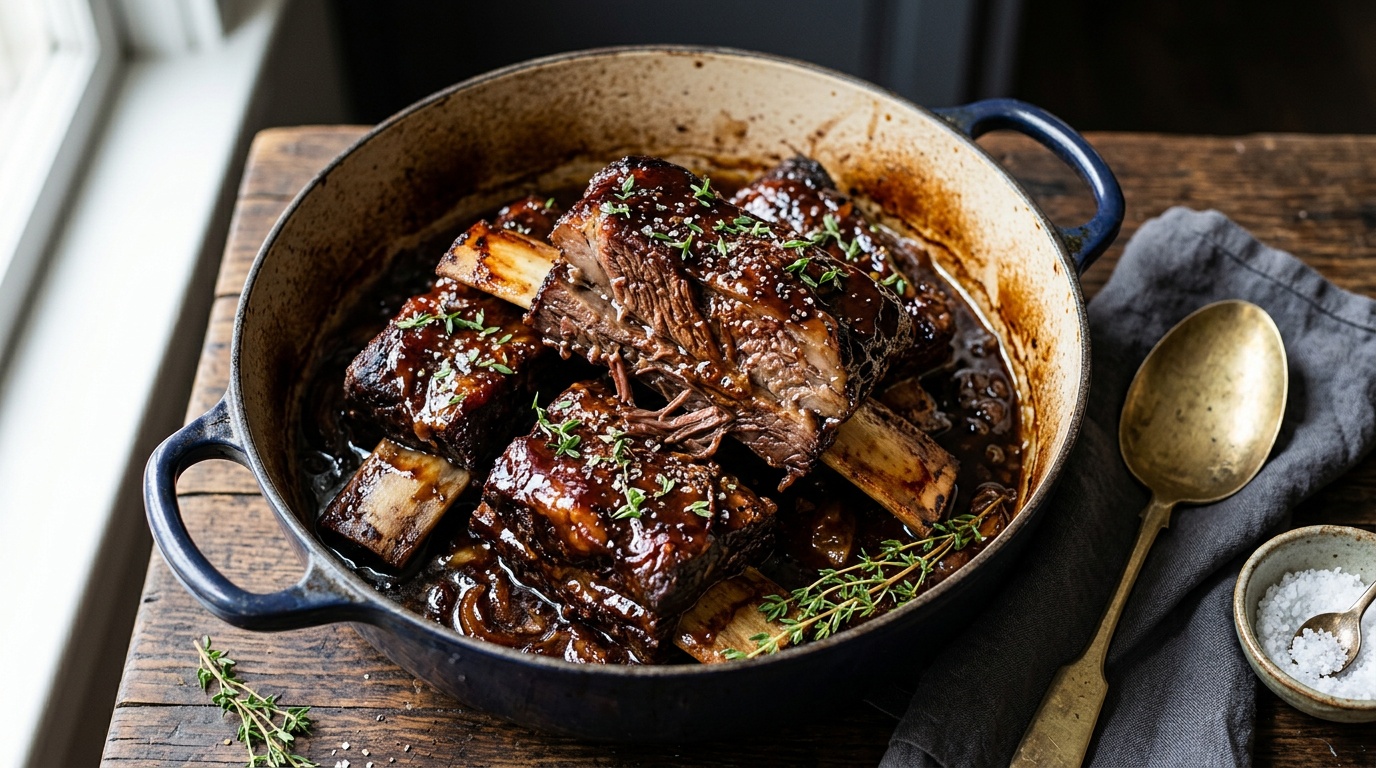
The Maillard Sear: Before anything else, I sear the meat to create a deep brown crust on the outside. This Maillard reaction is chemically necessary because it produces hundreds of unique flavor compounds that simply cannot be replicated by boiling or stewing alone. You want to see a dark, nearly mahogany color on all sides of the beef, which builds the base for a complex, savory braise.
Collagen Breakdown: Short ribs are tough, muscle-heavy cuts that rely on collagen for structure. By using a slow cooked beef recipe approach, the collagen slowly dissolves into gelatin over three hours at a low oven temperature. This transformation turns what would be a chewy piece of meat into buttery, tender bites that melt instantly on your palate.
Reduction and Emulsification: After the ribs are done, I reduce the strained liquid down until it coats the back of a spoon. This concentration process turns the braising juice into a thick, glossy red wine braising liquid that acts as a natural glaze. The fats from the beef emulsify into the sauce, providing a silky mouthfeel that a thin, watery broth just doesn’t offer.
Ingredients
The Ribs
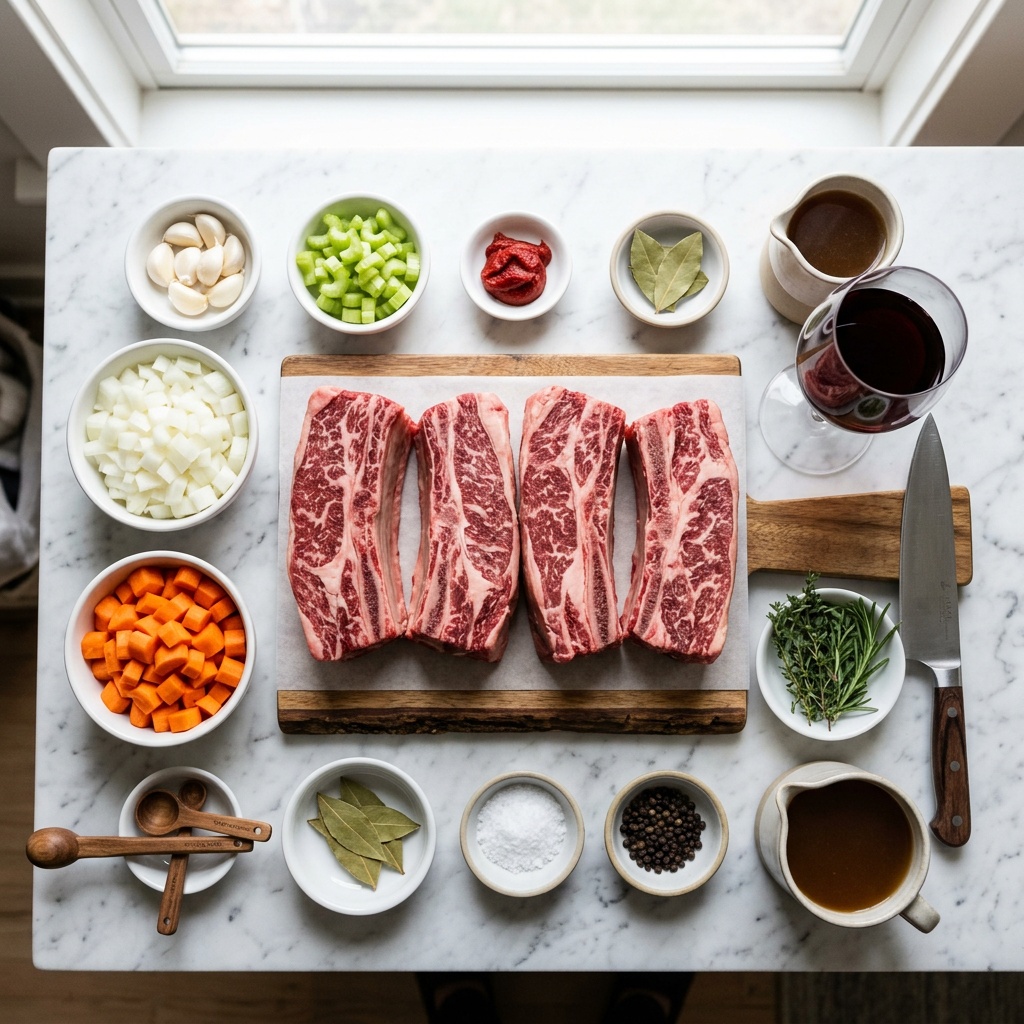
- 4 lbs bone-in beef short ribs (English-style, trimmed of excess fat)
- 2 tbsp grapeseed oil (for searing)
The Braise
- 1 large yellow onion (diced)
- 2 medium carrots (chopped)
- 2 cups dry red wine (Cabernet Sauvignon or Merlot)
- 3 cups beef stock (high-quality, low-sodium)
- 4 sprigs fresh thyme
Instructions
1Sear the Ribs Properly
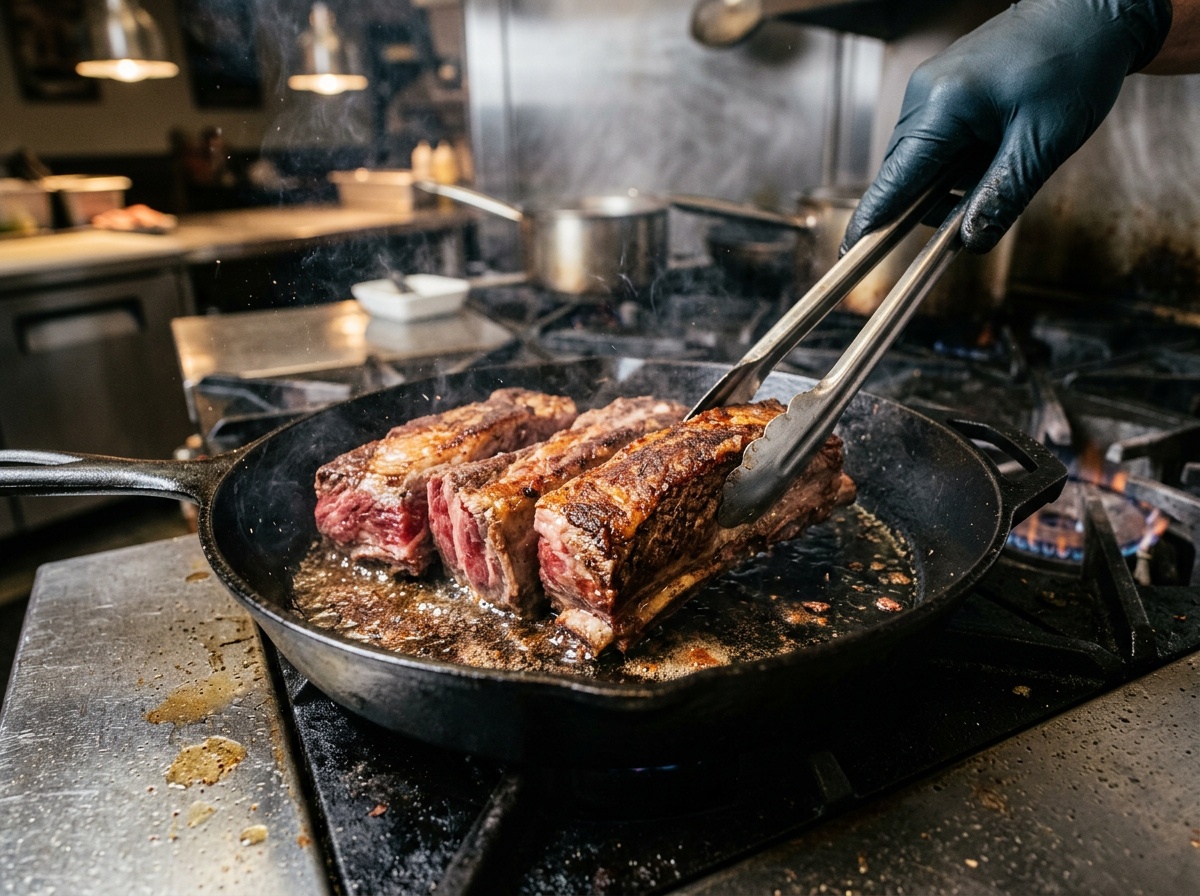
I start by preheating the oven to 325°F. I pat the ribs completely dry with paper towels; moisture on the surface prevents the meat from browning properly, and I want a deep, caramelized color. I heat the oil in a large enameled cast iron Dutch oven over medium-high heat until it shimmers. I sear the ribs in batches, making sure not to crowd the pan, because overcrowding leads to steaming instead of searing. I let them sit undisturbed for about 3-4 minutes per side until they develop a beautiful deep crust, then remove them to a plate.
2Build the Braise
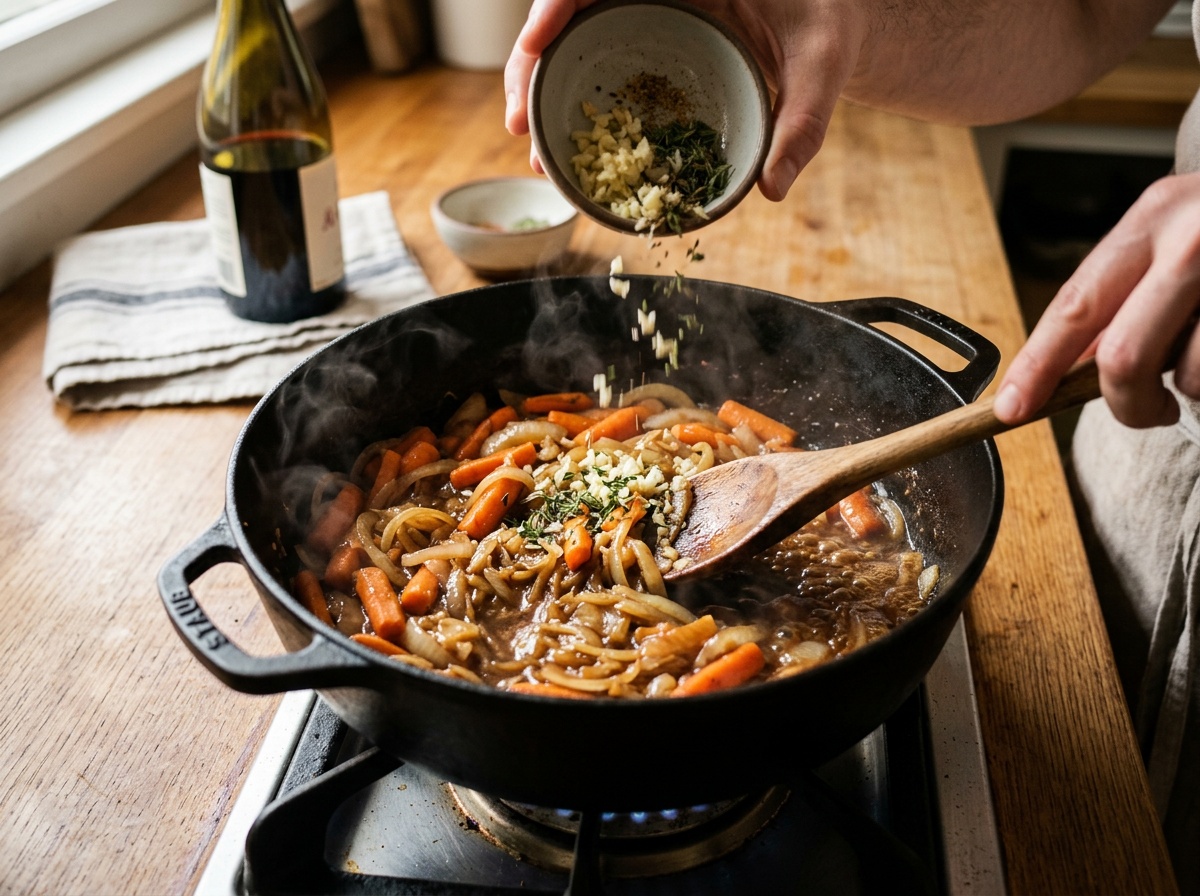
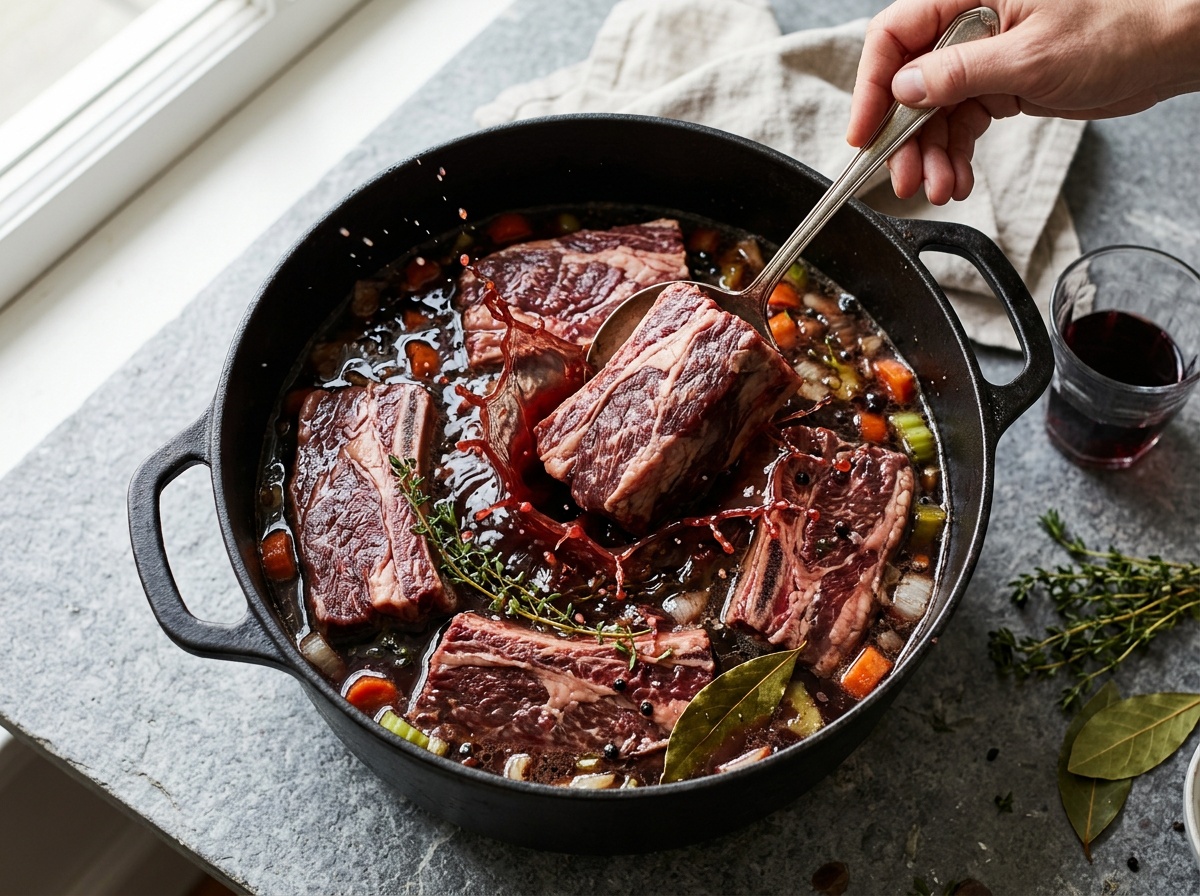
In the same Dutch oven, I add the onions and carrots, cooking them in the rendered beef fat for 6-8 minutes until they soften and start to brown. This is where I build the flavor for my beef short ribs recipe oven dish, so I scrape the bottom of the pot to release all the browned bits. I pour in the red wine and bring it to a simmer, letting it reduce by half to concentrate the flavor before adding the beef stock and thyme. Once the liquid is simmering, I nestle the ribs back into the pot, bone-side down, ensuring they are partially submerged but not completely covered.
3Slow Braise and Serve
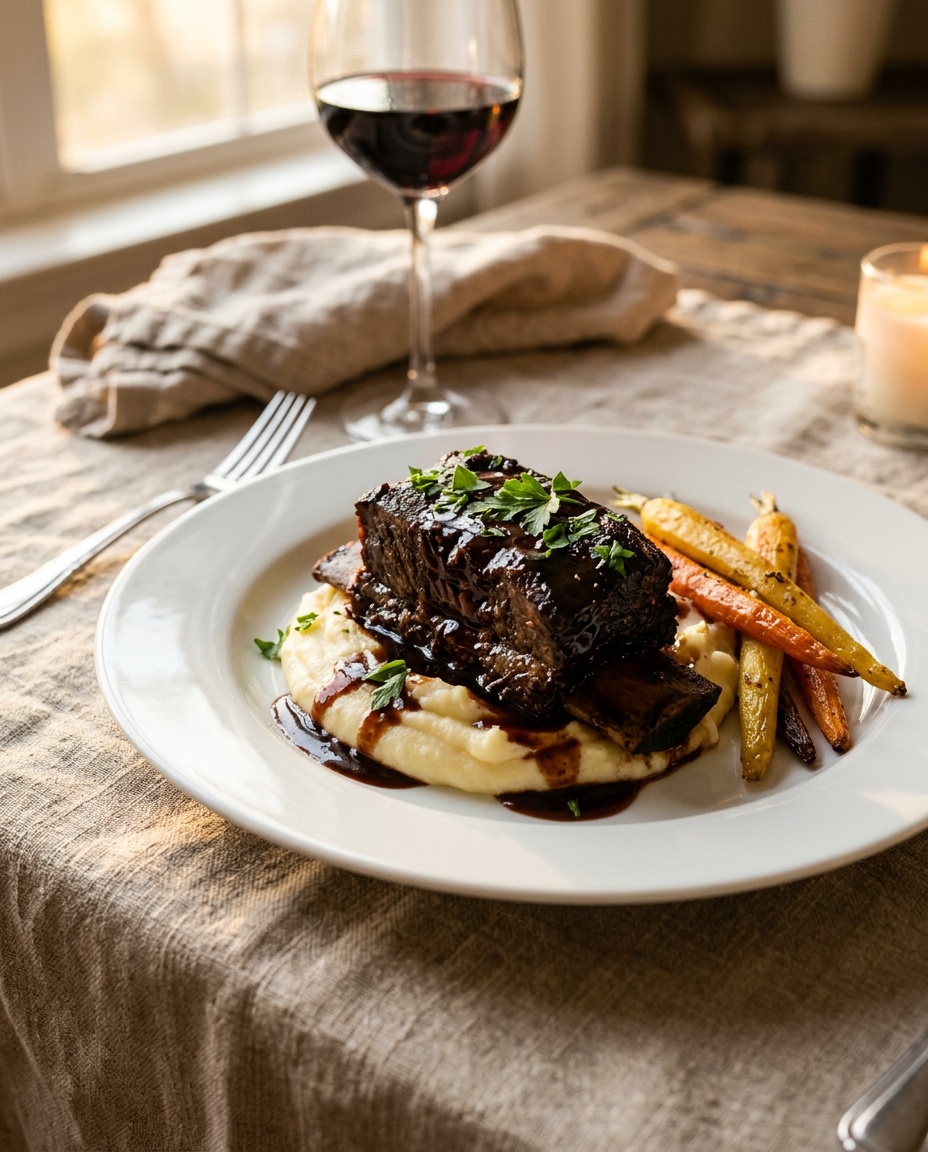
I cover the pot with a tight-fitting lid and transfer it to the middle rack of my oven. I let it braise for 3 to 3.5 hours, or until the meat is fork-tender and beginning to separate from the bone. I’ve found that checking at the 3-hour mark is crucial to avoid overcooking. Once finished, I carefully remove the ribs and strain the braising liquid into a saucepan, skimming off any excess surface fat. I boil the liquid over high heat until it reduces into a sticky, herb-infused glaze that coats the back of a spoon, then I pour it generously over the ribs to serve.
Tips & Variations
Sear Patience: Do not rush the searing process. If the meat sticks to the pan, it is not ready to turn yet; wait another minute until the proteins have naturally released from the surface, which is the mark of a proper sear.
The Right Wine: For the best flavor, use a dry red wine that you would actually enjoy drinking, like a Cabernet or Merlot. I avoid cooking wines found in grocery aisles because they are often overly salty and lack the complexity of a decent table wine.
Make Ahead Strategy: These tender oven-baked ribs actually taste better the next day after the flavors have had time to meld in the fridge. I recommend cooking them a day early, refrigerating overnight, and then skimming the solidified fat off the top before reheating.
Don’t Overcrowd: I always cook the ribs in two batches even if they look like they might fit in the pot. Crowding leads to gray, boiled meat instead of the deep, delicious crust we are aiming for in this beef short ribs recipe oven.
Serving Suggestion: I love serving these over creamy garlic mashed potatoes or polenta to soak up the sauce. A side of bright, acidic roasted broccolini helps cut through the richness of the beef and adds a necessary texture contrast.
Nutrition Information
Per serving (approximate values)
| Nutrient | Amount |
|---|---|
| Calories | 650 |
| Protein | 45g |
| Carbohydrates | 12g |
| Total Fat | 48g |
| Fiber | 2g |
| Sugar | 5g |
Frequently Asked Questions About beef short ribs recipe oven
How long does a beef short ribs recipe oven method actually take?
▼
This beef short ribs recipe oven method takes about 3 to 3.5 hours of inactive roasting time. While the oven does the heavy lifting, you need to budget about 25 minutes for the initial searing and vegetable preparation. I always suggest checking the tenderness with a fork at the 3-hour mark to ensure the meat is perfectly tender.
Can I use a different liquid instead of wine for braised beef ribs?
▼
If you prefer not to use alcohol, you can certainly replace the red wine with an equal amount of high-quality beef stock mixed with a splash of balsamic vinegar. The vinegar adds the necessary acidity to balance the rich beef, which mimics the function of the wine in the braising liquid. I usually start with 1 tablespoon of vinegar and adjust to taste.
How do I know if my ribs are done properly?
▼
The meat is ready when it is fork-tender, meaning a fork slides into the muscle with absolutely no resistance and the meat is beginning to fall away from the bone. If it still feels firm or rubbery, cover the pot and keep it in the oven for another 20 minutes. Testing the resistance is the most reliable way to gauge progress, rather than relying solely on the clock.
How should I store leftover ribs?
▼
Store the leftovers in an airtight container with plenty of the braising liquid to keep the meat moist. They will stay fresh in the refrigerator for up to 3 days, and they actually improve in flavor as they sit. To reheat, I place them back in a small saucepan with a splash of water and heat over low heat until warmed through, or use the oven at 300°F.
What kind of pot is best for this recipe?
▼
A heavy-bottomed, enameled cast iron Dutch oven is the best tool for this job because it conducts heat evenly and retains temperature well. If you do not have one, you can use a large, deep stainless steel pot with a tight-fitting lid, though you might need to check on the liquid levels more frequently. Avoid thin aluminum pots, as they can cause the sauce to scorch on the bottom during the long braise.