Introduction
I vividly remember the first time I tried making ribs inside because the weather outside was absolutely miserable. I wanted that smoky, fall-off-the-bone goodness without standing in the rain, so I spent weeks perfecting my beef ribs recipe oven style. It was a cold Tuesday in February, and the kitchen started smelling so savory that my neighbors actually knocked on the door to ask what was cooking.
I keep coming back to this method because it turns out consistently better than most restaurant versions I’ve had. It’s my go-to for making slow-roasted beef ribs during the winter months, although I honestly make them all year round now. In my experience, the oven provides a controlled, steady heat that mimics a smoker without the hassle, leading to incredibly tender beef ribs that practically melt in your mouth.
You’ll learn the importance of low-and-slow cooking to break down the connective tissue and why patience is truly the main ingredient here. I’ve made the mistake of rushing the process and turning the heat too high, which leads to tough meat, so I’ll share the exact temperatures I’ve found work best. By the end, you’ll see how to achieve a caramelized, sticky glaze that looks just as good as it tastes.
Why This Recipe Works
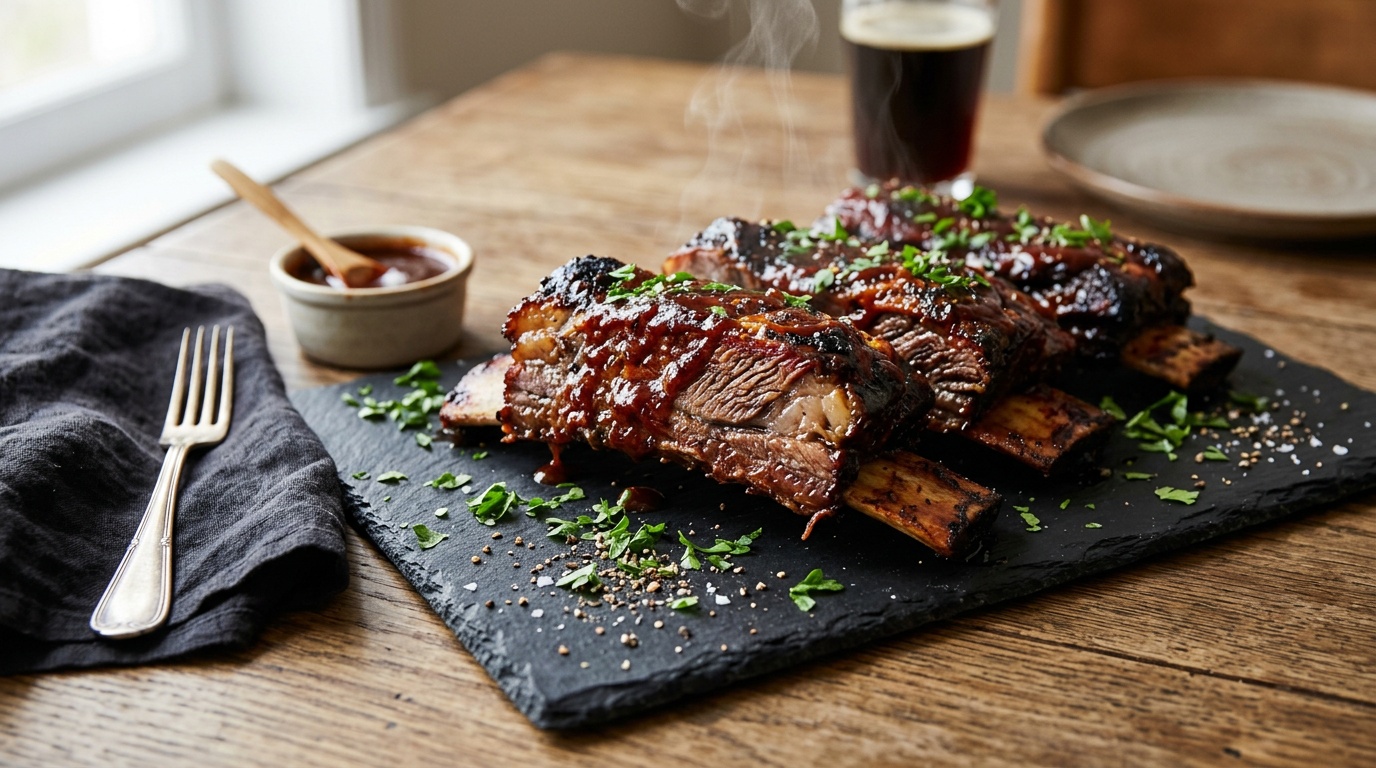
Low and Slow Cooking: The key to slow-roasted beef ribs is the low temperature, which allows the tough collagen in the beef to slowly break down into gelatin. When you cook the ribs at 275°F, you are essentially braising them in their own rendered fat and the moisture from the aromatics. This chemical transformation is why the meat becomes fork-tender rather than stringy or chewy.
Fat Rendering: Beef ribs are notoriously fatty, which is exactly why they taste so rich when cooked correctly. I have found that trimming the excess hard fat cap while leaving some of the intramuscular fat allows the meat to self-baste during the long cooking process. This constant basting keeps the meat hydrated, ensuring you end up with juicy beef ribs every single time.
Maillard Reaction: In the final twenty minutes of cooking, I increase the heat slightly and add my glaze to trigger the Maillard reaction on the surface. This creates a complex, savory, and slightly sweet crust that creates a beautiful contrast to the tender meat inside. The sugars in the glaze caramelize, providing a depth of flavor that is essential for a balanced bite.
Ingredients
For the Ribs
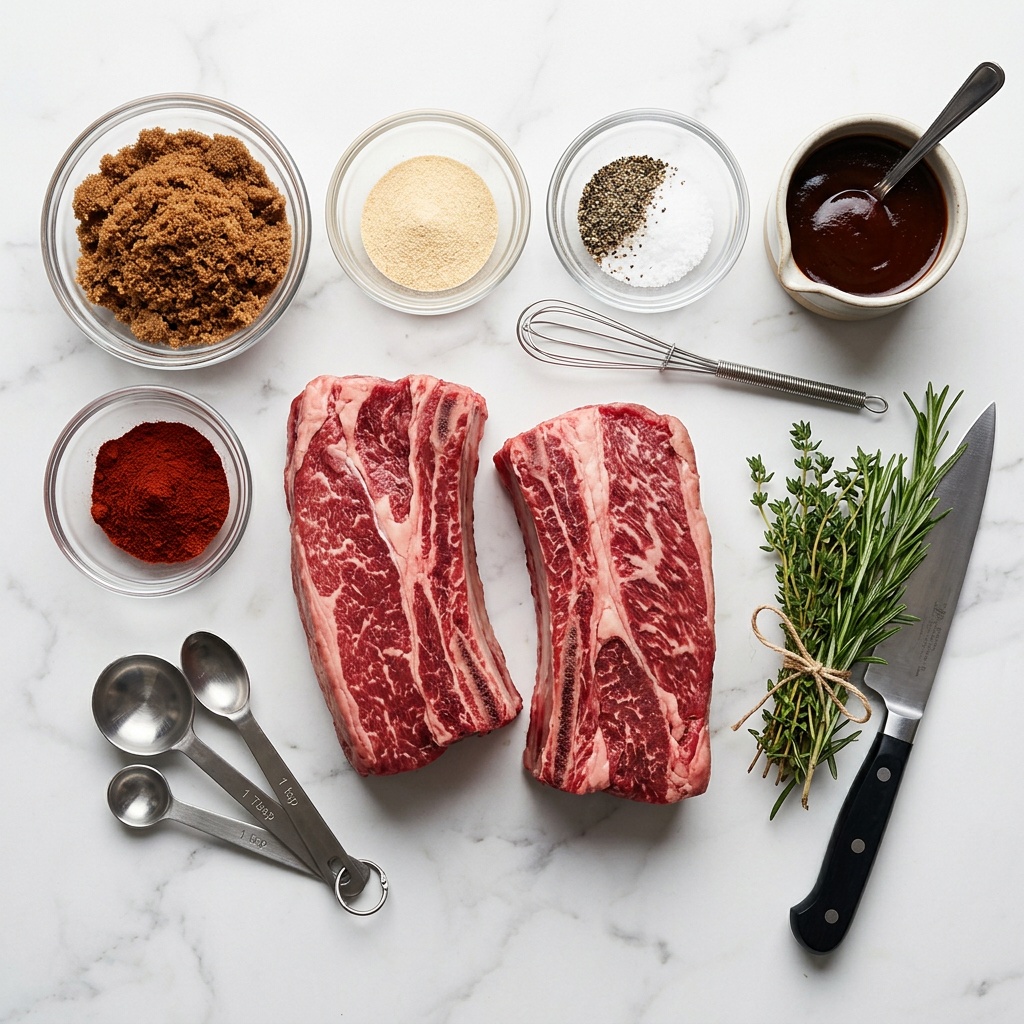
- 4 lbs beef short ribs (bone-in, english cut)
- 1/4 cup brown sugar (packed)
- 1 tbsp smoked paprika
- 1 tsp garlic powder
For the Glaze
- 1 cup barbecue sauce (your favorite brand)
- 1 tbsp apple cider vinegar
Instructions
1Prep and Season Ribs
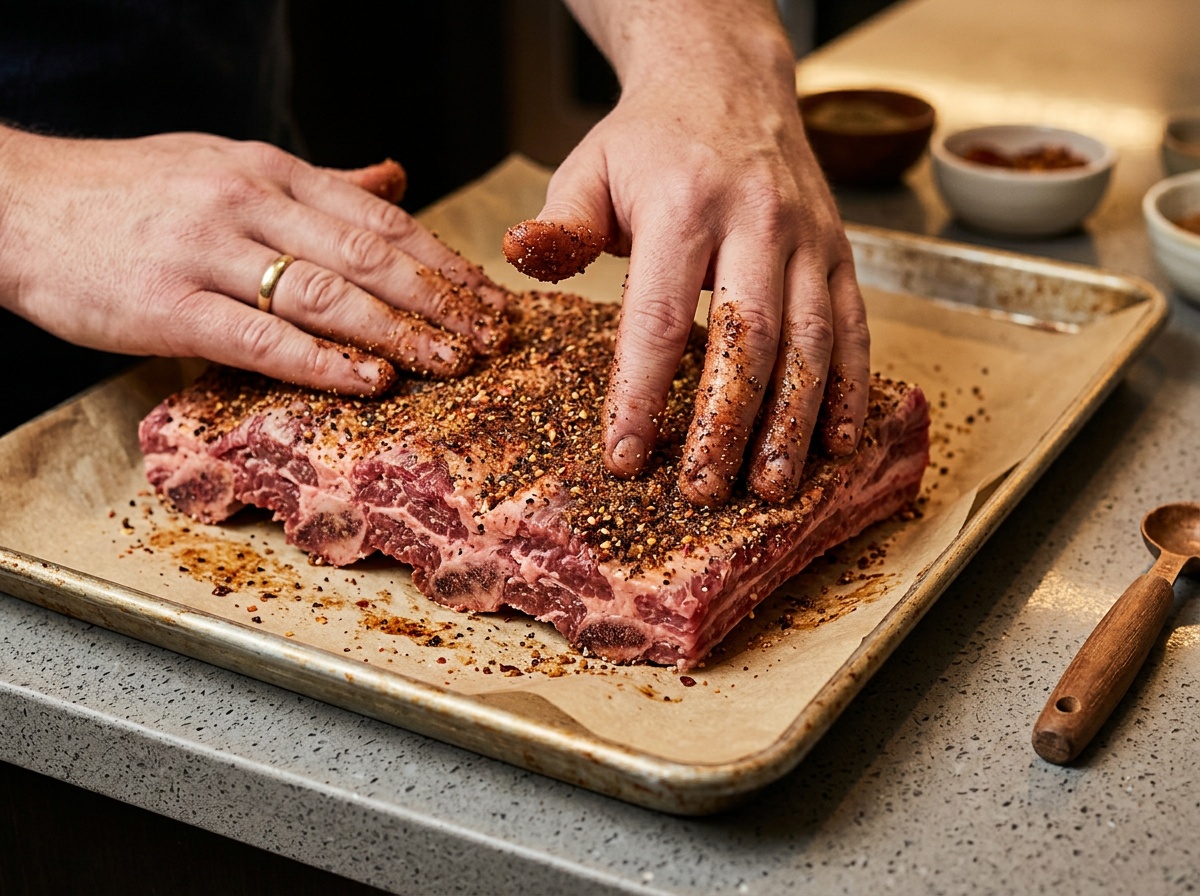
I start by prepping my space and getting the ribs ready, which involves removing the silver skin from the back of the ribs if your butcher hasn’t already done it for you. Using a butter knife to get under the membrane and a paper towel to pull it off helps significantly with texture. Once that is done, I massage the beef ribs marinade—my mix of brown sugar, smoked paprika, garlic powder, and a dash of cumin—all over the meat. I find it’s essential to let this sit for at least an hour at room temperature to allow the flavors to penetrate the surface fibers. Don’t skip this, because seasoning just the outside doesn’t create the deep flavor profile you’re aiming for. Once the ribs are seasoned, I place them bone-side down on a foil-lined baking sheet to catch any drippings, ensuring the cleanup is a breeze.
2Slow Roast the Ribs
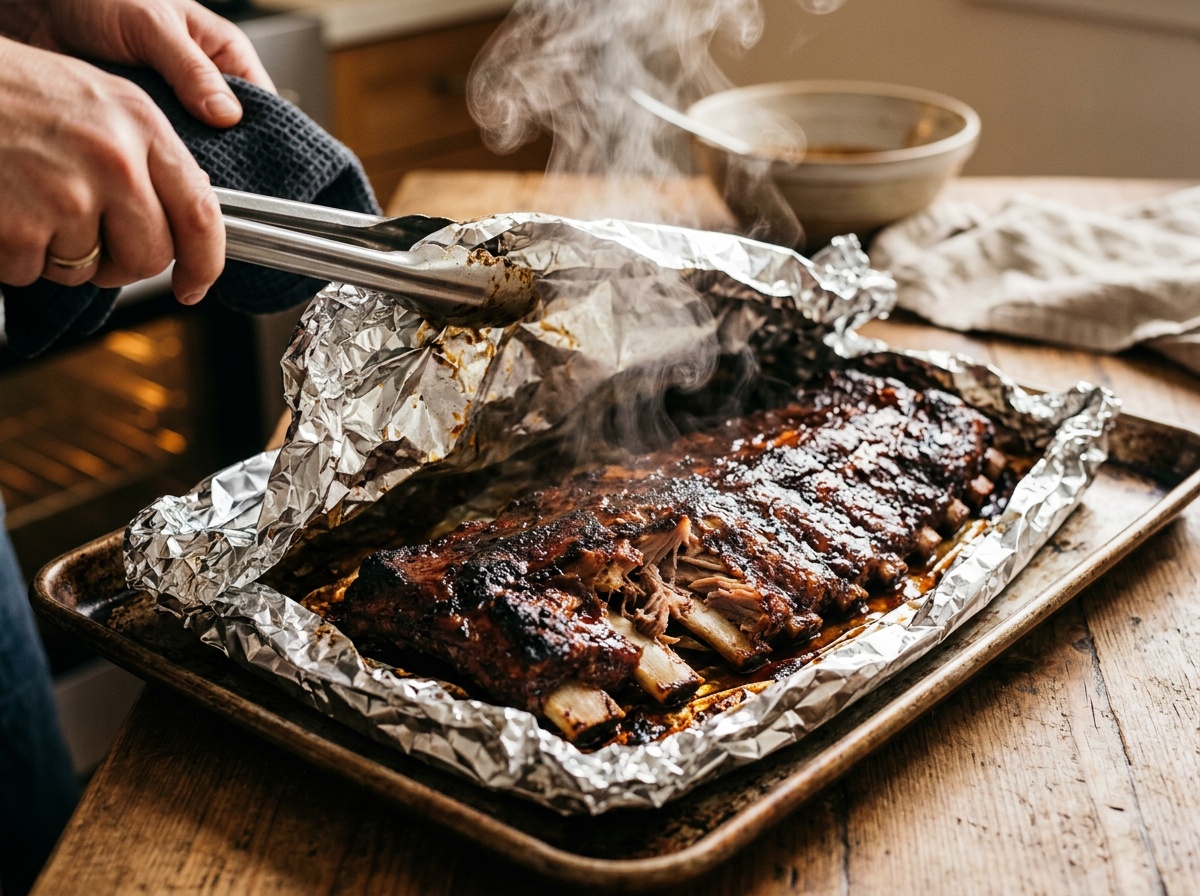
Once my oven is preheated to exactly 275°F, I slide the baking sheet onto the middle rack. This is where this beef ribs recipe oven method works its magic, utilizing the slow, steady convection to render the fat and cook the meat evenly. I let them roast undisturbed for about three hours, because opening the door releases the heat and extends the cooking time. You will know they are getting close when the meat starts to shrink back from the bone about half an inch, exposing the tips. I use a heavy-duty aluminum foil tent for the first half of the cooking process to trap the moisture, which acts like a mini-steamer to ensure the meat stays tender. This technique, essentially an oven-baked ribs recipe, guarantees that you won’t end up with dried-out or tough beef that is hard to chew.
3Glaze and Finish
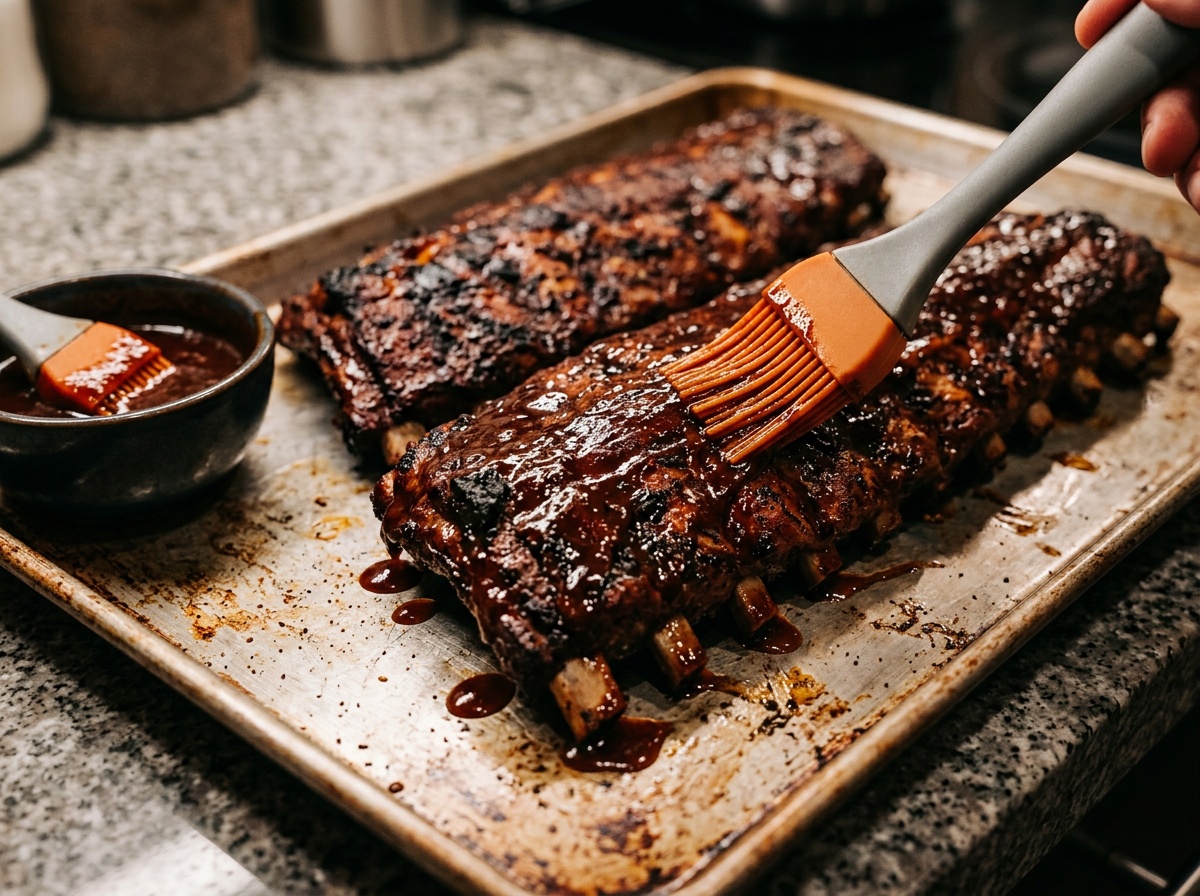
Now that the ribs are mostly cooked, I remove the foil and turn the oven up to 400°F to get that final texture. I brush a generous layer of my favorite barbecue sauce mixed with apple cider vinegar over the ribs, ensuring every crevice is coated in the sticky goodness. I put them back in for another 15-20 minutes, watching them closely so the sugars in the sauce don’t burn. You want the edges to get slightly charred and bubbly, indicating the glaze has properly set. Once I pull them out, I let them rest on a cutting board for at least 10 minutes before slicing between the bones. This resting step is crucial for tenderizing beef ribs because it allows the juices to redistribute throughout the meat, keeping each slice succulent and flavorful.
Tips & Variations
Mastering the Temperature: The secret to this beef ribs recipe oven method is resisting the urge to crank up the heat. High heat will toughen the meat fibers instantly, while 275°F provides the gentle, consistent environment needed to melt that tough connective tissue.
Silver Skin Removal: Never skip removing the silver skin on the back of the ribs, as it acts like a piece of plastic wrap that prevents your seasoning from penetrating. Use a sharp knife to lift one corner and a paper towel to grip it while pulling firmly in one smooth motion.
Resting is Non-Negotiable: I always let the ribs rest for at least 10-15 minutes after they come out of the oven. If you cut into them while they are piping hot, the juices will run out onto the board instead of staying inside the meat, which ruins the texture.
Foil Usage: Use heavy-duty foil for the tenting phase to ensure no steam escapes. If you only have thin foil, double it up to create a better seal, which is what keeps the meat moist during those first three hours of roasting.
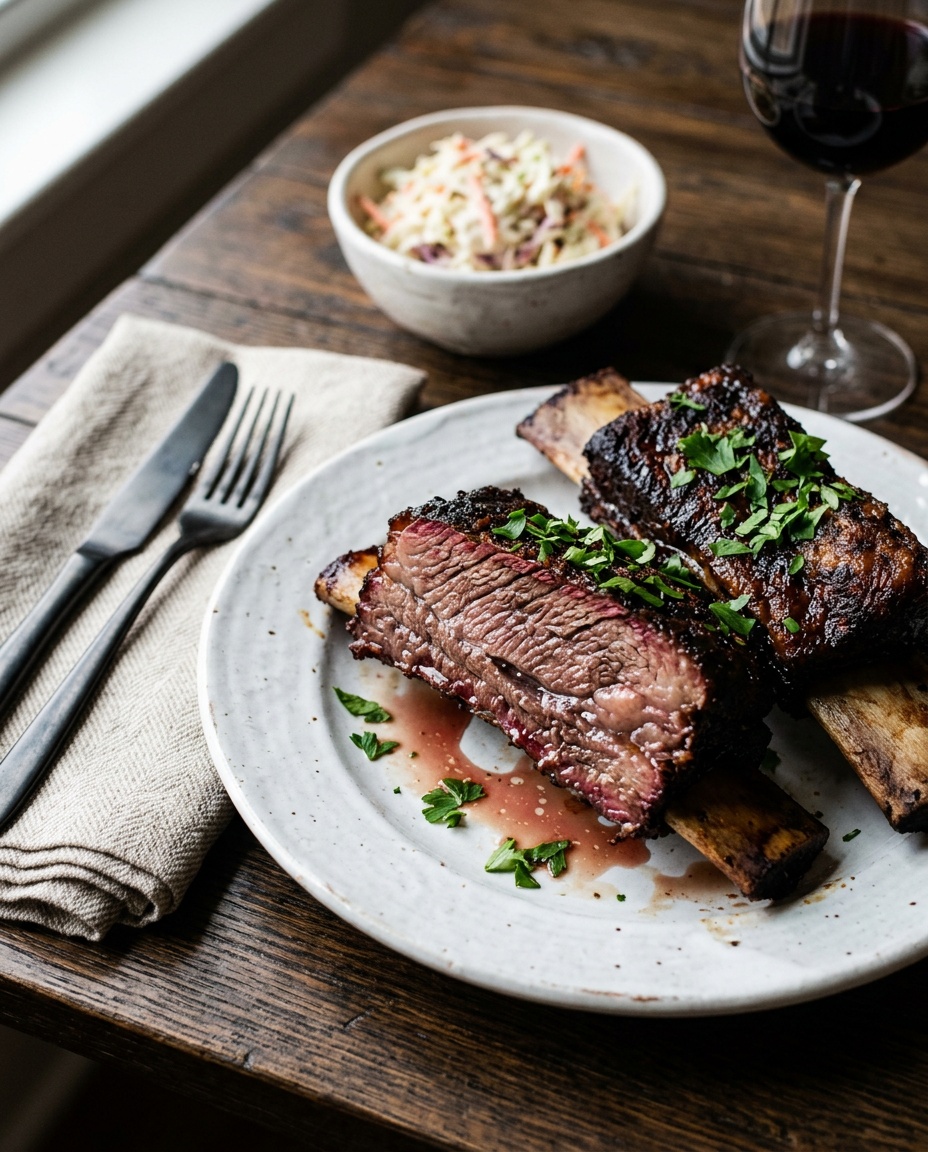
Serving Suggestions: Serve these with something acidic to cut through the rich fat of the ribs. A vinegar-based coleslaw or quick-pickled red onions provide a perfect balance to the savory, caramelized crust and create those tender beef ribs everyone loves.
Nutrition Information
Per serving (approximate values)
| Nutrient | Amount |
|---|---|
| Calories | 650 |
| Protein | 35g |
| Carbohydrates | 18g |
| Total Fat | 48g |
| Fiber | 1g |
| Sugar | 15g |
Frequently Asked Questions About beef ribs recipe oven
What is the best beef ribs recipe oven method for beginners?
▼
The best beef ribs recipe oven method for beginners is the low-and-slow approach, which requires minimal active effort but delivers maximum flavor. You simply season the meat, seal it in foil, and roast at 275°F for about three hours until the meat retracts from the bone. This process is very forgiving and yields consistent results every time.
How do I know when my ribs are fully cooked and tender?
▼
You will know your ribs are ready when the meat pulls back from the bone by at least half an inch. If you use a fork to gently pull the meat, it should feel like it wants to come right off without any resistance. Aim for an internal temperature of around 200°F if you have a meat thermometer available.
Can I store these ribs and reheat them later?
▼
Yes, these ribs reheat beautifully in the oven. Wrap them in foil with a splash of water or extra barbecue sauce to keep them from drying out, and reheat at 325°F for about 20 minutes until warmed through. They stay fresh in the refrigerator for up to three days when stored in an airtight container.
What if I don’t have apple cider vinegar for the glaze?
▼
You can easily swap apple cider vinegar with white wine vinegar or even a squeeze of fresh lime juice. The goal of the acid is to cut through the richness of the beef fat and balance the sweetness of the sugar, so any sharp, acidic liquid will work effectively in the glaze ratio.
Should I remove the fat cap before roasting?
▼
It is best to trim the very hard, thick layer of fat from the top of the ribs, as it won’t render completely during the roasting time. However, don’t remove all the fat; leave a thin layer, about an eighth of an inch, to keep the meat moist and provide that signature savory flavor while it cooks.