Introduction
The first time I tasted this dish was in a small, crowded kitchen in Lima, where the sound of metal hitting a blazing hot wok filled the room. I watched the chef toss marinated beef strips with onions and tomatoes, creating a dish that smelled like soy, vinegar, and pure comfort. That experience defined my standard for a truly authentic peruvian stir fry, and I have spent years trying to replicate that specific smoky depth in my own kitchen. This beef lomo saltado recipe is the result of those experiments, balancing the acidity of red wine vinegar with the rich, savory notes of high-quality soy sauce.
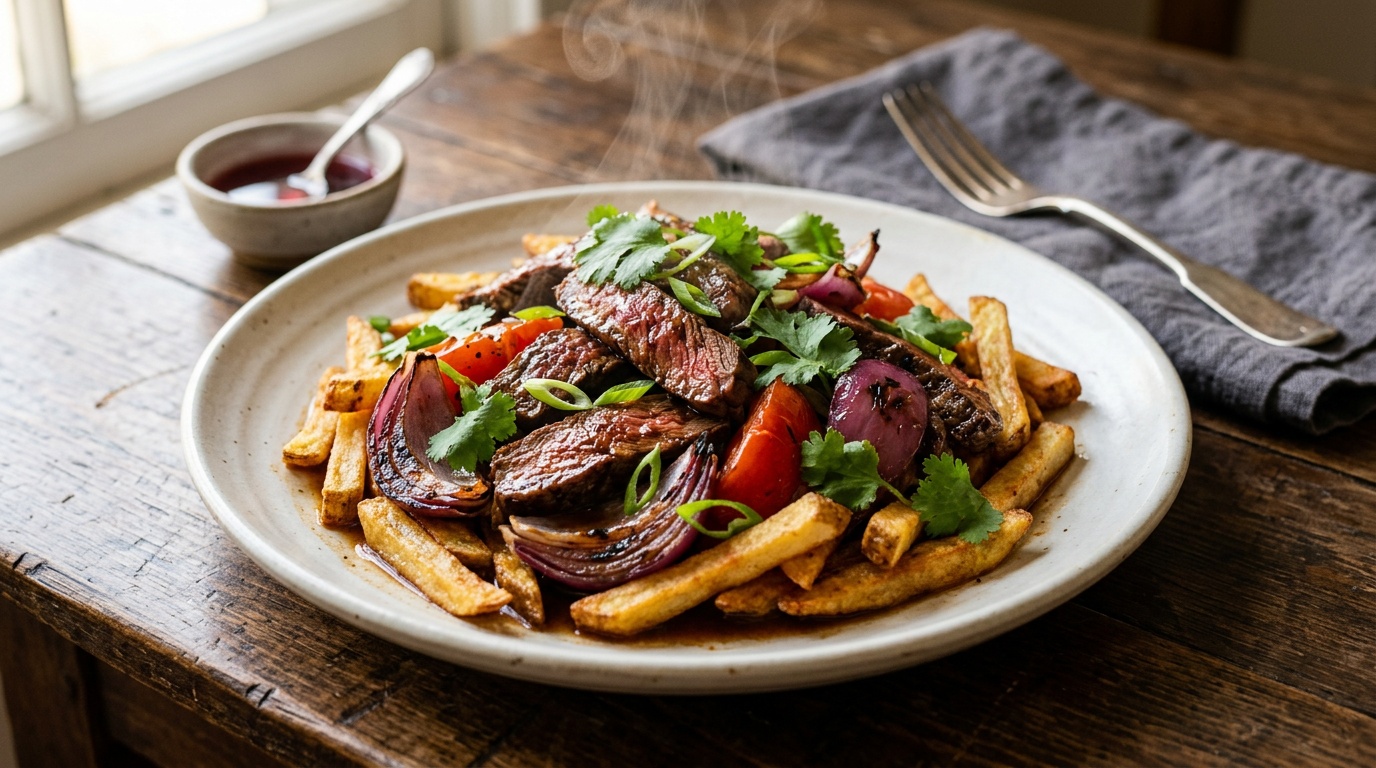
I keep coming back to this meal because it defies the typical expectations of a stir-fry by including potatoes. The contrast of the crispy french fries soaking up the savory pan juices against the tender, seared beef is something I find hard to beat on a busy weeknight. It fits perfectly into a weekend rotation when I want something that feels special but comes together in under an hour. Compared to other stir-fries, this one feels more grounded and substantial, almost like a cross between a steakhouse dinner and a vibrant street food snack.
In this guide, you will learn the exact sequence of events required to get that restaurant-style sear without a commercial-grade burner. I have made the mistake of overcrowding my pan more times than I care to admit, resulting in steamed meat rather than the beautiful, brown crust we are looking for. You will also learn how to manage your vegetables so they soften but retain a bit of bite, ensuring the final result has both texture and bold, cohesive flavor.
Why This Recipe Works
High-Heat Maillard Reaction: The secret to this dish lies in the initial searing phase, where high heat transforms the surface of the beef strips. By using a cast iron skillet or carbon steel wok over high heat, I ensure the beef creates a deep, caramelized crust rather than graying and steaming in its own juices. This chemical reaction, known as the Maillard reaction, creates the complex, savory flavor profile that characterizes a traditional lomo saltado.
Acid-to-Salt Balance: The signature soy sauce and vinegar glaze needs to hit the hot pan at exactly the right moment to deglaze the surface. The acidity from the red wine vinegar cuts through the richness of the seared beef strips, while the soy sauce provides the foundational saltiness required for the dish. When these liquids hit the scorching pan, they evaporate slightly and concentrate into a syrupy, intense reduction that coats every ingredient.
Potato Texture Management: Adding crispy french fries to the stir fry technique might seem counterintuitive, but it provides the essential vessel for the sauce. I fry the potatoes separately until they are golden and crunchy so they don’t immediately turn to mush when combined with the other ingredients. This allows them to absorb the sauce during the final toss while maintaining enough structure to provide a distinct textural contrast against the tender vegetables.
Ingredients
The Protein and Marinade
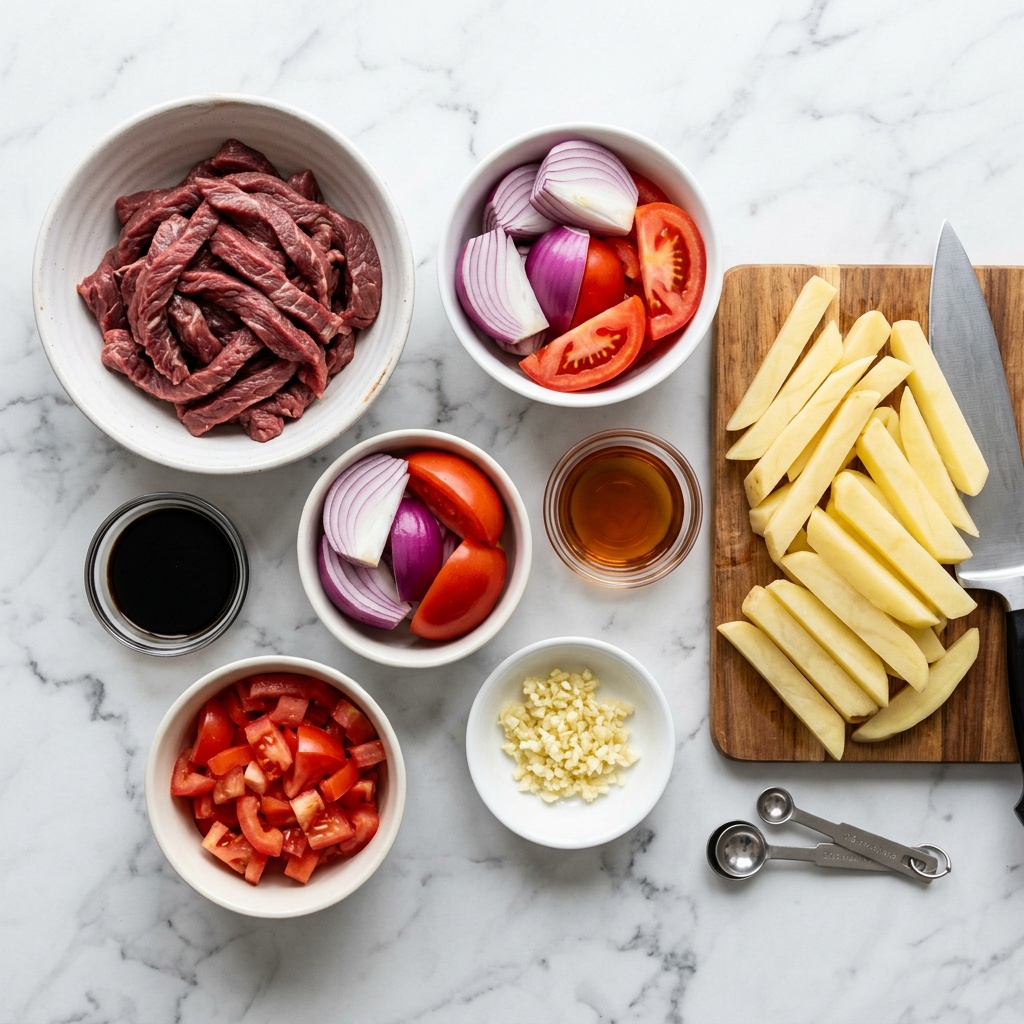
- 1.5 lbs sirloin steak (sliced into 1/2 inch strips)
- 2 tbsp soy sauce (divided)
- 1 tbsp red wine vinegar (for the marinade)
- 2 cloves garlic (minced)
Stir-Fry and Vegetables
- 1 large red onion (cut into thick wedges)
- 3 medium roma tomatoes (seeded and cut into wedges)
- 2 cups french fries (cooked until crispy)
- 1/4 cup cilantro (chopped)
- 1 tbsp vegetable oil (high smoke point)
Instructions
1Marinate the Steak
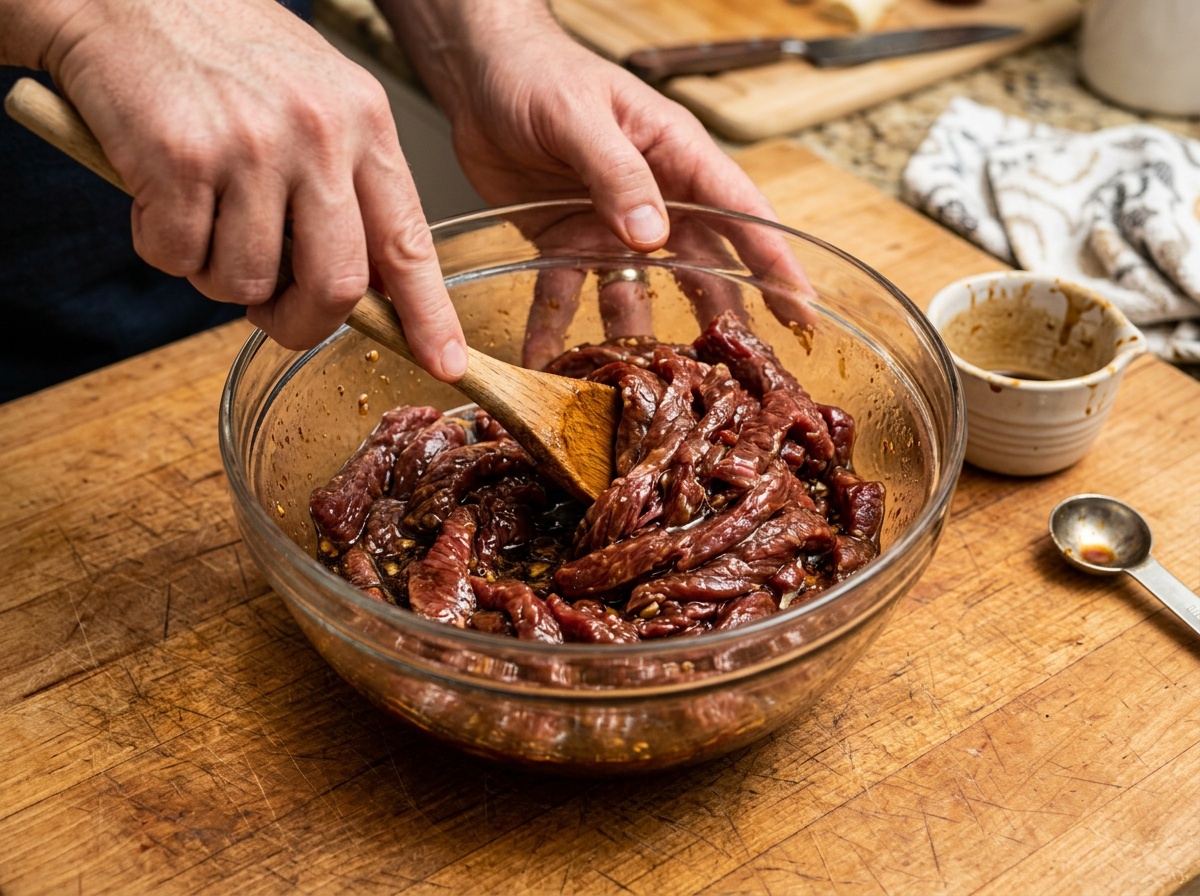
I begin by combining my sliced sirloin with half of the soy sauce, the red wine vinegar, and the minced garlic in a medium bowl. I let this sit for at least 15 minutes at room temperature, which gives the acids time to tenderize the beef slightly without turning it mushy. While the meat marinates, I prep all my vegetables so that everything is ready to go once the heat is on. It is important to have your onions, tomatoes, and cilantro prepped beforehand because this beef lomo saltado recipe moves extremely fast once you start cooking. I always organize my ingredients in bowls next to the stove to avoid any scrambling during the cooking process.
2Sear the Beef
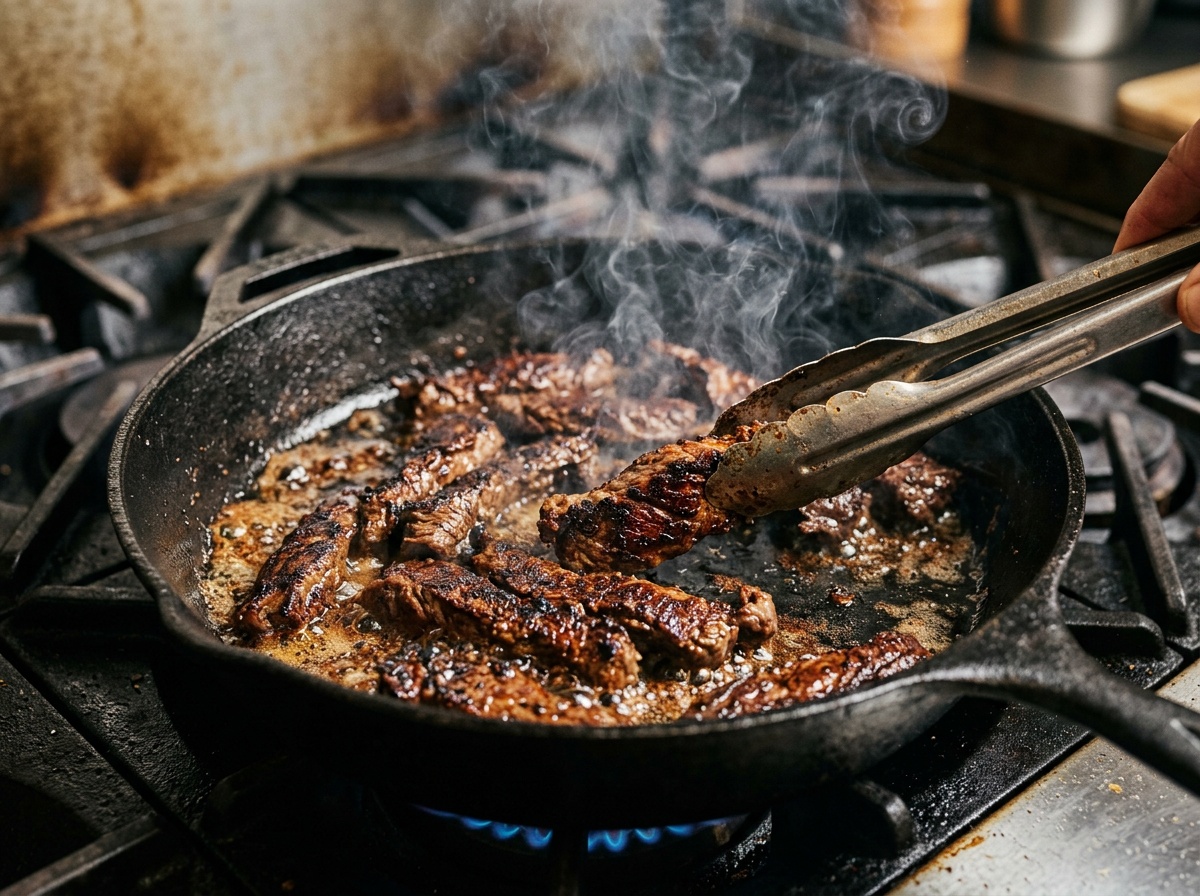
I heat a large cast-iron skillet or wok over the highest heat setting until it begins to smoke slightly. Adding just a tablespoon of oil, I carefully lay the beef strips in a single layer, ensuring I do not crowd the pan. I let the meat sit undisturbed for about 90 seconds, allowing a deep, dark brown sear to form on the bottom. Once flipped, I cook for another minute until just medium-rare, then I immediately remove the meat to a side plate. I prefer leaving the pan juices behind, as these are concentrated flavor bombs that will form the base of my sauce for the rest of the cooking time.
3Stir-Fry Vegetables
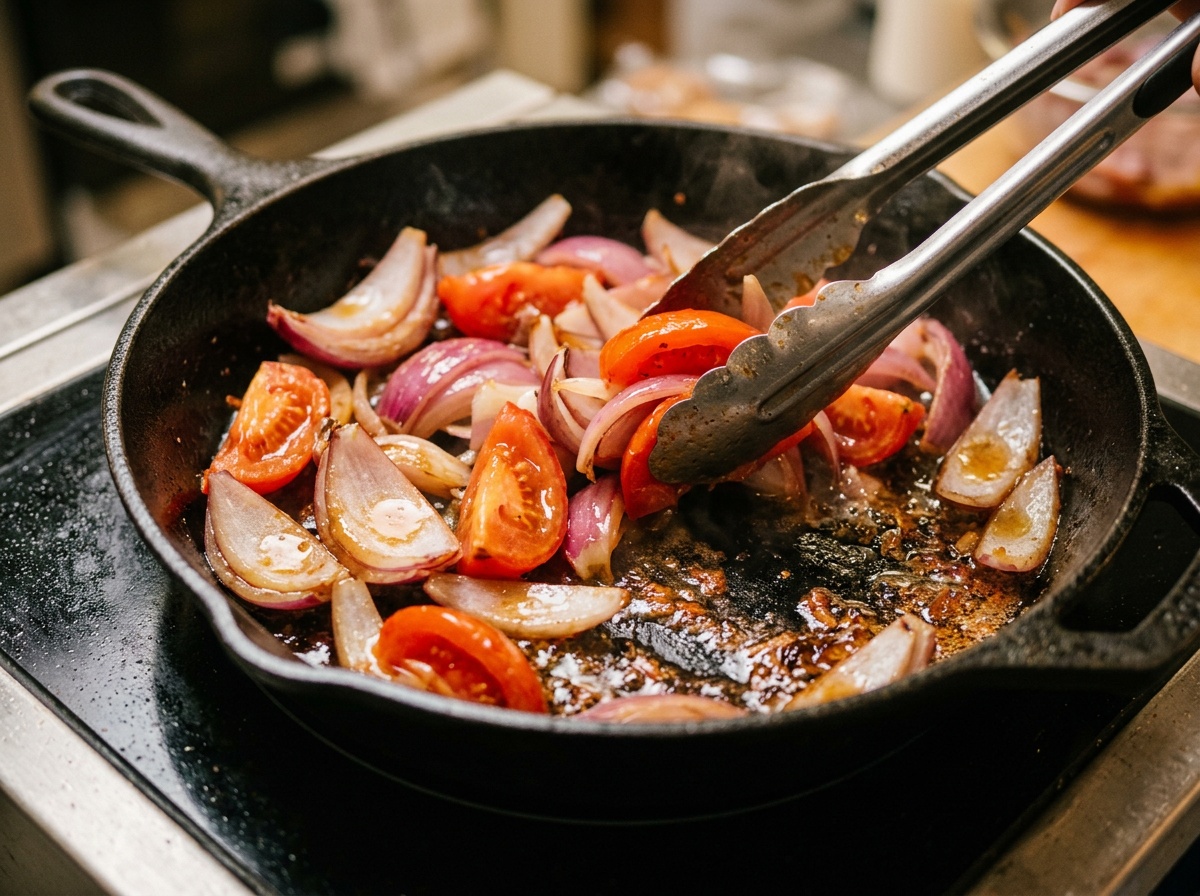
Using the same hot pan with the remaining beef fat and juices, I toss in the red onion wedges. I stir-fry them for about 2 minutes until they are charred on the edges but still maintain a slight crunch in the center. Next, I add the seeded tomato wedges and cook for another minute; I am very careful not to let the tomatoes break down completely into a sauce. I add the remaining soy sauce and a splash of vinegar to the pan to deglaze the bottom, scraping up any browned bits with my spatula. This creates that essential glaze that defines the traditional dish.
4Final Assembly
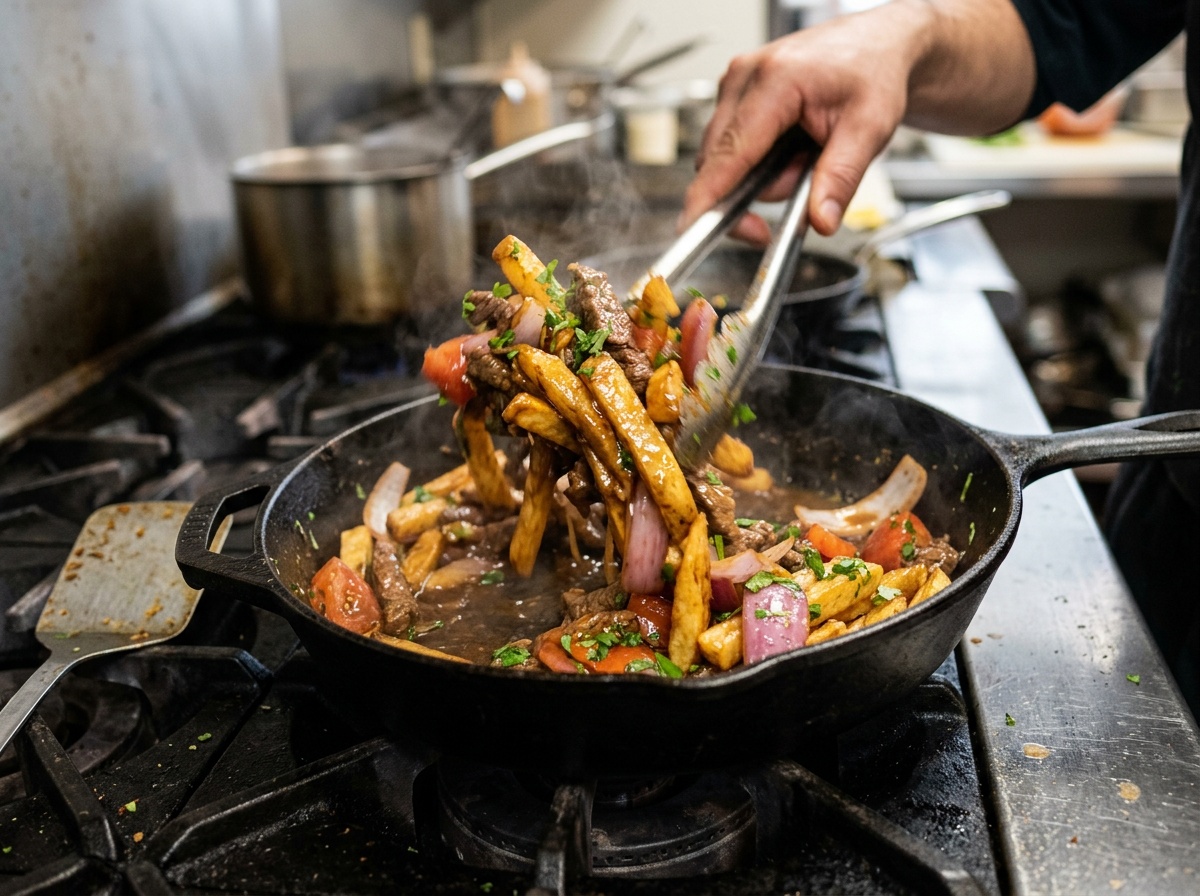
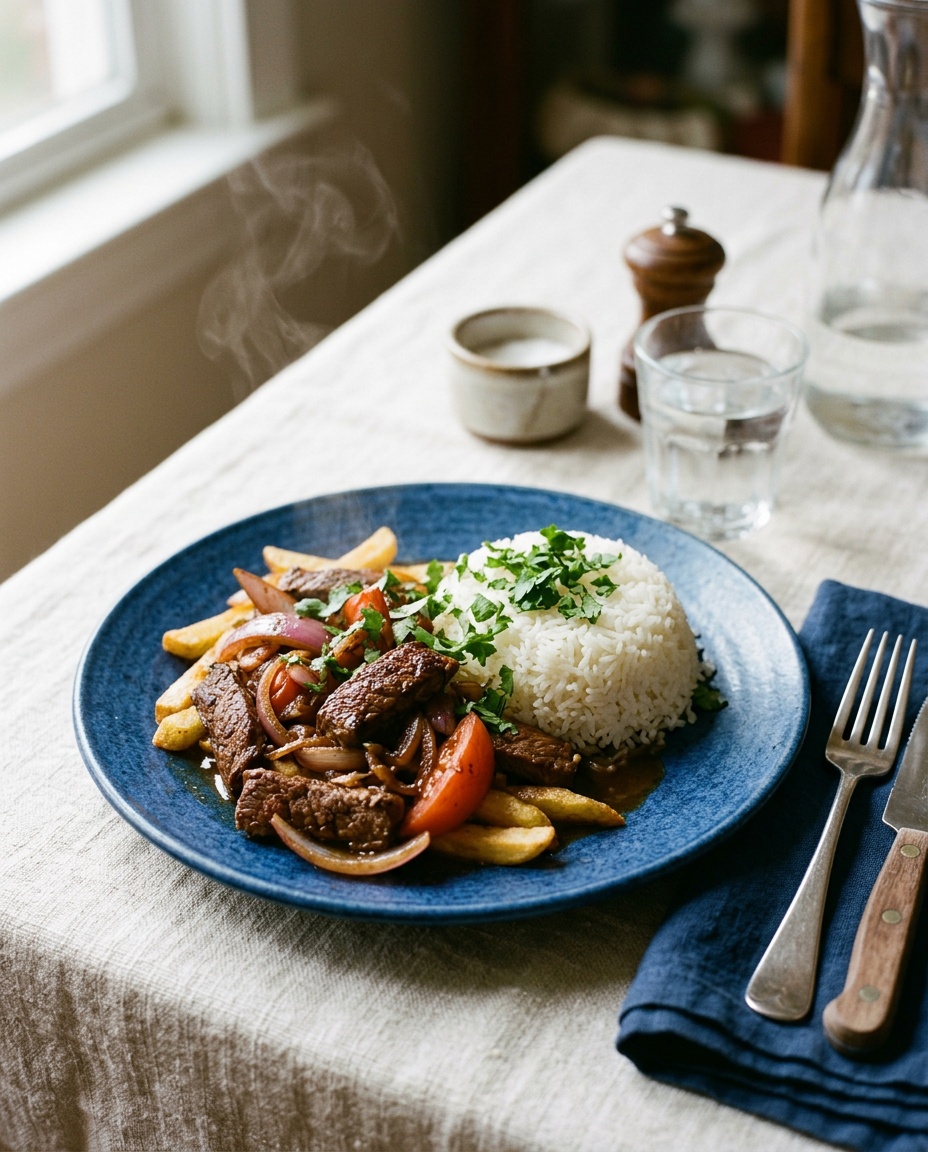
I return the cooked beef strips and their resting juices back into the skillet with the vegetables. I immediately add the hot, crispy french fries and toss everything together vigorously for about 30 seconds. The goal is to coat the fries in the pan sauce without making them soggy, so timing is everything here. I turn off the heat and stir in the fresh cilantro at the very last second so it retains its vibrant color. I transfer the mixture to a serving platter immediately, as the dish is best enjoyed while the fries are still holding onto a bit of their crunch.
Tips & Variations
Don’t Overcrowd: If you are cooking for a crowd, sear the beef in two separate batches rather than trying to fit it all at once. If the pan is overcrowded, the temperature drops, the meat releases too much water, and you end up boiling the beef instead of getting that nice, caramelized sear.
The Fry Texture: For the best results with this beef lomo saltado recipe, I recommend using thick-cut fries, which hold their structure better than shoestring fries. If you are baking them, make sure they are extra crispy before tossing them into the stir fry so they can absorb the sauce without turning completely soft immediately.
Tomato Prep: Removing the seeds and pulp from the tomatoes is crucial to keeping the dish from becoming a watery soup. Use roma tomatoes, as they are fleshier and contain less liquid, ensuring the sauce stays thick, sticky, and concentrated rather than runny or diluted.
Pan Temperature: If your pan is not hot enough, the soy sauce and vinegar will pool in the bottom rather than caramelizing into a glaze. Ensure your burner is on high and the oil is shimmering before you add the ingredients, as this ensures the liquids evaporate into a coating rather than a broth.
Freshness Matters: The cilantro should be added right after you take the pan off the heat, not during the cooking process. Cooking cilantro for too long makes it lose its bright, citrusy aroma and turns it bitter, so adding it at the very end preserves its freshness and visual appeal.
Nutrition Information
Per serving (approximate values)
| Nutrient | Amount |
|---|---|
| Calories | 480 |
| Protein | 32g |
| Carbohydrates | 38g |
| Total Fat | 22g |
| Fiber | 3g |
| Sugar | 6g |
Frequently Asked Questions About beef lomo saltado recipe
Can I prepare this beef lomo saltado recipe ahead of time?
▼
While the beef can be marinated for up to 4 hours in advance, I strongly recommend cooking the final dish fresh right before serving. Because the beef lomo saltado recipe relies on the crispy texture of the fries and the crunch of the onions, it does not reheat well once the potatoes have soaked up the sauce and softened.
What is the best type of beef to use for this stir fry?
▼
For the best results, use sirloin steak or tenderloin, as these cuts are naturally tender and cook quickly over high heat. Avoid tougher cuts like round steak, which require long, slow braising, as they will remain chewy and tough when cooked using the fast, high-heat stir fry technique required for this dish.
Can I substitute the fries with rice?
▼
Lomo saltado is traditionally served with a combination of rice and fries, though many home cooks prioritize one over the other. If you want to use rice, serve the stir-fry over a bed of steamed white rice and include the fries on the side or mixed in, as the starch is essential to balance the salty sauce.
How do I keep my onions from getting mushy?
▼
The trick to keeping onions crunchy is to cook them over very high heat for a short duration, usually no more than two minutes. Only add them to the pan when it is scorching hot, and keep them moving constantly; if they sit still, they will steam and lose their structural integrity and crisp texture.
Is it possible to make this dish gluten-free?
▼
Yes, you can easily make this dish gluten-free by substituting standard soy sauce with tamari or a gluten-free soy sauce alternative. The flavor profile will remain nearly identical, and these alternatives offer the same level of saltiness and depth required to deglaze the pan and create the signature savory coating for the beef.