Introduction
Making beef jerky in dehydrator recipes at home has been a weekend ritual for me ever since I realized how much better the texture is than anything from a package. I vividly recall the first time I set up my machine; my kitchen filled with that deep, savory, smoky scent that reminded me of the small smokehouse in my hometown, and I knew I wouldn’t go back to store-bought bags. It’s become a regular in my kitchen because it’s a high-protein snack that fits perfectly into my outdoor adventures, whether I’m hitting the hiking trails or just need a reliable, savory bite on the go.
I keep coming back to this method because it is straightforward, and once you get the technique down, you can experiment with endless flavor combinations. It’s far more cost-effective than buying jerky, and frankly, the texture you get from drying your own slices is completely unmatched. I’ve found that the process allows for much more control over the salt and spices compared to any commercial brand I’ve seen on the shelf, allowing me to adjust the heat or sweetness exactly to my family’s liking.
In this post, I’ll walk you through the specific prep and drying process that took me several attempts to finally perfect. We will cover the importance of meat selection, the right way to slice against the grain for tenderness, and the exact heat settings needed for safe, consistent results. By the time you are finished, you will have a batch of jerky that is perfectly dried, intensely flavorful, and entirely your own.
Why This Recipe Works
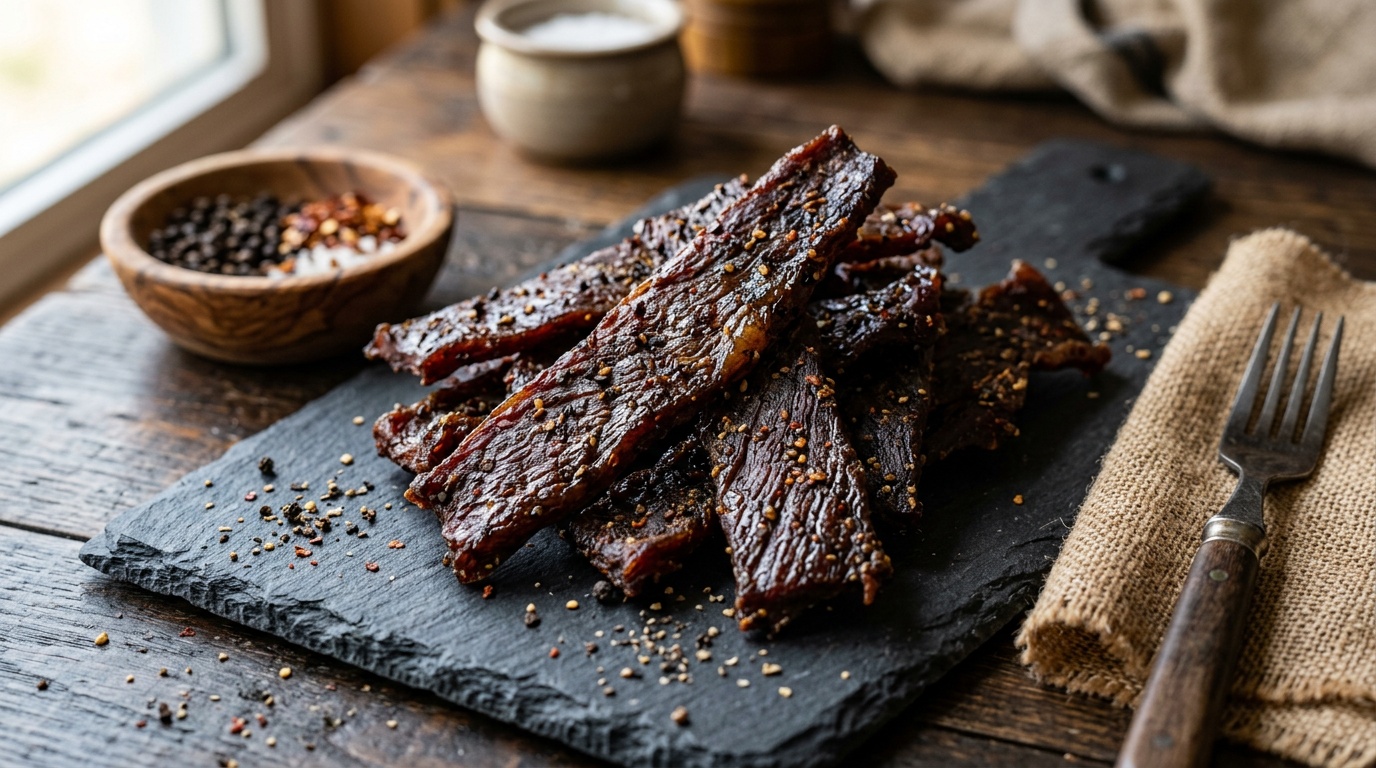
Meat Selection Science: The best beef jerky meat is extremely lean, which is why I always reach for an eye of round roast. Fat does not dry out and will quickly turn rancid, so trimming every bit of visible fat is necessary for the long-term stability and quality of your homemade beef jerky.
The Marinade Chemistry: Marinating beef for jerky creates a chemical environment that both flavors the meat and helps preserve it. The salt in the soy sauce and Worcestershire draws moisture out of the muscle fibers through osmosis, while the spices penetrate deeply, ensuring every bite is savory and consistent.
Optimized Dehydrator Temperature: Setting the dehydrator temperature to exactly 160°F is the standard for safely drying meat at home. This temperature is high enough to kill bacteria while still low enough to dry the meat out slowly, creating that signature leathery, chewy texture without cooking it into a piece of tough leather.
Technique for Consistency: When you are prepping beef jerky in dehydrator recipes, slicing the meat against the grain is mandatory for tenderness. If you slice with the grain, the jerky becomes stringy and hard to chew; cutting perpendicular to the muscle fibers shortens them, yielding a much more pleasant, tender experience.
Ingredients
The Jerky
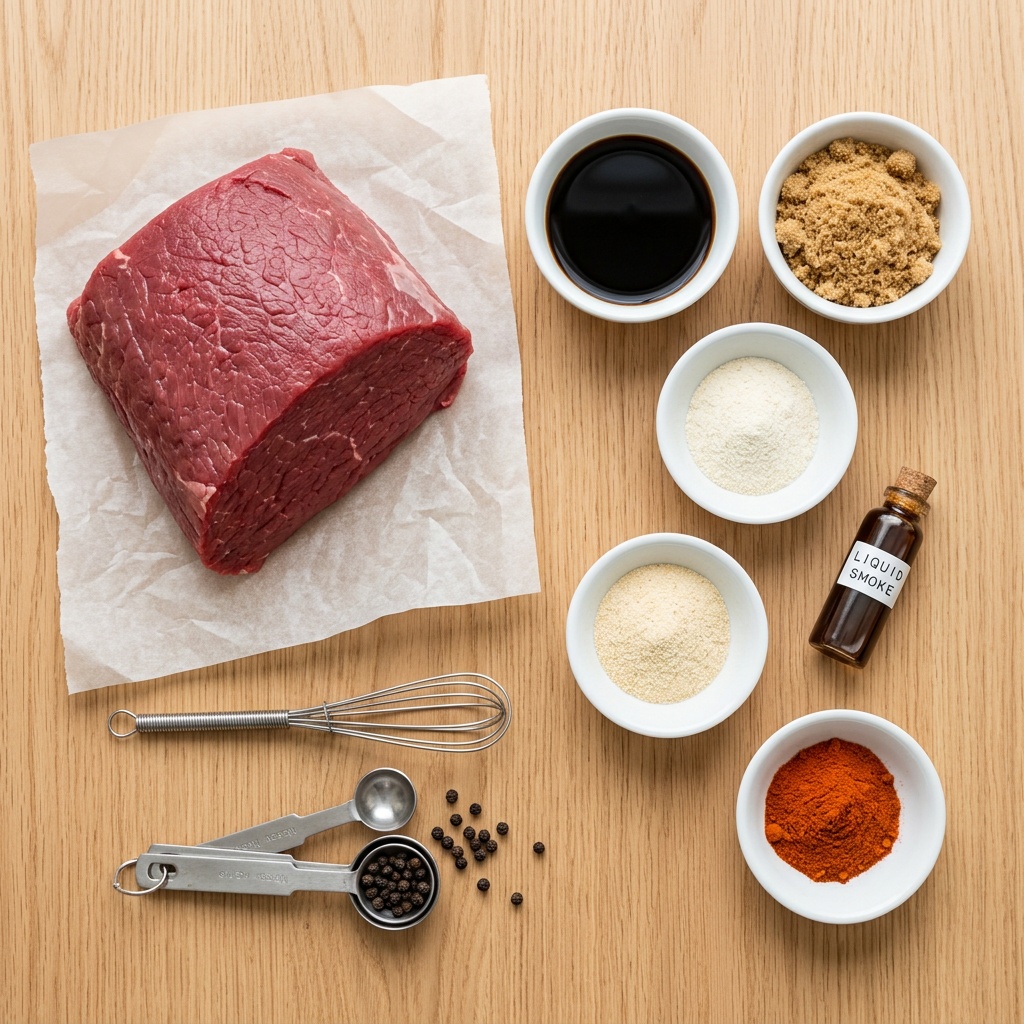
- 2 lbs eye of round roast (well-trimmed of all visible fat)
The Marinade
- 1/2 cup soy sauce (low sodium preferred)
- 1/4 cup Worcestershire sauce
- 1 tsp liquid smoke (hickory or mesquite)
- 1 tbsp onion powder
- 1 tbsp garlic powder
- 1 tbsp brown sugar (packed)
- 1 tsp black pepper (freshly cracked)
Instructions
1Prep and Slice the Beef
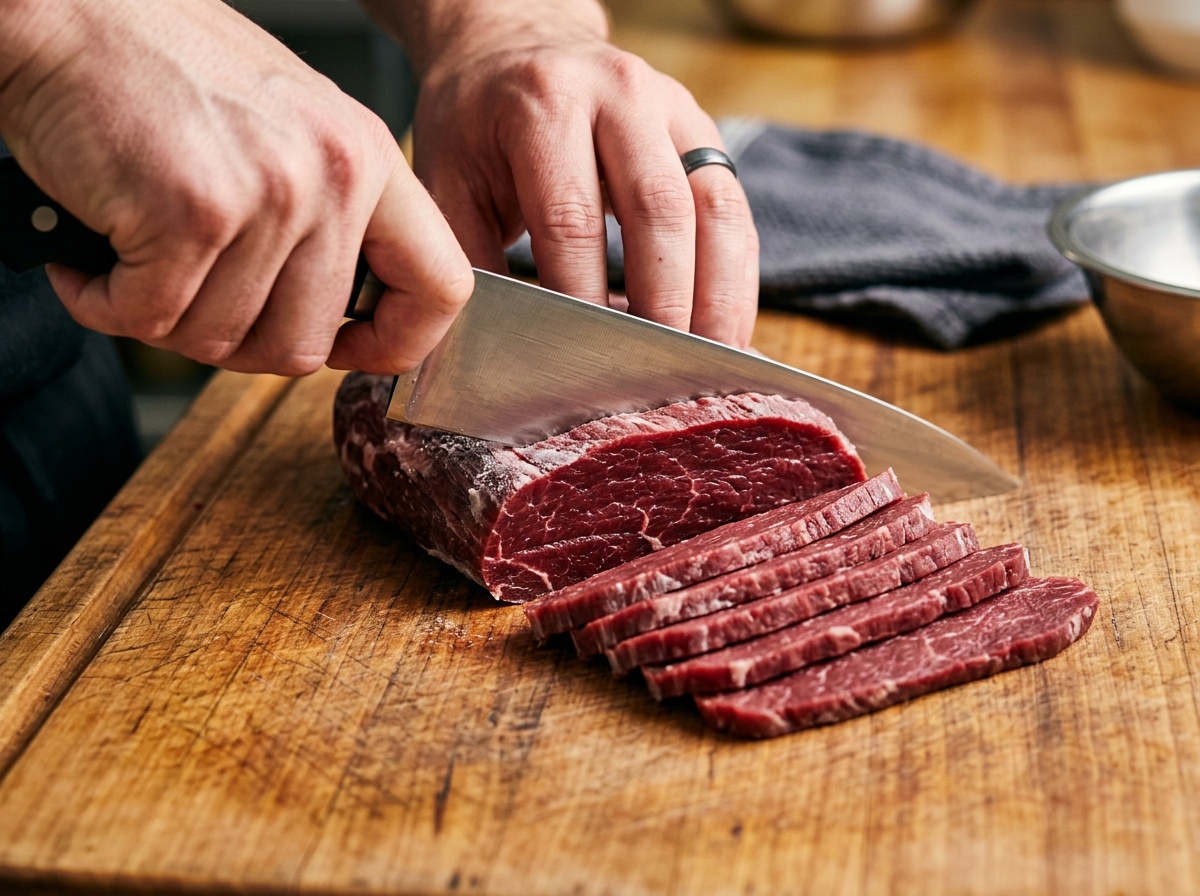
I begin by putting my eye of round roast in the freezer for about 60 to 90 minutes. It shouldn’t be frozen solid, but firming it up makes it much easier to slice into uniform, thin strips. Once it’s firm, I use a very sharp chef’s knife to slice the meat against the grain into strips about 1/8 to 1/4 inch thick. Consistency is what separates professional results from a mediocre batch, so I take my time here. I trim off any visible white fat as I go, as this will spoil during storage. If the slices aren’t perfectly even, the jerky won’t dry at the same rate, which is a common mistake I see.
2Marinate the Strips
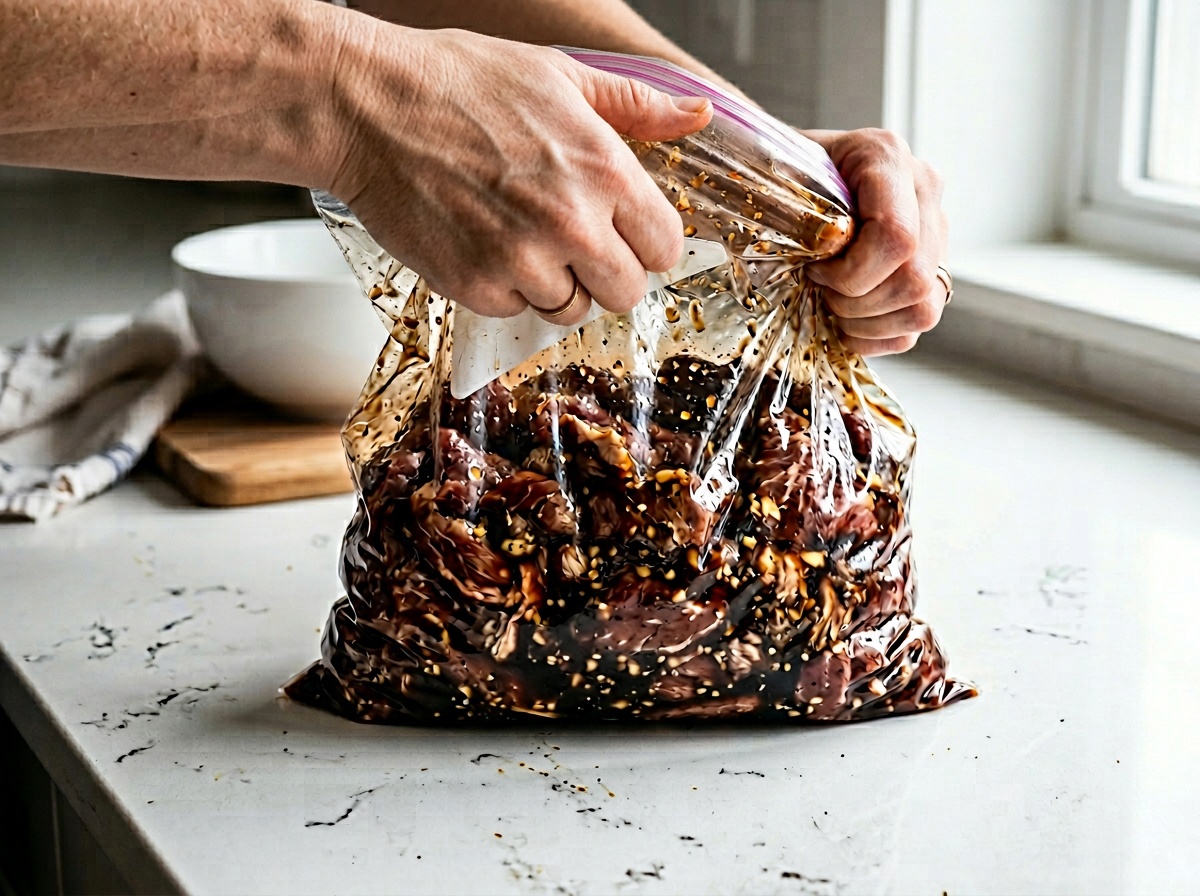
In a large glass bowl or a gallon-sized freezer bag, I whisk together the soy sauce, Worcestershire sauce, liquid smoke, onion powder, garlic powder, brown sugar, and black pepper. I add the meat strips to the marinade, massaging the liquid into the beef to ensure every piece is fully coated. I seal the bag, pushing out as much air as possible, and place it in the refrigerator for at least 6 hours, though I prefer 12 hours for a deeper flavor. This step is where all the character of the final snack is built, so do not rush it. The salt and spices need time to penetrate the muscle fibers for the best outcome.
3Layout on Dehydrator Trays
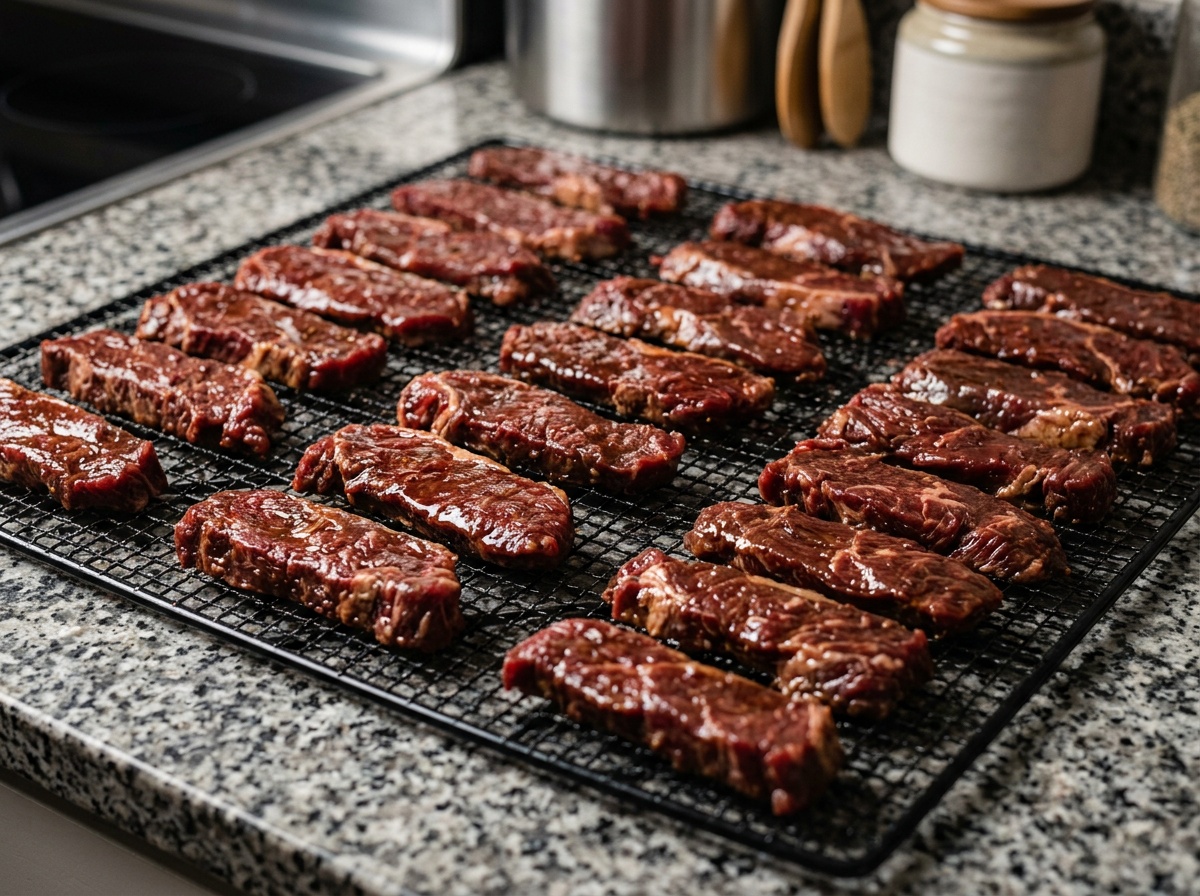
After the meat has finished marinating, I remove the strips and pat them dry with paper towels. Removing excess moisture is one of those jerky making tips that drastically speeds up the drying time and prevents the meat from steaming rather than drying. I lay the strips out on the dehydrator trays in a single layer, ensuring that none of the pieces are touching or overlapping. Air circulation is everything; if the pieces overlap, they will stay moist and won’t dry properly. I space them out just enough to allow the hot air to flow between them efficiently across the rack.
4Dehydrate to Perfection
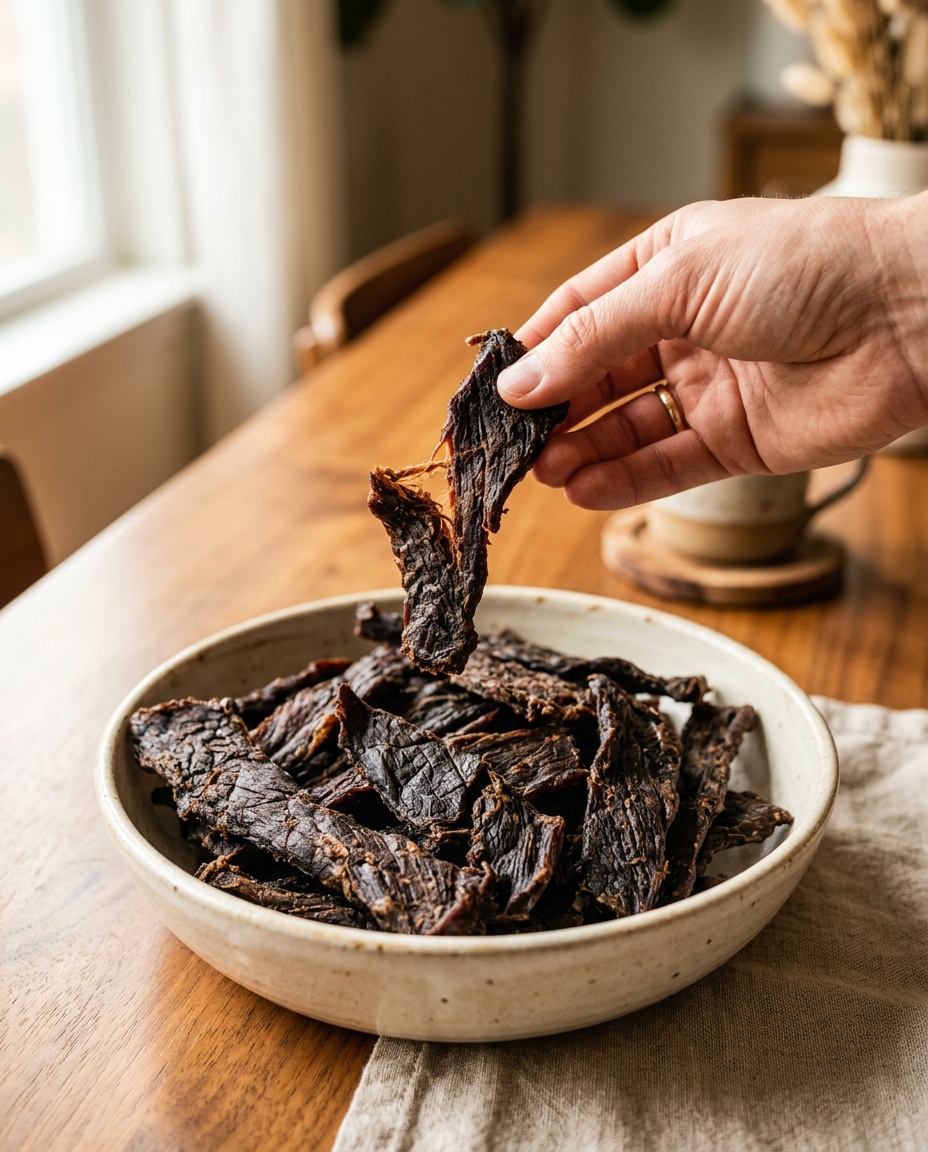
I set the dehydrator temperature to 160°F and turn it on, letting it run for 4 to 6 hours initially. When I make beef jerky in dehydrator recipes, I always start checking the texture at the 4-hour mark by removing a piece and letting it cool for a minute. When it’s ready, the jerky should bend easily without snapping completely in half, and it shouldn’t feel wet or spongy in the middle. If it feels too soft, I continue drying for another 30 to 60 minutes. Once it’s done, I turn off the machine and let the jerky cool completely on the trays before I transfer it to a storage container.
Tips & Variations
The Meat Firming Trick: Always freeze your meat for an hour before slicing. This firming trick allows you to get those nice, consistent, paper-thin slices that are impossible to achieve with room-temperature, raw beef.
Beef Jerky Storage: For the best beef jerky storage, keep your finished jerky in an airtight container or a vacuum-sealed bag. It will stay fresh at room temperature for a week, or in the fridge for a month, but for longer shelf life, keep it in the freezer.
Flavor Customization: If you like a bit of heat, add a teaspoon of red pepper flakes to the marinade. I’ve found that the heat intensifies during the drying process, so start small with your spicy additions.
Drying Evenness: Rotate your trays halfway through the drying time. Even the best dehydrators have hot spots, and moving the bottom trays to the top ensures a uniform drying process for every single piece.
Avoid Over-Drying: Check the jerky frequently during the final hour of drying. Over-dried jerky becomes brittle and snaps like a dry twig; you want it to have that classic, tough, satisfying chew, not a crumbly texture.
Nutrition Information
Per serving (approximate values)
| Nutrient | Amount |
|---|---|
| Calories | 110 |
| Protein | 18g |
| Carbohydrates | 3g |
| Total Fat | 3g |
| Fiber | 0g |
| Sugar | 2g |
Frequently Asked Questions About beef jerky in dehydrator recipes
What is the best way to make beef jerky in dehydrator recipes?
▼
The most effective way is to slice lean meat like eye of round very thin, marinate it for at least 8 hours, and dehydrate at 160°F. This specific temperature ensures safety while providing the perfect chewy texture. Always pat the meat dry before placing it on the trays to ensure even drying.
How do I know when the homemade beef jerky is fully done?
▼
You know it’s done when the meat is dry to the touch but still flexible. If you bend a piece, it should crack slightly but not break apart; if it feels soft or moist when squeezed, it needs more time. Always let a piece cool for 2 minutes before testing for texture.
Can I use a different cut of meat for this recipe?
▼
Yes, but stick to lean cuts like top round, bottom round, or sirloin tip. Avoid marbled cuts like ribeye or chuck because the fat will turn rancid quickly and shorten the storage life significantly. Always trim every visible piece of fat before marinating for the best possible results.
How long can I keep the jerky before it spoils?
▼
Homemade jerky stored in an airtight container stays fresh for about one week at room temperature. If you vacuum seal it, it can last for several months in the refrigerator or up to a year in the freezer. Always store it in a cool, dark place away from heat.
Is it necessary to use liquid smoke in the marinade?
▼
Liquid smoke is not strictly necessary, but it provides that authentic, wood-smoked flavor that is difficult to replicate otherwise. If you don’t have it, you can leave it out, but the final result will lack that signature smoky depth. You could also substitute with a teaspoon of smoked paprika for a hint of smoky flavor.