Introduction
I remember the first time I tried to cook a traditional brisket for a St. Patrick’s Day gathering. I followed a standard boiling method, but the result was grey, salty, and fairly tough. After that, I started exploring different corned beef recipes oven baked, and I found that roasting allows for a much better texture and flavor development without the meat drying out in the liquid.
What I love about this oven method is the way the fat cap renders down over the long, slow cook time. It creates a rich, savory crust that you just don’t get when boiling. It has become my standard for family dinners because the oven does the heavy lifting, leaving me time to handle the sides while the brisket develops that deep, mahogany color I look for in a good roast.
In this post, you will learn how to properly season the brisket, how to manage the fat-to-meat ratio during the roasting process, and the specific resting time needed to ensure the fibers hold onto their moisture. I’ve encountered enough tough, stringy brisket to know that patience is the primary ingredient, and you’ll see exactly how the meat should look when it’s ready to slice.
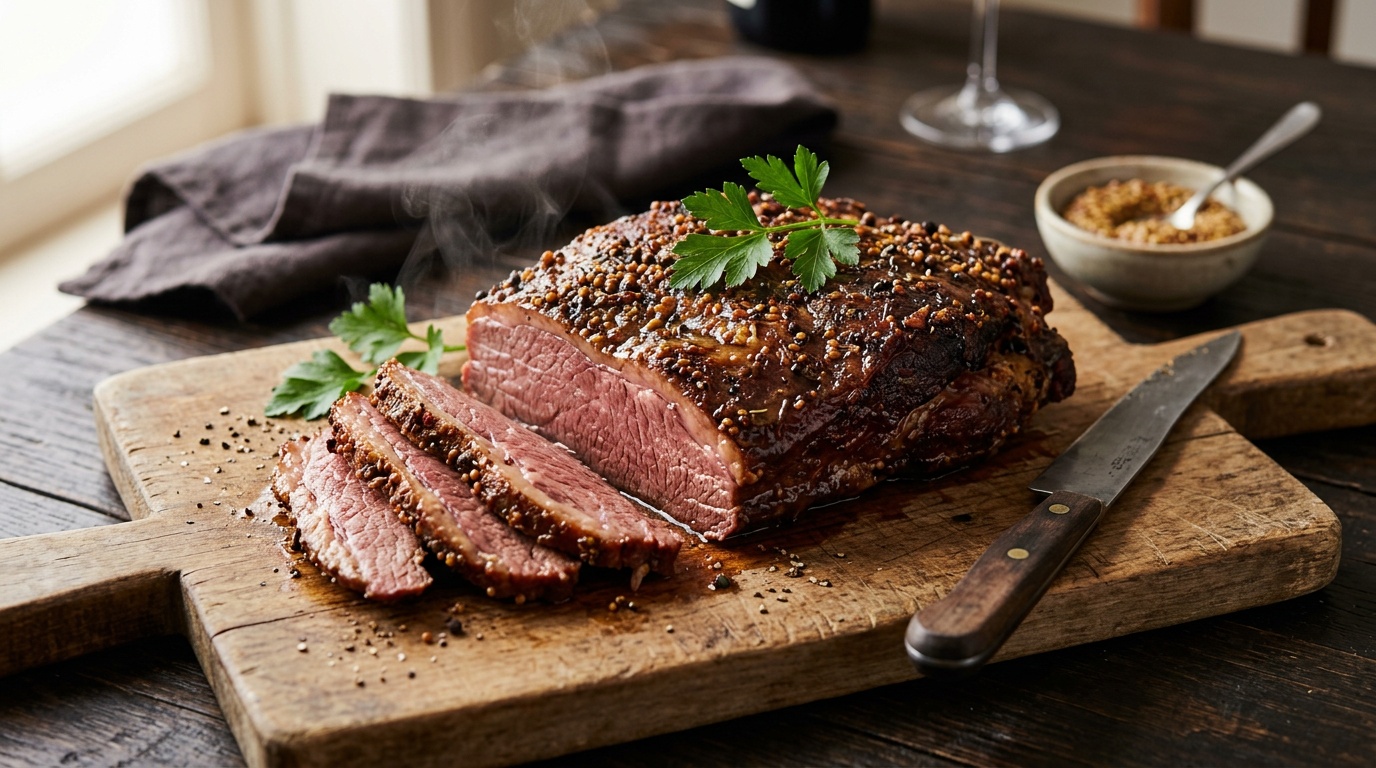
Why This Recipe Works
Slow Roasting Technique: By cooking at a lower temperature of 325°F, you allow the connective tissues within the beef to break down slowly. This process turns tough collagen into gelatin, which coats the muscle fibers and provides that tender mouthfeel. I find this much more reliable than high-heat roasting, which often results in a dry outer layer before the inside is ready.
The Fat Cap Benefit: Placing the brisket with the fat cap facing up ensures that as it renders, the juices baste the meat below it. This is a simple bit of physics: gravity draws the liquid fat through the muscle fibers, acting as an internal marinade. You will notice that this results in a tender corned beef brisket that stays moist even after hours in the heat.
Covered Roasting Environment: Wrapping the meat in foil creates a mini-steaming environment within the roasting pan. This locks in the moisture released during the rendering process, preventing evaporation from drying out the edges. It works similarly to a dutch oven, concentrating the spices from the best corned beef rub into the meat rather than letting them dissipate into the oven air.
Ingredients
The Roast
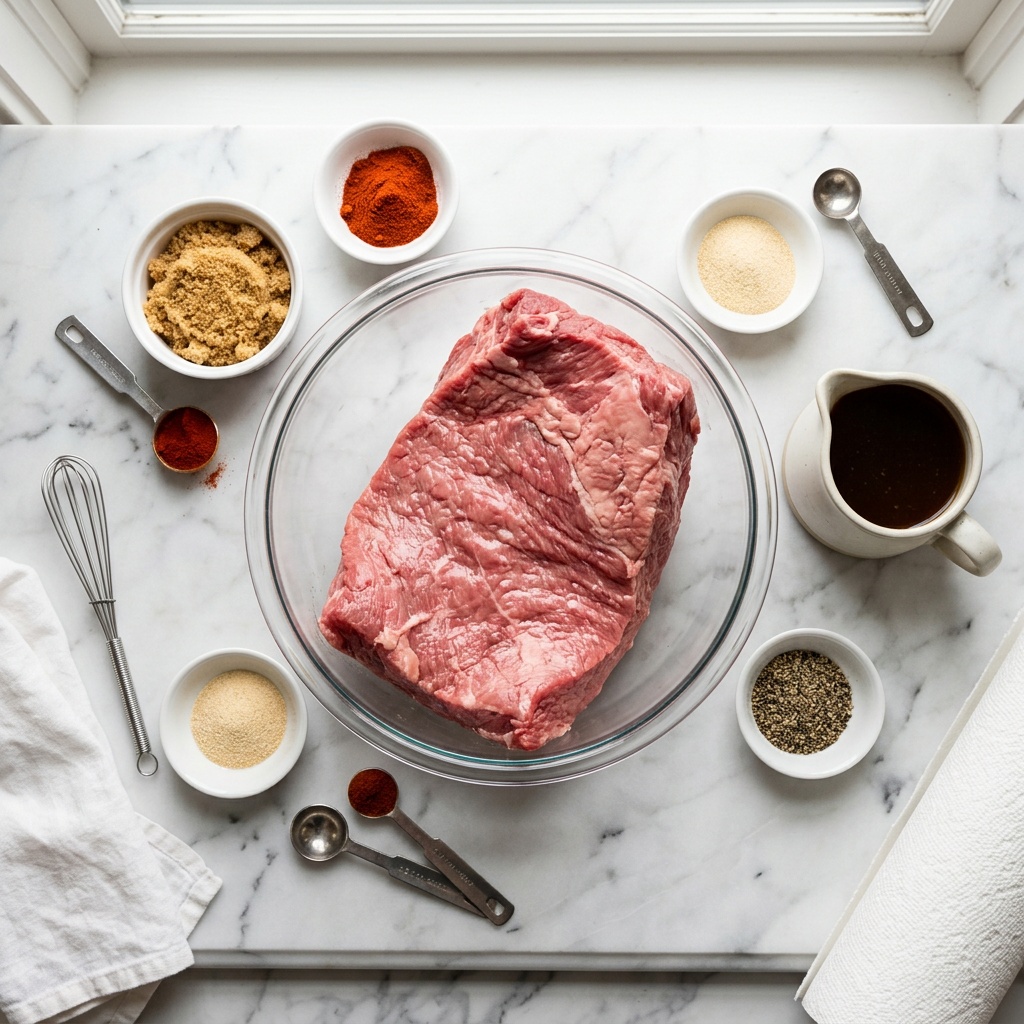
- 1 whole corned beef brisket (3-4 lbs, flat cut if possible)
- 2 cups beef broth (low sodium)
The Rub
- 2 tbsp brown sugar (packed)
- 1 tbsp coarse black pepper
- 1 tbsp paprika (smoked)
- 1 tsp garlic powder
Instructions
1Season the Brisket
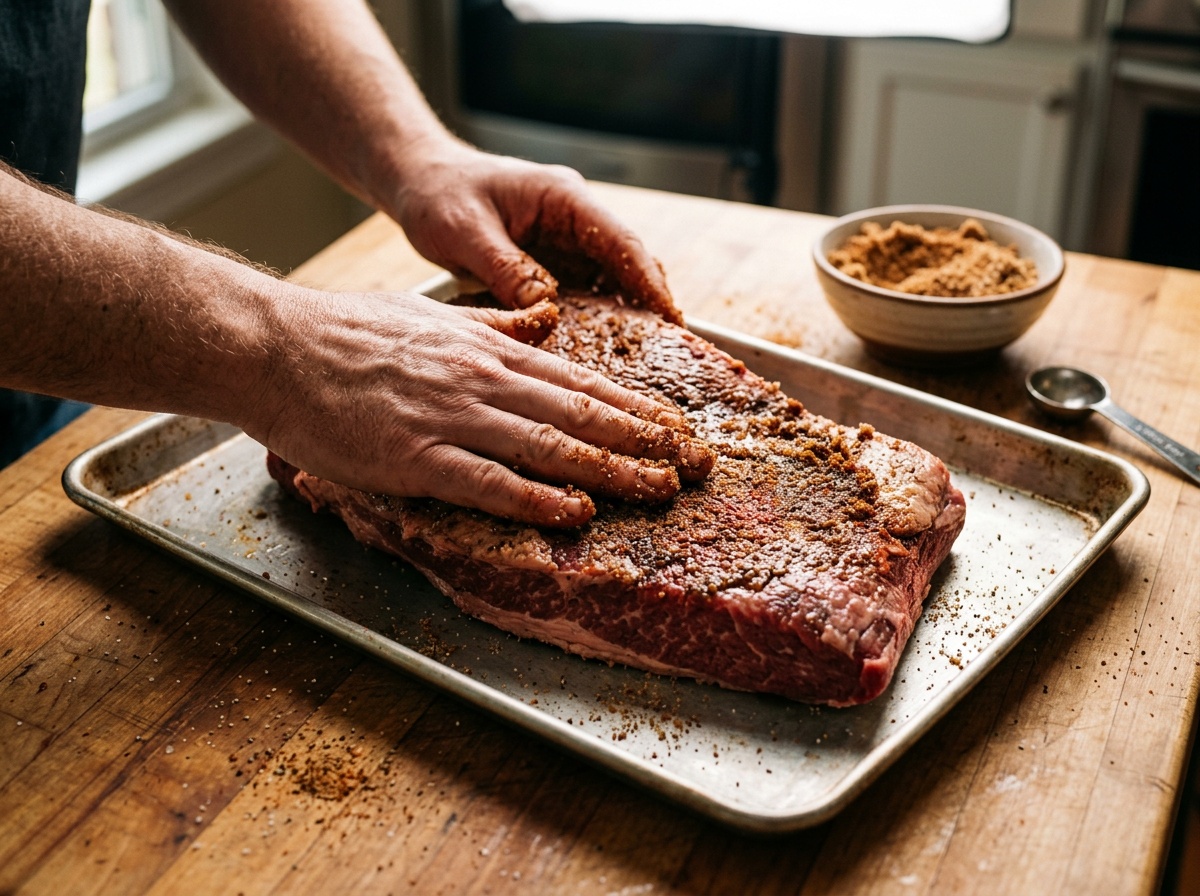
I preheat the oven to 325°F while I get the meat ready. I take the brisket out of its packaging, rinse it briefly under cold water to remove the excess surface brine, and pat it completely dry with paper towels. Drying the surface is what allows the rub to stick rather than sliding off into the pan. I mix the brown sugar, pepper, paprika, and garlic powder in a small bowl, then rub this mixture evenly over the entire piece of meat. You want a good, thick coating on top of the fat side, as this will caramelize nicely. Do not skip this step, as it helps create the base for a tender corned beef brisket that tastes better than store-bought deli versions.
2Roast and Baste
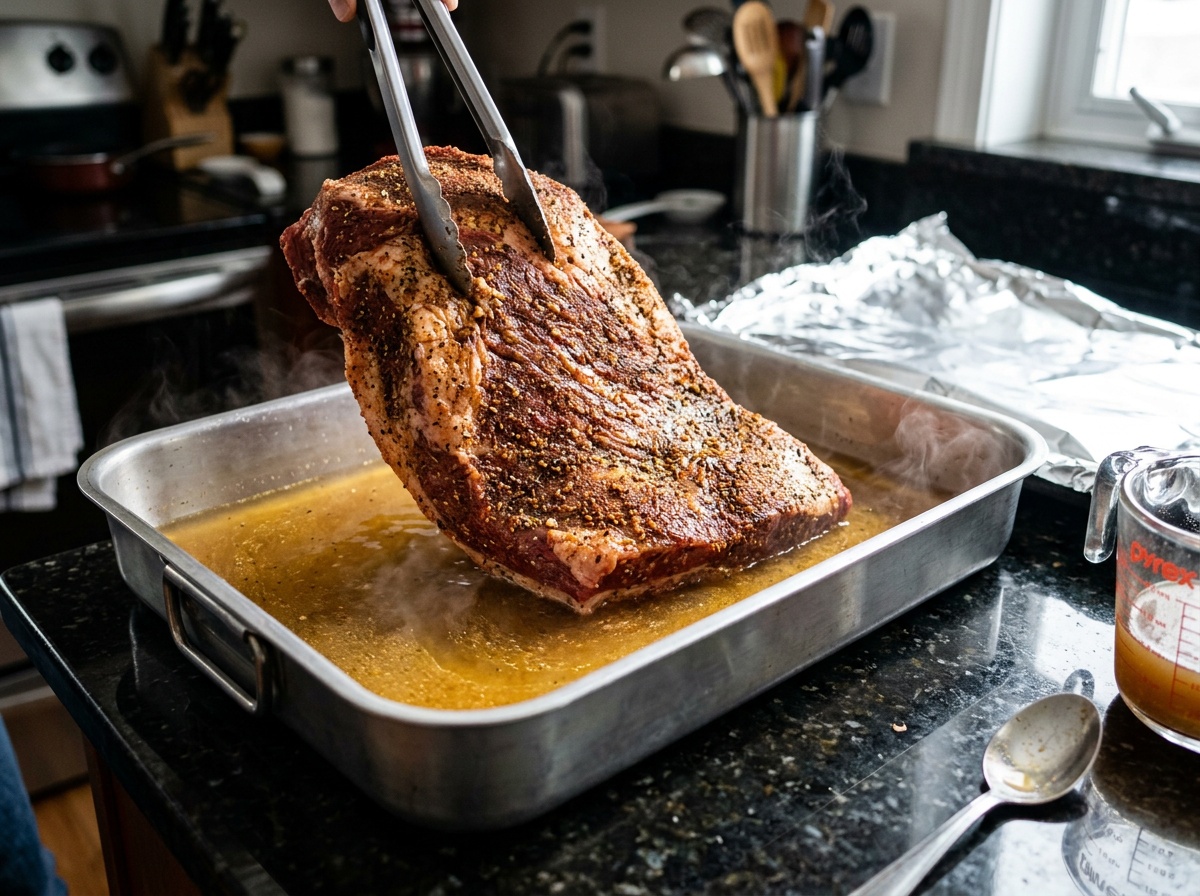
I place the brisket into a deep roasting pan or a heavy-duty baking dish, making sure the fat side is facing up. I pour the beef broth into the bottom of the pan—I don’t pour it over the meat, as I don’t want to wash off my rub. I cover the dish tightly with aluminum foil; this step is standard for many corned beef recipes oven baked because it prevents the liquid from evaporating too quickly. I slide it into the center rack of the oven and let it roast for about 3.5 to 4 hours. You want the internal temperature to reach around 190°F to 200°F for that signature pull-apart texture.
3Rest and Slice
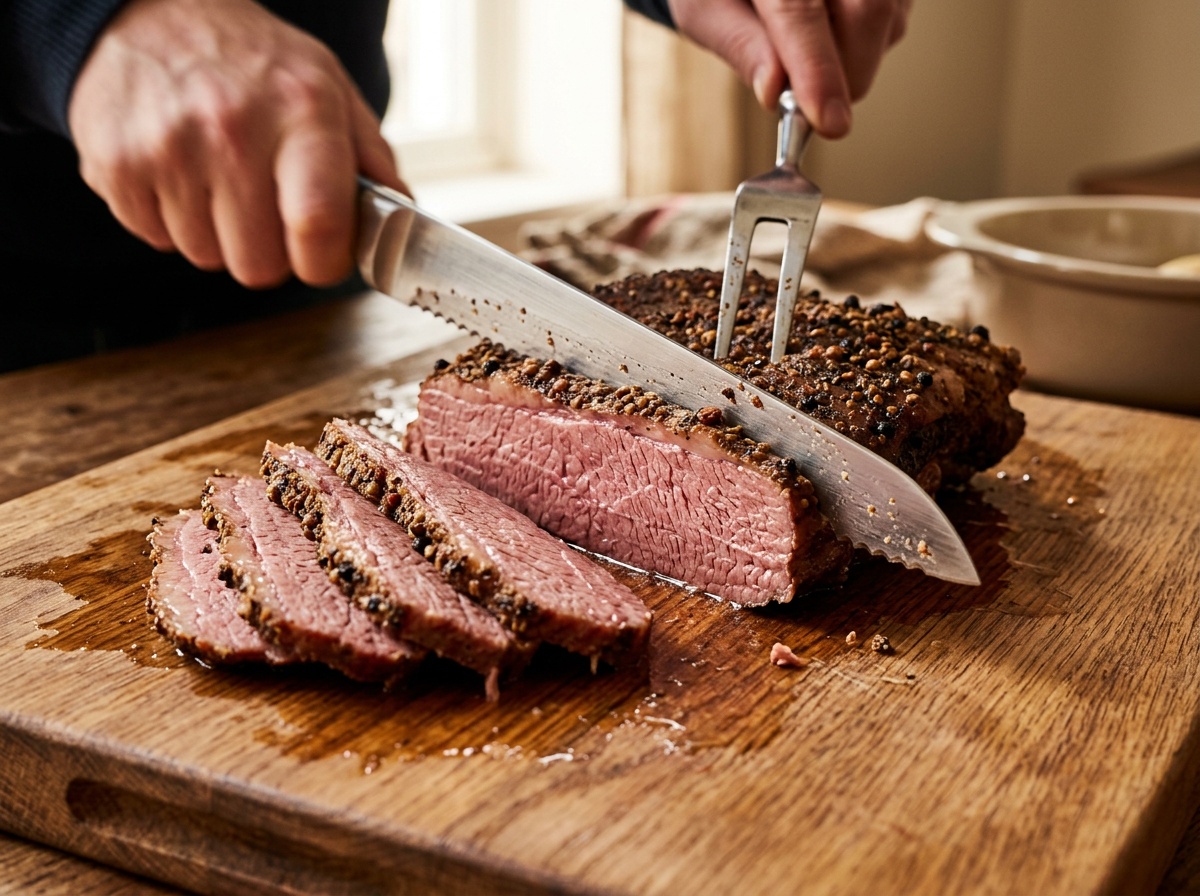
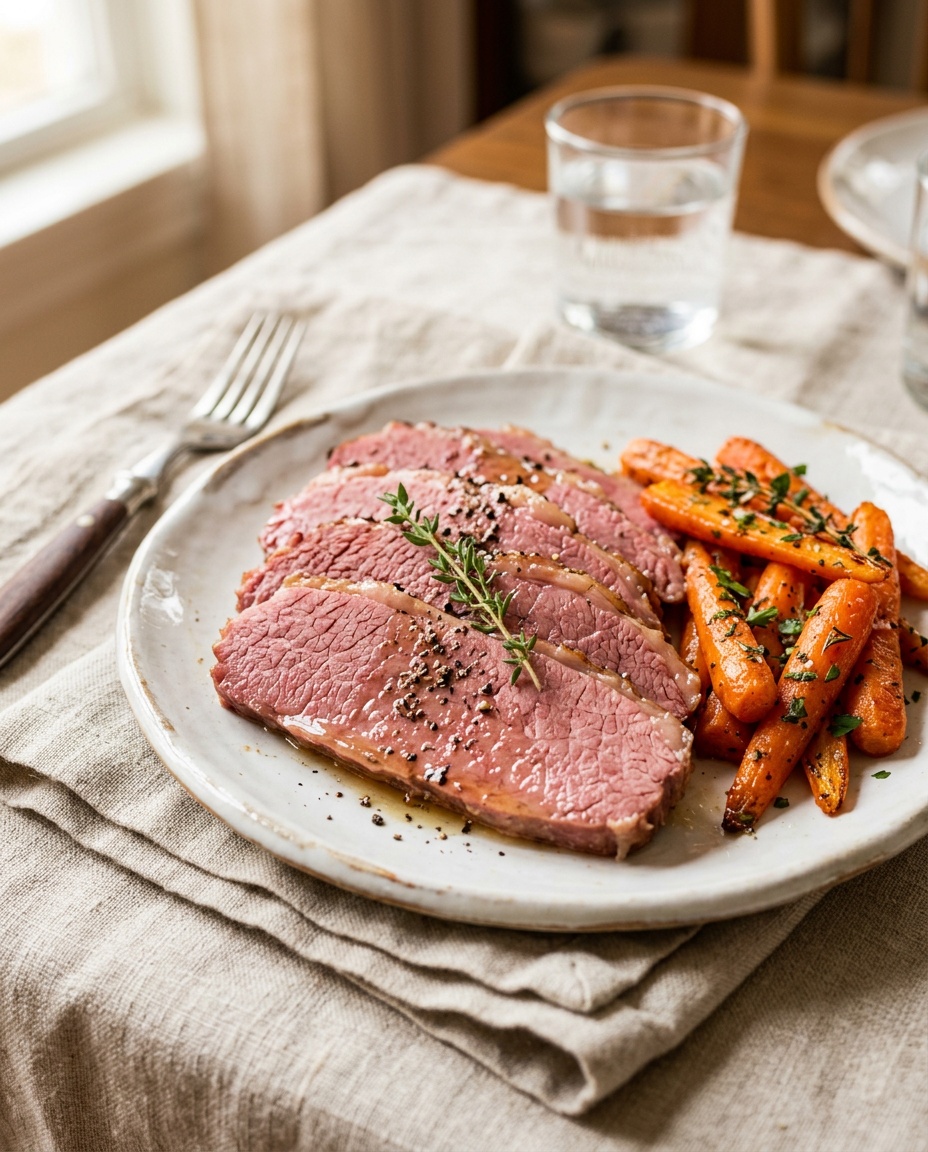
Once the meat hits that 190°F mark, I pull it out of the oven, but I keep the foil on. It is tempting to slice into it immediately, but if you do, the juices will run out instantly and leave you with dry meat. I let it rest on the counter for at least 20 to 30 minutes. This resting period allows the muscle fibers to relax and reabsorb the juices. When I’m ready to serve, I transfer it to a cutting board and slice it against the grain with a sharp serrated knife. Slicing against the grain ensures that each piece is as tender as possible, even if you are working with a leaner cut.
Tips & Variations
Fat Cap Placement: Always position the fat cap facing upward during the roasting process. As the fat renders, it acts as a self-basting mechanism for the meat underneath, ensuring the bottom doesn’t dry out. It works better when the beef is slightly elevated or sitting in enough liquid to keep the environment humid.
Slicing Direction: Identify the direction of the muscle fibers—the grain—before you start slicing. You must cut perpendicular to those lines. If you slice with the grain, the meat will feel chewy and tough, regardless of how long you roasted it.
Managing Saltiness: Since corned beef is cured in a salt brine, it is inherently salty. I recommend skipping any additional salt in your rub. If you find the final product too salty, you can soak the raw brisket in cold water for two hours before cooking, changing the water once, to leach out excess sodium.
Successful Storage: Leftovers keep well in an airtight container in the refrigerator for up to four days. To reheat, I place the slices in a shallow baking dish with a splash of broth and cover with foil, heating at 300°F until warmed through, which prevents the meat from drying out.
Recipe Variations: There are many corned beef recipes oven baked that call for adding chopped carrots, onions, and potatoes around the meat during the last hour of cooking. I prefer to roast the vegetables separately so they get crispy edges rather than boiling in the beef juices, but it is a convenient way to get a full meal in one go.
Nutrition Information
Per serving (approximate values)
| Nutrient | Amount |
|---|---|
| Calories | 380 |
| Protein | 28g |
| Carbohydrates | 6g |
| Total Fat | 26g |
| Fiber | 1g |
| Sugar | 5g |
Frequently Asked Questions About Corned Beef Recipes Oven Baked
What is the best temperature for corned beef recipes oven baked to ensure tenderness?
▼
For the most consistent results, I recommend baking at 325°F. This temperature is low enough to break down the connective tissue without scorching the exterior. Most successful corned beef recipes oven baked rely on this temperature for at least three to four hours to reach the desired internal doneness of 190°F to 200°F.
Do I need to soak the brisket before I start roasting it?
▼
Soaking is optional but highly recommended if you are sensitive to salt. Briskets are cured in a very concentrated brine, and even with rinsing, the salt content remains high. Soaking the raw meat in cold water for two hours, changing the water halfway through, significantly improves the balance of the final dish.
How do I know when the meat is actually done cooking?
▼
The most reliable way is using a digital meat thermometer. You are looking for an internal temperature of 190°F to 200°F. If you don’t have a thermometer, the meat should feel very tender and begin to pull away from the edges of the pan when poked with a fork.
Can I cook vegetables in the pan at the same time?
▼
Yes, you can add chunks of cabbage, carrots, and potatoes to the roasting pan during the last 60 to 90 minutes of cooking. They will absorb the savory beef juices, creating a complete corned beef and cabbage dinner in one pan. Just ensure they are submerged in the liquid so they steam rather than burn.
What is the best way to slice the meat once it is finished?
▼
You must let the meat rest for at least 20 minutes before slicing. Once rested, look for the direction of the muscle fibers, known as the grain. Using a sharp knife, cut thin slices against that grain, which ensures that every bite is tender and easy to chew, rather than stringy or tough.