Introduction
The first time I cooked a prime rib for my family’s holiday dinner, I was nervous about overcooking such an expensive cut of meat. I remember holding my breath while checking the thermometer, worried that I had ruined the centerpiece of the evening. That experience taught me everything I needed to know about patience in the kitchen, and it’s why I have stuck to this specific boneless prime rib recipe ever since. There is a distinct, warm nostalgia to the smell of garlic and rosemary roasting in the oven that just says “celebration” to me now.
I keep coming back to this method because it completely removes the guesswork from serving a large roast. Honestly, I’ve found that traditional high-heat roasting often results in an uneven gradient—overcooked on the outside and raw in the center—which is exactly what we want to avoid. This oven roasted beef roast method is my go-to for special occasions, from Christmas dinner to a milestone anniversary. It is much more forgiving than other methods I’ve tried over the years, and it works beautifully even if you are newer to cooking large cuts of meat.
In the following steps, you will learn the secret to consistent results, which really comes down to the reverse sear method. I’ll walk you through how to prepare the meat so you get that deep, flavorful crust without drying out the interior. By the end, you will have a beautiful, tender beef roast that is evenly pink from edge to edge, with a delicious garlic herb butter crust that everyone will be talking about long after the meal is over.
Why This Recipe Works
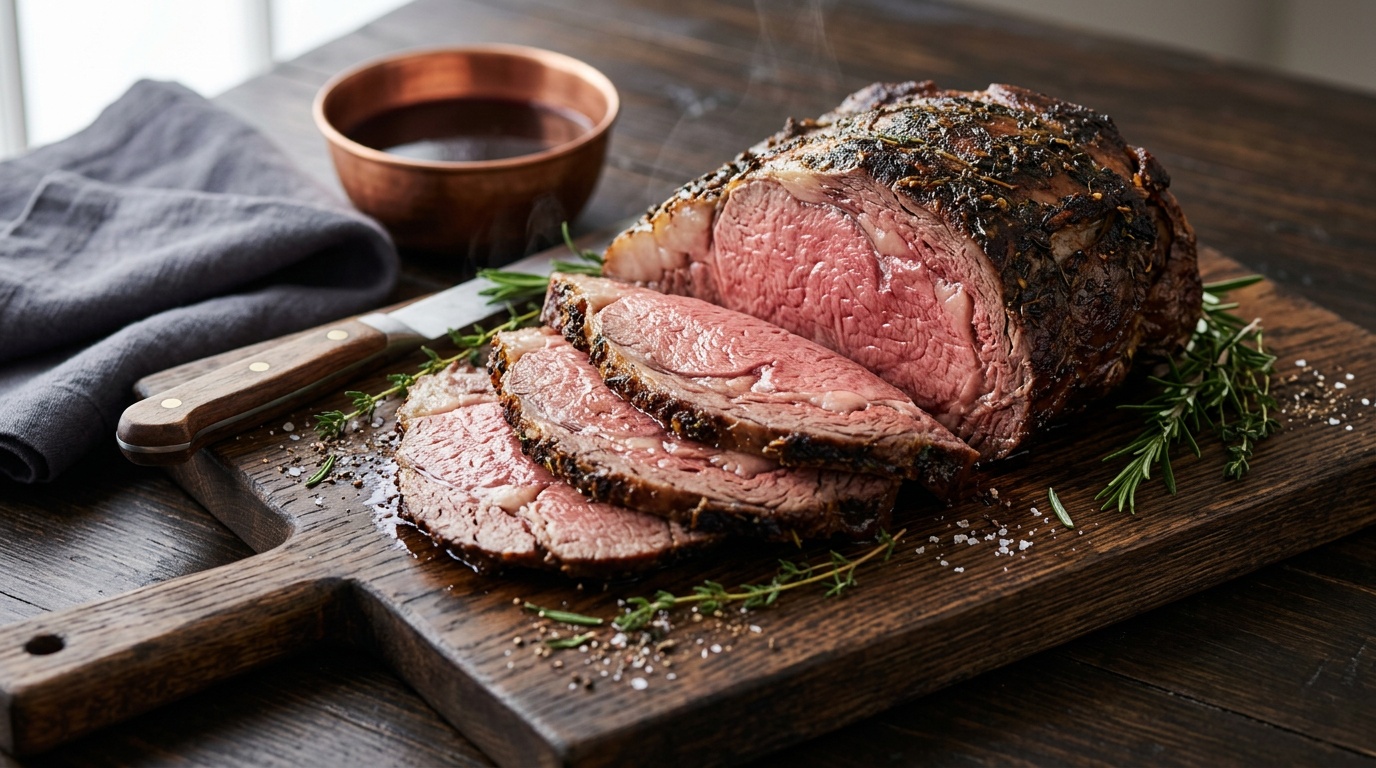
The Reverse Sear Method: By starting the meat at a very low temperature (225°F), I ensure the heat penetrates the roast gently and evenly. This prevents that grey band of overcooked meat around the edge that you see with high-heat roasting, giving you edge-to-edge perfection. It takes longer, but the consistent, predictable result is worth the patience.
Garlic Herb Butter Crust: Applying a compound butter creates a rich, flavor-packed surface that browns beautifully when you finish the roast at high heat. The butter solids caramelize quickly during the final sear, adding a nutty, savory complexity that pairs perfectly with the beef. I’ve found that applying this right before the final sear ensures the herbs don’t burn during the long, slow roast.
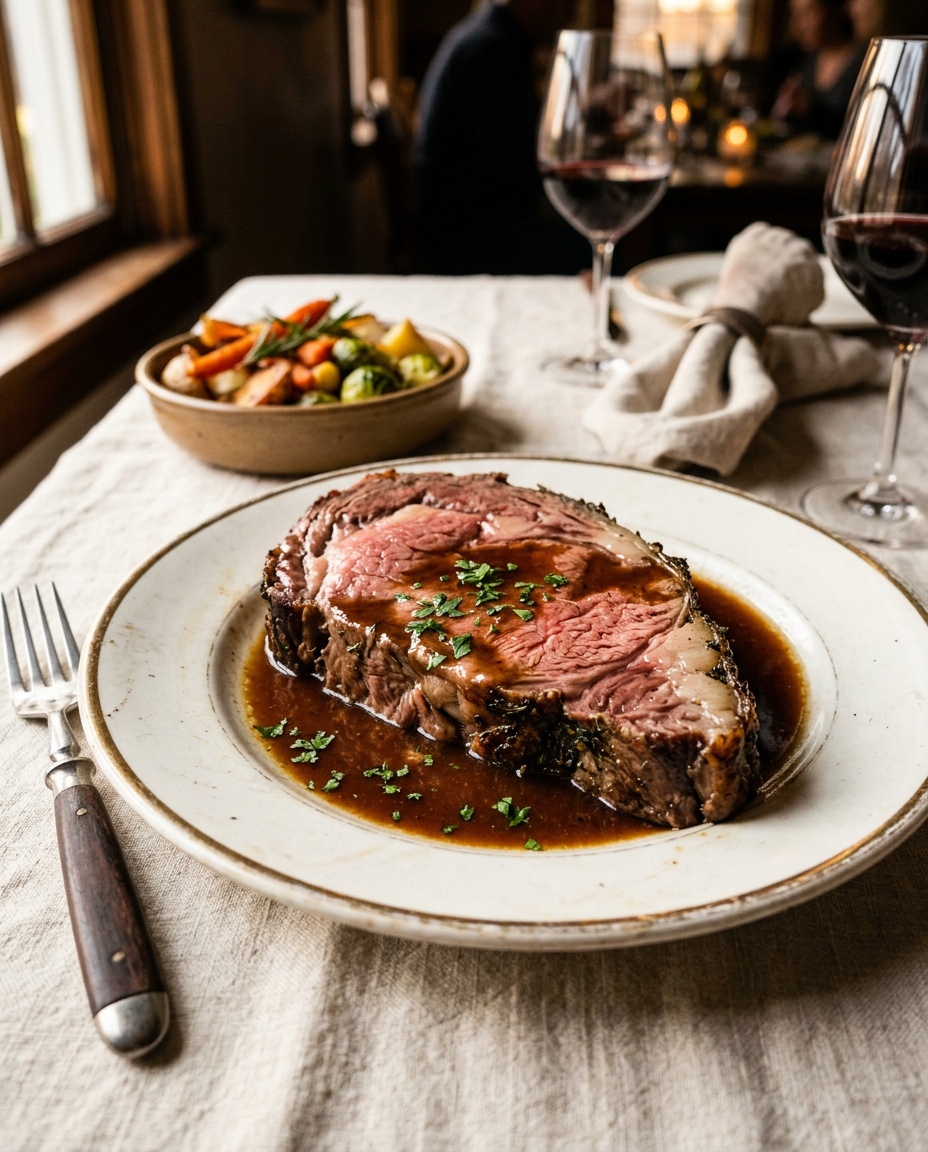
Importance of Resting: Resting the meat for 20-30 minutes after cooking allows the muscle fibers to relax and reabsorb the juices that are pushed to the center during the searing process. If you cut into the roast immediately, those juices spill out onto the board instead of staying inside the meat. This simple step is the difference between dry slices and melt-in-your-mouth tenderness.
Ingredients
The Roast
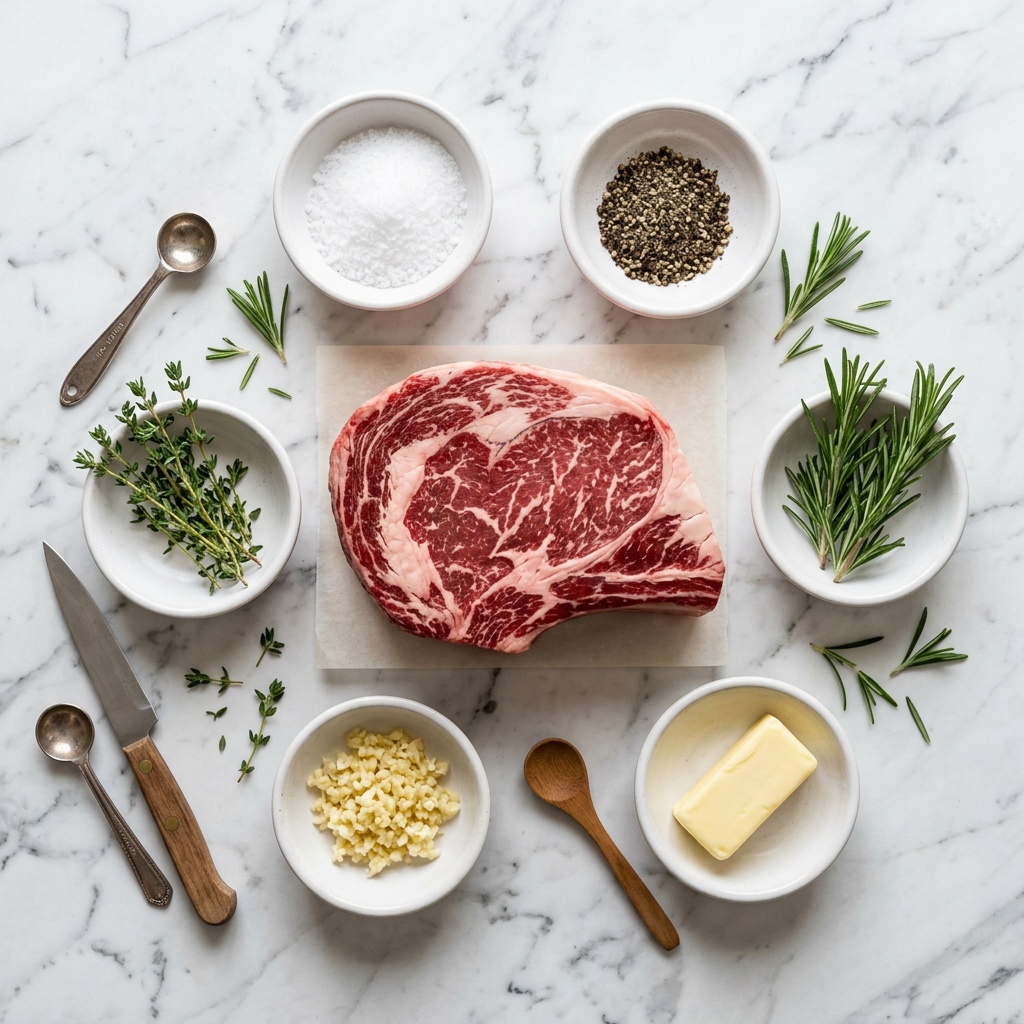
- 5 lbs boneless prime rib roast (high quality, well-marbled)
- 2 tbsp kosher salt (coarse)
- 1 tbsp freshly cracked black pepper
Garlic Herb Compound Butter
- 1/2 cup unsalted butter (softened)
- 4 cloves garlic (minced)
- 1 tbsp fresh rosemary (finely chopped)
- 1 tbsp fresh thyme (finely chopped)
Instructions
1Season and Temper
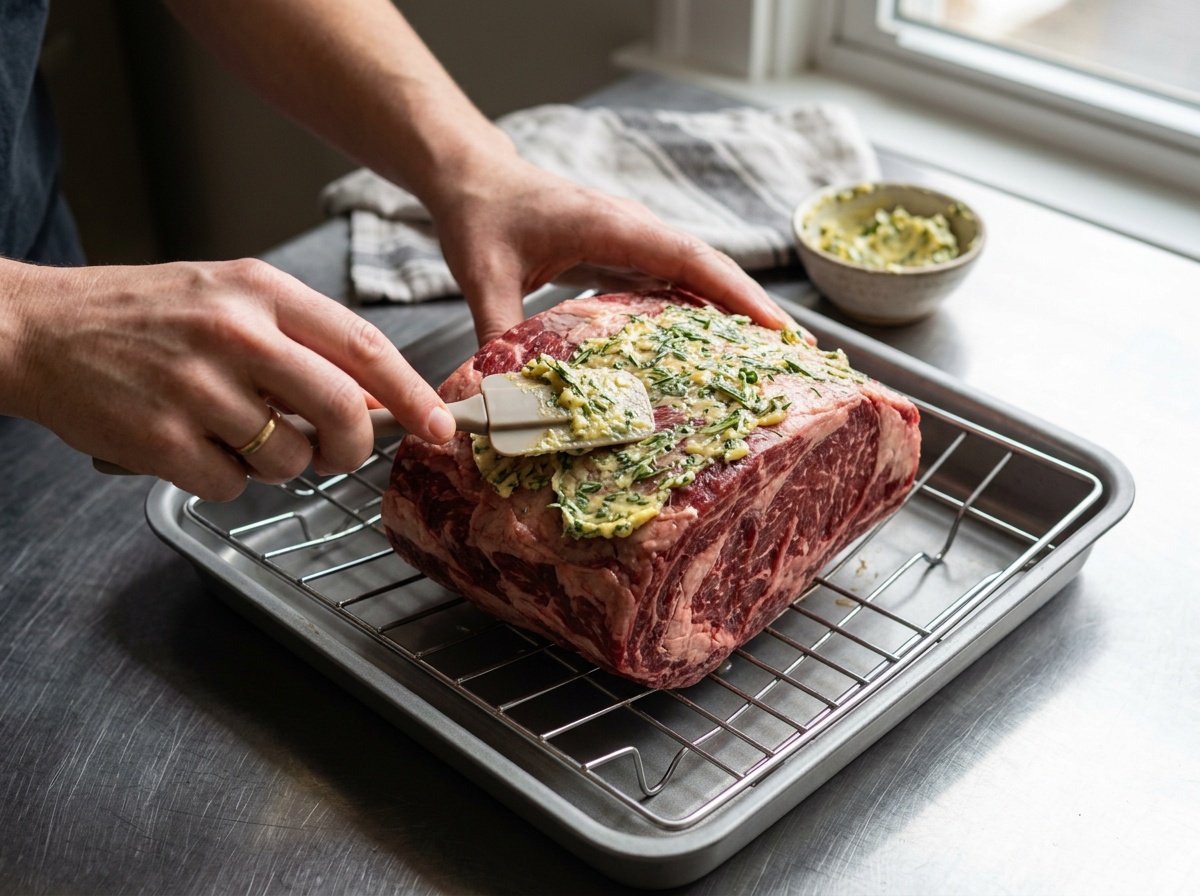
I take the roast out of the refrigerator about one hour before I start cooking to let it come closer to room temperature. This helps it cook more evenly from the start. I pat the entire surface of the beef dry with paper towels—moisture is the enemy of a good crust, so don’t skip this. I mix the softened butter with the minced garlic, rosemary, and thyme until it forms a uniform paste. Then, I season the roast generously all over with the kosher salt and black pepper, pressing it into the meat. I apply the herb butter mixture only to the top fat cap at this stage, as it can burn if applied too early. I set the roast on a rack inside a roasting pan, fat-side up.
2The Low and Slow Roast
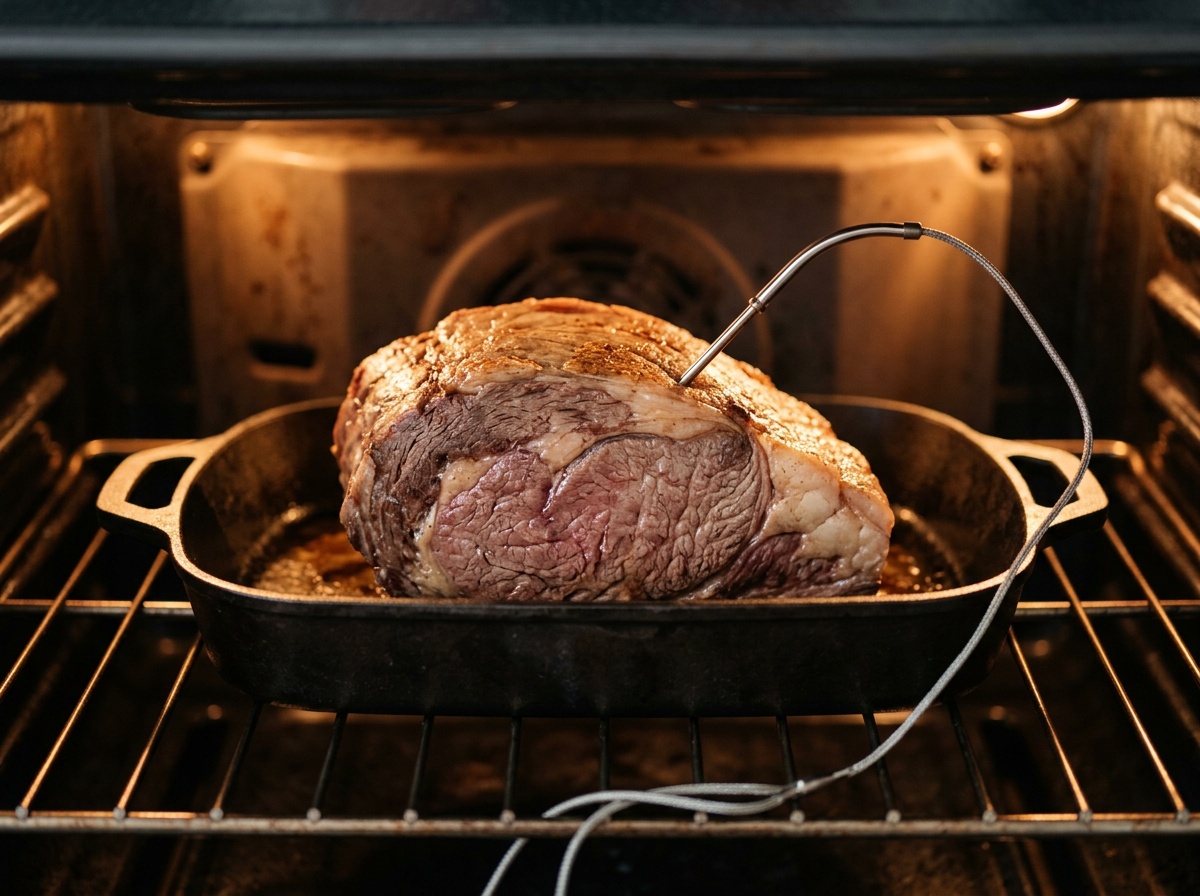
I preheat my oven to 225°F and place the rack in the center. I insert an oven-safe meat thermometer into the thickest part of the roast, avoiding the bone if there were any, though this is a boneless prime rib recipe, so just center it well. I roast it slowly until the internal temperature reaches about 115°F to 120°F for a perfect medium-rare result. This usually takes about 3 to 4 hours depending on the size of your roast, but I never rely on time alone. I keep a close eye on the thermometer because that internal temperature is the only way to guarantee success. You will see the fat render down and the exterior dry out slightly, which is exactly what we want.
3Sear and Rest
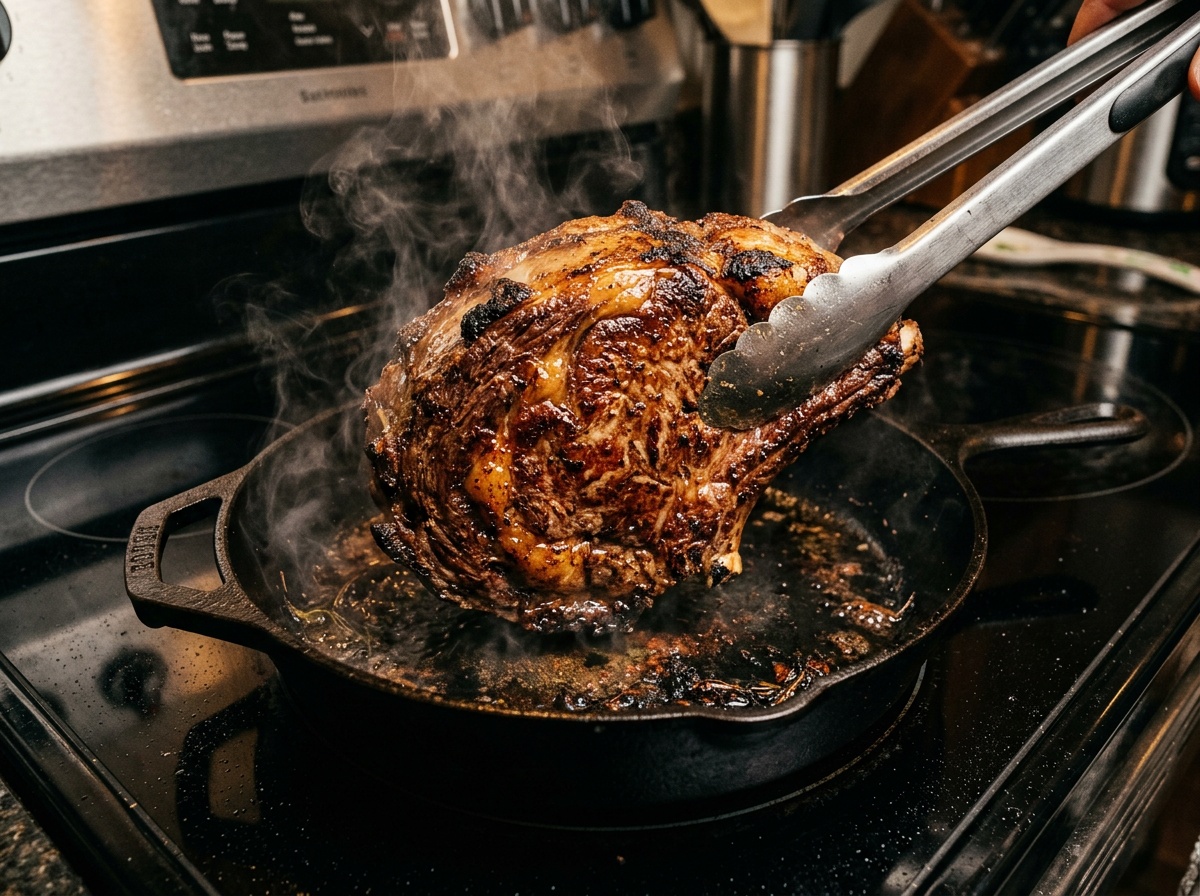
Once the roast hits 120°F, I remove it from the oven and tent it loosely with foil. I crank my oven up to 500°F (or the highest setting) and let it come up to temperature. While the oven heats, I spread the remaining garlic herb butter over the top and sides of the roast. Once the oven is hot, I put the roast back in for 8-10 minutes to develop that deep, caramelized crust. I watch it very carefully because the butter can burn quickly at high heat. Once it looks dark golden brown, I pull it out and let it rest on a cutting board for at least 20 minutes before slicing. This rest is essential for keeping those juices inside every slice.
Tips & Variations
Use a Thermometer: Never guess the doneness of a roast by time alone; a digital meat thermometer is the only way to be certain. I pull my roast at 120°F for medium-rare, knowing it will carry over to 125-130°F during the rest.
The Importance of Drying: If you don’t pat the meat dry, it will steam instead of roast. I take an extra minute to ensure the entire surface is bone dry before applying salt, which creates a much better crust.
Proper Resting: Do not skip the resting time! I know it smells incredible and you want to eat immediately, but waiting 20-30 minutes allows the juices to redistribute, ensuring every slice is moist.
Storage Tips: Leftovers keep well in an airtight container in the fridge for up to 3 days. To reheat without drying it out, I slice it into thick pieces and gently warm them in a skillet over low heat with a splash of beef broth.
Beef Ribeye Roast Temperature: For a medium roast, aim for an internal temp of 135°F after resting. I always stick to the lower side, as it’s easy to cook it further, but you can’t go backward once it’s overcooked.
Nutrition Information
Per serving (approximate values)
| Nutrient | Amount |
|---|---|
| Calories | 650 |
| Protein | 45g |
| Carbohydrates | 1g |
| Total Fat | 52g |
| Fiber | 0g |
| Sugar | 0g |
Frequently Asked Questions About Boneless Prime Rib Recipe
What is the best way to ensure success with this boneless prime rib recipe?
▼
The key to success with this boneless prime rib recipe is using the reverse sear method. By cooking at a low 225°F until the meat hits 120°F, you ensure even heat distribution. This technique prevents the outer grey ring often caused by high-heat cooking, giving you beautiful, consistent, rosy-pink slices throughout the entire roast.
How long should I cook a 5-pound roast?
▼
For a 5-pound roast at 225°F, it typically takes between 3 to 4 hours to reach an internal temperature of 120°F. However, I always recommend using a meat thermometer rather than a timer. Every oven is different, and the exact shape and initial temperature of your meat will affect the total cooking time significantly.
Can I prep this roast ahead of time?
▼
Yes, you can absolutely prep it ahead! I often season the meat with salt and pepper the night before and keep it in the fridge uncovered. This actually helps dry out the surface for a better crust. Just take it out 1-2 hours before cooking to let the chill come off the meat.
What should I do if my roast is cooking too fast?
▼
If you notice the internal temperature climbing faster than expected, simply lower your oven temperature by 25 degrees or remove the roast from the oven earlier than planned. It is much easier to let a roast sit for a bit longer while wrapped in foil than it is to deal with overcooked, dry beef.
How do I cut the roast properly?
▼
Always slice against the grain for the most tender bite. Look for the lines of the muscle fibers on the cut end of the roast and slice perpendicular to them. I prefer using a sharp, long carving knife to get clean, uniform slices, which makes presentation much more professional and attractive for guests.