Introduction
I remember the first time I made this boneless beef short ribs recipe on a chilly Tuesday in November. I had some friends coming over for a simple dinner, and I wanted something that felt sophisticated but wouldn’t keep me stuck in the kitchen all night. The house filled with the smell of caramelized beef and savory herbs, which instantly warmed up the whole space and created such a welcoming atmosphere.
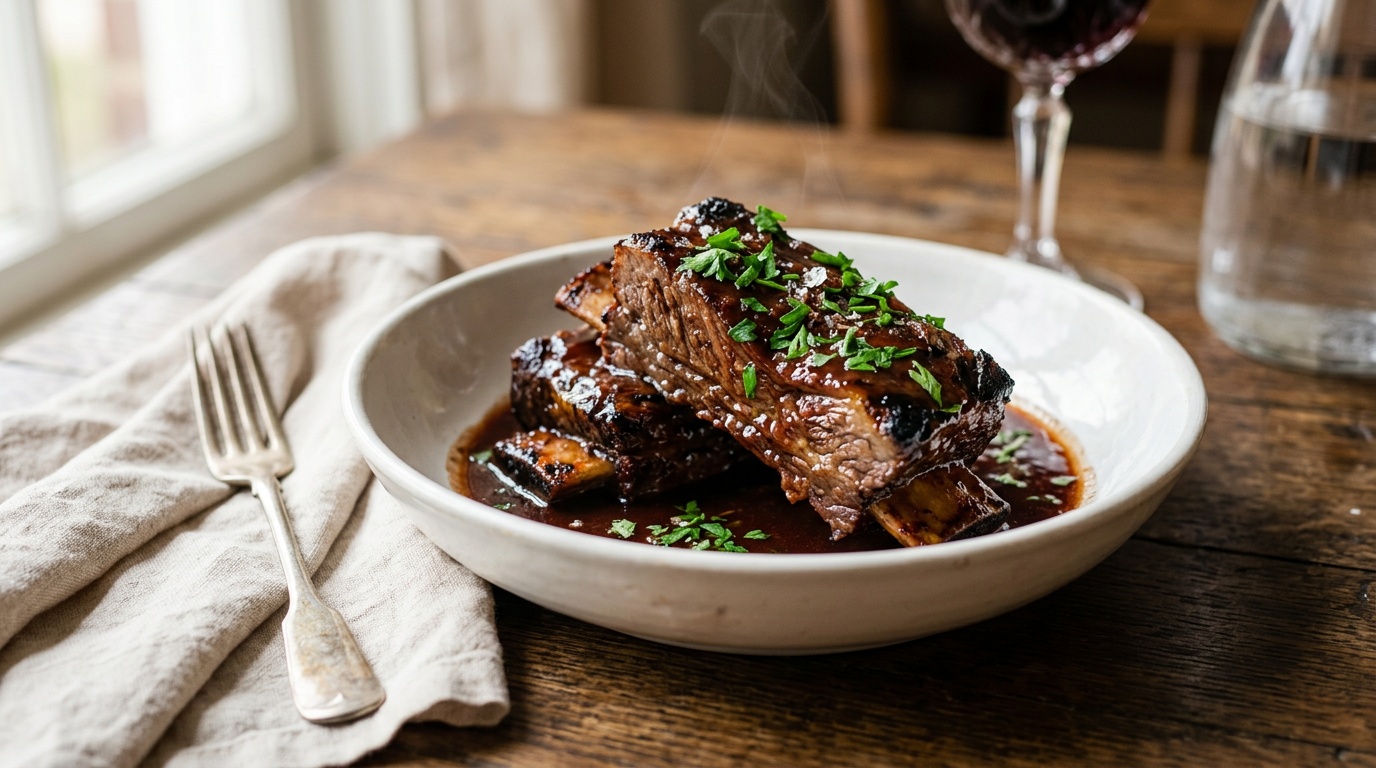
Why This Recipe Works
The Maillard Reaction: Searing the meat until it creates a dark, crusty exterior is not just for color; it generates hundreds of new flavor compounds. By browning the beef properly, we ensure a deep, savory foundation that permeates the entire braised beef short ribs dish. I look for a deep mahogany color, not just gray or brown, to know I have maximized that flavor development.
Low and Slow Braising: Collagen, the tough connective tissue in short ribs, requires a low, moist heat environment to break down into gelatin. When I cook these at a steady 300°F, that tissue transforms into a silky, tender texture that defines truly tender beef short ribs. Without this patient, long-duration cooking, the meat remains rubbery and tough rather than succulent.
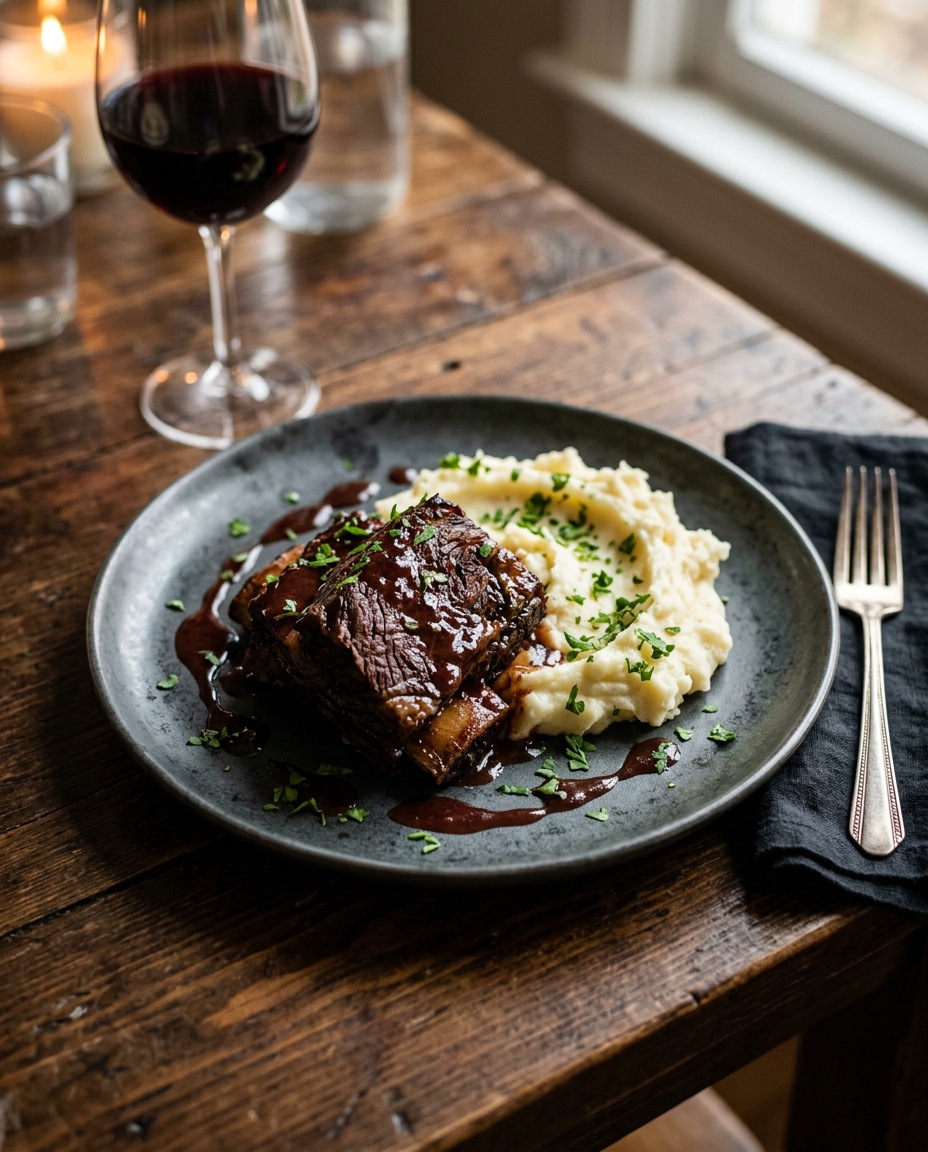
Liquid Reduction: After the meat is cooked, reducing the braising liquid by half concentrates the sugars and proteins into a glossy, coating-consistency sauce. This beef broth reduction adds a professional finish to the plate, tying the red wine braise together with the richness of the beef fat. I whisk in a tablespoon of cold butter at the very end to give it that restaurant-style sheen.
Ingredients
For the Beef
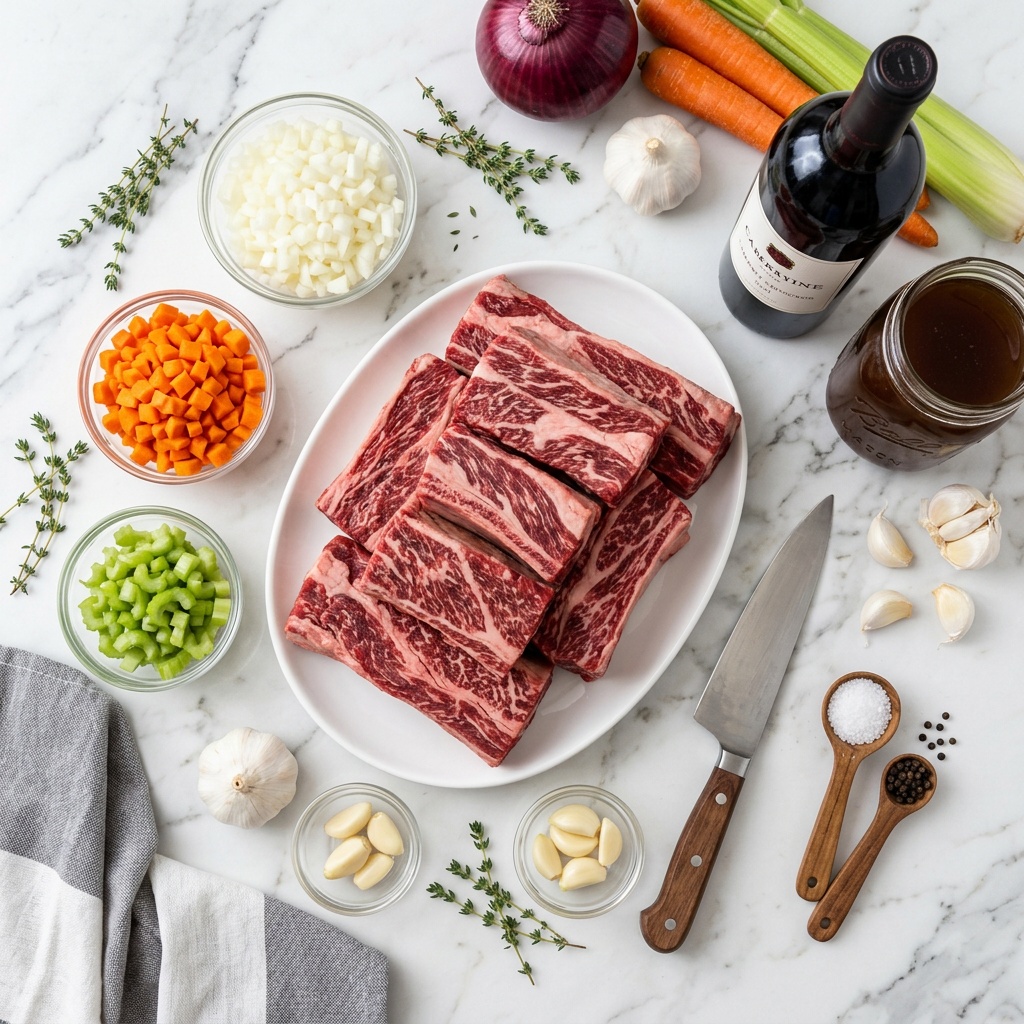
- 3 lbs boneless beef short ribs (trimmed of excess fat)
- 1 tsp kosher salt (plus more for seasoning)
- 1/2 tsp black pepper (freshly cracked)
- 2 tbsp neutral oil (grapeseed or avocado)
For the Braise
- 1 large yellow onion (diced)
- 2 stalks celery (diced)
- 2 medium carrots (peeled and diced)
- 4 cloves garlic (smashed)
- 2 cups dry red wine (cabernet or merlot)
- 2 cups beef stock (low sodium)
Instructions
1Sear the Beef Ribs
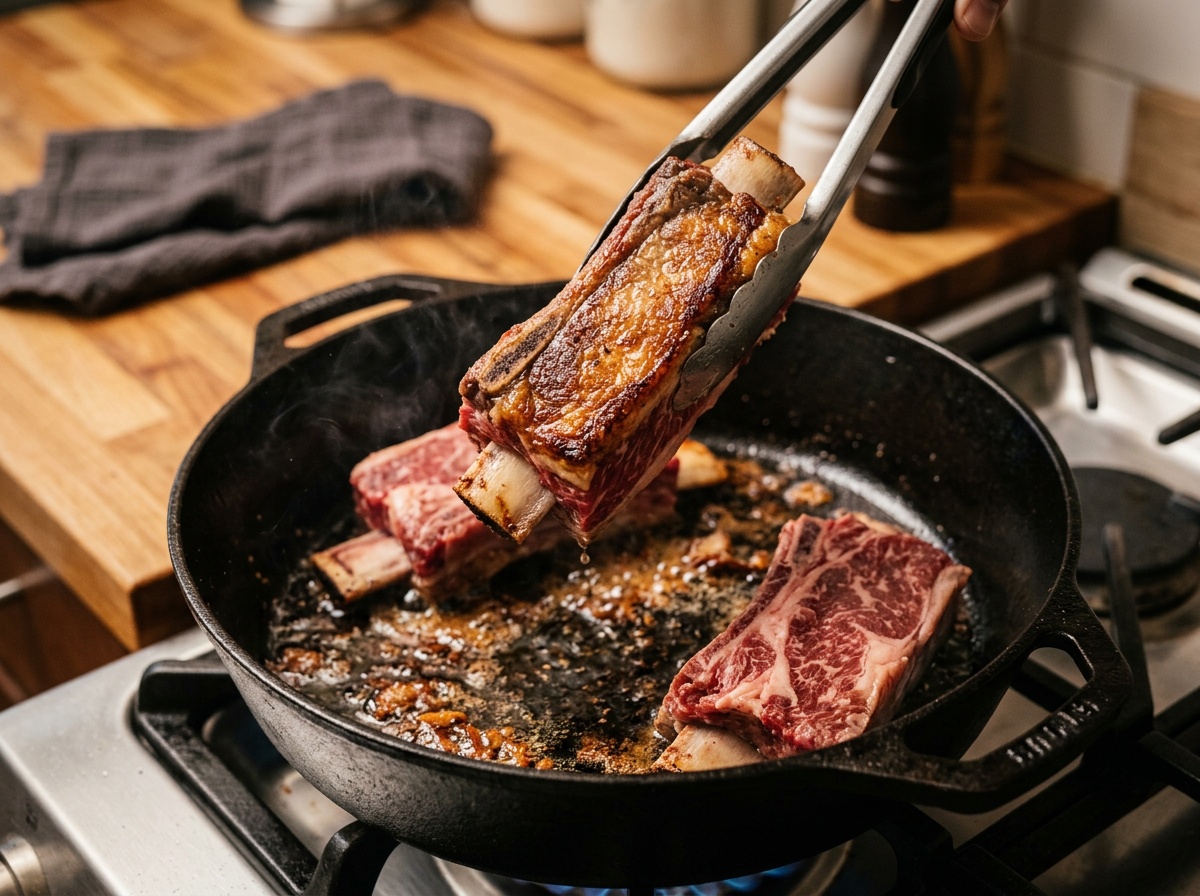
I start my boneless beef short ribs recipe by patting the meat thoroughly dry with paper towels — moisture is the enemy of a good sear. I season the ribs generously with salt and pepper on all sides. In my heavy Dutch oven, I heat the oil over medium-high heat until it shimmers. I place the ribs in the pan, ensuring I don’t crowd them, and let them sear undisturbed for about 3-4 minutes per side. I am looking for a deep, dark brown crust. Once seared, I remove the ribs to a plate and pour off most of the excess fat, leaving just a tablespoon to cook the vegetables.
2Sauté Aromatics and Deglaze
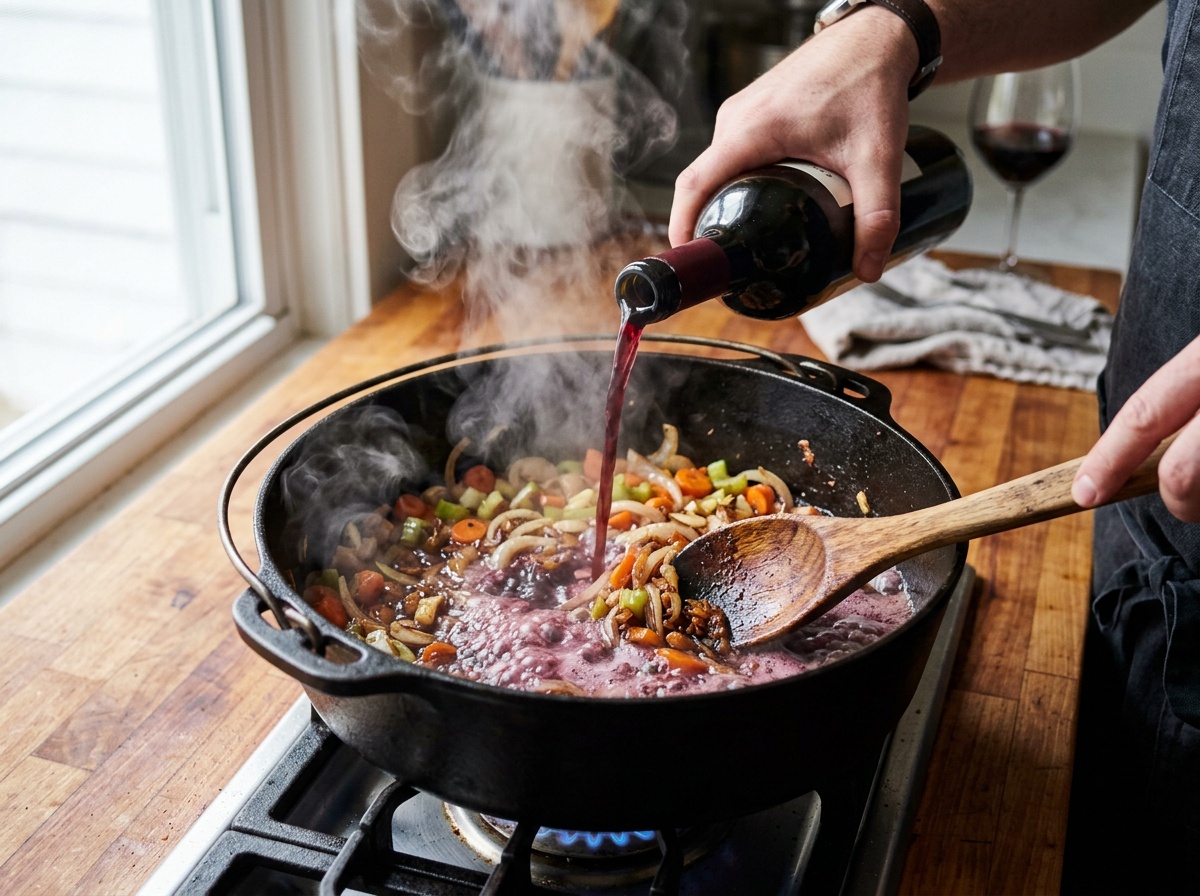
Using the same pot with the rendered fat, I toss in my diced onions, carrots, and celery. I cook them over medium heat for about 8-10 minutes until they are soft and slightly caramelized. I add the smashed garlic and cook for another minute until fragrant. To deglaze the pan, I pour in the red wine and use a wooden spoon to scrape up all those delicious brown bits from the bottom — this is where the depth of flavor for my braised beef short ribs comes from. I let the wine bubble and reduce by half, which usually takes about 5 minutes, ensuring the raw alcohol smell has completely cooked off.
3Braise and Reduce
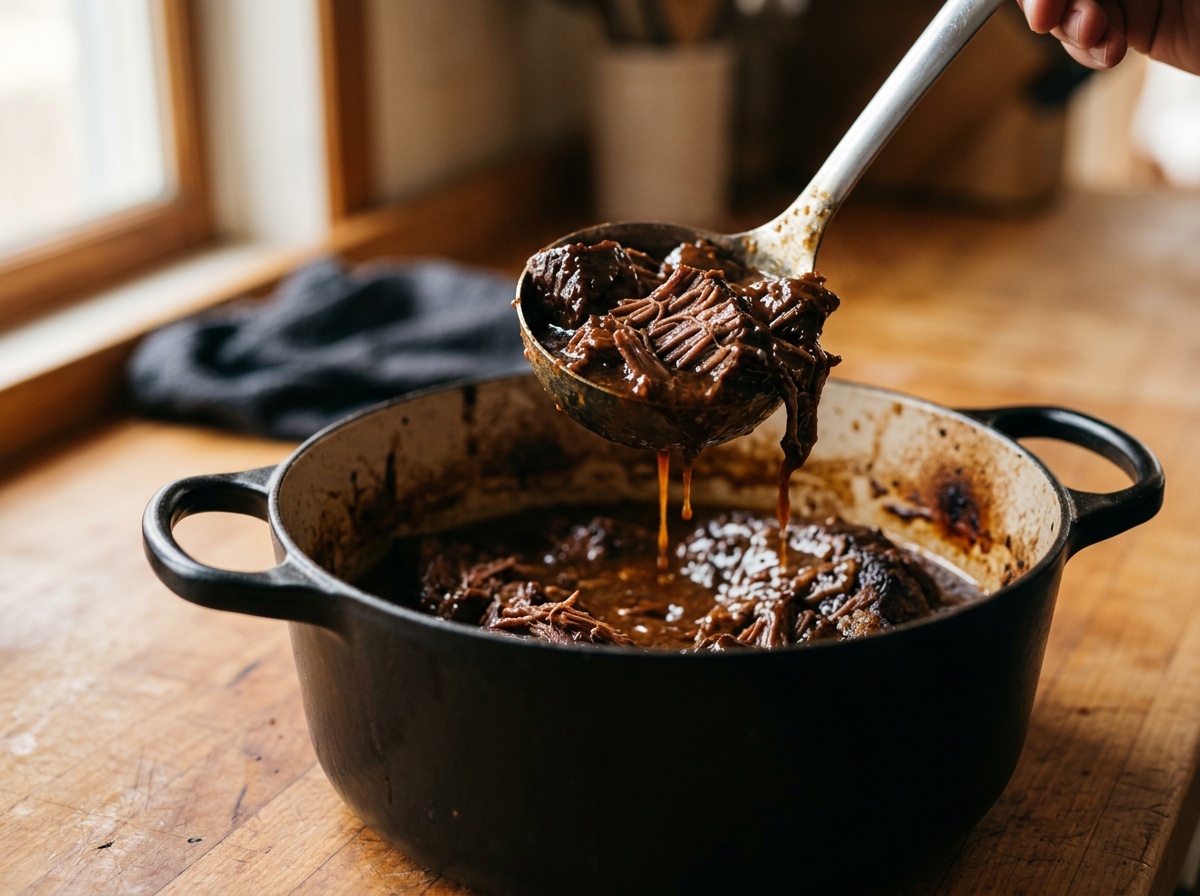
I place the seared beef back into the Dutch oven, nestling them into the vegetable mixture, and pour in the beef stock until the ribs are mostly submerged. I bring it to a gentle simmer on the stove, then cover the pot tightly with a lid and transfer it to a 300°F oven. I let it cook for 2.5 to 3 hours. I know they are finished when I can easily pull the meat apart with a fork. Once done, I remove the ribs carefully and strain the liquid into a saucepan. I boil the liquid until it reduces into a syrupy, concentrated beef broth reduction that coats the back of a spoon beautifully.
Tips & Variations
Room Temperature Meat: I always pull my ribs out of the fridge about 30 minutes before I start. If you sear cold meat, it drops the pan temperature too quickly and you end up steaming the beef instead of getting that crusty sear.
Deglazing Properly: That dark layer on the bottom of the pan is pure flavor. When I add the wine, I take an extra minute to scrape every bit of that fond off the surface with a wooden spoon so it incorporates into the braising liquid.
The Boneless Beef Short Ribs Recipe Secret: The secret to the best version of this boneless beef short ribs recipe is patience during the reduction phase. If you serve the sauce too thin, it runs off the meat, but when reduced to a syrup, it clings to every bite.
Skimming the Fat: Short ribs have a lot of intramuscular fat that renders out during the long cook. After I strain the braising liquid, I use a wide spoon to skim the excess grease off the top before I begin the reduction.
Resting the Meat: Never serve the ribs straight from the oven. I let them rest in the sauce for about 10-15 minutes after cooking; this helps the meat reabsorb some of the juices and prevents it from drying out as you portion it onto plates.
Nutrition Information
Per serving (approximate values)
| Nutrient | Amount |
|---|---|
| Calories | 480 |
| Protein | 35g |
| Carbohydrates | 12g |
| Total Fat | 32g |
| Fiber | 2g |
| Sugar | 5g |
Frequently Asked Questions About the Boneless Beef Short Ribs Recipe
Can I make this boneless beef short ribs recipe in a slow cooker?
▼
Yes, you can absolutely adapt this boneless beef short ribs recipe for a slow cooker. Follow the searing and sautéing steps in a skillet first to build flavor, then transfer everything to your slow cooker. Cook on low for 7-8 hours until tender, then reduce the liquid in a separate saucepan on the stove to create that rich sauce.
What is the best way to ensure I get tender beef short ribs?
▼
To get perfectly tender beef short ribs, the key is the low and slow braising process. Make sure your oven is set to a steady 300°F and that the ribs are mostly covered by the braising liquid. If the liquid evaporates, the meat will dry out, so ensure the lid provides a tight seal throughout the entire three-hour cooking time.
How do I store and reheat this braised beef short ribs dish?
▼
This dish stores beautifully in an airtight container in the refrigerator for up to 3 days. I actually prefer eating it the next day because the flavors meld together. To reheat, warm it gently on the stovetop over low heat with a splash of beef stock to keep the sauce loose and glossy.
Can I substitute the red wine in this beef broth reduction?
▼
If you prefer not to use red wine, you can substitute it with a high-quality balsamic vinegar mixed with extra beef stock. Start with 1/4 cup of balsamic and 1.75 cups of beef stock. It will provide the necessary acidity to balance the richness of the beef, though the final flavor profile will be slightly sharper and sweeter.
How can I tell when the seared beef ribs are finished cooking?
▼
You know your seared beef ribs are done when the meat is ‘fork-tender.’ This means if you press a fork into the thickest part of the meat, it should yield with almost no resistance and begin to pull apart easily. If it still feels firm or rubbery, return the pot to the oven for another 30 minutes, as connective tissue takes time to break down.