Introduction
I still remember the first time I made this beef bone broth recipe; my entire apartment smelled like a cozy, old-fashioned kitchen on a rainy Sunday afternoon. I had picked up a few pounds of marrow bones from the local butcher on a whim, not really sure what to expect, but the result was so much deeper than anything I had ever bought in a carton. It wasn’t just broth; it was liquid gold that transformed every soup, stew, and risotto I made for the rest of that winter.
Honestly, this is the one thing I keep coming back to whenever I feel run down or the weather turns chilly. I have found that nothing beats the depth of flavor you get when you roast the bones first — it creates that rich, savory foundation that store-bought versions simply lack. It is part of my weekly rhythm now, usually setting it up on a quiet Saturday morning so it can simmer away while I take care of chores or read a book.
You will learn the importance of roasting the bones to get that perfect Maillard reaction and why a low, gentle simmer is essential for extracting maximum collagen. I remember my first attempt was a cloudy mess because I rushed the heat, but I have figured out the exact timing to ensure it stays clear and full-bodied. By the end, you will have a jar of nutrient-dense broth that makes everything you cook taste noticeably better, and you will never want to go back to the boxed stuff again.
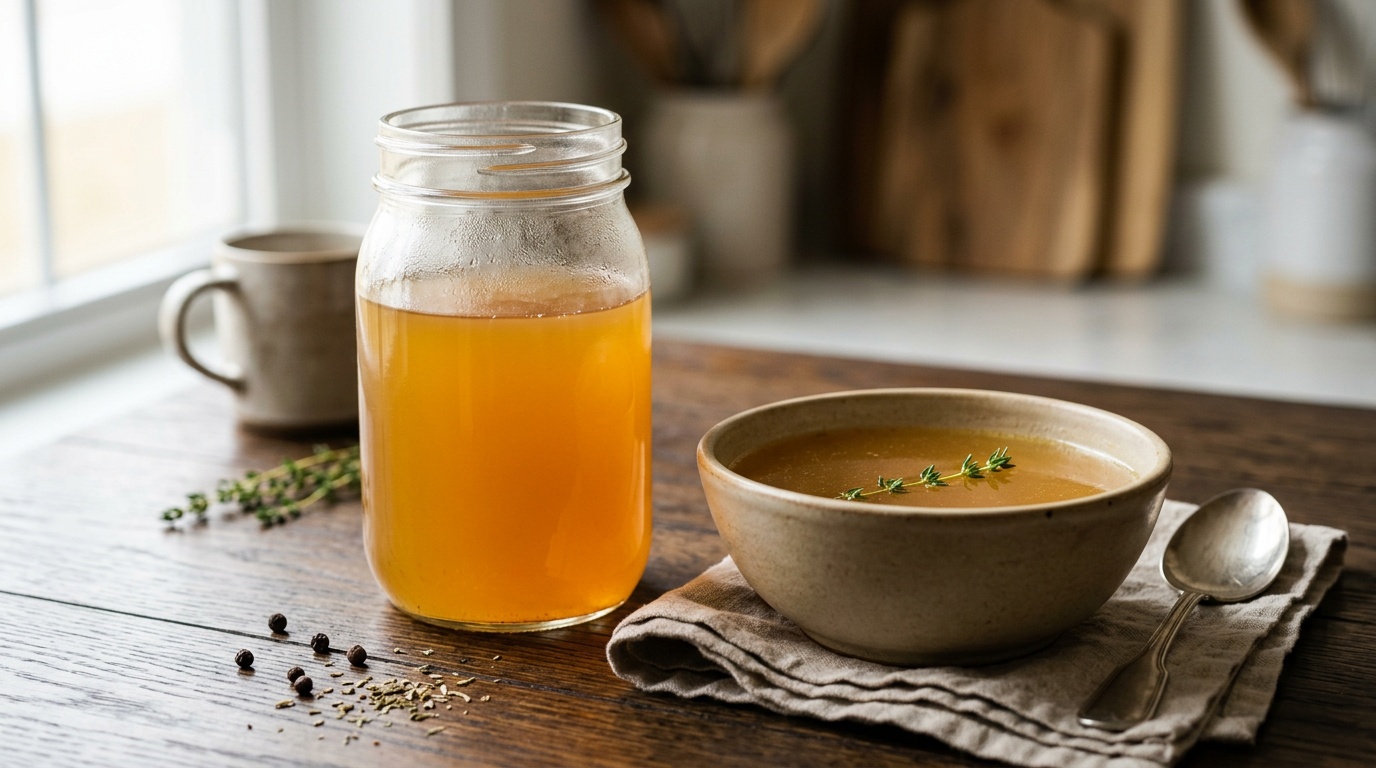
Why This Recipe Works
Roasting for Depth: Roasting the bones at 425°F is the foundation of this beef bone broth recipe. When you roast them until dark brown, you create a complex Maillard reaction on the surface of the bone, which contributes a deep, roasted flavor profile that a simple boil cannot achieve. I always ensure the bones have a nice crust before adding them to the pot because that color directly translates to the final richness of the liquid.
Low and Slow Extraction: The secret to a truly gelatinous beef stock is maintaining a gentle simmer over 12 to 24 hours. By keeping the temperature just below a boil, you allow the collagen-rich stock to develop slowly without emulsifying the fat into the water, which would result in a cloudy finish. This steady heat gradually breaks down the connective tissues, resulting in a mineral-heavy broth that firms up in the fridge.
Acid and Mineral Balance: Adding a splash of apple cider vinegar at the beginning is my favorite trick for a nutritious mineral broth. The acidity helps pull minerals out of the bones and makes the collagen more accessible during the long cooking process. It does not make the finished product taste like vinegar, but it does make a significant difference in how the nutrients are released from the marrow.
Ingredients
The Foundation
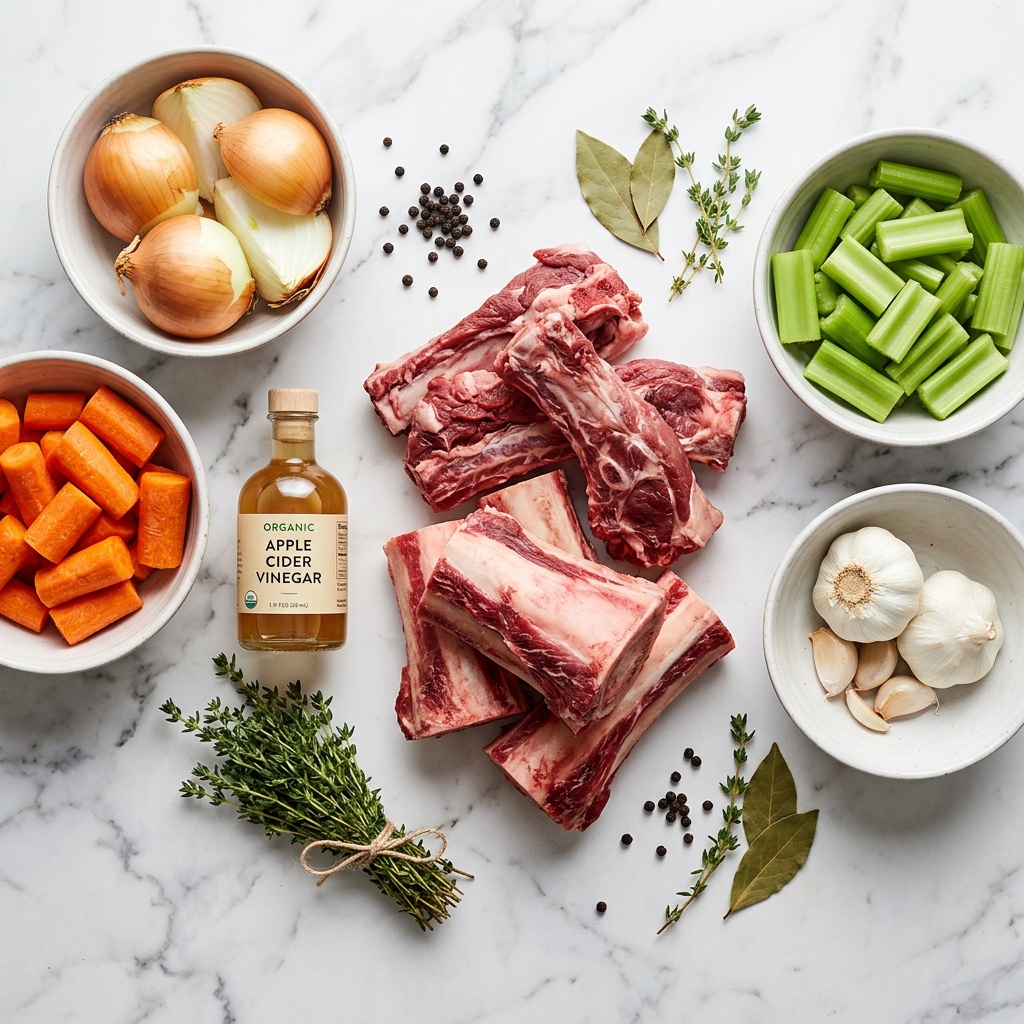
- 4 lbs beef marrow bones (knuckle and leg bones mixed)
- 1 lb beef neck bones (for extra gelatin)
- 2 tbsp apple cider vinegar (raw and unfiltered)
Aromatics
- 2 large yellow onions (quartered)
- 3 large carrots (roughly chopped)
- 3 stalks celery (roughly chopped)
- 1 head garlic (halved crosswise)
- 1 bunch fresh thyme
- 2 tsp black peppercorns (whole)
Instructions
1Roast the Bones
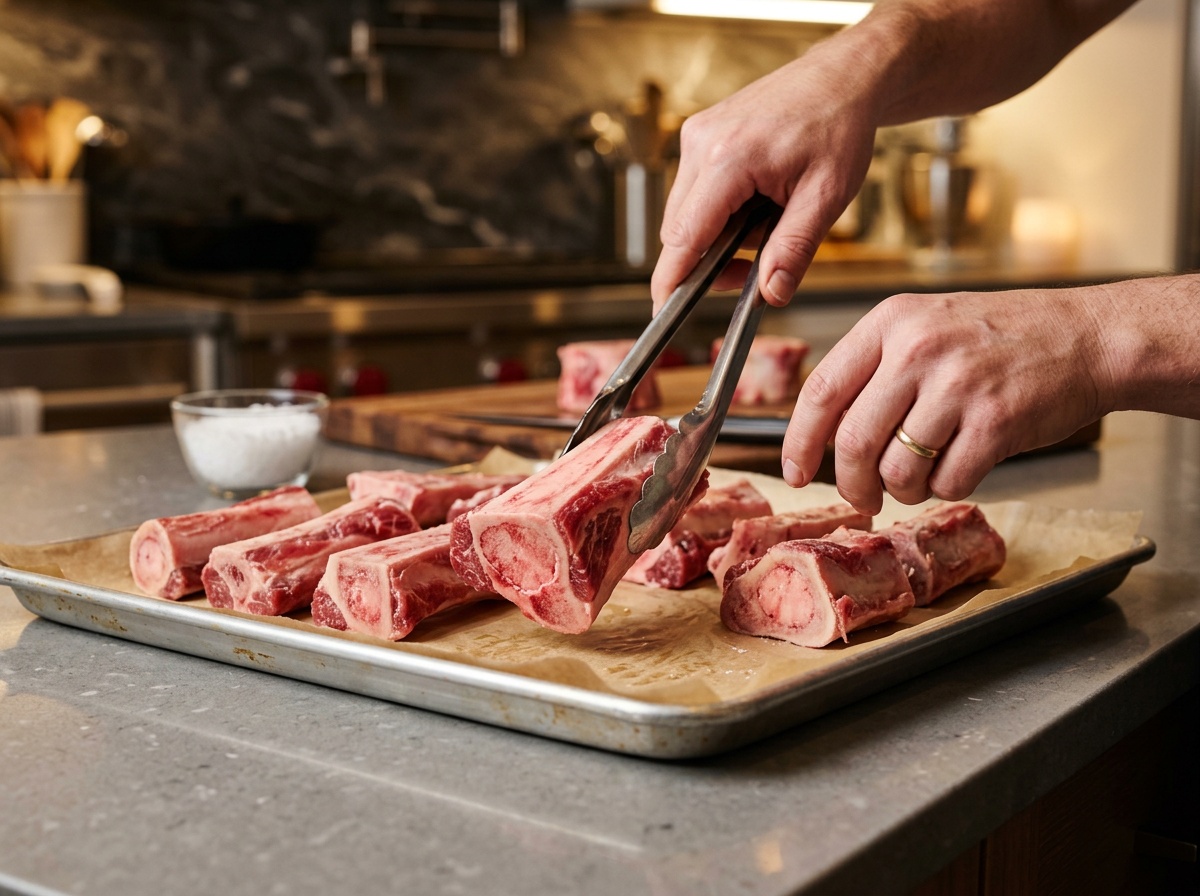
I start by preheating my oven to a high 425°F to ensure we get a deep, caramelized color. I arrange the beef marrow bones and neck bones in a single layer on a large rimmed baking sheet, making sure they are not crowded so they roast rather than steam. I pop them in for about 40 to 50 minutes, turning them halfway through so every side develops that dark, golden brown crust. This roasting step is where the flavor starts, so don’t be afraid to let them get quite dark, almost like a well-seared steak. Once they look deeply browned and smell savory, I remove them from the oven and carefully scrape any flavorful juices from the pan into my stockpot.
2Prepare the Aromatics
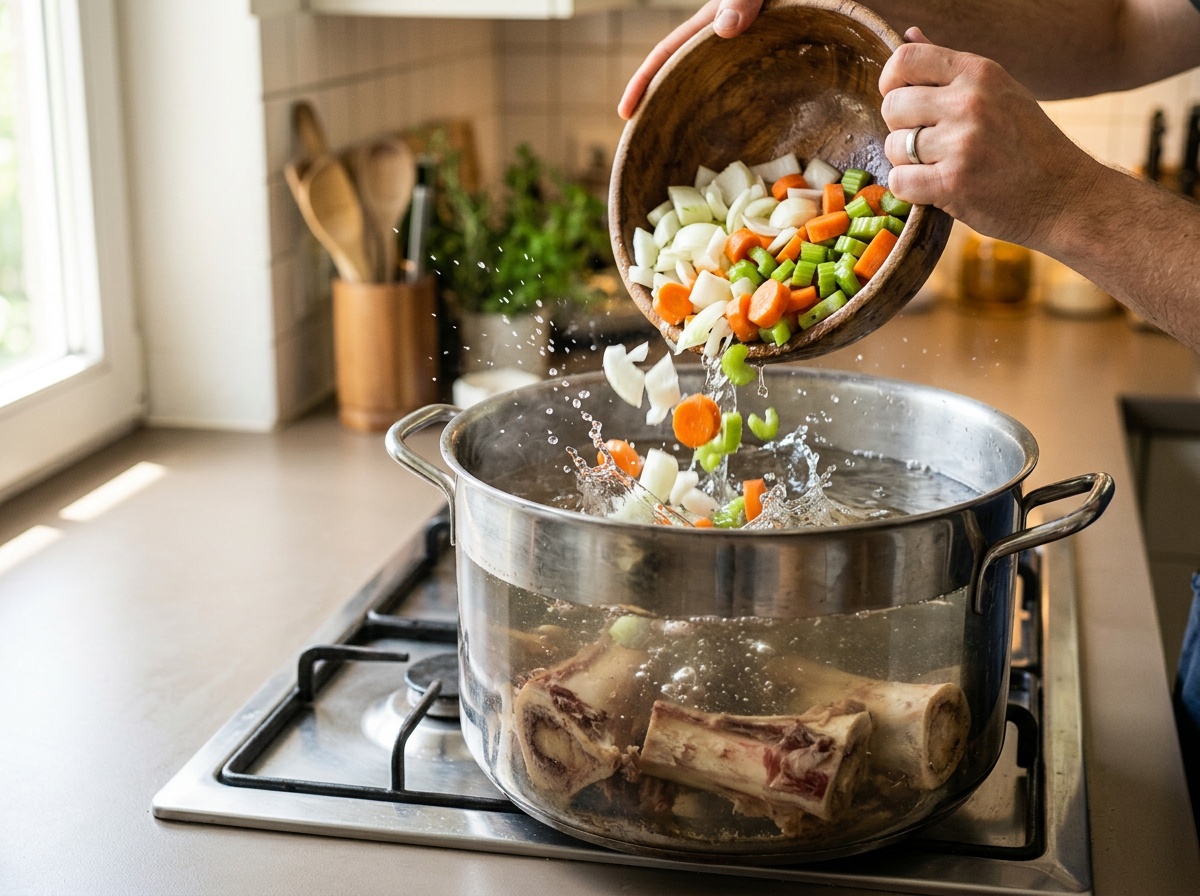
While the bones are roasting, I prepare the aromatics by roughly chopping the onions, carrots, and celery — you do not need to be precise here since they will be strained out later. I use the onion skins too, as they add a lovely golden hue to the broth, which is a neat trick I learned to give the stock more color. I place the bones into a very large stockpot, then tuck the vegetables and herbs around them. I add enough cold water to cover the bones by about two inches; starting with cold water is vital because it allows the proteins and minerals to release slowly as the temperature rises. I also pour in the apple cider vinegar now to help with the extraction process.
3The Gentle Simmer
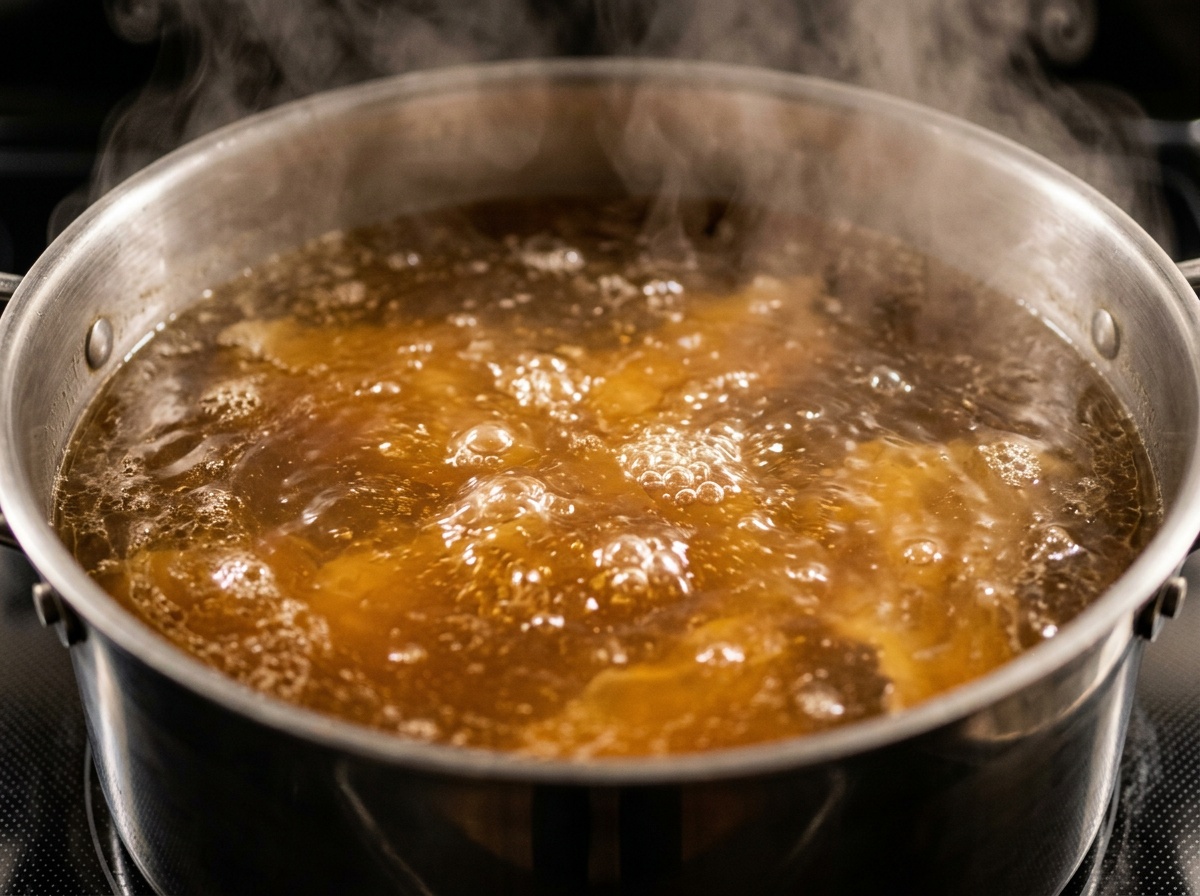
This is the most important part of my beef bone broth recipe; patience is definitely required here. I bring the pot to a very gentle boil over medium-high heat, and as soon as I see the first few bubbles, I immediately turn the heat down to the lowest setting. I want to see a very slow, lazy bubble rising to the surface, maybe one every few seconds. I cover the pot partially with a lid and let it cook for at least 12 hours, though I usually let it go for 24 if I have the time. If I notice the water level dropping too much, I add a splash of boiling water to keep everything submerged, but I rarely need to do much else.
4Strain and Chill
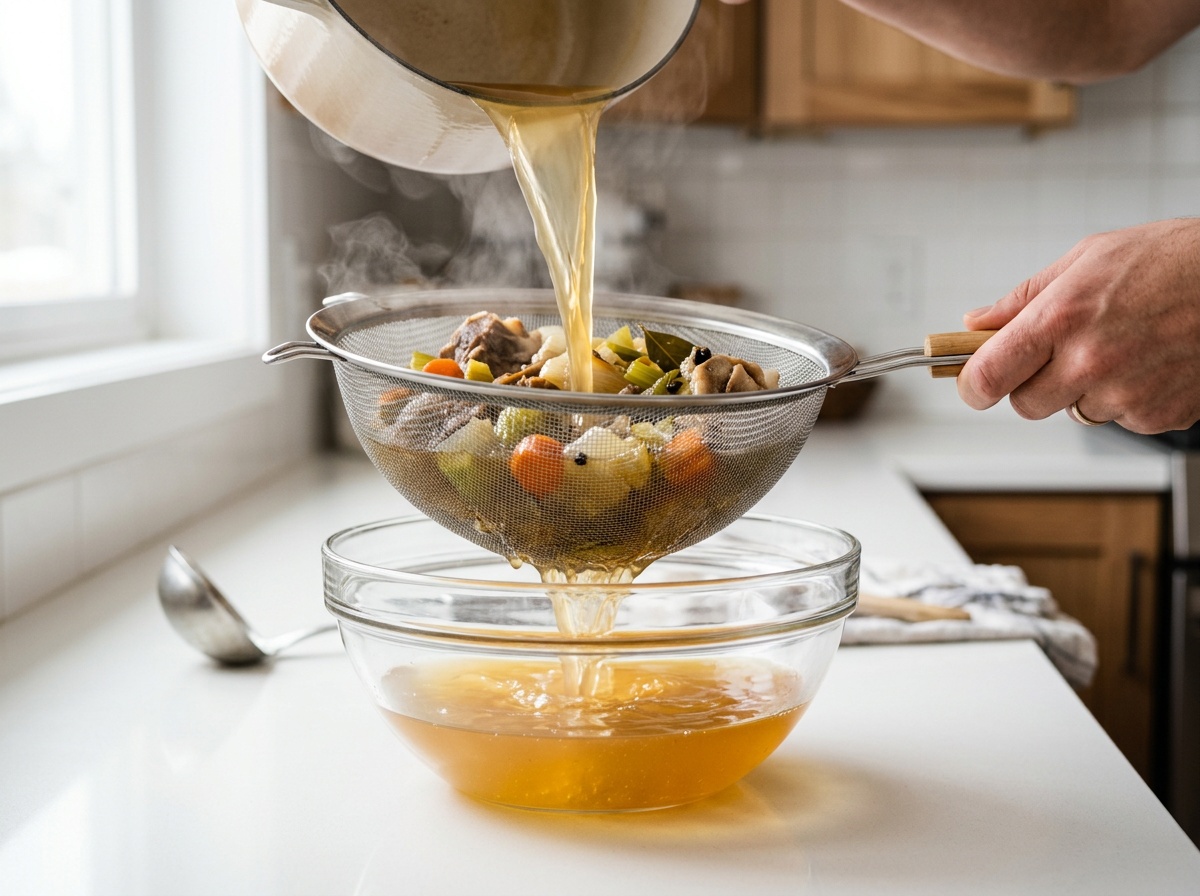
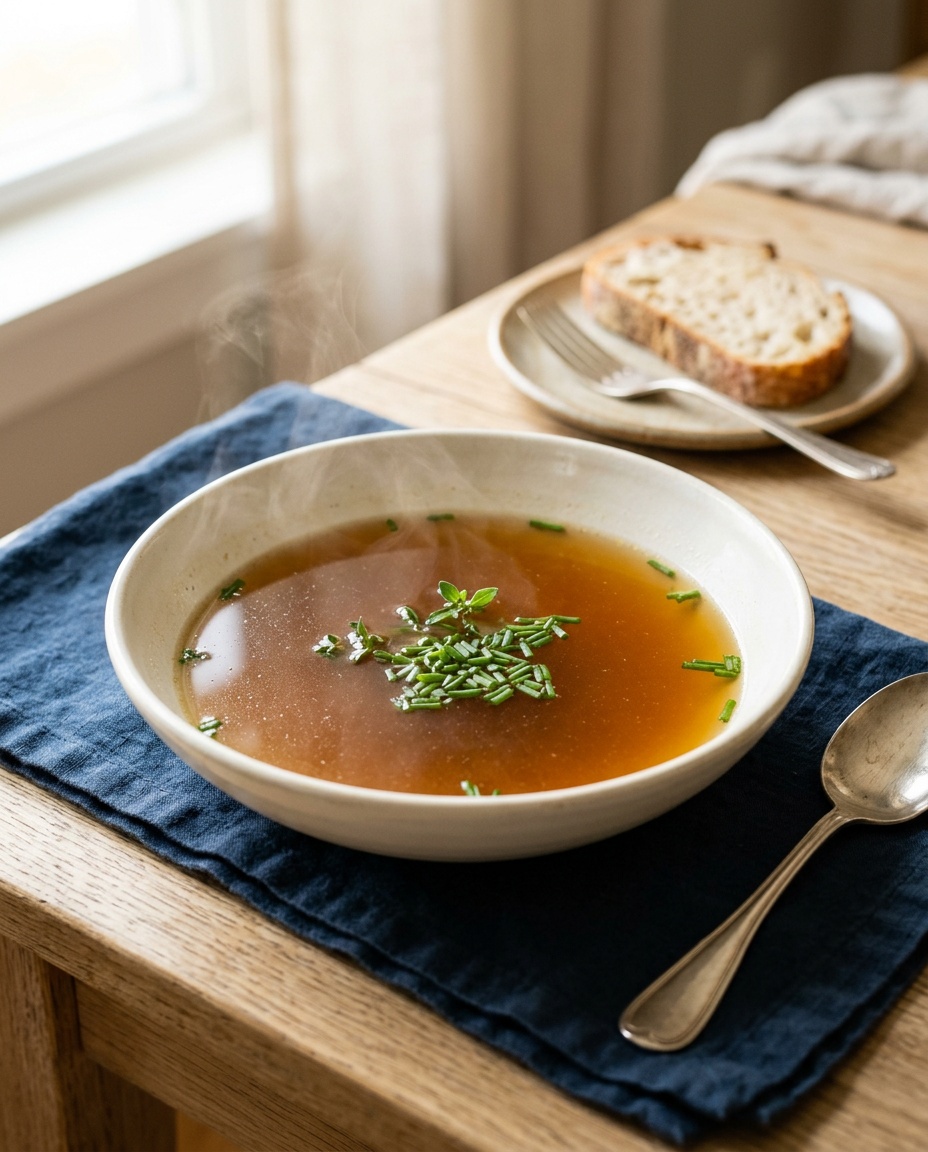
Once the cooking time is up, I turn off the heat and let the pot cool for about an hour so it is safe to handle. I set up a large fine-mesh sieve over a clean, large bowl or container and carefully pour the liquid through. I discard the bones and mushy vegetables — they have given everything they have to offer. I let the broth cool completely on the counter before putting it in the fridge overnight. The next morning, I skim off the solid layer of fat that has formed on the top, which leaves me with a clear, gelatinous, and clean-tasting broth that is ready for cooking or freezing.
Tips & Variations
Use Cold Water: Always start your stock with cold, filtered water. Using hot water or starting with a boil too quickly seals the proteins on the surface of the bones, which prevents them from releasing their full flavor and collagen into the liquid.
The Fat Cap: Do not throw away the fat you skim off the top after chilling! You can render this down into beef tallow, which is absolutely incredible for roasting potatoes or sautéing vegetables for a deep, savory flavor.
Freezing Tips: I like to freeze my broth in various portions, including using ice cube trays for small amounts to add to pan sauces. For larger batches, use freezer-safe bags, laying them flat so they stack easily and save precious freezer space.
Storing: Fresh broth will keep in the refrigerator for about 5 days if stored in a clean, airtight glass container. If you need it to last longer, transfer it to the freezer where it will stay high-quality for up to 6 months.
Vegetable Scraps: Keep a bag in your freezer to collect aromatic vegetable scraps like onion ends, celery leaves, and carrot peels throughout the week. When you are ready to make a batch of stock, toss those frozen scraps directly into the pot for free, concentrated flavor.
Nutrition Information
Per serving (approximate values)
| Nutrient | Amount |
|---|---|
| Calories | 45 |
| Protein | 6g |
| Carbohydrates | 1g |
| Total Fat | 2g |
| Fiber | 0g |
| Sugar | 0g |
Frequently Asked Questions About Beef Bone Broth
Is this beef bone broth recipe difficult to master for beginners?
▼
This beef bone broth recipe is surprisingly simple to master, even if you are new to cooking. The biggest challenge is having the patience for the long simmer, but the process itself is very forgiving. Just ensure you keep the heat at a very low, gentle bubble to maintain clarity, and you will get a perfect result every single time.
What is the secret to getting a clear finished stock?
▼
To achieve a clear, professional-looking broth, you must avoid a hard boil. If the water boils vigorously, it will emulsify the fat and particles, leading to a cloudy appearance. Keep it at a barely-there simmer, and be sure to skim any foam that rises to the surface during the first hour of cooking to remove impurities.
How do I know if my bone broth is nutritious?
▼
A truly nutritious mineral broth should have a gelatinous texture when it is fully chilled in the refrigerator. This wiggle means you have successfully extracted the collagen from the bones, which is exactly what you want for a high-quality stock. If it stays completely liquid when cold, you may need more cartilage-rich bones or a longer simmer time.
Can I reuse the bones after making one batch?
▼
Yes, you can actually do a second extraction with the same bones. Simply refill the pot with fresh water, add a fresh splash of vinegar, and simmer for another 12 hours. The second batch will be lighter in flavor and color, but it is perfect for using as a base for light soups or cooking grains like rice.
What is the best way to store homemade broth long-term?
▼
The best way to store your broth is to pour it into airtight glass jars, leaving about an inch of headspace at the top for expansion if you are freezing them. You can keep them in the fridge for up to 5 days, or freeze them for up to 6 months to ensure you always have a stash ready for cooking.