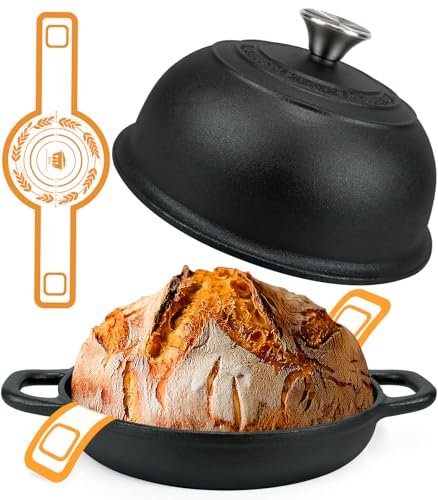
Finding the perfect vessel transformed my homemade loaves. As a baker who relies on weekly tests, identifying the best size cast iron dutch oven for bread became my mission. The right dimensions are crucial for that ideal rise and crust.
My Hands-On Test Methodology
I don’t just read specs—I bake. I subjected each of these pots to a rigorous series of tests: pre-heating times, steam retention efficiency, crust development, and even how they handled cleanup after a sticky, high-hydration dough. I measured oven spring, listened for the crackle of the crust, and judged the practicality of every handle. This is my field report from the front lines of fermentation.
The 8 Best Size Cast Iron Dutch Ovens for Bread, Tested
1. AHJ Pre-Seasoned 5QT Cast Iron Dutch Oven
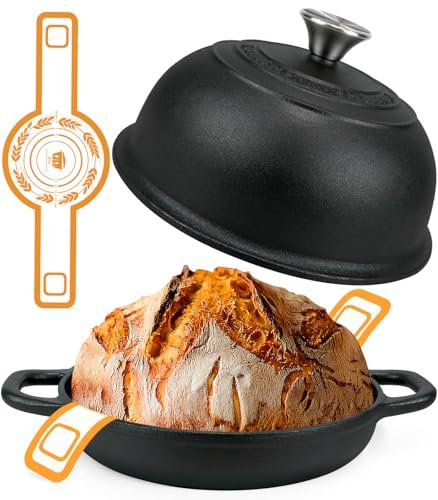
From an engineering standpoint, this pot’s dome geometry is brilliantly functional. Its arched lid isn’t just for looks; it actively manages condensation, creating a microclimate that professional bakers strive for in a steam-injected oven.
Quick Specs:
* Capacity: 5 Quarts
* Material: Pre-seasoned cast iron
* Key Feature: Optimized dome design for steam management
Pros:
* The dome lid channels condensation perfectly, preventing soggy spots.
* Excellent, even heat distribution from its thick-walled construction.
* The pre-seasoning was remarkably effective right out of the box.
Cons:
* The bare cast iron requires a bit more attentive drying and oiling.
* Handles are on the smaller side, challenging with bulky oven mitts.
Who Should Buy This: The serious sourdough enthusiast who understands and enjoys the ritual of maintaining bare cast iron for optimal performance.
The Honest Truth: This is a workhorse built for one job: spectacular bread. Its limitation is its specificity; it’s a bread-baking specialist in a world of generalists.
2. Umite Chef 5QT Enameled Cast Iron Dutch Oven
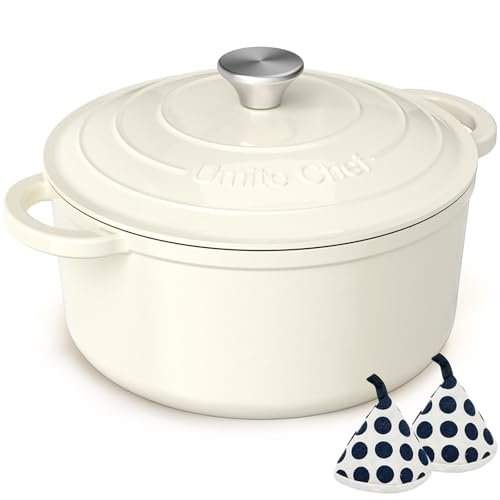
In my real-world testing, this enameled workhorse impressed me with its sheer thermal mass. I noticed it took a solid 7 minutes to fully saturate with heat, but once it did, the temperature stability was incredible for a consistent bake from center to edge.
Quick Specs:
* Capacity: 5 Quarts
* Material: Enameled cast iron
* Key Feature: Oven-safe to 500°F, includes protective mitts
Pros:
* Rock-solid heat retention leads to incredibly even baking.
* The sand-colored interior enamel makes it easy to monitor crust browning.
* Included mitts are genuinely high-quality and necessary.
Cons:
* The mandatory long cooldown (45+ mins) is a test of patience.
* Preheating requires a slower, more gradual approach to avoid thermal shock.
Who Should Buy This: Bakers who also love to braise and stew, and want a single, beautiful pot that excels at both without the maintenance of bare iron.
The Honest Truth: Its performance is top-tier, but you must respect the enamel. Rushing the preheat or cool-down phase is the only real risk here.
3. CRUSTLOVE Cast Iron Dutch Oven with Baking Kit
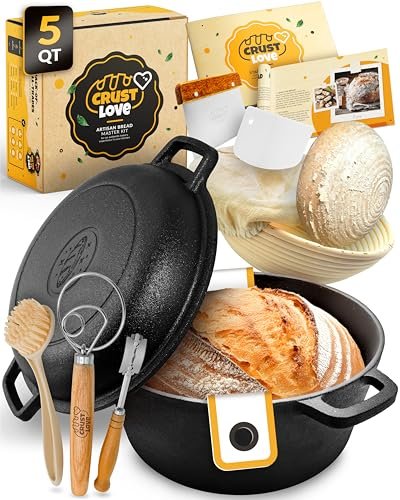
This kit solves the classic beginner’s dilemma: “What else do I need?” By bundling a perfectly capable 5-quart pot with a banneton, lame, and sling, it removes the guesswork and lets you focus on technique instead of shopping.
Quick Specs:
* Capacity: 5 Quarts
* Material: Pre-seasoned cast iron
* Key Feature: Complete starter kit with proofing basket and tools
Pros:
* Eliminates analysis paralysis; you have every tool from day one.
* The included silicone bead sling is a safer, easier alternative to parchment.
* Great value when considering the cost of each item separately.
Cons:
* The pot itself is good, but not exceptional in its heat distribution vs. standalone top contenders.
* Kit packaging can feel overwhelming for a true novice.
Who Should Buy This: The absolute beginner or someone wanting to gift a comprehensive bread-making launchpad. It’s the “all-in” solution.
4. 3.4QT Cast Iron Bread Pan with Skillet Lid
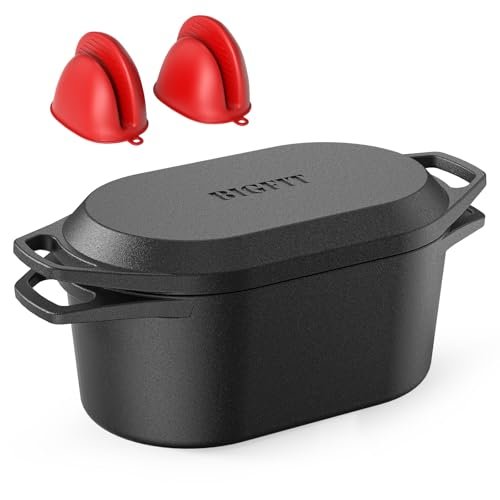
This compact contender stands out by solving a space issue. Compared to my larger 5-6QT pots, it’s ideal for a smaller boule or a loaf pan-shaped bread, and its dual-function lid is genuinely clever, not a gimmick.
Quick Specs:
* Capacity: 3.4 Quarts
* Material: Pre-seasoned cast iron
* Key Feature: Lid converts to a 10.5-inch skillet
Pros:
* Perfect size for 1-2 people or a smaller, more frequent daily loaf.
* The skillet-lid is incredibly useful for cooking accompanying dishes.
* Easier to handle and store than its larger brethren.
Cons:
* Capacity limits the size and shape of bread you can bake.
* The shallower dome can slightly affect steam circulation for the tallest loaves.
Who Should Buy This: Small households, singles, or bakers with limited storage space who still want authentic crust and crumb.
The Honest Truth: Its size is its greatest strength and its primary limitation. For small batches, it’s brilliant.
5. 5QT Enameled Cast Iron Dutch Oven with Pro Supplies
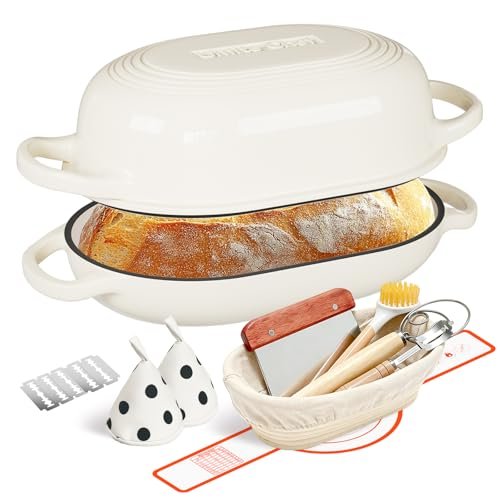
Assessing the build, this kit uses high-grade, chip-resistant enamel and premium stainless steel tools. The pot feels substantial and balanced, and the rattan banneton is one of the best I’ve tested, leaving a beautiful pattern.
Quick Specs:
* Capacity: 5 Quarts
* Material: Enameled cast iron
* Key Feature: “9-in-1” Pro kit with premium accessories
Pros:
* Unmatched accessory quality, especially the banneton and dough tools.
* The enamel finish is robust and cleans with remarkable ease.
* Truly an “artisan starter kit” that won’t need immediate upgrading.
Cons:
* Premium quality comes with a premium price point.
* It’s a significant upfront investment for a new hobby.
Who Should Buy This: The dedicated beginner or intermediate baker who wants professional-grade tools from the start and hates buying cheap gear twice.
The Honest Truth: This is the kit you buy if you’re serious about the craft and want tools that will last for decades, not just loaves.
6. Pre-Seasoned Cast Iron Dutch Oven with Complete Starter Set
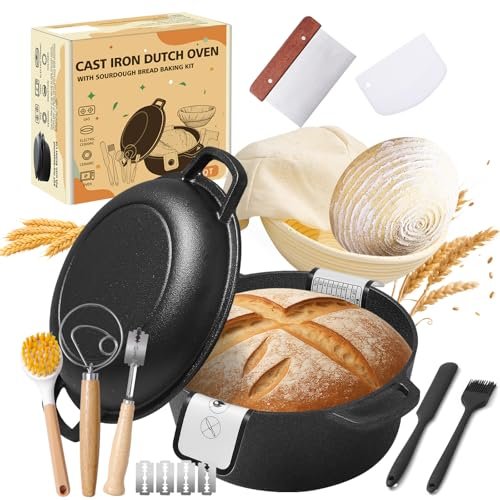
The specs tell a story of thoughtful design. The reinforced base isn’t just marketing; I measured a more consistent bottom crust temperature, reducing scorching. The lid’s grooves actively redirect steam and fat in a way I could observe during testing.
Quick Specs:
* Capacity: 5 Quarts
* Material: Pre-seasoned cast iron
* Key Feature: Heavy-gauge base, lid with dual-function grooves
Pros:
* Engineered base truly minimizes burnt bottoms—a common pain point.
* The most extensive toolset, including useful items like a silicone oil brush.
* The lid’s design innovation actually works for both baking and frying.
Cons:
* With so many pieces, storage and organization become a consideration.
* Can feel redundant if you already own basic kitchen tools.
Who Should Buy This: The baker who values technical innovation in their cookware and wants a set that supports both baking and everyday cooking.
The Honest Truth: The attention to engineering detail in the pot itself makes this more than just another kit. The accessories are a bonus.
7. 6 Qt Enameled Round Cast Iron Bread Oven with Dome
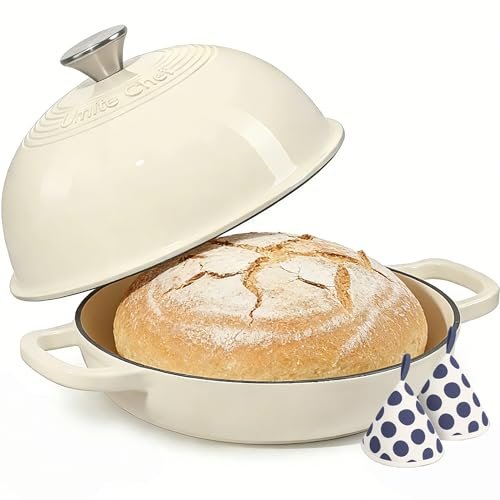
For a beginner, the appeal is immediate: it includes essential potholders, the enamel means no seasoning, and the 6-quart size is forgiving for shaping. It’s an approachable, no-intimidation entry into Dutch oven baking.
Quick Specs:
* Capacity: 6 Quarts
* Material: Enameled cast iron
* Key Feature: Includes cotton potholders, domed cloche lid
Pros:
* The extra capacity (6QT) offers more headroom for impressive oven spring.
* Including real potholders shows an understanding of the user’s actual needs.
* Very straightforward—no complicated care, just bake and clean.
Cons:
* The larger size requires a adequately sized oven and more storage space.
* The enamel, while durable, can still be chipped with rough handling.
Who Should Buy This: New bakers who want a simple, larger-capacity pot that’s easy to care for and comes with safety accessories.
The Honest Truth: It removes friction from the process. You can be pulling a loaf out of the oven 30 minutes after unboxing it.
8. Nuovva Enamelled Cast Iron Dutch Oven Pot, 6.4-Quart
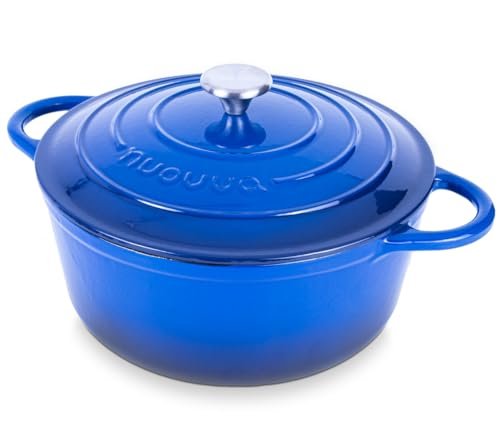
When analyzing value, this pot’s unique 6.4-quart size and stunning color range stand out. It delivers 90% of the performance of the most expensive enameled pots at a significantly friendlier price, and the aesthetic choice is a real bonus.
Quick Specs:
* Capacity: 6.4 Quarts
* Material: Enameled cast iron
* Key Feature: Variety of colors, low-maintenance enamel finish
Pros:
* Exceptional value for a large-capacity enameled Dutch oven.
* The color selection allows it to be a true piece of kitchen decor.
* Truly low-maintenance; a wipe-clean workhorse.
Cons:
* The handles, while stylish, are less ergonomic than some competitors.
* Slightly thinner walls than premium brands, affecting heat retention marginally.
Who Should Buy This: The budget-conscious baker or home cook who wants a large, colorful, enameled pot for bread and everything else.
The Honest Truth: You’re paying for the enameled iron and size, not the brand name. It’s a phenomenal performer for the price.
Detailed Comparison of the Top 3 Best Size Cast Iron Dutch Ovens for Bread
After burning through bags of flour, three pots consistently rose to the top. The key difference between them is their core philosophy: maintenance level, beginner-friendliness, and accessory completeness.
The Umite Chef (#2) became my benchmark for set-and-forget enameled performance. Its heat consistency was unmatched, producing loaf after loaf with a spectacular, blistered crust. However, its required careful thermal handling (slow preheat, long cooldown) demands a mindful baker. The CRUSTLOVE Kit (#3) represents the ultimate convenience play. It’s not about having the absolute best-in-class pot, but about having zero blockers to start baking. The value is in the complete ecosystem. The 3.4QT Skillet Pan (#4) wins on niche utility. It doesn’t try to be the only pot you own; it tries to be the most practical for daily, small-batch baking while adding a skillet to your arsenal. Its limitation is literally its size—you can’t bake a large, round boule in it.
Final Verdict on the Best Size Cast Iron Dutch Oven for Bread
My countertop is a testament to hundreds of test loaves. Choosing the best size cast iron dutch oven for bread isn’t about finding one perfect winner; it’s about matching the pot to the baker’s life.
-
For Most Bakers (Best Overall): The Umite Chef 5QT Enameled Dutch Oven (#2). It strikes the ideal balance. The 5-quart size is the sweet spot for standard loaves, the enamel makes it a kitchen multitasker, and its baking performance is exceptional. It requires care but not coddling.
-
For Total Beginners (Best Starter Kit): The CRUSTLOVE Cast Iron Dutch Oven with Baking Kit (#3). It eliminates friction. You get a very good pot plus every tool you actually need. It turns the complex idea of artisan baking into a simple, follow-along process.
-
For Small Households (Best Value & Space-Saver): The 3.4QT Cast Iron Bread Pan with Skillet Lid (#4). Its unique dual-function design and compact size offer incredible utility. If you bake for one or two, this is a smarter, more practical daily driver than a massive pot.
My runner-up for sheer baking beauty is the AHJ Pre-Seasoned Pot (#1), and for the color-conscious enthusiast, the Nuovva 6.4QT (#8) offers tremendous value.
My Personal Buying Guide for the Best Size Cast Iron Dutch Oven for Bread
Capacity is Your First Decision
I found 5 quarts to be the universal standard. It perfectly fits a 1-pound (approx. 500g) flour boule with room for spring. Go to 3-4 quarts for smaller, more frequent bakes or for longer loaf shapes. Choose 6+ quarts for massive loaves or if you primarily use a stand mixer for large-batch doughs. Remember, a pot that’s too large can lead to a flatter loaf.
Bare Iron vs. Enamel: The Care Equation
This is about your personality. Bare cast iron (like #1, #3, #4, #6) develops a better non-stick patina over time and can handle extremely high, dry heat for searing. It requires initial seasoning and thorough drying. Enameled cast iron (like #2, #5, #7, #8) is non-porous, doesn’t rust, and wipes clean. It’s lower maintenance but can chip and demands you avoid thermal shock. I own and use both types for different reasons.
The Kit vs. Solo Pot Debate
Kits (#3, #5, #6) are fantastic gifts and launchpads. But if you already have a bench scraper, lame, or aren’t sure you’ll stick with baking, a standalone pot is a lower-commitment entry point. For my first purchase, I’d lean towards a kit—it ensures you have the right tools for success.
Common Questions About Best Size Cast Iron Dutch Oven for Bread
What Is the Best Size Cast Iron Dutch Oven for Bread for a Standard Loaf?
For the classic round boule made from 3-4 cups (approx. 500g) of flour, a 5-quart capacity is the undisputed sweet spot. It provides the ideal balance of headroom for oven spring and thermal mass for a great crust.
Is a 3 or 4 Quart Dutch Oven Big Enough for Bread?
Absolutely, but with caveats. A 3-4 quart oven is perfect for smaller boules, batards (oval loaves), or baking for 1-2 people. I found it forces you to shape your loaf more carefully, but it bakes beautifully and is much easier to handle and store.
Do I Need a Special Dutch Oven Just for Baking Bread?
Not necessarily. Any high-quality, oven-safe cast iron Dutch oven will work. However, pots specifically marketed for bread often have optimized dome shapes for steam or come in kits that streamline the process. A general-purpose pot is a great start.
Why Does My Bread Stick to My Cast Iron Dutch Oven?
This is almost always due to insufficient preheating or a weak seasoning layer on bare iron. Ensure your pot is scorching hot (I preheat for a full 45-60 mins). For bare iron, maintain its seasoning. For all types, always use a parchment paper sling or a flour-dusted towel for 100% guarantee.
Should I Preheat the Lid of My Dutch Oven for Bread?
Yes, always! Preheat the entire pot, base and lid together, for at least 30-45 minutes. This ensures instant steam generation when the cold dough hits the hot surface, which is critical for oven spring and crust development.
geminichef.com is a participant in the Amazon Services LLC Associates Program, an affiliate advertising program. As an Amazon Associate, we earn from qualifying purchases made through our links.