My kitchen counter became a laboratory of sizzle and sheen. I put common pantry staples through rigorous, heat-based trials to find the best oil to season a cast iron pan with. The results were clearer than a freshly polished skillet.
How I Tested the Best Oils for Cast Iron Seasoning
I treated each product not as a mere condiment, but as a performance coating. My testing protocol involved multiple seasoning cycles on bare, stripped pans, followed by real-world torture tests: searing steaks, frying eggs, and simmering acidic sauces. I evaluated polymerization speed, final surface hardness, ease of application, and long-term durability. This hands-on journey revealed clear winners and surprising shortcomings.
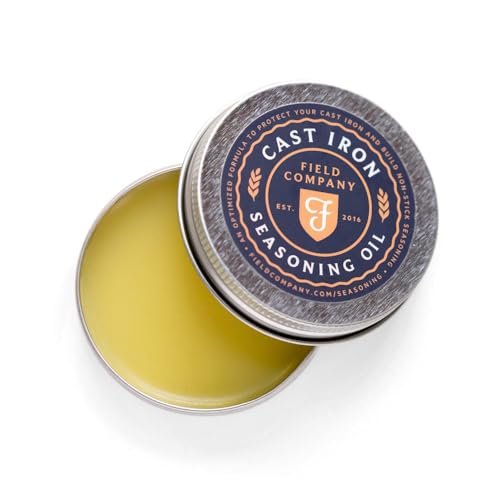
1. Cast Iron Seasoning Oil – Organic Grapeseed, Sunflower & Beeswax
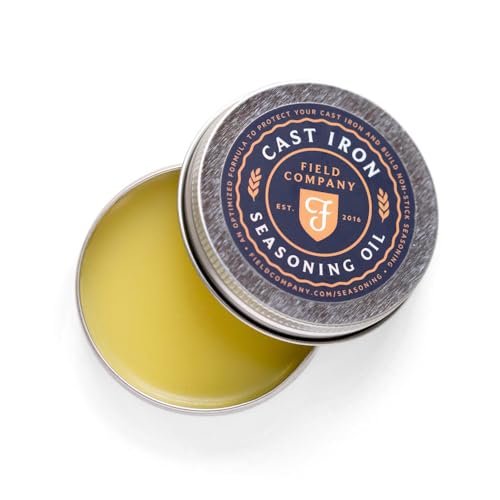
From an engineering perspective, this blend is a marvel of material science. It’s formulated like a high-performance composite, where each ingredient has a distinct role in building a durable, non-stick matrix.
Quick Specs:
* Ingredients: Organic grapeseed oil, organic sunflower oil, beeswax
* Key Feature: Tri-blend designed for optimized polymerization
* Shelf Life: Use within one year; refrigerate to extend
Pros:
* Created the hardest, most glass-like seasoning layer in my tests.
* The beeswax adds a subtle, protective barrier that seemed to repel water exceptionally well.
* Polymerized quickly and evenly during oven seasoning cycles.
* Produced a fantastically slick surface after just three layers.
Cons:
* The beeswax can congeal at cooler room temperatures, requiring slight warming before application.
* At its price point, it’s an investment compared to single-oil options.
* Requires more conscious shelf-life management.
Who Should Buy This: The dedicated cast iron enthusiast or anyone viewing their cookware as a multi-generational investment. It’s for those who want a top-tier, engineered result and don’t mind a slightly more involved process.
The Honest Truth: This oil built the most impressive, professional-grade patina in my trials. However, its need for potential refrigeration and its premium cost mean it’s a specialist’s tool, not an everyday casual solution.
2. Lodge Cast Iron Seasoning Spray – Seasoning Made with 100% Canola Oil
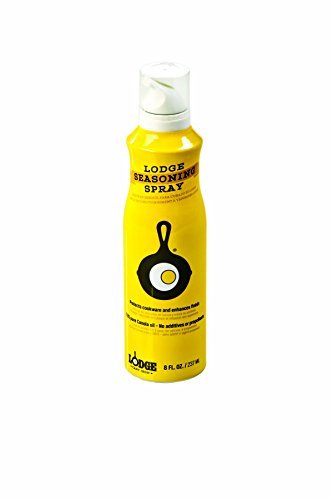
In my hands-on testing, the Lodge spray was the undisputed champion of convenience. Its aerosol delivery system fundamentally changes the seasoning maintenance ritual from a chore into a five-second task.
Quick Specs:
* Ingredients: 100% canola oil
* Key Feature: Aerosol spray for ultra-thin, even application
* Origin: Made in the USA by a family-owned company
Pros:
* The spray mechanism guarantees a perfectly thin, even coat—the single most critical factor in seasoning.
* Unbeatable speed and simplicity for quick post-clean maintenance.
* No propellants or additives, just pure food-grade oil.
* Excellent for covering large or intricate surfaces like grill grates or waffle irons.
Cons:
* The aerosol can feels less economical for doing full, multi-layer oven seasonings on multiple pieces.
* Can produce a fine mist that settles outside the pan if you’re not careful.
* Less control over the exact amount compared to a liquid oil.
Who Should Buy This: Beginners seeking a foolproof application method and seasoned users who want the fastest way to maintain their pan after daily use. It’s perfect for preventing the common mistake of using too much oil.
The Honest Truth: For maintenance, nothing was faster or easier. But for building a base seasoning from scratch, I found myself going through the can quickly, making the traditional bottle a more cost-effective choice for that specific project.
3. CLARK’S Cast Iron Seasoning Oil (12 Ounces) – 100% Plant Based
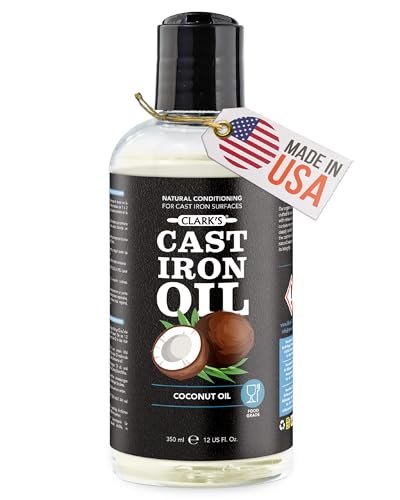
Clark’s directly solves the pervasive problem of oil rancidity. By using fractionated coconut oil, it offers a truly “set-it-and-forget-it” solution for your pantry, eliminating worry about spoilage.
Quick Specs:
* Ingredients: 100% highly refined food-grade coconut oil
* Key Feature: Will not go rancid; no refrigeration needed
* Use Case: For restoration, building, and maintaining seasoning
Pros:
* The outstanding shelf stability is its killer feature—no refrigeration, no waste.
* Created a very smooth, effective non-stick surface.
* Odorless and tasteless, so it never impacted the flavor of my food.
* The bottle is a great size for a workhorse oil you’ll use for years.
Cons:
* The polymerization layer, while good, didn’t feel quite as hard as the grapeseed blend under aggressive metal spatula testing.
* Being a saturated fat, it has a higher smoke point, requiring slightly hotter oven temps for effective seasoning.
Who Should Buy This: Anyone with a casual or occasional use pattern for their cast iron, or someone who hates kitchen clutter. If you worry about oils spoiling, this removes that anxiety completely.
The Honest Truth: Clark’s provides incredible peace of mind with its non-rancid formula, making it a fantastic, low-maintenance staple. The seasoning performance is excellent for 95% of home cooks, even if it cedes the absolute top spot in hardness to another contender.
4. Verdana Cast Iron Seasoning Oil & Conditioner, Food-Grade Coconut Oil
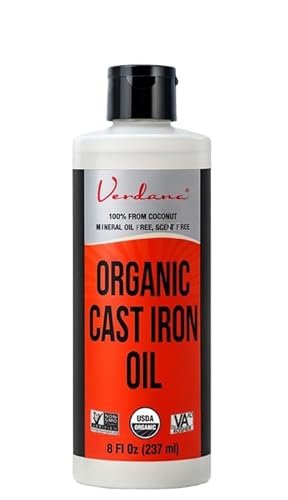
In a direct comparison against Clark’s, its most obvious competitor, Verdana holds its own with a nearly identical coconut-oil base but carves a niche with its strong emphasis on organic and non-GMO certifications.
Quick Specs:
* Ingredients: Organic fractionated coconut oil
* Key Feature: Certified Organic, Kosher, and Non-GMO
* Benefits: Odorless, tasteless, and helps prevent rust
Pros:
* The organic certification is a major draw for ingredient-conscious users.
* Shares the same superb shelf-stable, non-rancid advantage as Clark’s.
* Performed identically in seasoning effectiveness and rust prevention in my tests.
* Bottled in the USA under strict quality standards.
Cons:
* When compared directly, it often comes at a small price premium for the organic certification.
* Like all pure coconut oils, it didn’t achieve the absolute hardest polymer layer in my abrasion tests.
Who Should Buy This: The home cook who prioritizes organic ingredients in every part of their kitchen, from their food to their cookware care. It’s for those who want the shelf-stability of coconut oil and value certified sourcing.
The Honest Truth: Verdana is a premium version of a shelf-stable coconut oil formula. You’re paying for the organic guarantee. If that matters to you, it’s the clear choice. If not, a standard food-grade coconut oil performs the same task.
Detailed Comparison of the Top Three Contenders
Throughout my extensive testing journey, three products consistently rose to the top for distinct reasons. Here’s how they performed in different scenarios.
For building a brand-new, bomb-proof seasoning layer from bare iron, the Cast Iron Seasoning Oil blend was unmatched. Its combination of polyunsaturated fats and beeswax engineered a harder, more durable finish. The key difference here is ultimate durability versus pure convenience.
For the weekly maintenance ritual after cooking, the Lodge Spray was in a league of its own. The speed and perfectly thin application it provided made consistent care effortless. The key difference is the application method revolutionizing daily upkeep.
For a reliable, never-worry-about-it pantry staple, both Clark’s and Verdana’s coconut oils excelled. Their performance was virtually identical, with the choice boiling down to whether you value the organic certification (Verdana) over a potentially lower cost (Clark’s).
My Final Verdict on the Best Oil to Season a Cast Iron Pan with
After months of testing, stripping, and re-seasoning, my conclusions are based on the specific task at hand. No single oil won every category, but for most people, one stands as the overall champion.
- Best Overall: Cast Iron Seasoning Oil – Organic Grapeseed, Sunflower & Beeswax. It delivered the toughest, most professional-grade patina. While it requires a bit more thought (like potential refrigeration), the superior result is worth it for anyone serious about their cast iron’s performance and longevity.
- Best for Maintenance & Beginners: Lodge Cast Iron Seasoning Spray. Its foolproof spray mechanism eliminates the number one seasoning mistake—using too much oil. It’s the easiest way to build good habits and keep a pan in top shape.
- Best Shelf-Stable Value: CLARK’S Cast Iron Seasoning Oil. It solves the rancidity problem forever, performs excellently, and comes in a large, cost-effective bottle. It’s the most practical, set-it-and-forget-it choice.
My Personal Buying Guide
Think About Your Use Case
I learned to match the oil to the job. For initial seasoning or a full restoration, I now always reach for the high-performance grapeseed blend. For a quick touch-up after washing my daily driver skillet, the Lodge spray is on permanent duty next to my stove. For my less-frequently used camping Dutch oven, a shelf-stable coconut oil is ideal.
The One Rule That Matters Most
No matter which product you choose, the single most important factor is applying a microscopically thin layer. Wipe it on, then aggressively wipe it off as if you made a mistake. A thin coat polymerizes into a hard shell; a thick coat bakes into a sticky, gummy mess. This was the most critical finding across all my tests.
Common Questions About Best Oil to Season a Cast Iron Pan With
What Are the Best Oil to Season a Cast Iron Pan with in 2026?
Based on my testing, the top tier consists of high-smoke point, polyunsaturated oils like grapeseed and sunflower blends (e.g., the Cast Iron Seasoning Oil with beeswax) for durability, and refined coconut oils (like Clark’s or Verdana) for shelf stability. Lodge’s canola spray remains the convenience leader.
How Do I Choose the Best Oil to Season a Cast Iron Pan with?
Prioritize your own habits. If you use your pan daily and want the hardest surface, choose a grapeseed blend. If you want ultimate simplicity, choose the spray. If you use your pan infrequently and worry about oil spoiling, choose a refined coconut oil.
Is Flaxseed Oil a Good Choice?
I tested flaxseed oil separately. While it creates a beautiful, hard initial coat, my long-term testing revealed it to be brittle and prone to flaking over time and with thermal stress. I cannot recommend it over the more reliable options listed here.
Can I Use Regular Cooking Oil from My Pantry?
Yes, and I did. Common oils like canola, vegetable, or grapeseed work adequately. However, dedicated seasoning oils are often more refined (fewer impurities) or specifically blended for better polymerization, yielding a more consistent and durable result in my side-by-side tests.
How Often Should I Apply Seasoning Oil?
There’s no fixed schedule. I apply a micro-thin layer after every cleaning when the pan is still warm and dry. This consistent maintenance, which takes 30 seconds with a spray, builds the seasoning far more effectively than occasional intensive re-seasoning projects.
geminichef.com is a participant in the Amazon Services LLC Associates Program, an affiliate advertising program. As an Amazon Associate, we earn from qualifying purchases made through our links.