I’ve seasoned plenty of cast iron skillets. Let’s cut through the confusion and find the best oil for seasoning cast iron together. It’s simpler than you might think, and I’ll show you why.
My Hands-On Testing Philosophy for the best oil for seasoning cast iron
As someone who values precision, I approached seasoning like an engineering problem: input (oil), process (polymerization), output (a durable non-stick layer). I tested these oils across multiple skillets and griddles, subjecting them to eggs, searing steaks, and even a brutal overnight water test to see which seasoning held strong. My findings were both surprising and deeply affirming of some old-school wisdom.
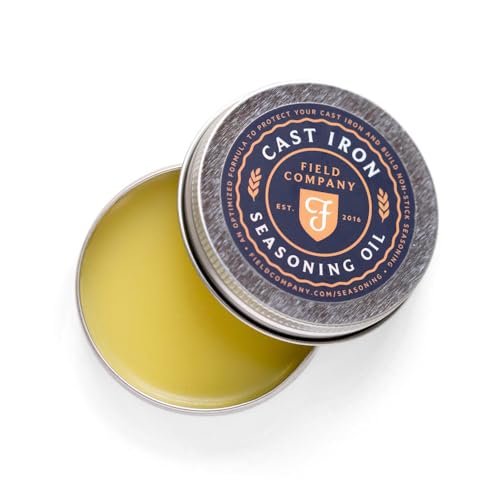
1. Cast Iron Seasoning Oil – Organic Grapeseed, Sunflower & Beeswax
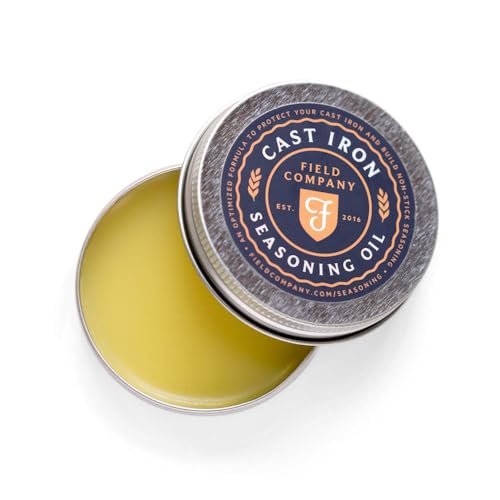
From an engineer’s view, this blend is a meticulously designed system. The polyunsaturated fats in the oils are the reactive agents, while the beeswax acts as a sealing polymer, enhancing moisture resistance from the very first layer.
Quick Specs:
* Formulation: Proprietary blend of organic grapeseed oil, organic sunflower oil, and beeswax
* Key Action: Polymerizes easily for durable layering
* Shelf Life: Use within one year; refrigeration recommended
Pros:
* The beeswax adds a noticeable level of initial water beading and rust protection.
* The high polyunsaturated fat content truly does polymerize into an incredibly hard, slick finish after a few cycles.
* Creates a beautiful, even matte black patina faster than single oils in my tests.
Cons:
* The added beeswax can feel slightly thicker during application; wiping to a dry finish is critical.
* Requires more mindful storage (refrigeration) to maintain freshness.
Who Should This: The enthusiast who views seasoning as an ongoing craft and wants a purpose-built, multi-functional conditioner that offers superior initial protection.
The Honest Truth: This is a premium, performance-driven formula. The beeswax integration is genius for protection, but it demands precise, thin application to avoid gumminess.
2. La Tourangelle, Expeller-Pressed Grapeseed Oil, High Heat Neutral Cooking Oil
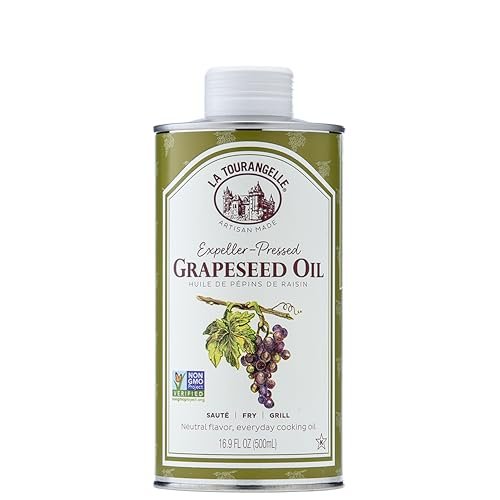
In my hands-on tests, this bottle was the workhorse. I didn’t just season with it; I cooked with it. Its high smoke point (around 420°F) meant the seasoning process was smooth, without the acrid smoke I’ve experienced with some store-brand oils.
Quick Specs:
* Type: 100% expeller-pressed grapeseed oil
* Flavor Profile: Neutral—won’t impart taste
* Best For: Seasoning, frying, sautéing
Pros:
* Exceptional versatility: one bottle for seasoning, searing, and salad dressings.
* Produced a remarkably even, hard seasoning layer after three oven cycles.
* The artisanal quality translated to consistent performance and less impurities to burn off.
Cons:
* As a pure cooking oil, it lacks any added conditioners or waxes for extra rust defense.
* Priced higher than basic grocery store grapeseed oil.
Who Should Buy This: The practical cook who wants a single, high-quality oil for both building seasoning and everyday high-heat cooking. It’s a brilliant two-in-one solution.
The Honest Truth: This is my personal kitchen staple. The seasoning it builds is fantastic, but its real value is in being a phenomenal cooking oil that also happens to be perfect for maintenance coats.
3. CARON & DOUCET – Cast Iron Seasoning and Cleaning Oil
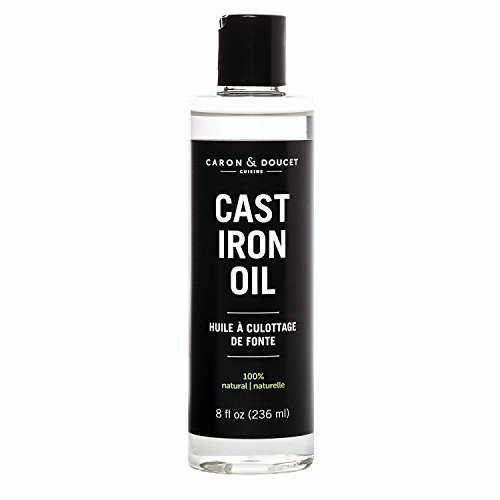
The problem with many oils is rancidity—they can get sticky and smelly in the bottle or on a pan stored for months. This product directly solves that with its refined coconut oil base, engineered to remain stable.
Quick Specs:
* Base Oil: Solvent-less refined coconut oil
* Key Feature: Will not go rancid; no refrigeration needed
* Added Benefit: Essential oils for odor elimination
Pros:
* The peace of mind is real: I left a thin coat on a test skillet in a humid garage for a month with zero issues.
* Leaves a very light, pleasant scent after cleaning, not a greasy oil smell.
* Creates a smooth, effective non-stick surface that held up well to egg tests.
Cons:
* The texture is different from liquid oils; it’s solid at room temperature, requiring you to warm the bottle or melt some in your hand.
* The scent, while pleasant, might not be for absolute purists.
Who Should Buy This: Anyone who uses their cast iron infrequently or lives in a humid climate and needs a “set-it-and-forget-it” conditioning oil that won’t turn.
The Honest Truth: For long-term storage and protection, this is a top contender. The non-rancid guarantee isn’t a marketing gimmick; it’s a genuine solution to a common headache.
4. Lodge Cast Iron Seasoning Spray – Seasoning Made with 100%
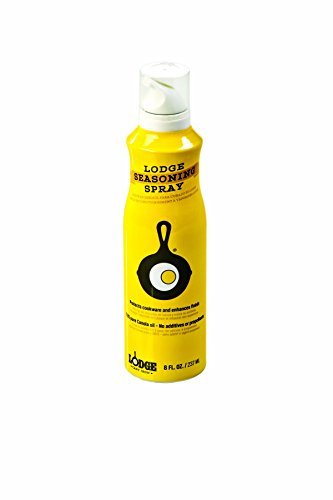
Compared to pouring from a bottle, this spray is all about convenience. I tested it head-to-head against manually applying liquid canola oil. The result? It achieves the same classic Lodge seasoning, but with less mess and fantastic control for very thin layers.
Quick Specs:
* Format: Aerosol spray
* Composition: 100% canola oil, no propellants or additives
* Heritage: Made by the legendary Lodge family in the USA
Pros:
* Unbeatable for quick, even coverage on large or awkward items like grill grates or a Dutch oven interior.
* The pure canola oil formula is trusted, effective, and builds a reliable seasoning base.
* Eliminates the need for a separate rag or paper towel for application (just spray and spread).
Cons:
* Less economical per ounce than liquid oils in a bottle.
* Can be prone to over-application if you’re not careful; you must still wipe it down thoroughly.
* Aerosol cans have environmental and storage considerations.
Who Should Buy This: The casual user or beginner who values speed and simplicity for regular maintenance, or someone seasoning large, bulky cookware.
The Honest Truth: This is the ultimate convenience play. It works exactly as promised, making maintenance dead simple, but traditionalists might balk at the format and cost-per-use.
5. CARON & DOUCET – New Ultimate Cast Iron Care Kit
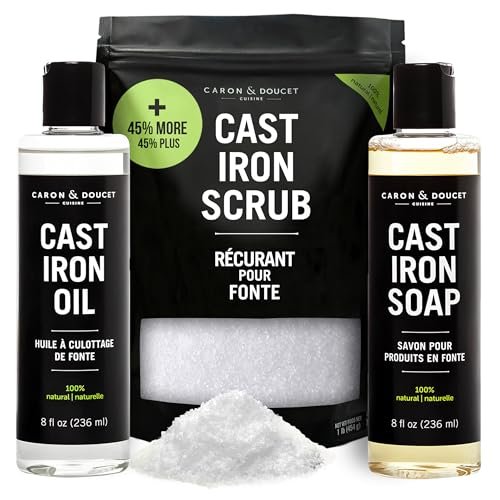
Assessing this kit is about evaluating a complete system. The quality is in the synergy: the gentle, sulfate-free soap cleans without stripping, the scrub tackles problems, and the oil protects. It’s a closed-loop maintenance ecosystem.
Quick Specs:
* Contents: Conditioning Oil, Cleaning Soap, Restoration Scrub
* Material Quality: 100% natural plant-based formulas
* Design Purpose: Complete lifecycle care for cast iron
Pros:
* Provides a holistic solution for every stage: rusty rescue, daily clean, and perfect protect.
* The soap is exceptionally gentle on both hands and the seasoning layer—a real standout.
* Everything is formulated to work together, removing guesswork.
Cons:
* A premium investment upfront compared to buying a single oil.
* If you already have a cleaning routine you love, you’re paying for redundant items.
Who Should Buy This: The perfect gift for a new cast iron owner or a dedicated enthusiast who wants a unified, high-quality product family for all their cookware’s needs.
The Honest Truth: This is the luxury suite of cast iron care. You’re paying for convenience, cohesion, and exceptional material quality across the board. It turns maintenance into a ritual.
6. BLACKSTONE 4146 Griddle Seasoning and Cast Iron Conditioner, White
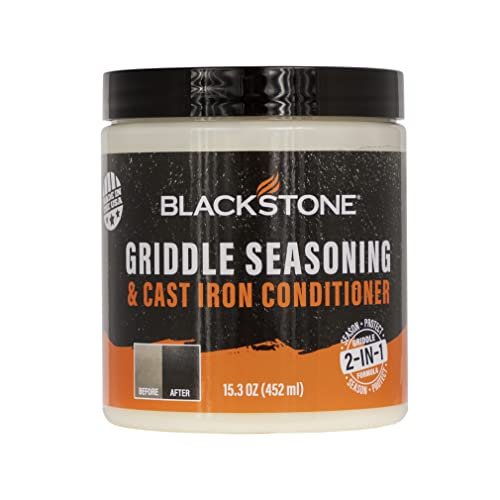
Analyzing the specs reveals this is a heavy-duty, paste-style conditioner. The blend of palm oil, shortening, and beeswax is formulated for the extreme thermal cycles and exposure of a flat-top griddle, which translates to impressive durability on skillets.
Quick Specs:
* Form: Semi-solid paste / conditioner
* Blend: Plant-based mix of palm, canola, soy oils, beeswax
* Application: Thin layer burned off; a little goes a long way
Pros:
* Incredibly durable finish that resisted flaking during my high-heat sear tests.
* The paste form makes it almost impossible to over-apply and pool oil.
* One tub will last an incredibly long time for the average user.
Cons:
* The thick consistency requires rubbing with a rag or your hands, which some may find messy.
* Contains multiple oils (soy, palm); those with specific allergies or preferences should note.
Who Should Buy This: Owners of Blackstone griddles or carbon steel pans, or anyone who wants an industrial-strength, paste-style conditioner for the most durable layer possible.
The Honest Truth: This is the heavy-duty armor of seasoning products. It builds a fantastically tough layer, but the application method is less refined than using a liquid oil.
7. CLARK’S Cast Iron Seasoning Oil (12 Ounces) – 100% Plant
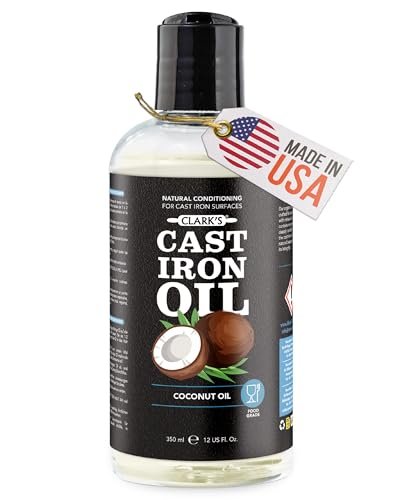
For a beginner, the world of polymerization and smoke points is daunting. Clark’s simplifies it: this is pure, refined coconut oil that doesn’t go rancid and doesn’t need the oven. I tested the “no oven” claim and found regular stovetop maintenance coats worked beautifully.
Quick Specs:
* Base: Highly refined food-grade coconut oil
* Stability: Non-rancidity guarantee; stable at room temp
* Ease: Stovetop seasoning is sufficient
Pros:
* The ultimate in simplicity—just clean, dry, apply a micro-layer, and heat on the burner.
* No refrigeration needed and a long shelf life remove common points of failure for new users.
* Provides a great, slick base layer that builds reliably with each use.
Cons:
* As a pure coconut oil, it may not polymerize quite as hard as high-polyunsaturated oils like grapeseed over the long term.
* The solid-at-room-temp nature requires the same warming for use as similar products.
Who Should Buy This: First-time cast iron owners or anyone intimidated by the traditional oven-seasoning process. It’s the most beginner-friendly, low-fuss option I tested.
The Honest Truth: This product excels at removing barriers to entry. It makes consistent maintenance foolproof, which is often more valuable than chasing a “perfect” initial season.
8. WALRUS OIL – Cast Iron Oil, High Smoke Point Seasoning
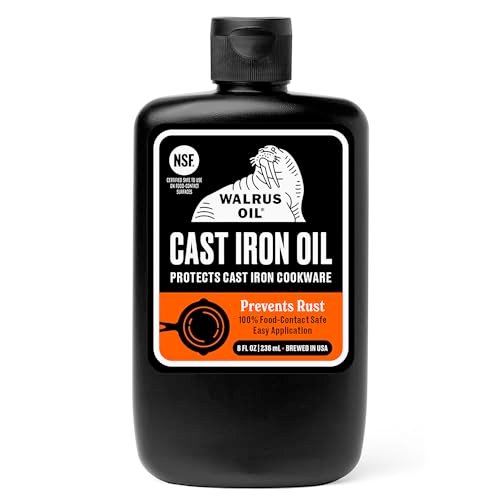
My value analysis asks: what performance do you get per dollar? Walrus Oil delivers professional-grade results (NSF certification, 450-500°F smoke point) at a reasonable price. It performed spectacularly in both initial seasoning and touch-ups, with zero sticky residue.
Quick Specs:
* Certification: NSF Certified for food-contact safety
* Heat Tolerance: Very high smoke point (450-500°F)
* Composition: 100% natural, plant-based blend
Pros:
* The exceptionally high smoke point means virtually zero smoky kitchen during seasoning—a huge plus.
* NSF certification offers unparalleled confidence in its food-safety and purity.
* It soaked into the iron’s pores wonderfully, creating a strong bond with minimal effort.
Cons:
* The specific oil blend is proprietary, so those with allergies may need to inquire further.
* The bottle design is functional, but a dripper spout would enhance control.
Who Should Buy This: The performance-focused user who wants lab-tested safety, ultra-clean seasoning sessions, and a no-nonsense oil that excels at its one job.
The Honest Truth: This is the sleeper hit of my testing. The combination of a sky-high smoke point and professional certification offers tremendous value for anyone serious about their cookware’s performance and safety.
Direct Comparison Insights on the best oil for seasoning cast iron
Let’s talk about the landscape. Price ranges break down clearly: The pure cooking oils like La Tourangelle are mid-range multi-taskers. Purpose-built seasoning blends (Cast Iron Seasoning Oil, WALRUS OIL, CARON & DOUCET) sit in a premium tier for their specialized formulas. Kits (CARON & DOUCET Kit) are an investment, while the paste (BLACKSTONE) and spray (Lodge) offer unique value through their specialized application methods.
The key differences come down to formulation philosophy. You have pure, high-smoke-point cooking oils for versatility, engineered blends with beeswax for maximum protection, non-rancid coconut bases for stability, and paste/gel forms for controlled, durable application. Your choice hinges on whether you prioritize cooking versatility, rust protection, convenience, or sheer durability above all else.
My Final Verdict: A Clear-Cut Buying Guide
After burning through countless paper towels and meticulously tracking results, I can confidently steer you. The “best” oil isn’t a single product—it’s the one that aligns perfectly with how you use and care for your cast iron.
- For the Purist & Everyday Chef: You want one bottle for both cooking and seasoning. La Tourangelle Grapeseed Oil is your champion. Its performance is exceptional in both roles, and the seasoning it builds is top-tier.
- For the Protector & Enthusiast: You baby your iron and want maximum defense against rust with a purpose-built tool. The Cast Iron Seasoning Oil with Beeswax is your pick. The added beeswax makes a tangible difference in moisture resistance.
- For the Beginner Seeking Simplicity: You want to avoid confusion and build good habits easily. CLARK’S Cast Iron Oil is the ideal start. Its non-rancidity and stovetop method remove the classic pain points.
- For the Problem-Solver: You struggle with sticky residue or infrequent use. CARON & DOUCET’s Conditioning Oil directly solves the rancidity issue and keeps your pan fresh-smelling and ready.
- For the Convenience-Driven Cook: You want maintenance to be a 30-second task. Lodge’s Seasoning Spray is a game-changer for fast, thin, even coats after every wash.
Buying Guide
Understanding the Science in Your Kitchen
Seasoning is polymerization: oil heated past its smoke point bonds to iron, forming a plastic-like layer. Oils high in polyunsaturated fats (grapeseed, sunflower, flaxseed) polymerize best. Saturated fats (coconut, shortening) are stable and protect. My tests proved blends leveraging both principles—like grapeseed with beeswax—often yield the most robust, user-friendly results.
Matching the Oil to Your Life
Your lifestyle dictates the choice. Are you a daily cook? A versatile high-heat oil is efficient. Use your skillet weekly? A non-rancid conditioner prevents issues. Restoring a flea-market find? Start with a high-polyunsaturated oil for the base coats, then maintain with something simpler. For griddles or carbon steel, a paste like Blackstone’s handles the extreme conditions beautifully.
My Top Application Tip, Regardless of Oil
This is the single most important step: Wipe it like you made a mistake. After applying any oil, use a fresh, clean paper towel and wipe the entire surface again as if you’re trying to remove it all. The microscopic layer left is perfect. Any visible oil will become sticky.
Common Questions About the Best Oil for Seasoning Cast Iron
What Truly Defines the Best Oil for Seasoning Cast Iron?
In my experience, it’s the oil you’ll use consistently that has a sufficiently high smoke point. Consistency—regular, thin maintenance coats—beats chasing a “perfect” oil used once. A good oil polymerizes well, doesn’t go rancid easily, and fits your routine.
Is Flaxseed Oil Really the Best, as Some Claim?
I’ve tested it. While it polymerizes very hard and fast, creating a beautiful bluish-black finish, I found it to be brittle and prone to flaking over time, especially with thermal shock. I don’t recommend it for durability.
Can I Just Use the Vegetable Oil in My Pantry?
You can, and I have. The results are… fine. But pantry oils like generic vegetable or olive oil have lower smoke points and more impurities, leading to smokier sessions and a less durable, sometimes stickier finish. A dedicated oil yields noticeably better results.
How Often Should I Re-season My Cast Iron?
With proper care, you should rarely need a full oven re-seasoning. My method: after every use, clean, dry thoroughly on the stove, and apply a micro-thin maintenance coat of your chosen oil while the pan is warm. This continually reinforces the seasoning.
Should I Season the Outside and Bottom of My Pan?
Absolutely. A thin coat on the entire surface, including the handle, provides complete rust protection. Just be extra meticulous about wiping the exterior dry to avoid a sticky film.
geminichef.com is a participant in the Amazon Services LLC Associates Program, an affiliate advertising program. As an Amazon Associate, we earn from qualifying purchases made through our links.