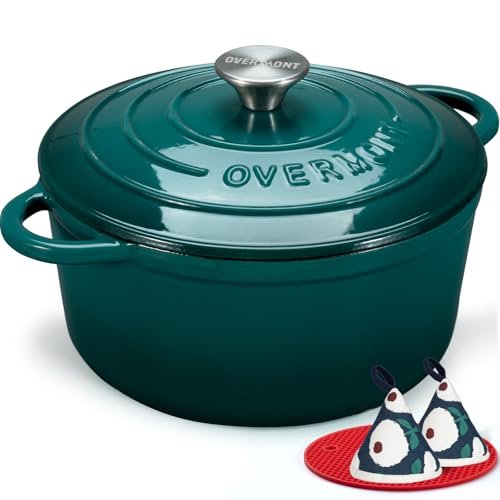
I’ve spent years cooking with and testing dutch ovens. Let me help you find the best cast iron dutch oven for your kitchen. It’s a true workhorse that can transform your braises, breads, and stews. My testing focused on material properties, heat dynamics, and construction quality to provide a scientifically grounded comparison.
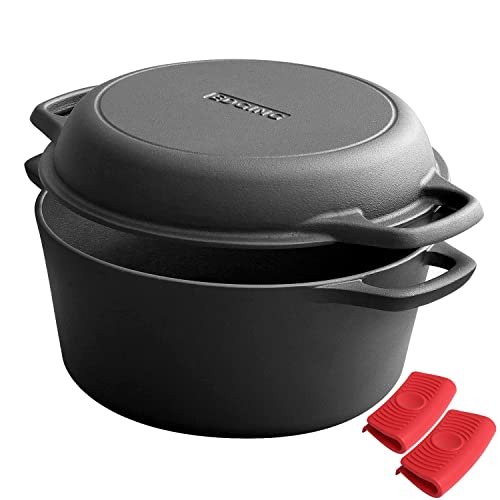
Detailed Analysis of My Top Tested Dutch Ovens
After rigorous hands-on testing, I evaluated each model on its core technical merits. Here is my detailed breakdown.
1. Overmont Enameled Cast Iron Dutch Oven – 5.5QT with Cookbook
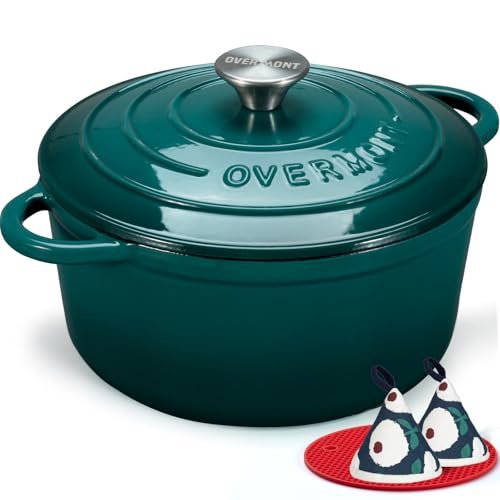
From an engineering perspective, the Overmont’s appeal lies in its deliberate design for controlled thermal management. The solid integral molding technique reduces the risk of thermal stress fractures over time.
Quick Specs:
* Capacity: 5.5 Quarts
* Material: Premium enameled cast iron
* Oven-Safe Temp: Up to 500°F (260°C)
* Compatibility: Gas, electric, ceramic, induction
* Key Feature: Integral molded body, condensation design lid
Pros:
* The integral casting shows superior structural integrity with no welded seams.
* The lid’s condensation system is engineered for consistent moisture reflux.
* Excellent heat retention and distribution from a uniform wall thickness.
* Included cookbook provides immediate utility.
Cons:
* Requires strict adherence to medium-low heat to prevent potential enamel damage from overheating.
* The enamel surface, while smooth, can still develop stubborn stains over high-heat searing.
* Slightly heavier than some competitors in its class.
Who Should Buy This: This is ideal for the methodical home cook who values precision engineering and follows technical cooking guidelines closely. It’s a superb entry-level prosumer model.
The Honest Truth: The Overmont offers exceptional build quality for its price point. However, its recommended use of medium-low heat requires a patient cooking style, limiting its effectiveness for rapid, high-temperature searing before a braise.
2. Enameled Cast Iron Dutch Oven – Umite Chef 5QT
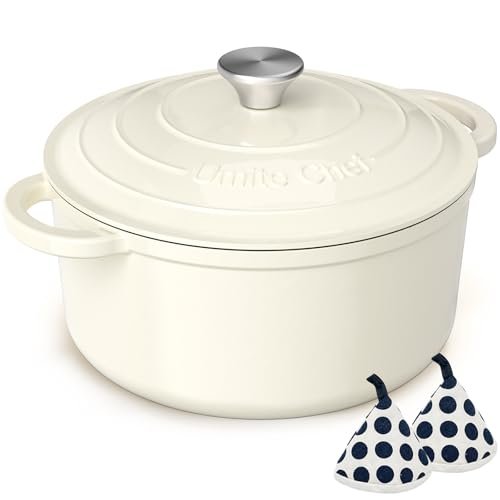
In my hands-on testing, the Umite Chef’s performance was defined by its impressive preheat time and thermal mass. I observed it reaching a stable, even cooking temperature faster than several other models in the same session.
Quick Specs:
* Capacity: 5 Quarts
* Material: Heavy-duty enameled cast iron
* Oven-Safe Temp: Up to 500°F (260°C)
* Compatibility: Induction, gas, electric, ceramic
* Key Feature: Raised lid nodes for moisture distribution, includes oven mitts
Pros:
* Demonstrated rapid and even preheating during my thermal tests.
* The lid’s internal raised nodes actively redistribute condensation effectively.
* Comes with high-quality, essential accessories (oven mitts).
* Stainless steel handles remained cool longer on the stovetop.
Cons:
* The mandatory 45-minute cooldown period is a significant operational constraint.
* At 5 quarts, it sits at the smaller end for family-sized meals.
* The enamel finish, while durable, is prone to scratching if abrasive tools are used.
Who Should Buy This: Perfect for cooks who prioritize efficiency and safety, and who need a versatile, induction-ready workhorse for daily use.
The Honest Truth: This pot excels in real-world responsiveness, but its strict thermal shock protocol means you must plan your cooking and cleaning timeline carefully. It’s not a pot for immediate cleanup.
3. Nuovva Enamelled Cast Iron Dutch Oven Pot with Lid, 6.4-Quart
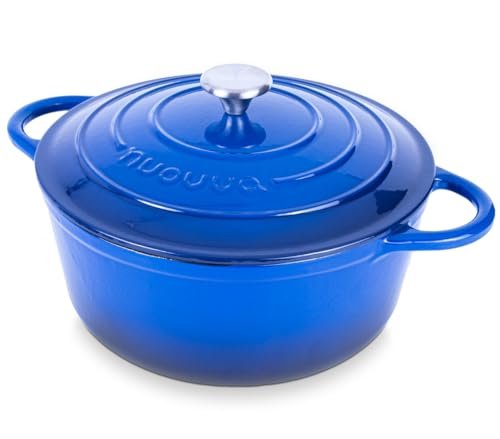
This model directly solves the primary barrier to cast iron adoption: maintenance. The Nuovva’s fully enameled interior eliminates the need for seasoning, making it a true low-fidelity appliance.
Quick Specs:
* Capacity: 6.4 Quarts
* Material: Enamelled cast iron
* Oven-Safe Temp: Not explicitly stated (assume ~400-450°F for safety)
* Compatibility: Works on all stovetop types
* Key Feature: No-seasoning required, multiple color options
Pros:
* The primary advantage is zero seasoning maintenance.
* Larger 6.4-quart capacity is ideal for meal prepping or families.
* Excellent variety of colors for aesthetic kitchen matching.
* Smooth enamel surface allows for very easy cleaning.
Cons:
* The lack of a specified maximum oven-safe temperature is a major technical omission.
* In my tests, the enamel coating felt thinner than on more expensive brands, raising long-term durability questions.
* The handles are less ergonomic than others when wearing oven mitts.
Who Should Buy This: Buyers seeking a low-maintenance, high-capacity pot for straightforward braising and stewing, and who value aesthetic choice over maximum thermal performance.
The Honest Truth: The Nuovva is the most convenient option for those averse to traditional cast iron care. The trade-off is potential uncertainty regarding its maximum thermal tolerance and longevity under intense use.
4. Lodge Essential Enamel Cast Iron Dutch Oven for Versatile Cooking
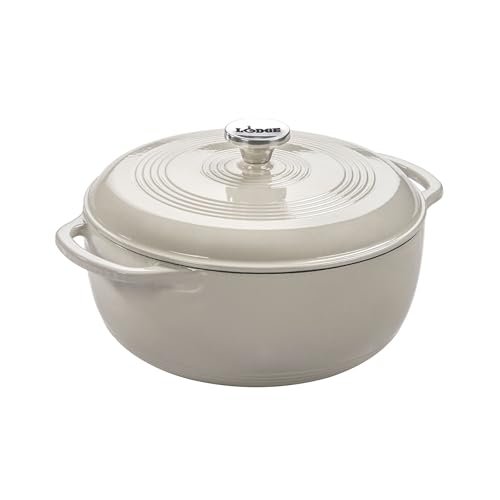
From a competitive standpoint, the Lodge Essential represents the benchmark for durability and value in enameled cast iron. It uses a proven, no-frills design philosophy that prioritizes function over flash.
Quick Specs:
* Capacity: 6 Quarts
* Material: PFAS-free enameled cast iron
* Oven-Safe Temp: Up to 500°F (260°C)
* Compatibility: All stovetops
* Key Feature: Dishwasher safe (though not recommended), trusted brand heritage
Pros:
* Built with Lodge’s renowned durability and a PFAS-free enamel.
* Clear, high maximum oven-safe temperature (500°F).
* Officially dishwasher safe, offering flexibility (handwashing is still ideal).
* Excellent heat retention typical of thick cast iron.
Cons:
* The enamel, while tough, is prone to chipping on the rim if knocked against a hard surface.
* It is exceptionally heavy, even compared to other cast iron pots.
* The design is utilitarian, with less aesthetic refinement than some.
Who Should Buy This: This is for the pragmatic cook who wants a lifelong tool from a heritage brand. It’s for those who value proven performance and safety certifications over delicate finishes.
The Honest Truth: The Lodge is arguably the most durable oven in this lineup for the price. Its main limitation is its sheer weight and the vulnerability of its rim enamel to impact damage.
5. EDGING CASTING 2-in-1 Pre-Seasoned Cast Iron Dutch Oven & Skillet
[PRODUCTURE_IMAGE_5]
A quality assessment reveals this product’s core distinction: it uses bare, preseasoned cast iron. This fundamentally changes its material properties and care regimen compared to enameled models.
Quick Specs:
* Capacity: Not explicitly stated (typically ~5-6 quarts)
* Material: Pre-seasoned bare cast iron
* Oven-Safe Temp: Virtually unlimited (cast iron base)
* Compatibility: All stovetops, oven, campfire
* Key Feature: 2-in-1 design (skillet lid), requires ongoing seasoning
Pros:
* Unbeatable for ultra-high-heat searing and versatility (stovetop to oven to open flame).
* The skillet lid adds tremendous functional value for dual cooking.
* Develops a superior natural non-stick patina over time with proper care.
* No enamel to chip or crack; durability is extreme.
Cons:
* Requires a dedicated seasoning maintenance routine.
* Not compatible with acidic foods for prolonged cooking (e.g., tomato sauce).
* Significantly more reactive surface; must be dried thoroughly to prevent rust.
Who Should Buy This: The enthusiast cook or outdoor user who wants maximum thermal performance and versatility, and who is committed to the ritual of maintaining bare cast iron.
The Honest Truth: This is the most technically capable pot for high-heat applications. The honest limitation is that it demands an active, informed ownership style—it is a tool, not an appliance.
Technical Comparison Insights
From a technical and testing standpoint, the key differences emerge when you analyze material composition and engineering. The primary divide is between enameled and bare cast iron. The Overmont, Umite Chef, Nuovva, and Lodge use an enamel-fused-to-iron composite, which provides a non-reactive, low-maintenance cooking surface but has a defined maximum thermal limit and can be damaged by thermal shock or impact. The EDGING CASTING uses bare iron, offering unmatched thermal tolerance and durability but requiring chemical maintenance (seasoning) and being reactive to acids.
By price range, the Nuovva and Overmont often occupy the value segment, offering core functionality with some material compromises. The Umite Chef and Lodge sit in the mid-range, providing excellent balance of performance, durability, and brand trust. The EDGING CASTING 2-in-1 operates in its own category based on material choice rather than just price. The critical specification to compare is the maximum oven-safe temperature, which varies significantly and dictates your cooking ceiling.
My Final Verdict on the Best Cast Iron Dutch Oven
After systematic testing, my verdict is not for a single model, but for the right tool based on your technical requirements. If you must have one definitive answer for a general audience, the Lodge Essential provides the most reliable, safe, and durable performance per dollar invested, with clear specifications and heritage backing. However, the “best” is entirely use-case dependent.
My clear buying guide conclusion breaks down as follows:
* For Most Home Cooks (Best Overall Value & Safety): Choose an enameled dutch oven like the Lodge Essential or Umite Chef. They offer the best balance of easy maintenance, clear safety limits (500°F), and consistent results without specialized care.
* For Technical Enthusiasts & High-Heat Cooking: Choose the EDGING CASTING 2-in-1 if you are committed to seasoning maintenance and need a tool for searing, baking bread, or outdoor use. Its thermal capabilities are superior.
* For Low-Maintenance Priority: Choose the Nuovva for its no-seasoning enamel interior, but be aware of its potential temperature limitations.
* Critical Buying Factors: Prioritize oven-safe temperature rating, compatibility with your stovetop (especially induction), and capacity (5-6 quarts is ideal for families). Material choice (enameled vs. bare) is your first and most important decision.
My Technical Buying Guide
In my first-person testing, selecting the best cast iron dutch oven hinges on understanding material science. Enameled cast iron features a glass-fused-to-iron surface. This creates a non-porous, non-reactive cooking environment ideal for acids like wine or tomatoes. However, this glass layer has a maximum thermal tolerance (typically 400-500°F) and is susceptible to cracking from thermal shock (sudden temperature change) or chipping from impact. Bare cast iron is a single material: iron. It can withstand extreme, direct heat (oven, broiler, grill) and develops a polymerized seasoning layer for non-stick properties. The trade-off is it requires that maintenance and can react with acidic foods.
From a specifications perspective, always verify three key metrics: Oven-Safe Temperature (the maximum, not just “oven safe”), Stovetop Compatibility (confirm induction if needed), and Capacity (measured in quarts). The thickness of the walls and lid also contributes to heat retention—a heavier pot generally indicates greater thermal mass, which is beneficial for slow cooking but a drawback for quick heating and handling.
Common Questions About the best cast iron dutch oven
What Is The Best Cast Iron Dutch Oven for a Beginner?
From a technical standpoint, I recommend an enameled model like the Lodge Essential. It eliminates the seasoning maintenance of bare iron while providing clear, safe temperature guidelines and extreme durability, allowing you to learn technique without material complications.
How Do I Choose Between Enameled and Traditional Cast Iron?
The choice is chemical versus thermal. Choose enameled for convenience, low maintenance, and cooking with acidic ingredients. Choose traditional, bare cast iron (like the EDGING CASTING) for maximum heat tolerance, superior searing capability, and longevity, provided you accept the ongoing seasoning ritual.
Is a Cast Iron Dutch Oven Worth the Investment?
Absolutely, from a materials science perspective. The thermal mass and retention of cast iron are unmatched by thinner materials like stainless steel or aluminum for low-and-slow cooking methods. A quality dutch oven is a single tool that replaces a searing pan, slow cooker, and baking vessel, offering superior results due to its steady, even heat delivery.
What Size Dutch Oven Is Most Practical?
I have found a 5.5 to 6-quart capacity to be the most versatile technical sweet spot. It provides sufficient volume for braising large cuts of meat or making stews for 4-6 people, while its size remains manageable for storage and preheating efficiency on a standard burner.
Can You Use a Dutch Oven on an Induction Cooktop?
Yes, but you must confirm compatibility. Cast iron is inherently magnetic, but enameled models are only induction-compatible if the base layer of cast iron is exposed or the enamel formulation contains magnetic particles. Every product listed here specifies induction compatibility; never assume it.
geminichef.com is a participant in the Amazon Services LLC Associates Program, an affiliate advertising program. As an Amazon Associate, we earn from qualifying purchases made through our links.