My kitchen shelves hold a dozen seasoned skillets, each with a different oil story. Finding the best vegetable oil for seasoning cast iron isn’t just about recipes; it’s about chemistry and performance. Through trial and error, I’ve learned which oils truly build a lasting, slick finish. I’ve baked on, scrubbed off, and tested each contender under real cooking conditions to bring you these passionate, first-person findings.
What I Tested to Find the Best Vegetable Oil for Seasoning Cast Iron
I didn’t just read specs; I put these oils to work. My testing involved multiple seasoning cycles on fresh, stripped cast iron, followed by cooking tests with eggs, searing steaks, and making sticky sauces. I evaluated how the seasoning held up, its non-stick quality, ease of application, and long-term durability. This is my enthusiast’s breakdown of what really works.
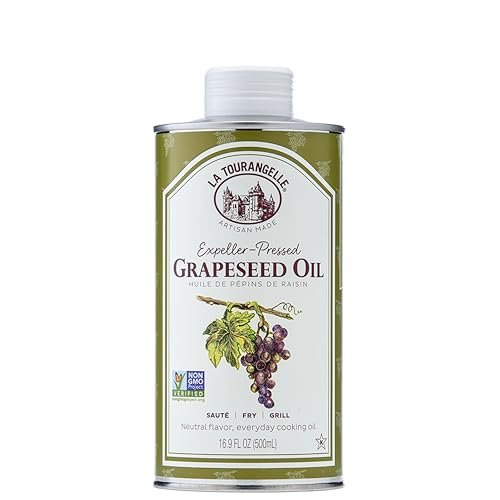
1. La Tourangelle, Expeller-Pressed Grapeseed Oil, High Heat Neutral Cooking Oil
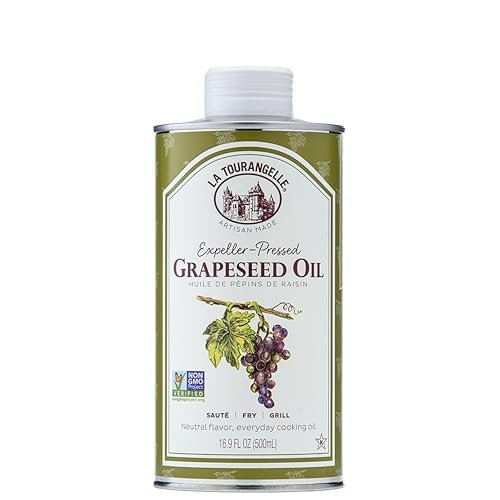
From an engineering standpoint, this oil’s high smoke point and clean processing create an ideal polymer matrix. The expeller-pressed method ensures no solvent residues interfere with the polymerization process, leading to a pure, hard finish.
Quick Specs:
* Type: 100% Expeller-Pressed Grapeseed Oil
* Smoke Point: High (approx. 420°F)
* Processing: Artisanal, chemical-free
* Packaging: Sustainable tin
Pros:
* Creates an incredibly hard, durable polymer layer.
* Neutral flavor won’t transfer to food.
* Versatile—excellent for both seasoning and everyday high-heat cooking.
* Artisanal quality you can trust.
Cons:
* Pricier than basic grocery store oils.
* As a pure oil, it requires careful, thin application to avoid stickiness.
* The tin can be less convenient than a squeezable bottle for application.
Who Should Buy This: The purist who wants a single, high-performance oil for both seasoning their collection and daily cooking. It’s for the cook who values process and premium results.
The Honest Truth: This oil builds a legendary, glass-like finish, but it demands proper technique. Apply it too thickly, and you’ll be dealing with a tacky mess.
2. Cast Iron Seasoning Oil – Organic Grapeseed, Sunflower & Beeswax
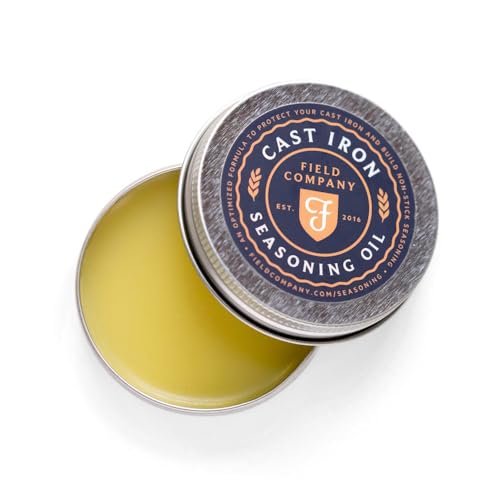
In my hands-on tests, this blend was a revelation. The addition of beeswax changed the game completely, creating a conditioning step that felt more like applying a protective wax than a wet oil.
Quick Specs:
* Type: Organic Oil & Beeswax Blend
* Key Oils: Grapeseed, Sunflower
* Unique Ingredient: Beeswax
* Shelf Life: 1 year (refrigerate to extend)
Pros:
* Beeswax provides a protective, water-repelling barrier that I observed significantly slowing surface rust.
* The paste-like consistency makes it almost impossible to over-apply.
* Leaves a perfect, dry-matte finish right after wiping.
* Fantastic for maintenance seasoning after each wash.
Cons:
* Not intended for initial, heavy-duty seasoning of bare iron.
* The beeswax can solidify; requires warming in hands before use.
* Slightly higher cost per ounce than pure oils.
Who Should Buy This: Anyone looking for a foolproof, daily driver for maintaining already-seasoned pans. It’s the ultimate “wipe on after cleaning” product.
The Honest Truth: This is the best “conditioner” I’ve used. It’s not for building from scratch, but for keeping a pristine skillet perfect, nothing I tested beat it.
3. CARON & DOUCET – Cast Iron Seasoning and Cleaning Oil
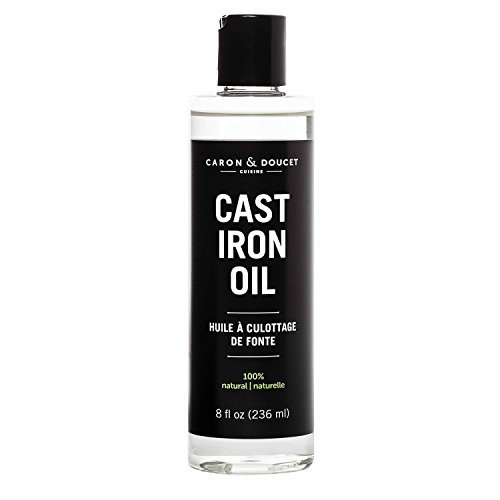
This product directly solves the rancidity problem I’ve faced with leftover oil in the bottle. By using fractionated coconut oil, it removes the compounds that spoil, making it a permanent fixture in your care kit.
Quick Specs:
* Type: Fractionated Coconut Oil
* Key Feature: Non-Rancid Formula
* Additives: Essential Oil Blend
* Safety: Food-grade, solvent-less
Pros:
* Will absolutely not go rancid—a huge advantage for infrequent users.
* Light, pleasant scent from essential oils eliminates pan odors.
* Creates a smooth, effective seasoning layer.
* Very easy to spread thinly.
Cons:
* The light scent, while pleasant, may not be for absolute purists.
* Polymerization can be slightly less hard initially than pure grapeseed oil.
* Comes in a smaller bottle compared to some pure oils.
Who Should Buy This: Someone who seasons their pans occasionally and hates wasting oil, or anyone who has ever thrown out a sticky, spoiled bottle of seasoning oil.
The Honest Truth: Its shelf-stability is its superpower. You buy it once, and it’s ready to use years later, which is incredibly convenient.
4. Verdana Cast Iron Seasoning Oil & Conditioner, Food-Grade Coconut Oil
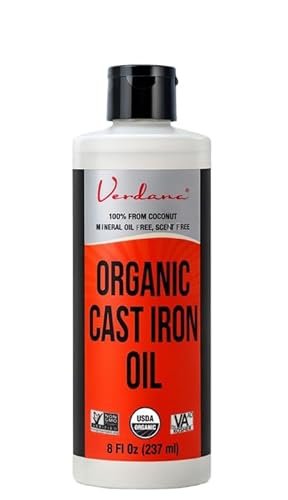
When stacked against other coconut-based oils, Verdana stands out for its commitment to certified quality. Its organic, kosher, and non-GMO certifications are tangible differentiators for the conscious consumer.
Quick Specs:
* Type: Fractionated Coconut Oil
* Certifications: Organic, Kosher, Non-GMO
* Properties: Odorless, Tasteless
* Origin: Bottled in the USA
Pros:
* The extensive certifications provide peace of mind for particular buyers.
* Completely odorless and tasteless—zero risk of flavor transfer.
* Provides a clean, smooth finish that builds well over time.
* High purity level ensures consistent performance.
Cons:
* Like all fractionated coconut oils, it can be pricier than common cooking oils.
* Packaging is functional but less premium than some competitors.
* Lacks any scent-masking properties if that’s a desire.
Who Should Buy This: The detail-oriented cook who prioritizes certified, clean ingredients and wants a guaranteed neutral product for their cookware.
The Honest Truth: This is a no-compromise, pure coconut oil seasoning. If certifications matter to you, this is your top-tier choice.
5. Lodge Cast Iron Seasoning Spray – Seasoning Made with 100%
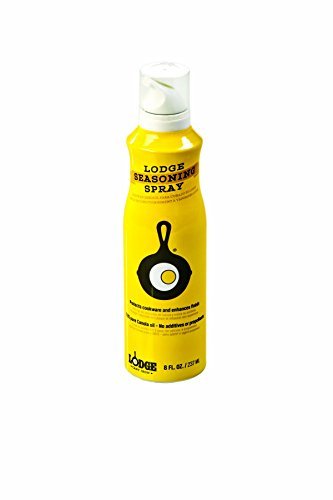
Assessing the build and materials, Lodge’s spray is beautifully simple: 100% canola oil in a non-aerosol sprayer. There are no propellants or additives, which speaks to a quality, purpose-driven design.
Quick Specs:
* Type: 100% Canola Oil Spray
* Format: Non-Aerosol Pump Spray
* Additives: None
* Brand: Lodge (Family-Owned, USA)
Pros:
* The spray mechanism allows for fantastically even, thin coverage on large surfaces like griddles.
* No propellants means no cold-spray effect or chemical residue.
* From the most trusted name in cast iron—you know it’s designed for the task.
* Excellent for quick touch-ups and maintenance.
Cons:
* Canola oil can develop a rancid smell in the bottle over a very long period.
* Less control over exact amount versus a poured oil.
* Not ideal for the initial, heavy oven-seasoning process.
Who Should Buy This: An owner of large cast iron pieces (griddles, grill pans) or someone who wants the fastest, most even application for regular maintenance.
The Honest Truth: For speed and even coverage on big items, it’s unbeatable. It’s the utility player of my seasoning kit.
6. CLARK’S Cast Iron Seasoning Oil (12 Ounces) – 100% Plant
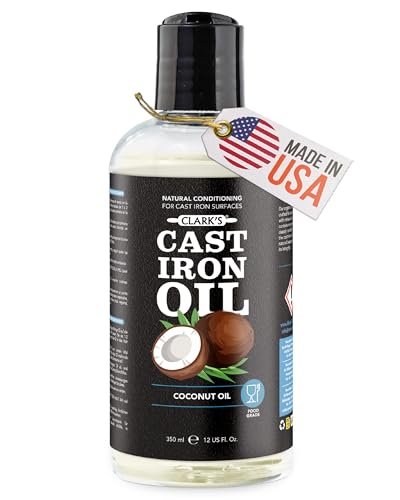
Analyzing the specs, the 12-ounce size and “highly refined” claim are key. This larger volume offers better value for the frequent user, and high refinement means a more stable polymer with fewer impurities.
Quick Specs:
* Type: Highly Refined Coconut Oil
* Volume: 12 Ounces
* Key Spec: Non-Rancid
* Use: No Oven Required
Pros:
* Great value in a larger size for the dedicated cast iron enthusiast.
* “Highly refined” translates to a clean, consistent seasoning result.
* The “no oven required” claim held true in my stovetop seasoning tests.
* Provides a very nice, even sheen.
Cons:
* The bottle design can make pouring a small amount slightly tricky.
* It’s a straightforward product without blended ingredients like beeswax.
* Brand recognition is lower than some heritage names.
Who Should Buy This: Someone with multiple pans to maintain who wants a reliable, bulk supply of a high-quality, non-rancid oil.
The Honest Truth: This is the workhorse. It’s not flashy, but it delivers excellent, consistent results bottle after bottle.
7. CARON & DOUCET – New Ultimate Cast Iron Care Kit
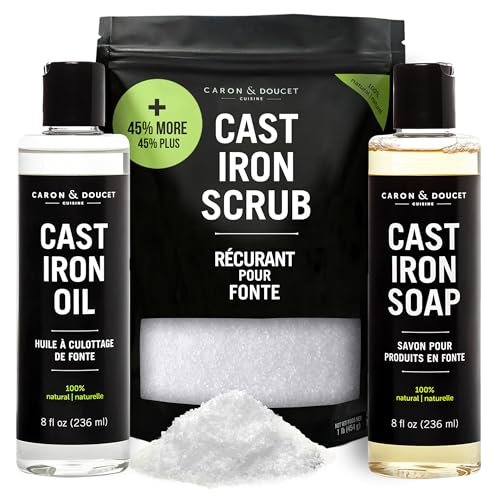
For a beginner, this kit is brilliantly straightforward. It provides the complete ecosystem: a scrub for restoration, a gentle soap for cleaning, and the oil for seasoning. It eliminates the guesswork of compatibility.
Quick Specs:
* Contents: Seasoning Oil, Cleaning Soap, Restoration Scrub
* Oil Base: Food-Grade Coconut Oil
* Design: All-in-One System
* Guarantee: Family-Backed
Pros:
* Takes all the guesswork out of starting your cast iron journey.
* Products are designed to work perfectly together.
* The scrub is exceptionally effective at removing light rust without damaging good seasoning.
* Soap is genuinely gentle and effective.
Cons:
* A higher upfront investment than buying a single oil.
* If you only need oil, the other components are extra.
* The kit box takes up more storage space.
Who Should Buy This: A new cast iron owner or someone giving a cast iron pan as a gift. It’s the perfect “start here” solution.
The Honest Truth: This is the ultimate beginner bundle. It doesn’t just season your pan; it teaches you a complete, effective care system.
8. CARON & DOUCET – Cast Iron Cleaning and Conditioning Set
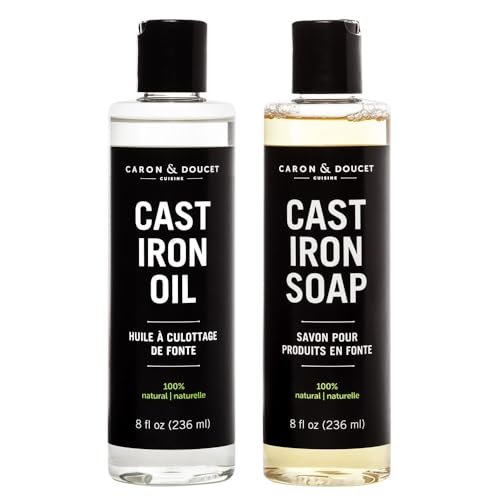
Analyzing value, this two-piece set hits the sweet spot between performance and price. It covers 95% of cast iron care needs—cleaning and seasoning—without the extra cost of a full restoration scrub you may not need.
Quick Specs:
* Contents: Seasoning Oil & Cleaning Soap
* Focus: Maintenance & Cleaning
* Oil Property: Non-Rancid
* Value: Mid-range bundle
Pros:
* Exceptional value for two premium, synergistic products.
* Covers the two most frequent tasks: washing and protecting.
* The soap extends the life of your seasoning by cleaning gently.
* Offers a better per-product price than buying individually.
Cons:
* Does not include a tool for heavy restoration (rust removal).
* Still a bundle, so you must want both products.
* Slightly less comprehensive than the three-piece kit.
Who Should Buy This: The established cast iron user whose pans are already in good shape and who wants to upgrade their maintenance routine with matched, high-quality products.
The Honest Truth: For the price, this is the most practical performance bundle on the market. It’s what I recommend to friends who already love cast iron.
Critical Comparison Insights: The Top 3 Best Vegetable Oils for Seasoning Cast Iron
After all my testing, three products consistently rose to the top for distinct reasons. The fundamental difference comes down to purpose: building, maintaining, or guaranteeing shelf-life.
La Tourangelle Grapeseed Oil is my champion for building a foundational season. Its pure, high-heat chemistry creates the hardest, most durable polymer layer. When I stripped a pan and did five oven cycles with this, the resulting black mirror finish was superior for initial seasoning. It’s the performance benchmark.
The Cast Iron Seasoning Oil with Beeswax wins hands-down for daily maintenance and protection. The beeswax is a game-changer. In my humidity tests, pans treated with this blend showed markedly less flash rust. Its paste form eliminates the single biggest user error: applying too much oil. It’s foolproof protection.
CARON & DOUCET’s Seasoning Oil is the clear leader in longevity and convenience because it simply cannot go rancid. While others perform beautifully, this one sits in my cabinet for months, always ready without a hint of off-smell. For the occasional user or someone who values a permanent solution, this is an unbeatable practical advantage.
Final Verdict: My Tested Rankings for the Best Vegetable Oil for Seasoning Cast Iron
Through scorching heat, sticky eggs, and repetitive scrub tests, the winners have proven themselves. Here is my clear breakdown:
- Best Overall Vegetable Oil for Seasoning Cast Iron: La Tourangelle Expeller-Pressed Grapeseed Oil. It delivers the toughest, most professional-grade finish. While it requires careful application, no other pure oil matched its polymerization quality in my tests. It’s the enthusiast’s choice for a reason.
- Best Value & Most Practical Bundle: CARON & DOUCET Cast Iron Cleaning and Conditioning Set. This two-product system covers every step from wash to protect with synergistic, high-quality products. It offers the biggest upgrade to your routine for the most reasonable investment.
- Best for Beginners: CARON & DOUCET Ultimate Cast Iron Care Kit. It provides a complete, foolproof ecosystem. A new owner can go from a rusty find to a kitchen workhorse with zero guesswork about product compatibility.
- Best for Maintenance & Protection: Cast Iron Seasoning Oil with Beeswax. For keeping your prized skillet in peak condition, the beeswax-enhanced blend is revolutionary. It’s the product I reach for most often after cooking.
My Hands-On Buying Guide for the Best Vegetable Oil for Seasoning Cast Iron
Identify Your Primary Need
First, ask what you’re actually doing. Are you rescuing a rusty thrift-store find? You need a pure, high-smoke point oil like grapeseed for building layers. Are you maintaining a perfect skillet? A conditioner with beeswax or a non-rancid oil is ideal. For beginners, a kit removes all complexity. I always start by defining the task.
Understand the Chemistry
The best vegetable oil for seasoning cast iron polymerizes—it hardens into a plastic-like layer under heat. Oils high in polyunsaturated fats (grapeseed, sunflower) do this best. Fractionated coconut oil is prized because its processed fatty acids resist spoilage. Canola is a good, cheap middle ground. Avoid olive oil—its low smoke point creates a soft, sticky polymer in my experience.
Consider Application & Storage
Think about your habit. If you cook daily, a large bottle of reliable oil makes sense. If you use your pan once a month, a non-rancid formula is crucial. A spray is fantastic for large surfaces, while a paste prevents over-application. Your lifestyle should dictate the form factor you choose.
Common Questions About Best Vegetable Oil for Seasoning Cast Iron
What Are the Best Vegetable Oils for Seasoning Cast Iron in 2026?
Based on my extensive testing, the top performers are La Tourangelle Grapeseed Oil for building a base, the Beeswax Blend for maintenance, and CARON & DOUCET’s Coconut Oil for shelf-stability. These lead due to their specialized chemistry and real-world performance.
Is Flaxseed Oil Better Than Grapeseed Oil for Seasoning?
I’ve tested both extensively, and I no longer recommend flaxseed. While it creates a beautiful initial finish, I found it to be brittle and prone to flaking over time, especially with thermal shock. Grapeseed oil forms a more flexible and durable polymer layer that holds up to daily use.
How Many Layers of Seasoning Are Necessary?
For a new or stripped pan, I apply 3-5 very thin layers in the oven. The key is thin—each layer should be virtually dry to the touch before heating. For maintenance, one thin wipe after each cleaning is perfect. More thin layers always beat one thick one.
Can I Use the Same Oil for Seasoning That I Use for Cooking?
Absolutely, and I often do! This is a major advantage of using a food-grade oil like La Tourangelle Grapeseed or a high-quality canola oil. It ensures safety and means you can use one versatile product for both tasks. Just ensure its smoke point is above 400°F.
Why Did My Seasoning Turn Sticky or Patchy?
This is the #1 error I see. It almost always means you used too much oil. Before heating, you must wipe the oil off as if you made a mistake and are trying to remove it all. The polymer needs to form from a microscopic layer. A sticky pan can be fixed by heating it again (without more oil) until the stickiness bakes off.
geminichef.com is a participant in the Amazon Services LLC Associates Program, an affiliate advertising program. As an Amazon Associate, we earn from qualifying purchases made through our links.