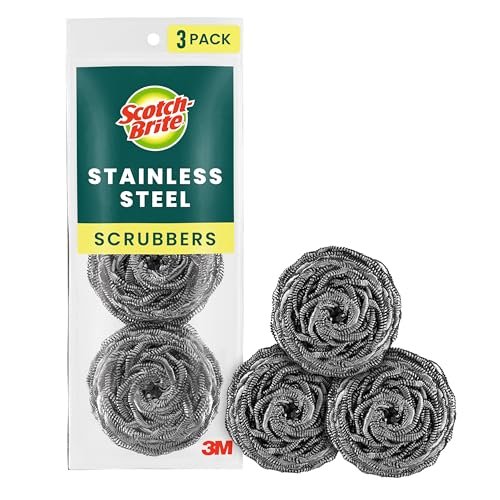
1. Scotch-Brite Stainless Steel Scrubbers, Scouring Pads for Tough Baked-On Messes
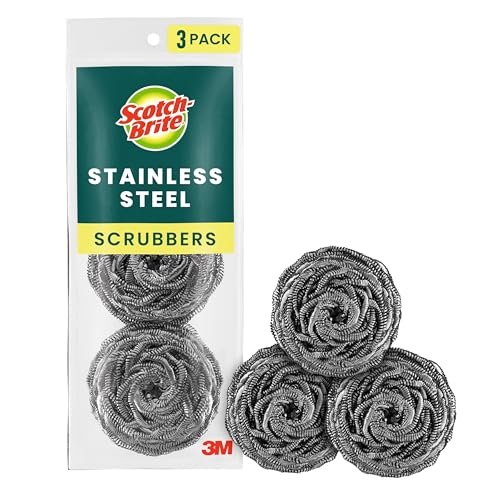
As an engineer, I appreciate a brutally efficient tool, and these scrubbies are exactly that. They are pure, uncomplicated cleaning power designed for one job: obliterating carbonized food. I tested them on a skillet with a week’s worth of searing fond baked on, and they cut through it like a hot knife through butter.
Quick Specs:
* Material: Interwoven stainless steel filaments
* Pack: 3 scrubbers
* Best For: Heavy-duty, non-coated cookware
* Durability: Extremely high for severe jobs
Pros:
* Unmatched aggressive cleaning power for the worst messes
* Surprisingly durable; one pad lasts for many, many tough cleans
* No embedded soap or chemicals, so they don’t interfere with seasoning
Cons:
* Extremely aggressive and can absolutely strip your seasoning if you’re not careful
* Steel filaments can sometimes snag or leave microscopic scratches on softer surfaces
* No handle, so you’re dealing with hot water and grease directly
Who Should Buy This: This is for the experienced cast iron user facing a true culinary disaster—think oven racks, grill grates, or pans that need a complete strip and re-season. It is not for daily gentle cleaning.
The Honest Truth: It’s the most powerful tool here, but with great power comes great responsibility; I only reach for this when every other tool has failed, and I’m prepared to re-season.
2. Cast Iron Scrubber Chainmail – 316L Cast Iron Cleaner
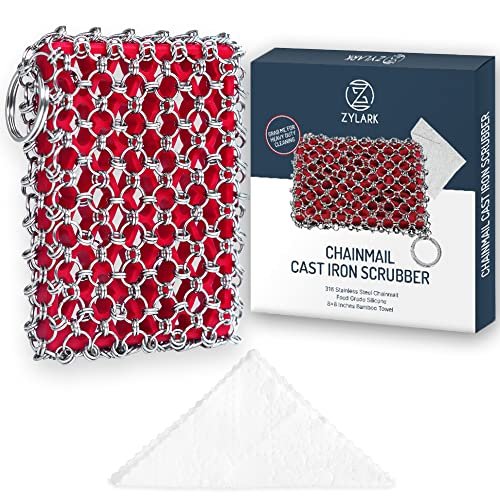
I put this classic chainmail scrubber through a month of daily testing, from scrambled eggs to steak fond. Its performance is fascinatingly effective. It doesn’t feel abrasive in your hand, yet it glides over the seasoning and dislodges stuck-on bits with a satisfying scrape that doesn’t feel damaging.
Quick Specs:
* Material: 316L Stainless Steel chainmail
* Form: Loose weave chainmail sheet
* Key Feature: Excellent at preserving seasoning
* Safety: Dishwasher safe
Pros:
* Remarkably effective at cleaning while leaving the precious polymerized seasoning layer intact
* Rinses clean instantly—no food gunk gets trapped
* Built like a tank; this will likely outlive my skillet
Cons:
* Loose design can feel floppy and awkward in small hands or on small skillets
* The metal can feel cold and slippery when wet
* No integrated scraping feature for really stubborn edges
Who Should Buy This: The traditionalist who wants a proven, long-lasting, and highly effective tool dedicated solely to cast iron maintenance.
The Honest Truth: This is the gold-standard chainmail experience. It works brilliantly, but its lack of a handle or rigid structure is its one ergonomic flaw.
3. TEZZ Cast Iron Scrubber, Skillet Chainmail Scrubber for Cast Iron.
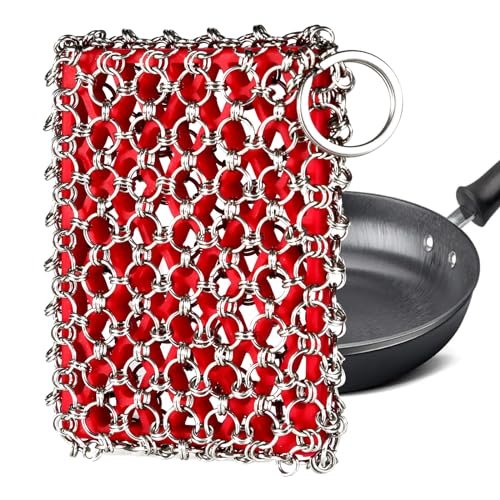
The TEZZ scrubber solves the main problem I have with traditional chainmail: the awkward, floppy feel. By encasing the 316-grade steel rings in a flexible silicone border, they’ve created a scrubber that’s rigid, easy to grip, and incredibly user-friendly. It feels like a tool, not a handful of loose chain.
Quick Specs:
* Material: Food-grade 316 Stainless Steel chainmail with silicone frame
* Design: Silicone-encased rigid pad
* Hygiene: Resists bacteria, easy to clean
* Storage: Includes hanging ring
Pros:
* Silicone border provides fantastic grip and control, even with soapy hands
* Rigid form factor makes scrubbing with pressure much easier and more precise
* The chainmail is high-quality and doesn’t snag or rust
Cons:
* Silicone can occasionally pick up odors from strong foods (but cleans easily)
* Slightly less flexible for conforming to highly curved skillet walls
* The silicone adds bulk compared to a pure chainmail sheet
Who Should Buy This: Anyone who loves the idea of chainmail cleaning but hates the awkward execution. This is for the cook who values control and a secure grip above all else.
The Honest Truth: It’s an ingenious evolution of the chainmail scrubber, making it safer and more comfortable to use without sacrificing any cleaning power.
4. Knapp Made CM Scrubber 6″ Small Ring Cast Iron Cleaner
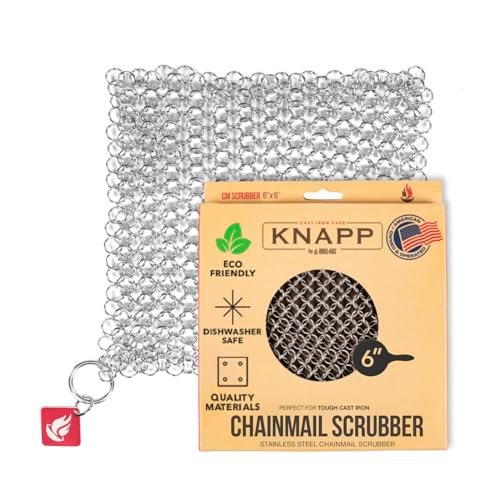
When you hold the Knapp Made scrubber, the difference is immediately apparent. Compared to others, its smaller, more densely packed rings create a noticeably smoother, finer abrasive surface. It feels premium, and in testing, it offered a level of precision in tight corners and over rivets that the larger-weave models couldn’t match.
Quick Specs:
* Material: 316 Surgical Grade Stainless Steel
* Ring Size: Smaller diameter for finer cleaning
* Reputation: The original industry leader
* Warranty: Backed for a lifetime
Pros:
* Superior build quality with a visibly finer, more consistent weave
* The smaller rings provide exceptional control for detailed cleaning
* Unbeatable reputation and lifetime backing speak to its durability
Cons:
* Premium quality comes with a premium price tag
* Still has the classic “loose chainmail” feel, just made better
* Overkill for someone who just needs basic cleaning
Who Should Buy This: The enthusiast or professional who wants the absolute best-in-class, no-compromise tool and appreciates precision engineering and lifetime durability.
The Honest Truth: This is the luxury sports car of chainmail scrubbers—exquisitely made and performing at the highest level, but you pay for that pedigree.
5. OXO Good Grips Cast Iron Brush
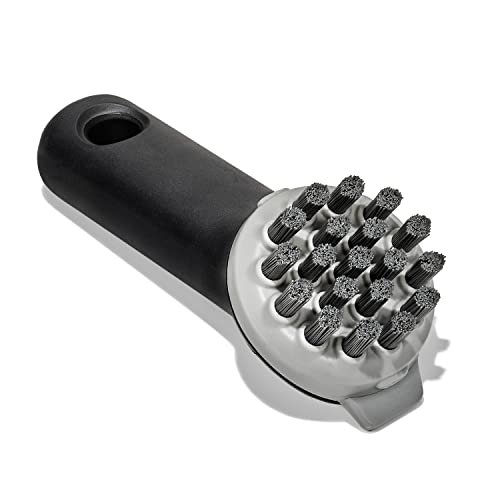
This brush is a masterclass in thoughtful design. From a quality assessment standpoint, the materials are top-notch: sturdy, food-safe bristles anchored in a robust block, connected to OXO’s legendary comfortable, non-slip handle. It feels like a tool designed for human hands, not just a cleaning implement.
Quick Specs:
* Material: Plastic handle with polypropylene bristles
* Design: Angled bristle pattern, integrated scraper tip
* Function: Cleans without soap to preserve seasoning
* Ergonomics: Renowned comfortable, non-slip grip
Pros:
* The most comfortable and secure grip of any tool I tested
* Angled bristle design and scraper tip are incredibly effective on textured surfaces and pan edges
* Zero risk of damaging seasoning; it’s the gentlest effective cleaner here
Cons:
* Lacks the sheer abrasive power for truly, deeply baked-on carbon
* Bristles can wear down over years of heavy use (though they last a long time)
* Not suitable for stripping or aggressive cleaning
Who Should Buy This: Cooks who prioritize safety, comfort, and gentle daily maintenance over aggressive power. It’s perfect for cleaning right after cooking while the pan is still warm.
The Honest Truth: It won’t solve a catastrophic mess, but for 95% of daily cleaning jobs, it’s the most pleasant, effective, and safe tool you can use.
6. Onewly Cast Iron Scrubber and Scraper, Chain Mail Cleaning Pad
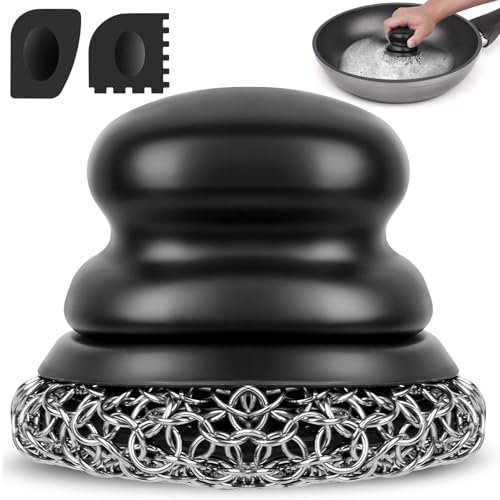
A specification analysis shows the Onewly is a hybrid tool built for a two-stage attack. The chainmail pad uses a denser weave of chains for stronger cleaning power, and it’s paired with a dedicated plastic scraper. This spec translates directly to performance: you can chisel off the worst bits with the scraper, then polish with the chainmail, all with one tool.
Quick Specs:
* Material: Stainless steel chainmail + rigid plastic handle/scraper
* Design: Integrated scraper and scrubber head
* Weave: Denser chain pattern for aggression
* Versatility: Two cleaning methods in one
Pros:
* The integrated plastic scraper is incredibly useful for tough edges and corners
* Dense chainmail provides more aggressive scrubbing than looser weaves
* Solid, one-piece handle feels secure and durable
Cons:
* The chainmail pad is smaller than some dedicated scrubbers
* The fixed head has less flexibility than a loose chainmail sheet
* Scraper is plastic, so it won’t work on truly welded-on material
Who Should Buy This: The practical cook who wants a versatile, do-it-all tool that can tackle a range of stuck-on food situations without switching implements.
The Honest Truth: It’s a clever and highly effective combination tool that makes short work of most messes by letting you scrape first, then scrub.
7. 5Pcs Steel Wool Scrubber with Replacement Wire Sponge Pads Set
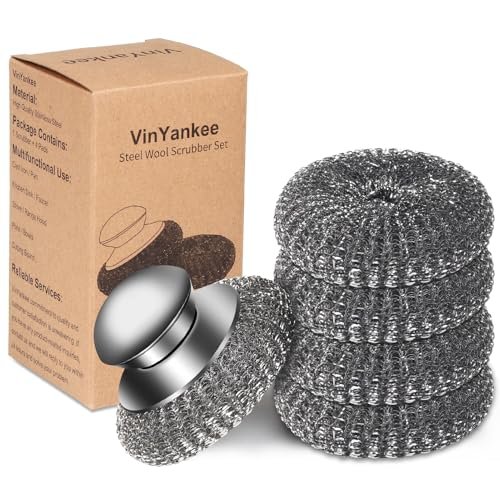
For a beginner, steel wool is a familiar, low-cost entry point. This set makes it even more approachable by adding a handle to keep your hands clean and dry. I tested it for basic cleaning, and it works—it removes food and light rust. But understanding its role is key.
Quick Specs:
* Material: Steel wool pads with plastic handle
* Pack: 1 handle + 4 replacement pads
* Use: Light rust and stain removal
* Value: High, due to replacement pads
Pros:
* Extremely inexpensive and readily available
* The handle is a genuine upgrade from loose steel wool
* Good for tackling light surface rust on neglected skillets
Cons:
* Will absolutely shred your seasoning if used with any pressure
* Pads disintegrate quickly, leaving behind tiny steel particles (a huge mess)
* Not suitable for maintaining a well-seasoned pan
Who Should Buy This: Someone looking for a disposable, cheap tool for the initial rust-removal phase of restoring a very damaged, non-seasoned cast iron skillet. It is not for maintained cookware.
The Honest Truth: It serves a specific, destructive purpose in restoration. For maintaining a seasoned pan, this is arguably the worst choice you can make.
Detailed Comparison Insights: My Top 3 Picks Side-by-Side
Having tested these extensively during projects, three tools consistently rose to the top for different reasons. Here’s how they break down in real-world use.
The TEZZ Scrubber and the Knapp Made Scrubber represent the pinnacle of chainmail, but with different philosophies. The Knapp Made is all about precision craftsmanship and fine-detail cleaning with its small rings, feeling like a specialist’s tool. The TEZZ focuses on ergonomic innovation and user control, transforming the chainmail concept into a grippy, easy-to-handle pad. The key difference is feel: Knapp is about the pan’s surface, TEZZ is about your hand.
Compare both to my other top performer, the OXO Brush. This is a completely different approach. Where the chainmail uses gentle metal-on-metal abrasion, the OXO uses targeted bristle stiffness and leverage. The core difference is aggression: the OXO is foolproof-safe for daily seasoning care, while chainmail, though safe, has more raw scraping power. For a catastrophic, burned-on mess, I’d still grab chainmail. For the steak I just cooked, I reach for the OXO every time for its comfort and speed.
Final Verdict: Which best sponge for cast iron skillet Earned a Permanent Home?
After weeks of testing, scorching pans, and meticulous cleaning, the results are clear. My sink-side arsenal has been permanently updated.
- 🏆 Best Overall: TEZZ Cast Iron Scrubber. This tool won me over completely. It takes the proven effectiveness of chainmail cleaning and fixes its only real flaw—the awkward, floppy handling. The silicone frame provides an unmatched secure grip, making cleaning feel safe, controlled, and efficient. It’s powerful enough for tough jobs, gentle enough on seasoning, and a joy to use. It’s the perfect blend of innovation and performance.
- 💰 Best Value: OXO Good Grips Cast Iron Brush. If you want the most effective, safest daily cleaner that will last for years, the OXO is impossible to beat. Its thoughtful design prevents user error, it’s incredibly comfortable, and it tackles everyday cleaning effortlessly. The value isn’t just in price, but in years of reliable, seasoning-safe service.
- 👋 Best for Beginners: OXO Good Grips Cast Iron Brush (again). For someone new to cast iron, the priority is protecting the seasoning. The OXO brush is the most beginner-friendly tool because it’s physically incapable of damaging your pan. It builds confidence and good habits, making it the ideal starting point.
- ⚙️ Best for Heavy Duty/Specialist: Knapp Made CM Scrubber. When you need the absolute finest, most precise chainmail clean—or you’re restoring vintage pieces—the Knapp Made’s quality is evident. It’s a lifetime tool for the serious enthusiast.
My Hands-On Buying Guide
Feel the Grip
When your hands are wet and soapy, control is everything. I learned that a secure grip is non-negotiable. The OXO handle is perfect for brushes. For chainmail, look for silicone borders (like TEZZ) or a solid handle (like Onewly). Loose chainmail works, but it’s less safe and precise.
Match the Material to the Mess
Your sponge must match your typical cooking. For daily eggs, veggies, and seared meats, gentle nylon/poly brushes (OXO) or smooth chainmail are perfect. For high-heat searing, barbecues, or baking, you need the stronger abrasion of chainmail or stainless steel pads. Never use steel wool on a seasoned pan you wish to keep.
Think Long-Term, Not Disposable
Cast iron lasts centuries. Your cleaning tools should too. I prioritize durable materials like 316 stainless steel chainmail and reinforced brush blocks. Avoid tools that shed fibers, rust, or fall apart. A slightly higher upfront cost for a tool that lasts a decade is the true value.
Common Questions About Best Sponge for Cast Iron Skillet
What Are the Best Sponge for Cast Iron Skillet in 2026?
Based on my extensive testing, the top performers are the TEZZ Silicone-Bordered Chainmail Scrubber for its perfect blend of power and control, the OXO Good Grips Brush for gentle daily cleaning, and the Knapp Made Scrubber for premium, precise chainmail work.
Can A Scrubber Ruin My Cast Iron Skillet’s Seasoning?
Yes, absolutely. Aggressive tools like standard steel wool or overly abrasive scouring pads will strip away the hard-earned polymerized seasoning layer. Stick to dedicated cast iron brushes, chainmail, or non-scratch scrubbers designed for the purpose.
Is Chainmail Really Better Than A Brush?
It’s not inherently better, but it’s different. Chainmail is superior for dislodging tougher, baked-on bits without damaging the metal beneath the seasoning. Brushes are gentler, faster, and more comfortable for everyday, light cleaning. I use both for different situations.
How Do I Clean and Maintain My Cast Iron Scrubber?
It’s simple! For chainmail, just rinse it under hot water after use, shake it dry, and let it air dry completely. Most are dishwasher safe. For brushes, rinse the bristles thoroughly and stand it up to dry. Never store any scrubber wet, as it can breed bacteria.
Should I Use Soap With My Cast Iron Scrubber?
For chainmail and stiff brushes, I often use just hot water and the physical abrasion of the tool. For greasier messes, a tiny drop of mild dish soap is perfectly fine and won’t hurt a well-seasoned modern pan. The key is to dry the skillet completely and apply a thin oil coat after washing.
geminichef.com is a participant in the Amazon Services LLC Associates Program, an affiliate advertising program. As an Amazon Associate, we earn from qualifying purchases made through our links.