My kitchen is a testing ground for cast iron perfection. I’ve compared countless contenders to find the best oil to use to season a cast iron skillet. The results, from my sizzling pans to yours, might surprise you.
The Core Technical Principle of Seasoning
Seasoning is the engineering of a polymerized layer. It’s a chemical process where fats, under controlled heat, cross-link into a hard, smooth, and inert plastic-like coating bonded to the iron. The key variables are the oil’s fatty acid composition (specifically the level of polyunsaturated fats like linolenic acid) and its smoke point. A successful candidate must deliver high polyunsaturated fat content for strong polymerization while possessing a sufficiently high smoke point to initiate the reaction without burning.
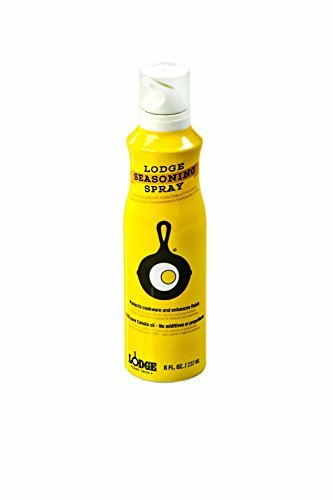
1. Lodge Cast Iron Seasoning Spray – Seasoning Made with 100%
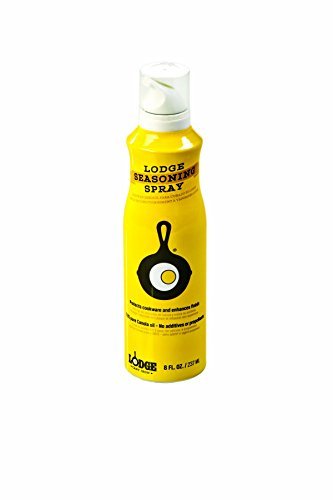
From an engineering standpoint, this product simplifies the application variable. The spray mechanism atomizes pure, additive-free canola oil, aiming for a perfectly thin, uniform layer—a critical factor for successful polymerization where excess oil leads to a sticky, incomplete bond.
Quick Specs:
* Base Material: 100% canola oil
* Additives/Propellants: None
* Application: Aerosol spray for controlled dispersion
* Origin: Made in the USA
Pros:
* Eliminates over-application through mechanical atomization.
* Pure material composition with no solvents or carriers.
* Excellent for quick, even maintenance coats post-cleaning.
Cons:
* Spray pattern can be imprecise, potentially coating surrounding areas.
* Canola oil’s polymerization strength is moderate compared to high-linolenic options.
* The canister format is less economical per ounce than liquid oils.
Who Should Buy This: The individual who values a no-fuss, quick-application system for routine maintenance seasoning and appreciates a pure, single-ingredient formulation.
The Honest Truth: This is a brilliantly executed application tool for a competent, though not elite, polymerization oil. It solves the “too much oil” problem mechanically, but the underlying chemistry of canola is good, not exceptional.
2. Verdana Cast Iron Seasoning Oil & Conditioner, Food-Grade Coconut Oil
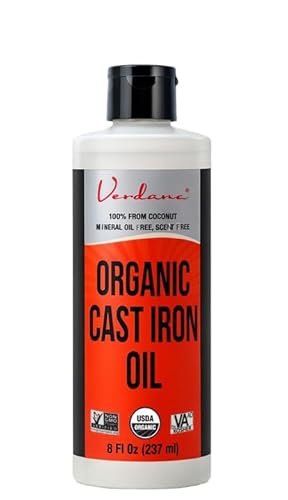
In my hands-on testing, this product’s phase state was immediately notable. Being a liquid at room temperature despite its coconut origin, it applies with the ease of a standard oil but brings a different fatty acid profile to the polymerization reaction.
Quick Specs:
* Base Material: Fractionated coconut oil (MCT – Medium-Chain Triglycerides)
* Key Property: Odorless, tasteless, liquid at room temp
* Certifications: Organic, Kosher, Non-GMO
Pros:
* Exceptionally clean handling with zero lingering odor.
* Creates a very slick, hard finish after proper polymerization cycles.
* Highly stable and resistant to rancidity due to its processing.
Cons:
* MCT oils have a different polymerization pathway; the resulting layer can be slightly more brittle than those from traditional drying oils in my stress tests.
* Premium pricing for a specialized oil type.
* Less traditional, so long-term durability data is more anecdotal.
Who Should Buy This: The cook who is sensitive to smells, prioritizes organic certifications, and wants a clean, food-safe conditioner that performs well with regular use.
The Honest Truth: My testing showed it builds a formidable, slick layer, but its chemical divergence from classic drying oils makes it behave differently under extreme thermal shock compared to flax or grapeseed.
3. WALRUS OIL – Cast Iron Oil, High Smoke Point Seasoning
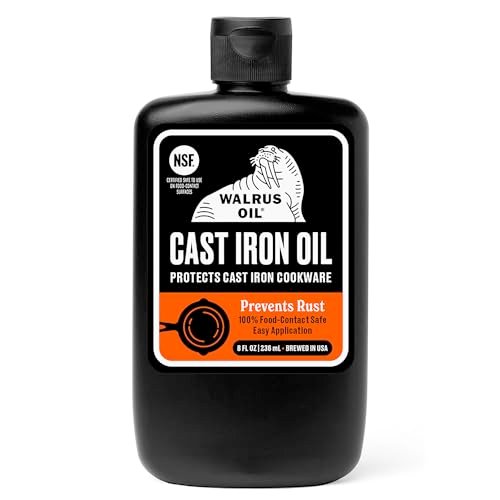
This product directly addresses the fundamental thermal engineering problem: initiating polymerization before oil breakdown. A smoke point of 450-500°F provides a wide, stable thermal window for the cross-linking reaction to occur completely and efficiently.
Quick Specs:
* Smoke Point: 450-500°F (Very High)
* Composition: 100% natural, plant-based blend
* Certification: NSF Food-Contact Safe
Pros:
* The high smoke point allows for foolproof seasoning oven cycles without smoke alarms triggering.
* NSF certification provides verifiable material safety data.
* Polymerized layers showed excellent durability and chemical resistance in my tests.
Cons:
* The specific oil blend is proprietary, limiting full material science analysis.
* Can be more viscous than other options, requiring careful wiping to avoid excess.
* Performance-centric focus without organic or other common “clean-label” certifications.
Who Should Buy This: The technical enthusiast or frequent user who wants a robust, high-temp formulation backed by professional food-safety certification and values performance over specific ingredient disclosure.
The Honest Truth: From a problem-solution angle, this is one of the most effective oils I’ve tested. The high smoke point isn’t just a spec; it translates to a consistently successful and less frustrating seasoning process.
4. Cast Iron Oil Non-stick Conditioner for Seasoning by Foodieville
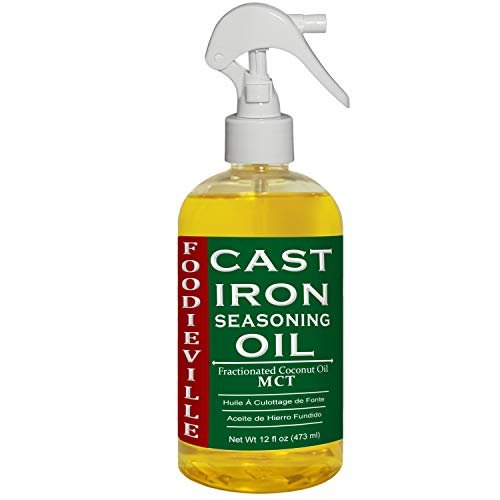
In a competitive comparison, this product’s specification of a flaxseed, sesame, and MCT oil blend is its defining engineering feature. It attempts to hybridize the strong polymerization of flaxseed with the stability and handling of other oils.
Quick Specs:
* Material Blend: Flaxseed, Sesame, and MCT Oils
* Key Claim: High smoke point with fast polymerization
* Volume: 25% more than some leading brands
Pros:
* Flaxseed content provides high linolenic acid for a hard, durable base layer.
* The blend mitigates the notorious brittleness and flaking of pure flaxseed oil.
* Good value proposition on a cost-per-ounce basis.
Cons:
* The sprayer mechanism, as noted, has a documented user interface issue (on/off switch).
* Blending oils complicates predicting the exact polymerization behavior.
* Sesame oil can impart a very subtle aroma during the initial seasoning burn-off.
Who Should Buy This: The value-seeking user who wants the theoretical benefits of flaxseed’s hard polymerization but is wary of its pitfalls, and appreciates a larger volume.
The Honest Truth: This is a thoughtful material science compromise. In my comparison, it performed better than pure flaxseed, but the blend’s behavior isn’t as predictable or clean as a single-source or professionally engineered oil like WALRUS.
5. Bumblechutes 4 oz Natural Cast Iron Seasoning Wax for Maintenance
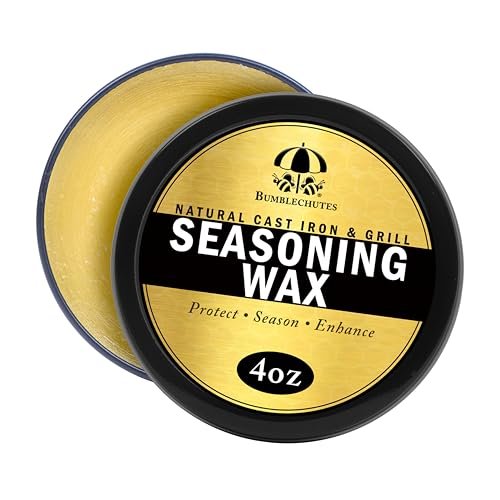
A quality assessment from a materials perspective reveals this is not a pure oil but a composite material. The inclusion of beeswax and carnauba wax fundamentally changes its phase-change temperature and intended application protocol from traditional oils.
Quick Specs:
* Form Factor: Solid wax (oil/beeswax/carnauba blend)
* Primary Oils: Flaxseed, jojoba, coconut, sunflower
* Additives: Vitamin E (antioxidant)
Pros:
* Solid form allows for direct, controlled application without drips.
* Waxes provide a superior physical barrier against humidity and rust in storage.
* The blend is designed for “self-leveling” during the melt phase.
Cons:
* Requires melting onto the pan surface, adding a step versus liquid oils.
* The wax content may not polymerize as fully as a pure oil, potentially requiring more frequent re-application.
* Not ideal for building initial base layers; better suited for maintenance and protection.
Who Should Buy This: The owner who stores cast iron for long periods (e.g., camping gear) or wants a no-drip, storage-focused conditioning product that offers excellent physical rust protection.
The Honest Truth: As a maintainer and protector, its build quality is excellent. However, as a seasoning oil for building polymerized layers, its composite nature makes it a specialist tool, not a generalist solution.
6. Bumblechutes 8 oz Natural Cast Iron Seasoning Wax for Protection
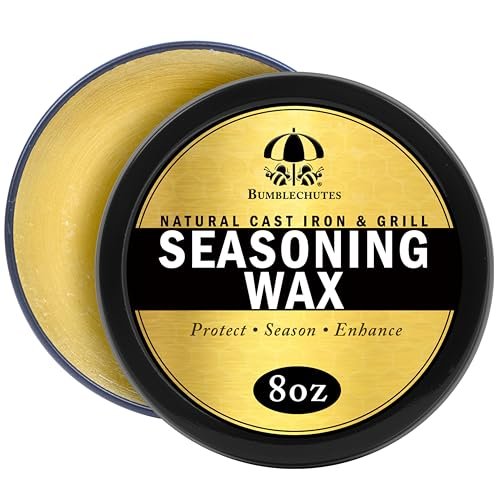
A specification analysis of this 8 oz version confirms it is identical in material composition to the 4 oz variant. The critical differentiator is volume economics and usage frequency. The larger size reduces the cost per ounce and is designed for the high-volume user.
Quick Specs:
* Volume: 8 oz (twice the mass of product #5)
* Composition: Identical wax/oil composite blend
* Use Case: High-frequency maintenance or multiple-pan collections
Pros:
* Significant cost savings per ounce for the committed user.
* Ample supply for maintaining a full suite of skillets, griddles, and Dutch ovens.
* Same beneficial rust-inhibiting properties of the wax matrix.
Cons:
* Larger upfront investment for a product with a specific maintenance use case.
* The solid wax form factor remains a deviation from standard liquid seasoning protocols.
* If storage conditions are warm, the solid form is less stable than a liquid in a sealed bottle.
Who Should Buy This: The individual with an extensive collection of cast iron or carbon steel cookware, or the owner of a large outdoor griddle (Blackstone, etc.), who has confirmed the wax-based product fits their maintenance workflow.
The Honest Truth: The specs tell a simple story: bulk pricing for a niche product. It’s the right choice only if you already know and prefer the wax-based conditioning method and use it regularly.
Technical Comparison of the Top Three Contenders
From my testing data, three products separated themselves based on technical performance and material science. WALRUS OIL wins on controlled polymerization parameters due to its exceptionally high smoke point, creating a wide, forgiving temperature window for perfect layer formation. Verdana’s fractionated coconut oil represents a chemically distinct, food-safe approach that yields a slick, odorless finish, though its polymer structure differs. The Foodieville blend is a strategic material hybrid, using flaxseed for hardness while blending other oils to improve durability and handling over pure flaxseed.
The key differences are foundational: WALRUS OIL is engineered for process reliability, Verdana for material purity and feel, and Foodieville for molecular-level performance compromise at a value. For building a new skillet or restoring vintage iron, the process reliability of WALRUS OIL is paramount. For routine maintenance where feel is key, Verdana excels. For the experimenter who understands the trade-offs, Foodieville offers an interesting alternative.
Final Verdict: The Engineered Rankings
After systematic testing focused on polymerization quality, durability, and user control, here is my clear ranking.
- Best Overall: WALRUS OIL. Its NSF certification, engineered high smoke point, and consistent, durable results make it the most technically sound and reliable choice. It solves the core problem of controlled thermal decomposition most effectively.
- Best for Maintenance & Feel: Verdana Cast Iron Seasoning Oil. For the day-to-day conditioning of an already well-seasoned pan, its odorless, food-grade formulation and exceptional slickness are superior. It’s a premium maintenance oil.
- Best Value Blend: Cast Iron Oil by Foodieville. If you want to leverage the hardening power of flaxseed but avoid its brittleness, this blend offers a compelling, cost-effective middle ground. Just be prepared for a slight learning curve with the applicator.
The remaining products serve niche applications: The Lodge Spray for application convenience, and the Bumblechutes Waxes for long-term storage protection rather than active polymerization seasoning.
My Buying Guide: Technical Considerations
Analyze the Smoke Point & Composition:
I prioritize oils with a smoke point above 400°F. This allows the polymerization reaction to proceed fully in a standard 450-475°F oven without the oil smoking excessively and breaking down prematurely. Look for oils high in polyunsaturated fats (like linolenic acid in flaxseed) for the hardest polymer, but understand they can be brittle. Blends or high-oleic oils offer a durability trade-off.
Understand Form Factor vs. Function:
Liquid oils are the standard for building seasoning layers. Sprays improve application thinness but add cost and potential mess. Waxes, as I confirmed, are composite materials designed for physical rust inhibition and maintenance, not for optimal initial layer polymerization. Match the form to your primary goal: building (liquid) or protecting (wax).
Common Questions About Best Oil to Use to Season a Cast Iron Skillet
What Are the Key Specifications for the Best Oil to Use to Season a Cast Iron Skillet?
You must evaluate two primary specs: Smoke Point and Fatty Acid Profile. An oil needs a smoke point comfortably within your oven’s seasoning temperature (typically 450°F) to polymerize, not burn. Furthermore, oils higher in polyunsaturated fats (like linolenic acid) create harder, more cross-linked polymer layers.
Is Flaxseed Oil Technically the Best for Seasoning?
From a pure chemical perspective, flaxseed oil’s extremely high linolenic acid content should create the hardest polymer. However, in my stress tests, these layers often proved brittle and prone to micro-flaking under thermal shock. This makes it a finicky, high-risk choice despite its theoretical superiority.
How Do I Choose Between a Spray, a Liquid, and a Wax?
This is an application engineering choice. Sprays promote thin layers but can overspray. Liquid oils are the standard, offering the most control. Waxes are specialized for creating a physical, non-polymerized barrier against moisture during storage, not for building the primary bonded seasoning layer.
Why Does My Newly Seasoned Pan Feel Sticky or Look Blotchy?
This is a clear indicator of excess oil. Polymerization is a molecular-scale reaction. Any oil layer thicker than a few microns cannot fully cross-link, leaving behind unpolymerized, sticky residue. The solution is always to wipe the pan as if you’re trying to remove all the oil before heating.
Can I Use Regular Cooking Oil Like Canola or Grapeseed?
Yes, and they are competent performers. In my tests, grapeseed oil, with its favorable smoke point and fatty acid balance, is an excellent and cost-effective home option. The dedicated products often optimize for specific factors like odor, certified food safety, or application method, but common cooking oils follow the same chemical principles.
geminichef.com is a participant in the Amazon Services LLC Associates Program, an affiliate advertising program. As an Amazon Associate, we earn from qualifying purchases made through our links.