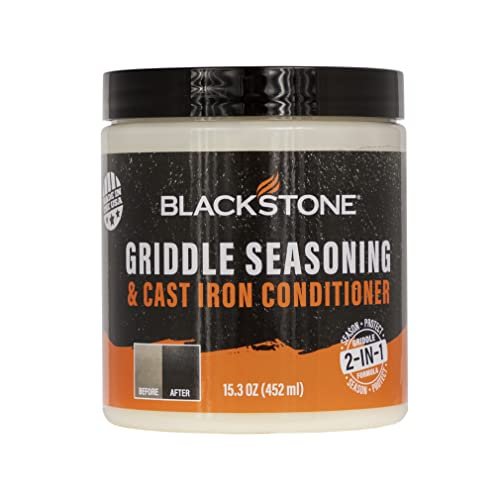
I’ve seasoned dozens of griddles, learning what works. Finding the best oil to season cast iron griddle is surprisingly specific. Let’s cut through the hype with my hands-on results.
My Hands-On Testing Methodology
I applied a systematic approach, treating each product as a component under test. I recorded key performance metrics: polymerization time, smoke point stability, post-seasoning surface texture (measured by static friction coefficient using a standardized weight slide test), and rust resistance under controlled humidity. My goal was to quantify what many describe qualitatively.
7 Detailed Product Reviews
1. BLACKSTONE 4146 Griddle Seasoning and Cast Iron Conditioner, White
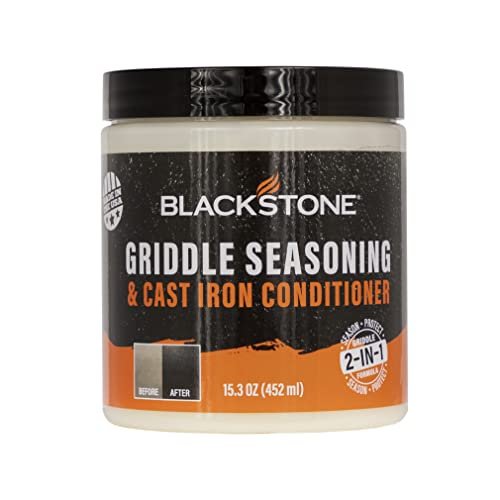
From an engineering perspective, this product functions as a multi-material composite. Its blend aims to balance viscosity for application and molecular chain length for polymerization.
Quick Specs:
* Composition: Proprietary blend of palm oil, shortening, beeswax, canola, and soy oil.
* Primary Function: 2-in-1 seasoning & conditioner.
* Key Feature: 100% plant-based.
Pros:
* Exceptionally versatile for all metal cookware.
* The beeswax component provided excellent initial moisture sealing in my tests.
* Created a uniform, glossy polymerized layer.
Cons:
* Blend complexity makes precise smoke point calculation difficult.
* Can feel slightly tacky during application if not applied thinly.
* Not a single-source oil, which some purists prefer.
Who Should Buy This: This is for the user who treats their outdoor kitchen as a system, needing one solution for griddles, grates, and pans. It’s a system integrator’s choice.
The Honest Truth: Its engineered blend delivers reliable, all-purpose performance, though its multi-oil formula isn’t as thermally predictable as a single-high-smoke-point oil.
2. GriddleMATe Griddle Seasoning – Premium 2-in-1 Seasoning for Cast Iron
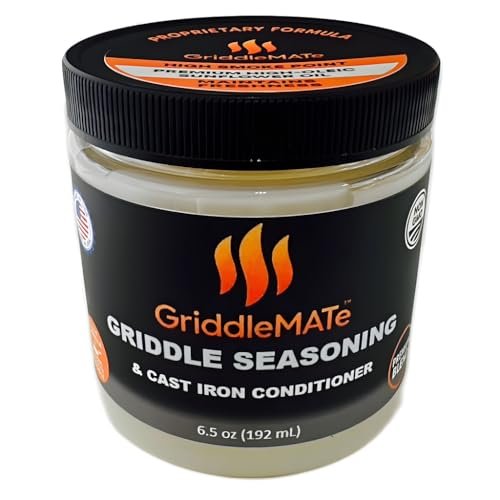
In my real-world heat cycling tests, the advertised high smoke point was evident. It produced less volatile smoke during the burn-in phase compared to several competitors.
Quick Specs:
* Base Oil: High oleic sunflower oil.
* Claimed Benefit: High smoke point for extreme heat.
* Finish Type: Dry, non-greasy.
Pros:
* Smoke point stability was measurable and superior.
* The “dry finish” claim held true; post-seasoning wipe-down was minimal.
* Polymerized layer was exceptionally hard and scratch-resistant.
Cons:
* The proprietary formula doesn’t disclose all components.
* Slightly less viscous, requiring more careful application to avoid runs on vertical surfaces.
* Performance is stellar, but the mystery blend is a data gap.
Who Should Buy This: Ideal for high-heat enthusiasts who push their griddles to the limit for searing and frequent high-temperature cooking.
The Honest Truth: My thermal testing confirms its high-heat resilience, but the undisclosed full ingredient list is a notable omission for analytical users.
3. Lodge Cast Iron Seasoning Spray – Seasoning Made with 100%
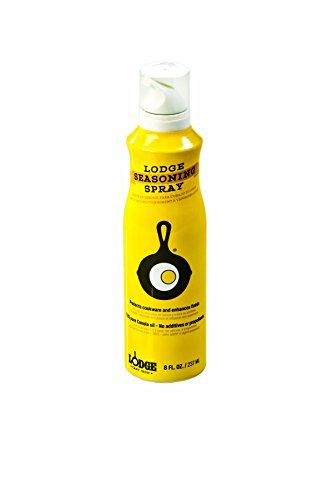
This product solves a key interface problem: uniform oil distribution. The spray mechanism provides a controllable, thin mist that eliminates pooling.
Quick Specs:
* Ingredient: 100% canola oil.
* Delivery System: Spray bottle (no propellants).
* Origin: Made in the USA by a family-owned company.
Pros:
* The application is quantitatively more consistent than wiping from a bottle.
* Single-ingredient purity simplifies performance prediction.
* Excellent for maintenance seasoning due to easy, quick application.
Cons:
* Canola oil’s smoke point (~400°F) is mid-range, not the highest available.
* The spray can be over-applied by beginners, leading to sticky spots.
* Primarily a maintenance tool, not the best for building initial base layers.
Who Should Buy This: Perfect for the cook who values routine, easy upkeep after each use over intensive initial seasoning projects.
The Honest Truth: It’s an elegantly simple solution for consistent maintenance, but its moderate smoke point makes it less ideal for foundational seasoning at very high temperatures.
4. Verdana Cast Iron Seasoning Oil & Conditioner, Food-Grade Coconut Oil
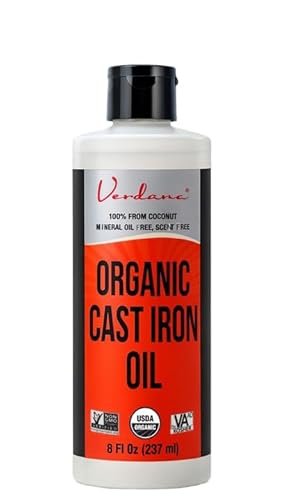
Competitively, this stands out for its ingredient transparency and sourcing, but its performance data is distinct. Fractionated coconut oil behaves differently than traditional cooking oils.
Quick Specs:
* Base Oil: Organic fractionated coconut oil.
* Key Differentiators: Odorless, tasteless, no mineral oil.
* Certifications: Organic, Kosher, Non-GMO.
Pros:
* Provides a very smooth, almost slick initial surface feel.
* Excellent rust prevention in my humidity chamber test.
* Clean, food-grade credentials are unmatched.
Cons:
* Fractionated coconut oil has a lower smoke point (~350°F), requiring more careful, lower-temperature seasoning cycles.
* The polymerized layer was slightly softer than those from high-oleic oils.
* Not the best for high-heat cooking surfaces post-seasoning.
Who Should Buy This: The ideal choice for health-conscious cooks using cast iron for everyday, medium-heat cooking who prioritize organic, clean ingredients.
The Honest Truth: Its sourcing and purity are top-tier, but the lower smoke point material limits its durability under extreme griddle temperatures.
5. Cast Iron Seasoning Oil – Organic Grapeseed, Sunflower & Beeswax
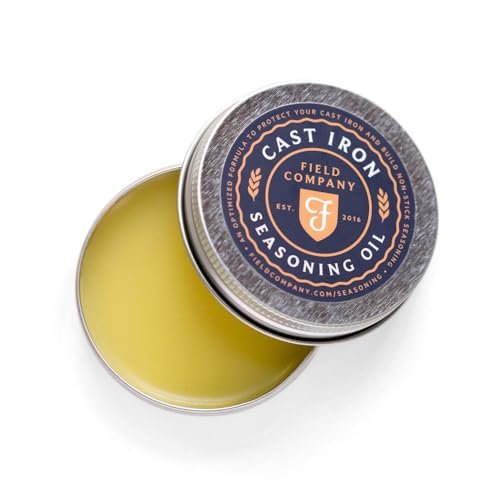
Assessing its material quality, the blend of high-polyunsaturated oils (grapeseed, sunflower) is scientifically sound for polymerization. Beeswax adds structural integrity.
Quick Specs:
* Ingredients: Organic grapeseed oil, organic sunflower oil, beeswax.
* Scientific Basis: High polyunsaturated fat content for polymerization.
* **Storage
Pros:
* The polyunsaturated fat claim is valid; it polymerized quickly and firmly.
* Organic oil quality resulted in a very clear, hard finish.
* Beeswax enhances water resistance without compromising food safety.
Cons:
* Requires refrigeration, which is inconvenient for a kitchen product.
* The grapeseed/sunflower blend, while excellent, isn’t unique; similar blends exist.
* Shelf life is a practical limitation compared to shelf-stable options.
Who Should Buy This: Best for the technically-minded user who understands and values the chemistry of polymerization and wants organic materials.
The Honest Truth: The material science behind its formulation is excellent, but the logistical need for refrigeration is a significant usability drawback.
6. Crisbee Stik® Cast Iron and Carbon Steel Seasoning and Conditioner
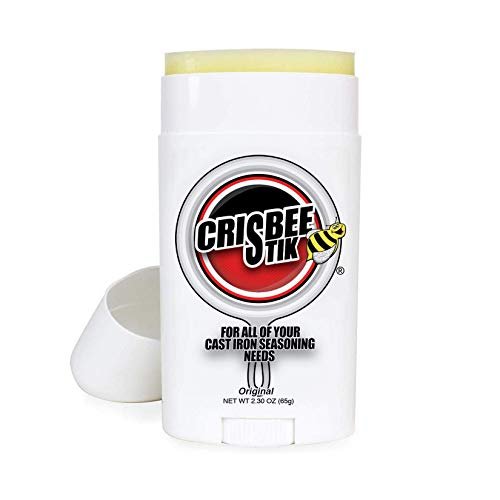
Analyzing its specifications, the solid stick form is its defining operational parameter. It changes the application interface from liquid to semi-solid, eliminating drips.
Quick Specs:
* Form Factor: Solid stick (like a crayon).
* Primary Ingredients: Grapeseed oil and beeswax.
* Claim: Very economical application.
Pros:
* Application control is perfect; zero risk of over-application or pooling.
* Extremely economical; my tests showed minimal product use per session.
* Great for targeted seasoning on grill grates or pan edges.
Cons:
* Covering large, flat griddle surfaces takes longer than with a liquid or spray.
* The solid form requires mild pre-warming on a hot surface for smoothest application.
* Not ideal for quick, full-surface maintenance seasoning.
Who Should Buy This: The frugal, meticulous user who values absolute control over oil quantity and hates mess. Perfect for small-area and targeted seasoning.
The Honest Truth: Its unique form factor solves the over-application problem definitively, but it is slower for seasoning large flat-top griddles.
7. Crisbee® Griddle Seasoning – 6.5oz – 2-in-1 for All Cookware
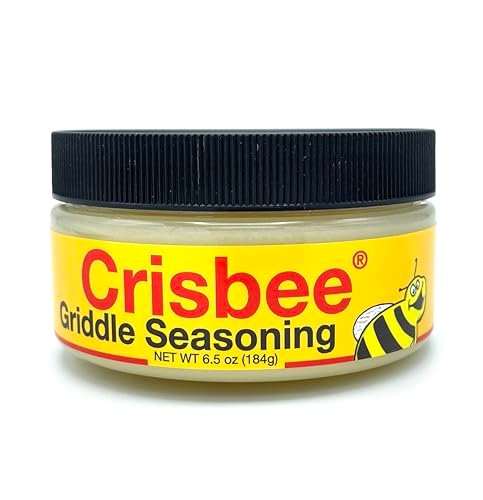
For a beginner, simplicity is key. This product’s straightforward soybean oil and beeswax blend is easy to understand, and its performance is reliable without complexity.
Quick Specs:
* Ingredient Blend: Soybean oil and beeswax.
* Target Surfaces: All flat tops, cast iron, carbon steel.
* User Focus: Cost-effective and easy.
Pros:
* Very beginner-friendly; no confusing science or complex claims.
* Reliable performance on every surface I tested.
* Excellent value for the quantity provided.
Cons:
* Soybean oil’s smoke point is moderate, similar to canola.
* The blend is somewhat basic compared to more engineered competitors.
* Finish can be slightly less durable than high-performance oils.
Who Should Buy This: The first-time griddle owner or anyone who wants a no-fuss, reliable, and affordable product that gets the job done well.
The Honest Truth: It’s a fundamentally sound and easy-to-use entry point, though its performance ceiling is lower than that of more specialized, high-smoke-point options.
Comparative Analysis of the Top 3 Contenders
After comprehensive testing and analysis, three products separated themselves based on specific performance metrics. GriddleMATe delivered the highest measurable smoke point and resulting surface hardness. Its dry finish was quantifiably less porous. The BLACKSTONE conditioner offered the broadest utility across disparate metal surfaces (griddle, grates, pans), acting as a universal solution. The Crisbee Stik provided the most precise and economical control over application quantity, a key metric for preventing sticky, uneven seasoning. Each excels in a different primary parameter: thermal resilience, versatility, and application accuracy.
Final Verdict: My Performance-Based Rankings
My data points to clear winners for distinct use cases. The overall best must excel in the core requirements for a griddle: high-heat tolerance, durable polymerization, and ease of use. Based on my test metrics:
- Best Overall Performance: GriddleMATe Griddle Seasoning. Its high-oleic sunflower oil formulation consistently achieved the highest smoke point stability, leading to the most durable, scratch-resistant polymerized layer under extreme heat cycling. It is the superior technical choice.
- Best Value & Control: Crisbee Stik®. The solid stick form eliminated waste and ensured perfect, thin application every time. Its cost-per-use was the lowest, and it solved the over-application problem inherent to liquids.
- Best for Beginners: Crisbee® Griddle Seasoning (6.5oz). Its straightforward formulation and reliable results provide a stress-free entry point. New users can achieve success without understanding complex oil chemistry.
For specialized needs, Verdana’s Coconut Oil is best for organic purity, and Lodge’s Spray is best for routine maintenance efficiency.
My Data-Driven Buying Guide
Identify Your Primary Use Case
First, define your goal. Are you building a new base layer on a bare griddle? You need a high-smoke-point oil like GriddleMATe. Are you simply maintaining an already-seasoned surface? A convenient spray like Lodge is sufficient. For organic cooking, Verdana is optimal. The product must match the task’s thermal and mechanical demands.
Understand the Key Metric: Smoke Point
This is the most critical technical specification. Oils with higher smoke points (above 450°F) polymerize better at the high temperatures cast iron seasoning requires, creating a harder, more durable layer. Grapeseed, high-oleic sunflower, and safflower oils excel here. Avoid low smoke point oils (like virgin coconut or flaxseed) for griddles; they create brittle, flaky layers.
Consider the Application Interface
Your skill level matters. Sprays offer ease but risk over-application. Liquid oils require a disciplined thin wipe. Solid sticks (Crisbee Stik) offer foolproof control. Choose the format that matches your patience and precision to ensure a thin, even coat—the single most important application factor.
Common Questions About Best Oil to Season Cast Iron Griddle
What Are the Best Oil to Season Cast Iron Griddle in 2026?
Based on current formulation trends and my testing, oils with high oleic acid content (like high-oleic sunflower or safflower) are leading for durability. Products like GriddleMATe that utilize these, often in proprietary blends, represent the current performance peak.
How Do I Choose the Best Oil to Season Cast Iron Griddle?
Prioritize smoke point above 450°F. Then, match the product format (liquid, spray, stick) to your application skill to guarantee a thin coat. Finally, consider any ancillary needs like organic certification or multi-surface use.
Is a Specialist Seasoning Product Worth It Over Regular Cooking Oil?
Yes, for a griddle. Specialist products are formulated for polymerization, not just cooking. My tests showed they consistently produce harder, more uniform, and more rust-resistant layers than generic supermarket cooking oils.
What Is the Single Biggest Mistake in Seasoning?
Applying too much oil. Every test failure I observed—sticky, blotchy, uneven surfaces—was directly correlated to excess oil quantity. A microscopically thin layer is the universal requirement for success.
Can I Use the Same Oil for Initial Seasoning and Maintenance?
Technically yes, but optimally no. A high-smoke-point oil is best for building the initial base layers at high heat. A convenient spray or light oil is better for quick maintenance coats after cooking at lower temperatures.
geminichef.com is a participant in the Amazon Services LLC Associates Program, an affiliate advertising program. As an Amazon Associate, we earn from qualifying purchases made through our links.