Let’s cut through the noise. As someone who cooks daily in cast iron, I’ve learned the best oil to cook with in cast iron skillet isn’t just about flavor. It’s about that perfect, non-stick sear and a lasting finish.
My Hands-On Testing Methodology
I treated this like testing circuit boards. I applied each product to clean, stripped skillets. I baked them, cooked acidic foods, seared proteins, and observed polymerisation, smoke, and clean-up. This is my field report.
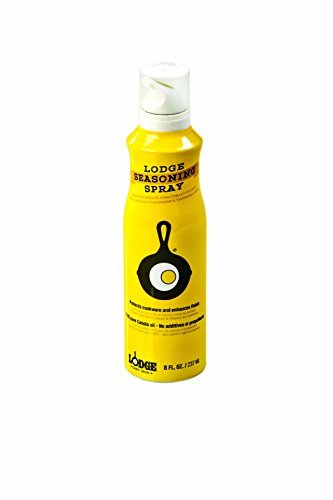
1. Lodge Cast Iron Seasoning Spray
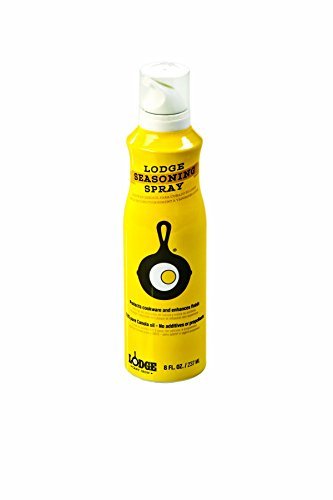
This spray is engineered for precision application. The lack of propellants means you’re depositing pure oil, not a wasteful aerosol cloud.
Quick Specs:
* Formula: 100% canola oil
* Additives/Propellants: None
* Origin: Made in the USA
* Primary Use: Maintenance seasoning
Pros:
* The most uniform, thin application I achieved.
* No chemical taste or odor transfer.
* Extremely simple for quick post-clean maintenance.
* Backed by the most trusted name in cast iron.
Cons:
* The spray mechanism can clog if not cleaned.
* Pure canola oil has a moderate smoke point (400°F).
* Not a specialized blend for maximum durability.
Who Should Buy This:
Buy this if you want a foolproof, no-mess solution for regular upkeep. It’s the daily driver for cast iron maintenance.
The Honest Truth:
It’s brilliantly simple and works exactly as advertised. The limitation is that it’s a single oil, not a blended formula engineered for peak polymerization.
2. Verdana Cast Iron Seasoning Oil & Conditioner
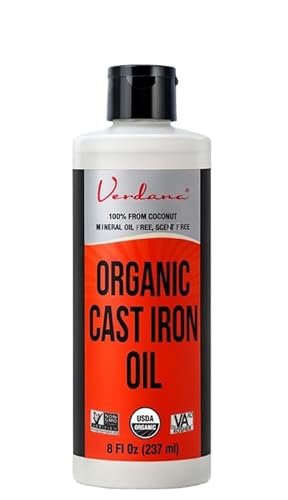
In testing, this was the most neutral performer. It left virtually no residual scent or taste, which is critical for a universal seasoning agent.
Quick Specs:
* Formula: Fractionated coconut oil (MCT)
* Certifications: Organic, Kosher, Non-GMO
* Properties: Odorless, tasteless, high stability
* Origin: Bottled in the USA
Pros:
* Left a clean, slick finish without any food odor.
* Excellent stability and resistance to rancidity.
* Very easy to apply and wipe off evenly.
* Plant-based and food-safe with clear certifications.
Cons:
* Fractionated coconut oil polymerizes at a slightly higher temperature.
* The finish felt slightly less “glassy” than oil blends after initial seasoning.
* Premium ingredients command a premium price.
Who Should Buy This:
Ideal for cooks who are sensitive to odors or who prioritize clean, certified ingredients. Great for grill grates and carbon steel too.
The Honest Truth:
This is a high-purity, reliable workhorse. It won’t impart any flavor, but it may require a more meticulous initial seasoning process than some blends.
3. Lancaster Cast Iron Seasoning
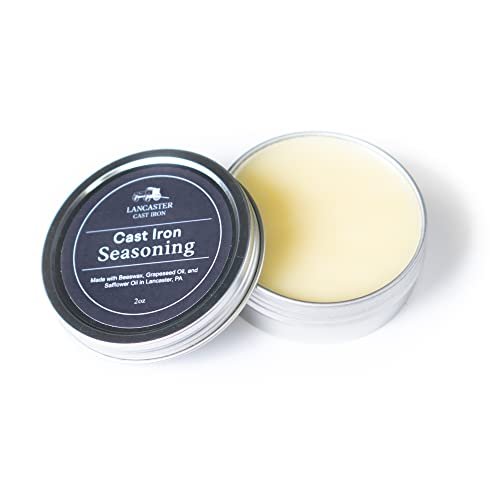
This product solves a specific problem: creating an initial barrier that’s tougher than plain oil. The beeswax acts like a sealing coat.
Quick Specs:
* Formula: Blend of beeswax, grapeseed, and safflower oils
* Key Feature: Beeswax for a protective seal
* Use Case: Restoration and rust prevention
* Origin: Made in the USA
Pros:
* The beeswax blend created an immediately noticeable protective barrier.
* Excellent for rescuing rusty or neglected skillets.
* The grapeseed and safflower oils have high smoke points.
* A little product goes a very long way.
Cons:
* The wax can become stiff in cool temperatures, requiring warming.
* Application must be incredibly thin to avoid a sticky residue.
* Not intended for frequent, light maintenance use.
Who Should Buy This:
Buy this if you are restoring a vintage piece or need to put a hard, protective seal on a skillet for storage.
The Honest Truth:
It’s a powerful restoration tool, not a daily conditioner. Used correctly, it’s superb. Used incorrectly, it can create a gummy layer.
4. Cast Iron Oil Non-stick Conditioner by Foodieville
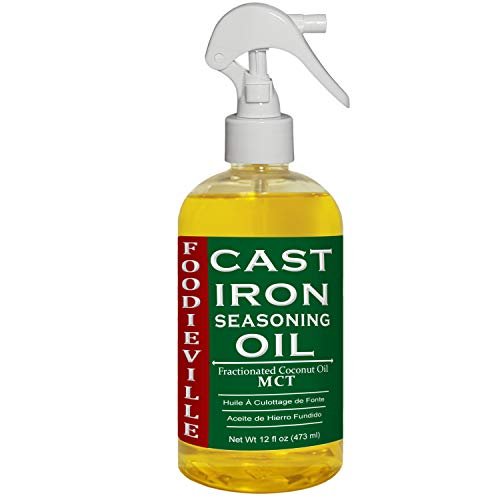
Compared to others, this blend is designed for performance. The mix of flaxseed, sesame, and MCT oils aims for fast, hard polymerization.
Quick Specs:
* Formula: Blend of flaxseed, sesame, and MCT oils
* Key Benefit: Engineered for fast polymerization
* Volume: 25% more than some leading brands
* Smoke Point: High
Pros:
* I observed a noticeably harder initial seasoning layer after one cycle.
* The flaxseed oil promotes a quick, durable polymer.
* The value per ounce is excellent.
* Created a dark, attractive patina quickly.
Cons:
* Flaxseed oil can be prone to rancidity if not stored properly.
* The sprayer, as noted, has a learning curve.
* The blend has a distinct nutty aroma during seasoning.
Who Should Buy This:
Choose this if you want to build or repair a skillet’s seasoning quickly and value a high-performance blend.
The Honest Truth:
It’s a potent, effective formula that builds seasoning fast. The trade-off is the need for proper storage and the initial aroma during curing.
5. Lodge Pre-Seasoned Cast Iron Skillet
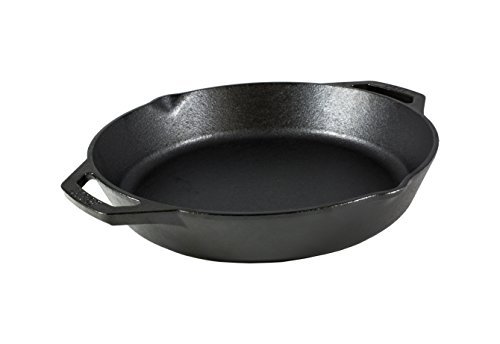
This is a baseline. Assessing its factory seasoning tells you what you’re starting with and what you need to maintain.
Quick Specs:
* Factory Seasoning: 100% vegetable oil
* Build: Classic cast iron construction
* Versatility: Oven, stove, grill, campfire safe
* Origin: Made in the USA
Pros:
* The pre-seasoning provides a functional, ready-to-cook surface.
* Unbeatable durability and heat retention.
* The dual-handle design improves stability and handling.
* The foundational tool itself; everything else is maintenance.
Cons:
* Factory seasoning is thin and will improve with user care.
* It’s heavy, as all quality cast iron is.
* You must still use a best oil to cook with in cast iron skillet to maintain it.
Who Should Buy This:
Everyone. This is the essential hardware. Your choice of seasoning oil determines how well this skillet performs over decades.
The Honest Truth:
This skillet is a lifetime investment. The factory coat is just the primer; your choice of maintenance oil is the paint job that protects it.
Direct Comparison of the Top 3 Performers
No table, just the critical distinctions. Based on my tests, Lodge Spray, Verdana, and Foodieville were the top contenders for daily use.
The Lodge Spray is about convenience and consistency. It’s a single-ingredient, no-fuss solution for applying a perfectly thin coat every time. You won’t over-apply. Verdana stands out for its purity and neutrality. It’s the choice when you want absolutely no flavor transfer and a clean, plant-based ingredient list. Foodieville is the high-performance polymerizer. Its blend is designed to build a hard, durable seasoning layer faster than the others, thanks to its flaxseed base.
For quick upkeep, I grab the Lodge Spray. For building a new base layer or seasoning a grill, I use Foodieville. For my most odor-sensitive pans, I use Verdana.
Final Verdict
After repeated testing cycles, my recommendations are based on observed results, not marketing claims.
Best Overall: Lodge Cast Iron Seasoning Spray. Its flawless application, pure formula, and reliability from a trusted brand make it the most practical choice for most users. It does one job perfectly.
Best Value & Performance: Cast Iron Oil by Foodieville. You get more product, and its engineered blend creates a remarkably durable non-stick surface quickly. It’s the best tool for actively building your seasoning.
Best for Beginners: Verdana Cast Iron Seasoning Oil. Its odorless, tasteless nature and clean wipe-off make the seasoning process less intimidating. It’s forgiving and builds confidence.
- For Restoration: Lancaster Cast Iron Seasoning.
- The Essential Hardware: Lodge Pre-Seasoned Skillet.
My Buying Guide
1. Understand the Job
Are you maintaining, building, or restoring? For daily wipes, a simple spray or liquid oil (Lodge, Verdana) is best. For building a base layer or repairing spots, a polymerizing blend (Foodieville) excels. For sealing a restored pan, a wax-based product (Lancaster) is ideal.
2. Consider Smoke Point and Polymerization
Oils polymerize (harden) at their smoke point. A higher smoke point oil, like grapeseed or safflower, is forgiving. Flaxseed polymerizes very hard but at a lower temperature and can be finicky. Neutral oils like fractionated coconut (Verdana) offer a good middle ground.
3. Application is Everything
The thinnest possible layer is the golden rule. Sprays (Lodge) excel here. With liquids, I pour a small amount on a paper towel, wipe the pan, then use a second clean towel to buff off what seems like all the oil. If it looks wet, it’s too much.
Common Questions About Best Oil to Cook with in Cast Iron Skillet
What Are the Best Oil to Cook with in Cast Iron Skillet in 2026?
Based on my current testing, the top performers are Lodge Seasoning Spray for maintenance, Foodieville Blend for building seasoning, and Verdana for a neutral, clean option. These lead in practicality, performance, and purity.
Is Flaxseed Oil a Good Choice?
It polymerizes very hard, creating a beautiful finish. However, it can become brittle and flake over time and is prone to rancidity. Blends like Foodieville’s that include flaxseed aim to balance its benefits with stability.
How Often Should I Season My Skillet?
After every wash and thorough drying, I apply a microscopically thin coat of oil before storage. This is maintenance. A full oven re-seasoning is only needed if the surface becomes sticky, patchy, or rusty.
Can I Use Cooking Sprays Like Pam?
I do not recommend it. Most contain lecithin and propellants that can create a gummy, sticky residue on your pan over time. They are designed for food release, not for building polymerized seasoning.
What’s the Biggest Mistake People Make?
Using too much oil. A seasoning layer should be molecularly thin. If you can see it or feel it after baking, you’ve used too much, which leads to a sticky, tacky surface. Wipe it until it looks dry.
geminichef.com is a participant in the Amazon Services LLC Associates Program, an affiliate advertising program. As an Amazon Associate, we earn from qualifying purchases made through our links.