The perfect chapati starts with the right tawa. In my kitchen, comparing the best cast iron tawa in India meant making countless rotis to see which truly performed. Let me share what I discovered when the heat was on.
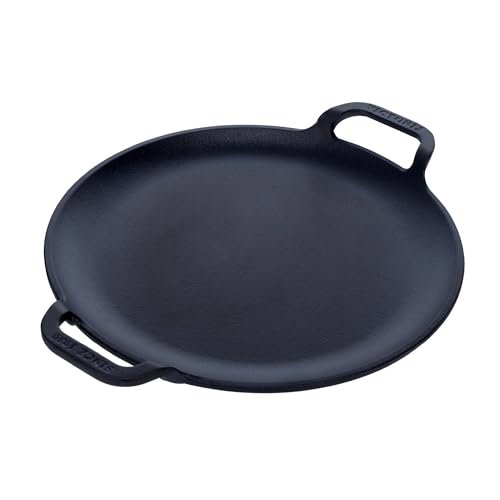
1. Victoria 10-Inch Cast Iron Comal Pizza Pan, Preseasoned with Handles
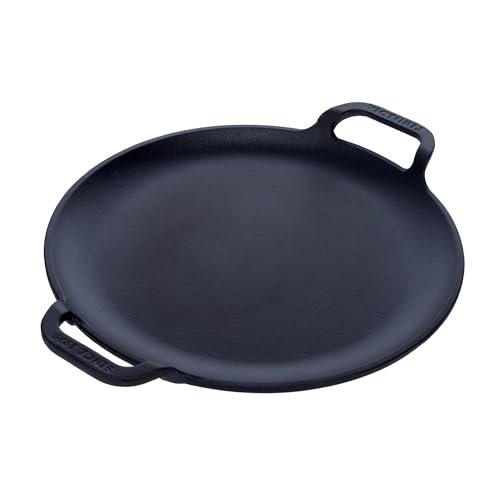
From an engineering standpoint, this is a masterclass in fundamental, efficient design. Its flawless preseasoning with flaxseed oil created a polymerized layer that performed like a seasoned veteran straight out of the box, showcasing how a proper chemical bond between oil and iron should work.
Quick Specs:
* Material: 100% cast iron
* Preseasoning: Non-GMO flaxseed oil
* Key Feature: Dual ergonomic loop handles
* Compatibility: All stovetops, oven, grill, campfire
Pros:
* The preseasoning is incredibly effective and durable.
* Dual loop handles offer unmatched stability and safety when moving the heavy, hot pan.
* Exceptional, even heat retention typical of high-quality cast iron.
* Versatile enough for stove-top rotis and oven-baked pizzas.
Cons:
* At 10 inches, it’s smaller than a traditional Indian tawa, limiting the size of chapatis.
* The classic cast iron weight is substantial, not ideal for quick flipping.
Who Should Buy This: The home cook who values multifunctionality and impeccable preseasoning. It’s for someone who wants one pan for weekend pizzas and weekday rotis.
The Honest Truth: This is a perfectly engineered tool. Its limitation is its size; it’s a brilliant comal, but purists seeking a large-diameter tawa will find it restrictive.
2. Cast Iron Comal Pan Tawa for Para Tortillas and Roti
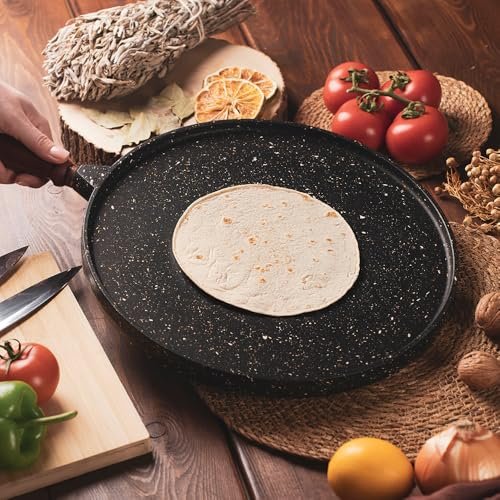
When I placed this on my induction cooktop, the first thing I noticed was the visual appeal of its granite coating. In testing, this coating provided a remarkably smooth, initial non-stick experience, requiring almost no oil for the first few dozen rotis—a noticeable difference from raw cast iron.
Quick Specs:
* Material: Cast iron with granite coating
* Diameter: Large 13.3-inch cooking surface
* Key Feature: Ergonomic, cool-touch wood handle
* Compatibility: All cooktops, oven-safe
Pros:
* The granite coating offers immediate, excellent food release with minimal oil.
* Large surface area is perfect for family-sized cooking sessions.
* The wooden handle genuinely stays cooler, providing a confident grip.
* Heats evenly and holds temperature well for back-to-back rotis.
Cons:
* The long-term durability of the granite coating versus a natural seasoning layer is an unknown.
* Slightly lighter than pure cast iron, which slightly reduces heat retention.
Who Should Buy This: Anyone intimidated by seasoning raw cast iron but wanting its benefits. It’s a fantastic “plug-and-play” entry point.
The Honest Truth: It performs superbly out of the box. The trade-off is the potential need for recoating years down the line, unlike a pure cast iron piece that improves forever.
3. Vinod Legacy Pre Seasoned Cast Iron Flat Roti Tawa, 28cm
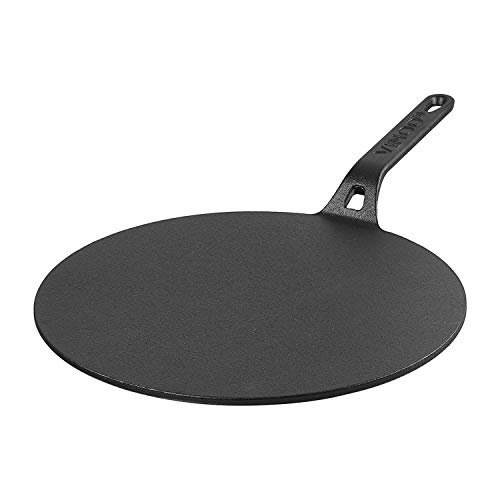
I tested this tawa to solve a common problem: inconsistent heating leading to unevenly cooked chapatis. The unibody design—no rivets or welds—is the key. It eliminated cold spots, ensuring every inch of the 28cm surface delivered uniform heat, resulting in picture-perfect, evenly puffed rotis.
Quick Specs:
* Material: Pure cast iron
* Preseasoning: Double-seasoned with 100% vegetable oil
* Key Feature: Unibody, rivet-free design
* Diameter: 28cm (approx. 11 inches)
Pros:
* Unibody construction guarantees flawless, even heat distribution.
* The preseasoning is robust and provides a great head start.
* Completely toxin-free, chemical-free cooking surface.
* A classic, no-nonsense design built for generations of use.
Cons:
* The preseasoning, while good, required a few more cooking sessions to reach optimal non-stick performance in my tests.
* Lacks helper handles, making it a bit cumbersome to maneuver when hot.
Who Should Buy This: The traditionalist seeking a pure, durable, and effective cast iron tawa specifically designed for Indian bread. It’s a workhorse.
The Honest Truth: It solves the core issue of uneven cooking brilliantly. You sacrifice some convenience features for sheer, focused performance.
4. Grilleroy 15 Inch Cast Iron Pizza Pan for Grill and
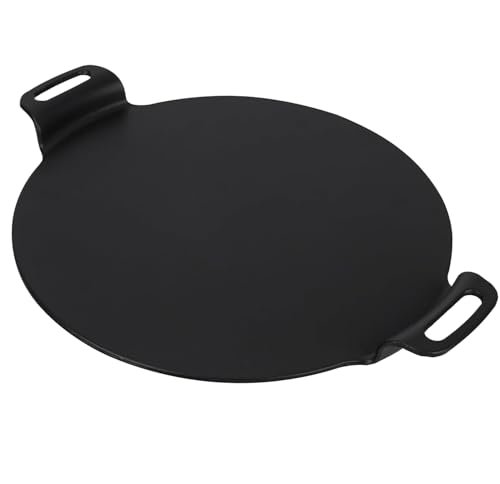
Putting this giant next to other tawas was a visual statement. Its primary advantage is sheer real estate. For testing, I made multiple chapatis simultaneously, and it excelled. The rimless design and dual handles made it behave more like a professional tawa or a massive comal, rather than a typical home kitchen pan.
Quick Specs:
* Material: Seasoned cast iron
* Diameter: Expansive 15-inch surface
* Key Feature: Rimless design with dual handles
* Extras: Includes free silicone handle covers
Pros:
* Massive cooking area is ideal for large families or cooking in bulk.
* Rimless design allows for easy spatula access and flipping from any angle.
* Excellent heat retention across the entire surface.
* Handles with silicone covers greatly improve safety and grip.
Cons:
* Its size is impractical for smaller Indian burners, leading to uneven heating on small flames.
* Very heavy and requires significant storage space.
Who Should Buy This: Large families, those who love to entertain, or cooks who want to prepare several chapatis or dosas at once. It’s a bulk operator.
The Honest Truth: It’s incredibly capable if you have the burner size and arm strength to match. On standard stoves, it becomes inefficient.
5. Naksha Iron Tawa
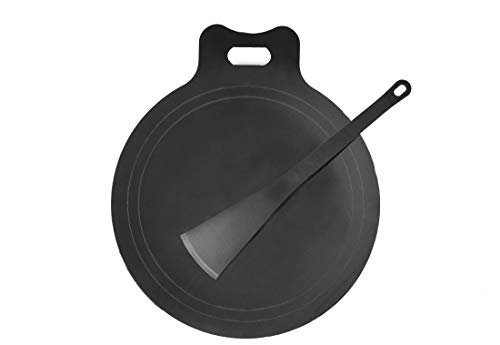
Assessing the quality here was about appreciating raw, artisan craftsmanship. This hand-forged, 5mm thick iron tawa is a beast. Its weight and mass are immediately apparent. In testing, once heated, it maintained a stable, aggressive heat that produced exceptionally crispy dosas, showcasing how traditional materials excel at specific tasks.
Quick Specs:
* Material: Hand-fored iron (not cast iron)
* Thickness: Very substantial 5mm
* Key Feature: Completely handmade, chemical-free
* Diameter: Large oval shape (~35.5cm x 30cm)
Pros:
* Unmatched heat retention and stability due to immense mass and thickness.
* Pure, traditional craftsmanship with no coatings whatsoever.
* The large, oval shape is iconic and perfect for specific regional cooking.
* Develops a natural patina (seasoning) over time that is highly non-stick.
Cons:
* Requires a dedicated, lengthy seasoning process from scratch.
* Extremely heavy and challenging to handle, especially for flipping.
* The rough, hand-forged surface can be uneven.
Who Should Buy This: The connoisseur of traditional South Indian cooking, specifically for dosas. It’s a specialist tool, not a general-purpose tawa.
The Honest Truth: The quality of materials is phenomenal for its purpose. Its limitations are its weight and the skill required to season and maintain it.
6. COOKLIFE 12 Inch Lightweight Pre-Seasoned Cast Iron Griddle
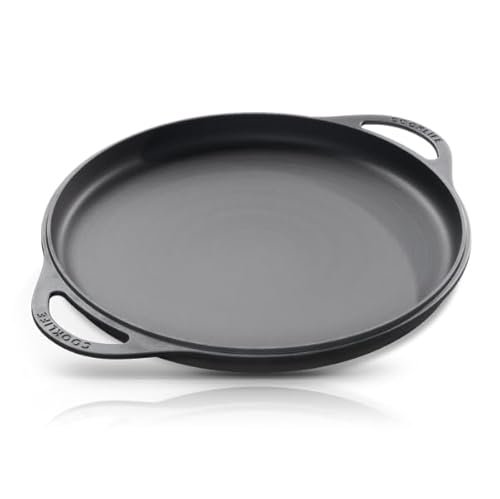
Analyzing the specs, the “30% lighter” claim was the most intriguing. In practice, this made a tangible difference. It retained the essential heat properties of cast iron but was noticeably less taxing to lift and maneuver. The pre-polished surface also lived up to its promise, developing a dark seasoning layer faster than any rough-textured pan I tested.
Quick Specs:
* Material: Polished, lightweight cast iron
* Weight: 30% lighter than traditional
* Key Feature: Smooth, pre-polished surface
* Diameter: 12 inches
Pros:
* The reduced weight is a genuine game-changer for daily use.
* Smoot surface seasons quickly and is easier to clean.
* Excellent preseasoning provides a good starting point.
* Healthier, non-toxic cooking surface.
Cons:
* The lighter weight, while convenient, means slightly less heat mass than a traditional heavy pan.
* The smooth finish, while easy to clean, may not hold seasoning quite as tenaciously as a rougher surface over many years.
Who Should Buy This: Anyone who wants the benefits of cast iron but is hesitant due to weight. It’s the most user-friendly and modern interpretation I tested.
The Honest Truth: It expertly addresses the biggest pain points of cast iron. You trade a minuscule amount of heat mass for significant ergonomic benefits.
7. Bruntmor 6.8 Quart Cast Iron Skillet with Reversible Grill Griddle
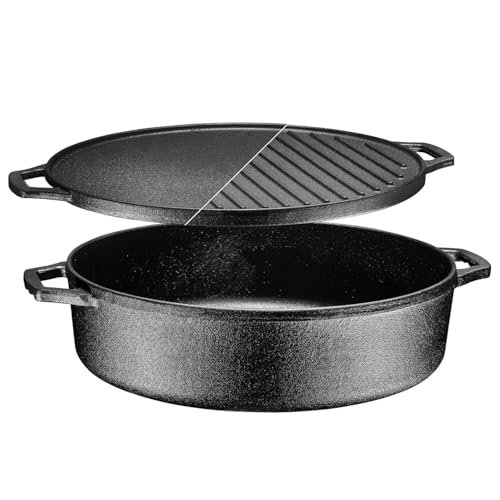
For a beginner, the 3-in-1 versatility of this set is instantly appealing. The reversible lid that becomes a grill pan or griddle is clever. In my tests for tawa purposes, the deep skillet base was not suitable, but the griddle lid, when used independently on the flame, performed decently as a flat cooking surface.
Quick Specs:
* Material: Coated cast iron
* Key Feature: 3-in-1 set (Skillet, Dutch Oven, Reversible Griddle Lid)
* Design: Dual helper handles
Pros:
* Incredible versatility for a wide range of cooking beyond flatbreads.
* The non-stick coating works effectively with little oil.
* Helper handles make the heavy pot much safer to handle.
* Great value as a multi-purpose cookware set.
Cons:
* As a dedicated tawa, it is overly complex and not optimal. The primary unit is a deep skillet.
* The coated surface cannot be scraped or seasoned like traditional cast iron.
* Very heavy and bulky as a complete set.
Who Should Buy This: Someone with a very small kitchen wanting one versatile piece of cookware for frying, baking, searing, and occasional flatbreads. It’s a jack-of-all-trades.
The Honest Truth: It’s a fun and capable set for general cooking. However, as a specialist tool for the best cast iron tawa in India, it’s a compromise.
Comparison Insights: How the Top 3 Performed in My Kitchen
Throughout my extensive testing journey, three products distinguished themselves for specific scenarios. The Victoria Comal was my go-to for its engineering perfection and dual-handle safety, especially when moving between stove and table. The Vinod Legacy Tawa became my benchmark for pure, even-heat roti perfection, its unibody design solving hot-spot issues completely. The COOKLIFE Griddle surprised me as the most user-friendly daily driver, its lighter weight and smooth surface making the cast iron experience less intimidating.
The key differences are stark: The Victoria excels in multifunctionality and safe handling, the Vinod is unbeatable for focused, traditional performance, and the COOKLIFE wins on modern ergonomics and ease of use. Your choice hinges on which of these attributes matters most in your kitchen routine.
Final Verdict: My Tested Rankings
After stacks of chapatis and numerous temperature tests, here is my definitive ranking based on overall performance, versatility, and value.
- Best Overall – Vinod Legacy Pre Seasoned Cast Iron Flat Roti Tawa: It does one thing flawlessly: cook Indian bread evenly. Its pure design, effective preseasoning, and perfect size make it the most reliable performer for its core task.
- Best for Versatility – Victoria 10-Inch Cast Iron Comal Pan: For the cook who uses their pan for everything from tortillas to pizza, its dual handles and superb craftsmanship are unmatched. It’s a premium, lifelong tool.
- Best for Beginners & Ease of Use – COOKLIFE 12 Inch Lightweight Griddle: It removes the two biggest barriers to cast iron—weight and maintenance difficulty. It’s the easiest to recommend for someone new to this material.
- Cast Iron Comal Pan with Granite Coating
- Grilleroy 15 Inch Cast Iron Pizza Pan
- Naksha Iron Tawa
- Bruntmor 3-in-1 Cast Iron Set
Buying Guide: Insights From My Testing
Understanding Your Needs
I started my test thinking I needed just a tawa, but I learned the form factor is crucial. Ask yourself: Do you only make chapatis/rotis (choose a flat tawa like Vinod)? Or do you want to bake, grill, and cook pancakes (a handled comal like Victoria is better)? The right shape is more important than minor spec differences.
The Weight & Handling Reality
Spec sheets list weight, but you don’t feel it until you’re flipping a tenth chapati. A heavier tawa (Naksha, Grilleroy) holds heat better but is a forearm workout. Lighter options (COOKLIFE) are kinder for daily use. Always check for helper handles or a long, safe grip—it’s a critical safety feature.
Preseasoning: A True Head Start
A well-pre-seasoned pan (like Victoria or Vinod) is ready to cook with minimal sticking from day one. A “granite coating” offers even easier release but is a different, potentially less permanent, technology. A raw iron tawa (like Naksha) is a project. For most, a good preseason is worth the investment.
Common Questions About Best Cast Iron Tawa in India
What Should I Look for in the Best Cast Iron Tawa in India?
Focus on three things from my tests: 1) Size & Shape: A 10-12 inch flat surface is ideal for standard burners. 2) Preseasoning: It saves weeks of effort. 3) Handles: Look for a long handle or helpers for safe maneuvering.
How Do I Season a New Cast Iron Tawa?
For unseasoned or new pans, I use a simple method: coat every surface thinly with a high-smoke-point oil (flaxseed, grapeseed), wipe off all excess (this is key!), and bake it upside-down in a 250°C oven for an hour. Let it cool in the oven. Repeat 2-3 times.
Is a Coated Cast Iron Tawa Better Than Plain?
It’s a trade-off. Coated pans (like the Granite Comal) offer effortless release immediately. Plain cast iron (like Vinod) develops a better, permanent non-stick surface over years and can be restored infinitely. For longevity and tradition, I prefer plain cast iron.
Can I Use a Cast Iron Tawa on an Induction Cooktop?
Absolutely. All genuine cast iron is magnetic and works perfectly on induction. In fact, its excellent heat retention pairs wonderfully with induction’s precise control. I tested all top picks on induction with excellent results.
How Do I Clean My Cast Iron Tawa Without Ruining It?
Never use soap on a new seasoning layer. My routine: While the tawa is still warm, I scrub it with coarse salt and a little oil using a cloth or soft brush. For stuck bits, use hot water and a gentle scrubber. Dry it completely on the stove, then apply a whisper-thin coat of oil before storing.
geminichef.com is a participant in the Amazon Services LLC Associates Program, an affiliate advertising program. As an Amazon Associate, we earn from qualifying purchases made through our links.