
Craving a hearty, satisfying meal? Our guide to Chef Gordon Ramsay’s meatloaf recipe will help you prepare a truly extraordinary dish. Discover the techniques for creating a moist, flavorful meatloaf, complete with his signature glaze. Elevate your dinner table with a recipe that’s surprisingly simple yet incredibly delicious.
Hey there, fellow food lovers! Are you ready to dive into the world of truly delicious home cooking, guided by one of the culinary greats? Today, we’re going to tackle a classic comfort food that, in the right hands, can be elevated from simple supper to a show-stopping centerpiece: the humble meatloaf. But not just any meatloaf – we’re talking about the Chef Gordon Ramsay meatloaf recipe. Yes, that’s right! The fiery, passionate chef known for his Michelin stars and demanding kitchen standards also knows a thing or two about making a remarkably easy and incredibly delicious meatloaf that will have everyone asking for seconds.
You might think that anything associated with Gordon Ramsay would be complex, requiring specialized skills and exotic ingredients. But when it comes to classic comfort food like meatloaf, his philosophy often boils down to this: start with excellent ingredients, respect those ingredients, and use simple, effective techniques. The result? A dish that’s bursting with flavor, perfectly moist, and deeply satisfying. This isn’t just a recipe; it’s a journey into making a meatloaf that stands out from all the others you’ve tried.
Forget everything you thought you knew about dry, bland meatloaf. Chef Ramsay’s approach ensures a tender texture, rich savory notes, and that signature tangy glaze that truly seals the deal. So, grab your apron, sharpen your knives (not literally, unless you need to!), and let’s get ready to create a meatloaf that would make even Gordon Ramsay himself crack a smile.
Key Takeaways
- Quality Ingredients are Paramount: Gordon Ramsay emphasizes using fresh, high-quality ingredients, especially for the ground meat blend, to achieve superior flavor and texture.
- Moisture is Key: Incorporating breadcrumbs soaked in milk or cream, along with finely diced vegetables, is crucial for preventing a dry, crumbly meatloaf.
- Gentle Mixing Technique: Overworking the meat mixture can lead to a tough meatloaf. Mix just enough to combine the ingredients gently.
- The Signature Glaze Matters: A flavorful glaze, often a tangy and sweet combination, adds a beautiful finish and a burst of complementary flavor to the meatloaf.
- Proper Baking and Resting: Baking at the correct temperature until an internal temperature of 160°F (71°C) is reached, followed by a crucial resting period, ensures even cooking and juicy results.
- Aromatics for Depth: Finely minced onions, garlic, and fresh herbs are essential for building layers of savory flavor within the meatloaf.
Quick Answers to Common Questions
What kind of ground meat does Gordon Ramsay typically use for meatloaf?
Chef Ramsay often recommends using a ground beef blend with a good fat content, like 80/20 ground chuck, for maximum flavor and moisture. Sometimes, he might suggest a mix of beef, pork, or veal for added complexity.
How do I prevent my meatloaf from being dry?
To prevent dry meatloaf, ensure you’re using ground meat with adequate fat content, incorporating binders like breadcrumbs soaked in milk or cream, and avoiding overmixing the meat mixture.
What makes Gordon Ramsay’s meatloaf glaze special?
Ramsay’s glazes are typically a balanced mix of sweet and tangy, often combining ketchup with brown sugar or maple syrup, and acidity from apple cider vinegar or Worcestershire sauce, creating a rich, flavorful crust.
Should I sauté the onions and garlic before adding them to the meatloaf mix?
Yes, it’s highly recommended to gently sauté minced onions and garlic until soft and translucent before adding them to the meat mixture. This softens them and mellows their flavor, preventing a raw taste in the cooked meatloaf.
How long should I let the meatloaf rest after baking?
You should let the meatloaf rest, loosely covered with foil, for at least 10-15 minutes after baking. This allows the juices to redistribute, ensuring a moister and more tender final product.
📑 Table of Contents
Unpacking Ramsay’s Meatloaf Philosophy & Key Ingredients
At the heart of any great dish from Chef Ramsay is a deep respect for ingredients. For his meatloaf, this means starting with the best possible foundation: the meat itself. He often stresses that a good meatloaf isn’t about hiding poor-quality meat; it’s about showcasing excellent flavor. Let’s break down what makes his ingredient list so effective.
The Perfect Meat Blend for the Chef Gordon Ramsay Meatloaf Recipe
- Ground Beef: This is your star player. Don’t just grab any lean ground beef. Ramsay would recommend a blend that has a good fat content, usually 80/20 (80% lean, 20% fat). The fat is crucial for moisture and flavor. You could even consider a mix of ground chuck and ground sirloin for a balance of richness and beefy taste.
- Optional Additions: Sometimes, a blend of meats can add complexity. Think about adding a small amount of ground pork or even ground veal for an extra layer of flavor and tenderness. This isn’t strictly necessary for a delicious meatloaf, but it’s a pro tip if you want to experiment.
Binding Agents and Moisture Boosters
One of the biggest complaints about homemade meatloaf is that it can be dry. Chef Ramsay tackles this head-on with clever additions:
- Breadcrumbs and Milk/Cream: This is a classic trick, and for good reason. Soaking fresh breadcrumbs (panko or homemade are excellent) in milk or cream before adding them to the meat mixture creates a tender, moist texture. The breadcrumbs absorb the liquid, then release it slowly during cooking, keeping the meatloaf juicy.
- Eggs: Eggs act as a binder, holding all the ingredients together so your meatloaf doesn’t crumble. They also add a touch of richness.
Aromatics for Depth of Flavor
Flavor, flavor, flavor! This is where the ordinary becomes extraordinary. Ramsay knows that a good meatloaf needs more than just meat and salt.
- Onions and Garlic: Finely minced onions and garlic are non-negotiable. Sautéing them gently before adding them to the mixture softens them and brings out their sweetness, ensuring no harsh raw onion bite in your final dish.
- Fresh Herbs: Parsley, thyme, and oregano are fantastic choices. Fresh herbs provide a vibrant, aromatic lift that dried herbs simply can’t match. Chop them finely so they distribute evenly throughout the meatloaf.
- Seasonings: Salt, black pepper, and perhaps a pinch of paprika or a dash of Worcestershire sauce are standard. Worcestershire adds a wonderful umami depth that complements the beef perfectly.
Crafting the Perfect Meatloaf Mix: Texture is Everything
Now that we’ve gathered our top-notch ingredients, it’s time to get our hands dirty – in the best possible way! The mixing technique is critical to achieving that tender, never-tough consistency that sets a great meatloaf apart.
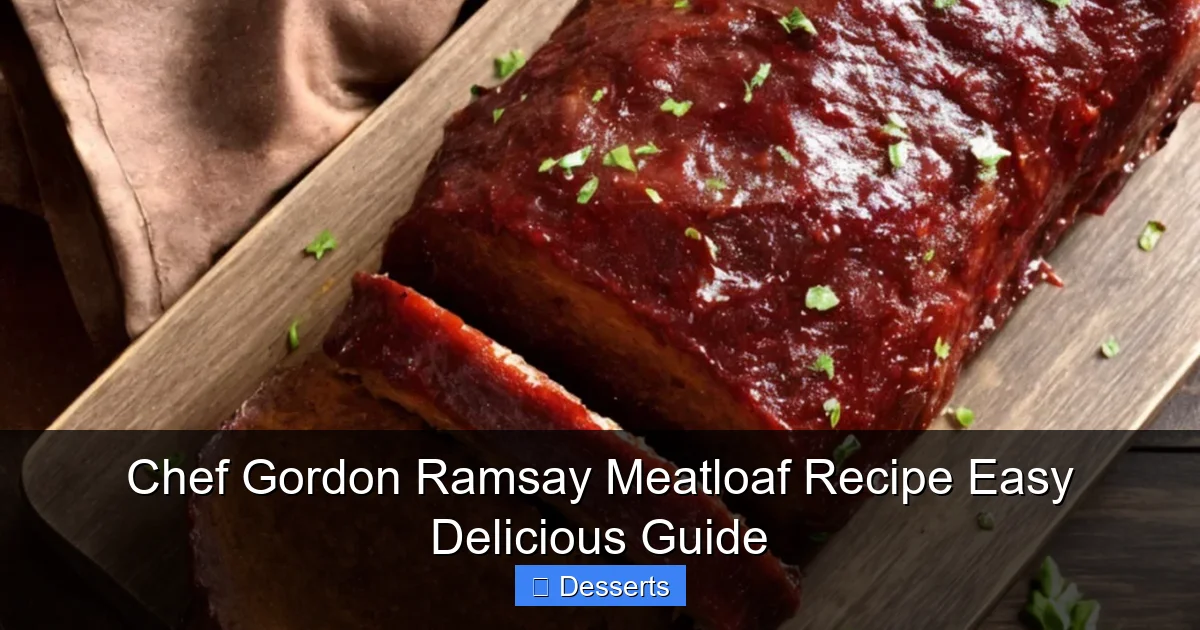
Visual guide about Chef Gordon Ramsay Meatloaf Recipe Easy Delicious Guide
Image source: cheframsayrecipes.com
Prepping Your Aromatics and Binders
First things first, let’s get those foundational flavors ready:
- Sauté the Aromatics: Finely mince your onion and garlic. In a small pan, with a touch of olive oil or butter, gently sauté them over medium-low heat until they are soft and translucent, about 5-7 minutes. Let them cool completely before adding them to the meat. This step is vital; hot aromatics can start to cook the meat prematurely.
- Soak the Breadcrumbs: In a separate bowl, combine your fresh breadcrumbs with milk or cream. Let them soak for about 5-10 minutes until they soften and absorb most of the liquid. This creates a paste-like consistency.
Mixing the Meatloaf: The Gentle Touch
This is where many home cooks go wrong. The key is to mix *just enough* to combine the ingredients, but not so much that you overwork the meat. Overworking develops the protein strands, leading to a tough, dense meatloaf.
- In a large bowl, combine the ground beef (and any other ground meats you’re using).
- Add the cooled sautéed onions and garlic, the soaked breadcrumbs, eggs, finely chopped fresh herbs, Worcestershire sauce, salt, and freshly ground black pepper.
- Now, here’s the crucial part: using your hands, gently mix all the ingredients. Don’t knead it like dough! Think of it more as folding and lightly combining. Your goal is to distribute everything evenly without compacting the meat. Mix until just combined, which should take only a minute or two.
Shaping Your Meatloaf
Once mixed, it’s time to shape your masterpiece. You have a couple of options:
- Loaf Pan Method: If you prefer a more uniform shape and less mess, lightly grease a loaf pan. Gently press the meat mixture into the pan, ensuring it’s evenly distributed but not packed too tightly.
- Free-Form Method: For a more rustic look and slightly crispier edges, shape the mixture into a loaf on a baking sheet lined with parchment paper or foil. This allows the heat to circulate more evenly around the meatloaf. Aim for a uniform thickness to ensure even cooking.
Whichever method you choose, make sure the top is relatively smooth so your glaze can adhere beautifully.
The Signature Glaze: Elevating Every Bite
What truly sets a Chef Gordon Ramsay meatloaf recipe apart is often his attention to finishing touches. And for meatloaf, that means a fantastic glaze. This isn’t just for appearance; it adds another layer of tangy, sweet, and savory flavor that perfectly complements the rich meat.
Crafting Your Delicious Glaze
While Ramsay might have variations, a classic meatloaf glaze often includes:
- Ketchup: The base for most glazes, providing sweetness and tomato tang.
- Brown Sugar (or Maple Syrup): Adds a deep, caramelized sweetness.
- Apple Cider Vinegar (or Red Wine Vinegar): Crucial for balancing the sweetness with acidity, creating that irresistible tangy kick.
- Worcestershire Sauce: For an extra layer of umami and savory depth.
- Mustard (Dijon or Yellow): A touch of mustard adds a subtle spice and complexity.
Mixing and Applying the Glaze
- In a small bowl, whisk together all the glaze ingredients until well combined and smooth. Taste and adjust to your preference – more vinegar for tang, more sugar for sweetness.
- Initial Glaze: After your meatloaf has baked for about 30-40 minutes (this allows it to set slightly), take it out of the oven. Spoon or brush about half of your glaze generously over the top and sides of the meatloaf. This initial application will bake into a beautiful, flavorful crust.
- Second Glaze (Optional but Recommended): For an even richer, more caramelized finish, you can apply the remaining glaze about 15-20 minutes before the meatloaf is fully cooked. This builds up layers of flavor and a gorgeous sheen.
Don’t be shy with the glaze! It’s a key component of the Chef Gordon Ramsay meatloaf recipe and truly makes it shine.
Baking Your Meatloaf to Golden Perfection
We’ve meticulously prepared our meatloaf, and now it’s time for the oven to work its magic. Achieving the perfect doneness is essential for a juicy, safe-to-eat meatloaf.
Preheating and Placement
- Oven Temperature: Preheat your oven to a moderate temperature, typically 350°F (175°C). This allows the meatloaf to cook through evenly without drying out the exterior too quickly.
- Rack Position: Place your meatloaf on a baking sheet (if free-form) or in its loaf pan on the middle rack of the oven. This ensures even heat circulation around the dish.
Baking Time and Internal Temperature
The total baking time will depend on the thickness and size of your meatloaf, but generally:
- For a 2-pound meatloaf, expect it to take anywhere from 1 hour to 1 hour and 15 minutes.
- The Golden Rule: Always rely on an internal temperature reading, not just time. The meatloaf is done when an instant-read meat thermometer inserted into the thickest part (without touching the pan) registers 160°F (71°C). This is the safe internal temperature for ground meat.
Remember to apply your glaze partway through the cooking process, as described in the previous section. Keep an eye on the glaze towards the end; if it’s browning too quickly, you can loosely tent the meatloaf with foil.
The Crucial Resting Period
Just like a good steak, meatloaf benefits immensely from resting after it comes out of the oven. This step is non-negotiable for a moist and tender result.
- Why Rest? As meat cooks, its juices are forced to the center. If you slice into it immediately, those juices will gush out, leaving you with a drier meatloaf. Resting allows the juices to redistribute throughout the meat, resulting in a much juicier and more flavorful slice.
- How Long? Once you remove the meatloaf from the oven, cover it loosely with foil and let it rest for at least 10-15 minutes. Resist the urge to cut into it sooner!
This resting period allows the internal temperature to rise a few more degrees (carryover cooking) and ensures every slice is as succulent as possible. This simple step truly embodies the Chef Gordon Ramsay meatloaf recipe attention to detail.
Serving, Enjoying, and Ramsay’s Pro Tips
Your incredible meatloaf is finally ready! Now comes the best part: presenting it beautifully and pairing it with sides that truly complement its rich flavors. Chef Ramsay, even with comfort food, knows the importance of presentation and thoughtful pairings.
Slicing and Presentation
After resting, carefully transfer the meatloaf from the pan to a cutting board. Using a sharp knife, slice it into generous portions. Because of the excellent moisture content, you should get clean, beautiful slices that hold their shape.
Serve each slice with a spoonful of any remaining glaze, or a simple gravy made from the pan drippings (if you collected them and deglazed the pan). A sprinkle of fresh parsley or chives adds a pop of color and freshness.
Perfect Pairings for Your Meatloaf
Meatloaf is a classic comfort food, and it pairs wonderfully with equally comforting sides. Think about textures and flavors that complement the richness of the meatloaf.
- Creamy Mashed Potatoes: This is a quintessential pairing. The fluffy, buttery potatoes are perfect for soaking up any extra glaze or meat juices.
- Roasted Vegetables: Carrots, green beans, or asparagus roasted with a little olive oil, salt, and pepper add a touch of freshness and a slight crispness.
- Steamed Green Beans or Broccoli: A simple, healthy option that provides a nice contrast.
- A Simple Green Salad: A light, tangy vinaigrette on mixed greens can cut through the richness of the meatloaf beautifully.
Chef Ramsay’s Pro Tips for Next-Level Meatloaf
- Don’t Be Afraid of Seasoning: Ramsay always emphasizes bold, balanced seasoning. Taste your meat mixture (a tiny, cooked bit, of course!) before baking to ensure it’s seasoned to perfection.
- Experiment with Herbs: While parsley and thyme are great, don’t be afraid to try rosemary or sage for a different aromatic profile.
- Leftovers Are Gold: Meatloaf sandwiches are legendary! Slice cold meatloaf for sandwiches with a little extra glaze, or reheat gently for another meal.
- Make it Your Own: While following a recipe is a great start, Ramsay encourages cooks to understand the *why* behind the steps, and then to adapt. Want a bit of spice? Add a pinch of red pepper flakes to your mix.
Making a truly exceptional meatloaf isn’t about complexity; it’s about thoughtful execution and using quality ingredients. By following these steps, you’ve not just made a meal; you’ve created a comforting, flavorful experience that truly embodies the spirit of a well-made Chef Gordon Ramsay meatloaf recipe. So go ahead, enjoy every single bite, and revel in the delicious success!
Conclusion
There you have it – the comprehensive guide to crafting a spectacular meatloaf, inspired by the culinary genius of Chef Gordon Ramsay. We’ve walked through every step, from selecting the finest ingredients and mastering the gentle art of mixing, to creating that iconic tangy glaze and baking your meatloaf to juicy perfection. It’s a recipe that proves that even the most straightforward dishes can be transformed into something truly extraordinary with a little attention to detail and a passion for flavor.
So, the next time you’re looking for a comforting meal that’s both easy to make and incredibly satisfying, remember this guide. Embrace the philosophy of quality ingredients and precise techniques, and you’ll consistently create a meatloaf that not only tastes amazing but also reflects the care and effort you put into it. Enjoy your delicious journey with the Chef Gordon Ramsay meatloaf recipe – it’s bound to become a new family favorite!
🎥 Related Video: Can A MasterChef Contestant Turn a Burn by Gordon into a Gourmet Meatloaf? | Ramsay Redemption
📺 Gordon Ramsay
It’s Ramsay Redemption Time and Monti Carlo is turning around what’s either an audition for prison sentence or a dry meatloaf.
Frequently Asked Questions
Can I make Gordon Ramsay’s meatloaf recipe ahead of time?
Absolutely! You can prepare the meatloaf mixture and shape it into a loaf the day before, then cover and refrigerate it. When ready to bake, let it sit at room temperature for about 30 minutes before placing it in the oven.
What can I use instead of breadcrumbs if I’m gluten-free?
For a gluten-free option, you can use gluten-free breadcrumbs soaked in milk, or finely ground gluten-free crackers. Some recipes also use cooked quinoa or oats as a binder, though these may alter the texture slightly.
My meatloaf is crumbling when I slice it. What went wrong?
Crumbling can happen if there aren’t enough binders (like eggs or breadcrumbs) or if the mixture was under-mixed. Ensure you have the correct proportions of binders and mix just until combined to help the loaf hold its shape.
How do I know if my meatloaf is cooked through?
The most accurate way to check for doneness is with an instant-read meat thermometer. Insert it into the thickest part of the meatloaf; it should register an internal temperature of 160°F (71°C) for safe consumption.
Can I add vegetables directly into the meatloaf mix?
Yes, you can finely dice and sauté other vegetables like bell peppers, mushrooms, or carrots before adding them to the meatloaf mix. This adds extra flavor, nutrients, and moisture to your meatloaf.
What are some good ways to use leftover meatloaf?
Leftover meatloaf is fantastic for sandwiches, either cold or gently reheated. You can also crumble it into pasta sauce, chop it up for a hash, or even repurpose it as a topping for baked potatoes or nachos.
geminichef.com is a participant in the Amazon Services LLC Associates Program, an affiliate advertising program. As an Amazon Associate, we earn from qualifying purchases made through our links.