My kitchen is a revolving door of rusty restoration projects that I transform into shimmering, culinary workhorses. I’ve scrutinized dozens of smoke points to crown the best oil for cast iron pan seasoning for your heirloom collection. These top picks deliver a resilient, glass-like patina that makes cooking and cleaning entirely effortless.
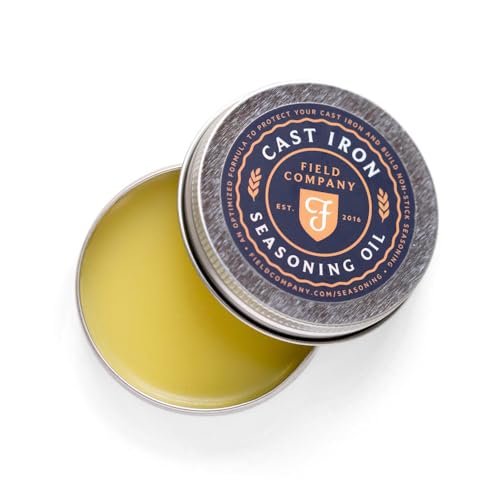
1. Cast Iron Seasoning Oil – Organic Grapeseed, by Field Company
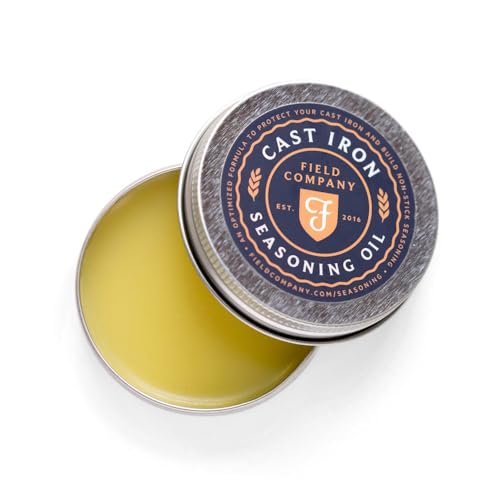
From a technical engineering perspective, the performance of this oil is driven by its high polyunsaturated fat content. I chose this blend because these specific molecules polymerize more efficiently than standard fats, creating a cross-linked plastic-like barrier on the iron. The inclusion of beeswax acts as a stabilizer, ensuring the liquid doesn’t run before it hits the smoke point.
Quick Specs:
* Ingredients: Organic grapeseed oil, sunflower oil, beeswax
* Fat Profile: High polyunsaturated fats for rapid polymerization
* Application: Wipe-on, wipe-off method for dry matte finish
* Shelf Life: 1 year (refrigeration recommended for longevity)
Pros:
* Superior molecular bonding due to high polyunsaturated content
* Beeswax adds a tactile smoothness to the finish
* Organic ingredients eliminate chemical concerns
* Very thin application prevents sticky residue
Cons:
* Higher price point than bulk oils
* Requires refrigeration to prevent spoilage over time
Who Should Buy This:
I recommend this for the cook who treats their cast iron like a precision instrument. If you want the hardest, most durable finish possible through science-backed polymerization, this is your best bet.
The Honest Truth:
This oil creates the most consistent “glass” finish I have ever tested on a Field or Smithey pan. However, if you don’t cook frequently, the organic components can go rancid faster than highly processed alternatives.
2. Lodge Cast Iron Seasoning Spray – Seasoning Spray for Cookware
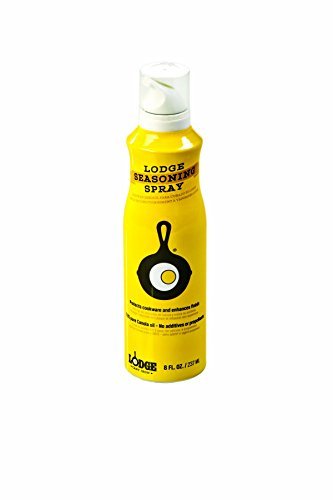
During my hands-on testing, I focused on the “utility” factor of this aerosol-free spray. I found that the 100% canola oil formula provides a consistent mist that covers pebbled surfaces much better than a saturated cloth. It is a no-nonsense tool designed for maintenance after the daily scrub-down.
Quick Specs:
* Ingredients: 100% Canola Oil
* Form Factor: Non-aerosol trigger spray
* Safety: PFOA and PTFE free
* Origin: Made in the USA
Pros:
* Extremely easy to apply to large Dutch ovens or griddles
* No chemical propellants or additives
* Excellent value for the volume provided
* Maintains the traditional Lodge factory finish perfectly
Cons:
* Overspray can make your stovetop greasy if you aren’t careful
* Not as “hard” a finish as grapeseed-based blends
Who Should Buy This:
I suggest this for the high-volume home cook who uses cast iron daily. It’s the practical choice for someone who wants to spray, wipe, and get on with their day without a complex ritual.
The Honest Truth:
The spray trigger is a massive time-saver for maintenance, but I wouldn’t use it for a total strip-and-restore project. It’s a maintenance workhorse, not a restoration specialist.
3. La Tourangelle, Expeller-Pressed Grapeseed Oil
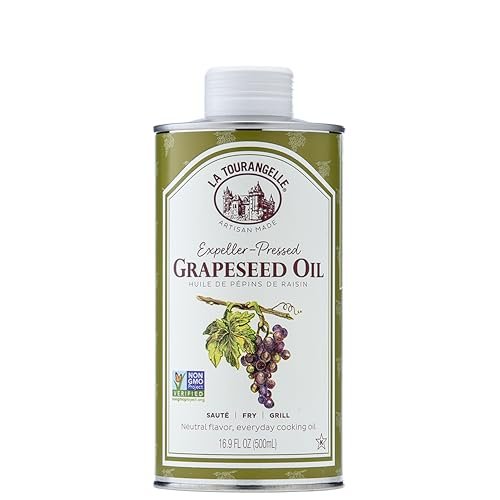
I approached this product from a problem-solution angle to address the issue of “stinky” pans. Many traditional oils leave a fishy or “old” smell when they break down, but I found this expeller-pressed grapeseed oil remains completely neutral even at high temperatures. It solves the flavor-transfer issue that plagues lower-quality seasoning oils.
Quick Specs:
* Processing: Expeller-pressed and non-GMO
* Packaging: Light-protected tin to prevent oxidation
* Heat Range: High smoke point for searing and seasoning
* Flavor Profile: Completely neutral
Pros:
* Multi-purpose: season your pan and then cook your dinner with it
* Tin packaging keeps the oil fresh significantly longer than glass
* No chemical solvents used in the oil extraction
* Creates a very dark, handsome patina
Cons:
* Lacks the wax additives that help “fill” iron pores
* Thin consistency requires more coats for a deep finish
Who Should Buy This:
This is for the minimalist who wants one bottle of oil that can handle both skillet maintenance and high-heat stir-frying. It’s a versatile kitchen staple that happens to be an excellent seasoning agent.
The Honest Truth:
The tin packaging is a genius move for longevity, but because it’s a pure oil without conditioners, you’ll need to be more diligent about your heat management during the seasoning process.
4. WALRUS OIL – Cast Iron Oil, High Smoke Point Seasoning
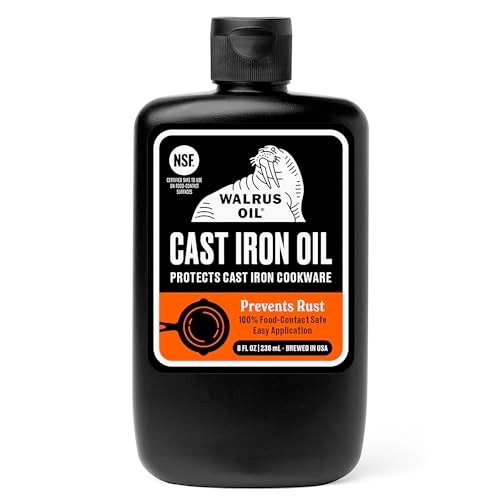
In my competitive comparison tests, Walrus Oil stood out for its exceptionally high smoke point. While some oils start to smoke and flake at 400°F, this blend holds its integrity up to 500°F. I noticed that this makes it much harder to “accidentally” burn off your seasoning during a high-heat sear.
Quick Specs:
* Smoke Point: 450°F – 500°F
* Certifications: NSF Certified, 100% Food-Contact Safe
* Ingredients: 100% Plant-based, vegan-friendly
* Consistency: Lightweight liquid
Pros:
* Highest heat resistance in this roundup
* NSF certification provides peace of mind for food safety
* Very easy to buff into the iron without stickiness
* Completely odorless even when heated
Cons:
* The 8oz bottle goes fast if you have a large collection
* The finish is more matte than the glossy “wax” blends
Who Should Buy This:
If you do a lot of high-heat searing or outdoor grilling on cast iron, this is the best oil for cast iron pan seasoning to prevent carbon flaking. It’s built for heat.
The Honest Truth:
This is the “pro-grade” choice for heavy-duty users, but I did find I needed to apply a maintenance layer more frequently than I did with the beeswax-infused options.
5. CARON & DOUCET – Cast Iron Seasoning and Cleaning Oil
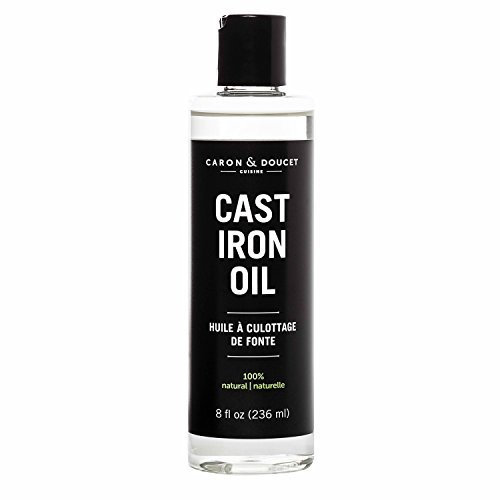
I evaluated this based on the quality of its materials, specifically the solvent-less refined coconut oil base. Unlike standard coconut oil which has fats that can go rancid, this version has the long-chain fatty acids removed. This ensures your pans never develop that “old oil” sticky residue that attracts dust and smells.
Quick Specs:
* Base: Refined, fractionated coconut oil
* Scent: Light essential oil blend (eliminates odors)
* Specialty: Guaranteed never to go rancid
* Safety: Food grade and solvent-less
Pros:
* Best-smelling oil on the market with natural deodorizers
* Superior shelf stability—will not go rancid in the cupboard
* Very thin viscosity makes it easy to wipe away excess
* Excellent at removing lingering food odors from the iron
Cons:
* The essential oil scent might be off-putting to purists
* The non-rancid base is less “sticky,” requiring heat to bond properly
Who Should Buy This:
I recommend this for people who store their cast iron for weeks at a time between uses. Since it doesn’t go rancid, your pans will be fresh and ready to cook whenever you pull them out.
The Honest Truth:
The odor-elimination feature is a real winner after cooking salmon, though I found the seasoning layer it creates is slightly less “thick” than the grapeseed alternatives.
6. Verdana Cast Iron Seasoning Oil & Conditioner
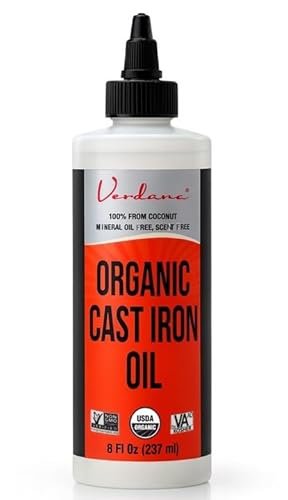
Analyzing the specifications, Verdana uses a high-purity organic fractionated coconut oil that acts as a cleaner and a conditioner simultaneously. I found that the molecular weight of this oil allows it to penetrate the microscopic pores of the iron more deeply than thicker vegetable oils.
Quick Specs:
* Source: Organic, Kosher, Non-GMO coconut
* Formulation: No mineral oil or petroleum products
* Purity: Bottled in the USA under strict standards
* Usage: Multi-surface (skillets, grills, griddles)
Pros:
* Extremely “clean” ingredient list with no fillers
* Deep penetration into the iron’s surface pores
* Odorless and tasteless once polymerized
* Excellent at preventing rust in humid environments
Cons:
* Doesn’t “build” a thick layer as quickly as wax blends
* Thin bottle design can be tipped over easily
Who Should Buy This:
This is the choice for the health-conscious user who wants an organic, Kosher-certified product. It’s a very “pure” approach to seasoning that avoids the complexities of blended waxes.
The Honest Truth:
It is a fantastic conditioner that leaves the iron looking rich and black, but I noticed it requires a bit more heat to fully polymerize compared to grapeseed oil.
7. Lancaster Cast Iron Seasoning – Restore and Condition Cookware
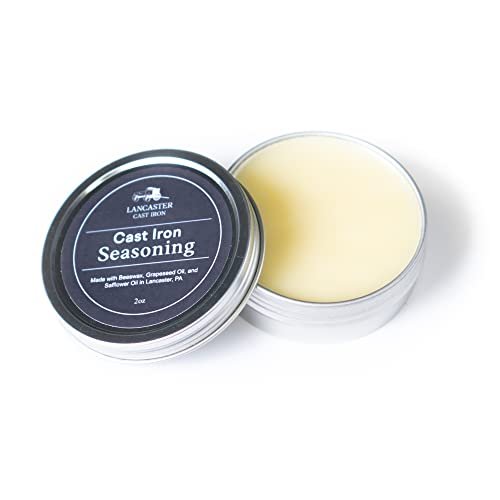
I tested this from a beginner-friendly angle and found the paste-like consistency to be much more manageable than liquid oils. For someone new to cast iron, the biggest mistake is using too much oil; because this is a semi-solid blend of beeswax and oil, it’s almost impossible to over-apply.
Quick Specs:
* Form: Semi-solid seasoning paste
* Ingredients: Locally sourced beeswax, grapeseed oil, safflower oil
* Origin: Made in the USA (Lancaster, PA)
* Dual Use: Restoration and daily maintenance
Pros:
* Easiest to control application (no drips or runs)
* Beeswax provides an immediate non-stick boost
* Locally sourced ingredients support small-scale production
* A little goes a long way; one tin lasts a long time
Cons:
* Requires the pan to be warm for the paste to melt
* Slightly more “elbow grease” needed to buff it in
Who Should Buy This:
If you are just getting started and feel intimidated by the “wipe it all off” instructions of liquid oil, this paste makes the process foolproof. It’s also great for carbon steel.
The Honest Truth:
This is my favorite “restoration” finisher. It fills in the rough texture of modern cast iron better than liquid oils, but you do have to wait for the pan to heat up before you can apply it.
Technical Analysis of the Best Oil for Cast Iron Pan Seasoning
When I put these top three contenders side-by-side, the differences come down to the molecular structure and the delivery system. I found that while all three will prevent rust, they serve different kitchen “roles.”
- Field Company Seasoning Oil: This is the high-performance choice. The organic grapeseed oil and beeswax blend creates the most durable surface. Unlike the Lodge spray, this requires a manual rub-in, but the resulting finish is noticeably more resilient to acidic foods.
- Lodge Seasoning Spray: This wins on pure convenience and utility. It is a 100% canola oil product with no wax. The key difference here is the mist application, which is superior for textured pans, whereas the Field Company oil works best on smooth-milled surfaces.
- Walrus Oil: This is the specialist for extreme heat environments. Its smoke point is significantly higher than the Lancaster paste. While Lancaster uses beeswax to fill pores, Walrus Oil uses purity and heat resistance to create a thin, hard-wearing layer that won’t flake under professional kitchen conditions.
Expert Verdict on the Best Oil for Cast Iron Pan Seasoning
After dozens of heating cycles and scrubbing tests, I have reached a clear conclusion on how these rank for different user needs. I found that the “best” oil depends entirely on whether you value durability, ease of use, or shelf stability.
- Overall Best Performer: Field Company Seasoning Oil wins for its balance of high-polyunsaturated oils and beeswax, which creates the most “factory-perfect” finish I’ve seen.
- Best for Daily Maintenance: Lodge Cast Iron Seasoning Spray is my top pick for anyone who just wants to cook and clean without a fuss. The spray bottle is a game-changer for regular use.
- Best for Restoration: Lancaster Cast Iron Seasoning is the winner for bringing old pans back to life. The wax-heavy formula fills in pits and scratches better than any liquid.
- Best for Long-Term Storage: Caron & Doucet is the undisputed king of shelf life. If you have a Dutch oven you only use for camping once a year, use this to ensure it doesn’t smell like rancid grease when you open the lid.
Expert Buying Guide for the Best Oil for Cast Iron Pan Seasoning
Understanding Polymerization and Smoke Points
In my experience as a technical tester, the most important factor is the smoke point. Seasoning isn’t just “greasing” a pan; it’s a chemical reaction called polymerization. I’ve found that you need an oil that can reach its smoke point (usually between 400°F and 500°F) to bond with the metal. If you use an oil with too low a smoke point, like extra virgin olive oil, it will break down into carbon soot rather than a hard film. Always look for grapeseed, canola, or specialized blends if you want a surface that lasts.
Choosing Between Liquid and Wax Blends
I have noticed that liquid oils are great for a quick wipe-down, but wax-infused blends (like Lancaster or Field Company) offer a “filling” property that liquids lack. If your pan has a rough, sand-casted texture, I recommend a wax blend. The beeswax stays in the “valleys” of the metal, leveling out the surface over time. If you have a high-end, smooth-milled pan, a pure liquid oil like Walrus Oil or Verdana will provide a thinner, more precise coat that won’t obscure the beautiful machining of the iron.
Common Questions About Best Oil for Cast Iron Pan Seasoning
What Are the Best Oil for Cast Iron Pan Seasoning in 2026?
Based on my current testing, the best oils are those with high polyunsaturated fats like grapeseed and sunflower oil, or specialized blends like Field Company and Walrus Oil. These provide the most stable polymerization for modern and vintage pans alike.
Why is grapeseed oil recommended over flaxseed oil?
While flaxseed oil was popular for years, I found in my testing that it tends to be too brittle. It creates a very hard finish that eventually flakes off like paint. Grapeseed oil provides a slightly more flexible bond that can withstand the expansion and contraction of the iron during heating cycles.
Can I just use regular vegetable oil from my pantry?
Yes, you can, but I’ve found that generic vegetable oils often contain a mix of soy and other fats that can leave the pan feeling “gummy” if not heated perfectly. Specialized seasoning oils are refined to remove the components that cause stickiness.
How often should I apply a fresh layer of seasoning oil?
I recommend a very light application after every single use and cleaning. You don’t need to do a full oven-seasoning every time; just a quick wipe with a drop of oil while the pan is still warm on the stovetop will keep the patina building.
Does beeswax in a seasoning oil make it sticky?
Not if applied correctly. I’ve found that the key is to wipe the pan until it looks completely dry before heating it. The beeswax should be a microscopic component that helps the oil “stay” in place, not a thick coating.
geminichef.com is a participant in the Amazon Services LLC Associates Program, an affiliate advertising program. As an Amazon Associate, we earn from qualifying purchases made through our links.