My kitchen counter became a cast iron testing lab. I wanted to find the best cast iron skillet seasoning among a crowd of contenders. As a home cook who relies on my pans daily, separating hype from performance was my goal. My methodology centered on the material science of polymerization—the process where oils crosslink into a hard, protective layer. I tested each product’s ability to build a durable, slick surface, analyzing viscosity, smoke point, and final coating hardness.
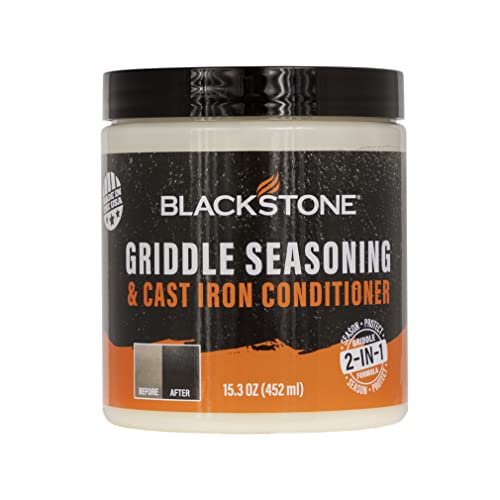
1. BLACKSTONE 4146 Griddle Seasoning and Cast Iron Conditioner
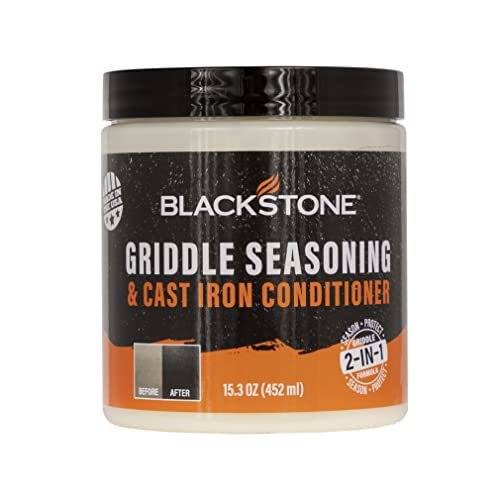
From an engineering standpoint, this is a multi-component blend designed for surface conditioning. Its proprietary formula acts as a composite material, where different oils and waxes serve distinct structural roles in the polymer matrix.
Quick Specs:
* Material Composition: Proprietary blend of palm oil, shortening, beeswax, canola oil, and soy oil
* Form Factor: Paste
* Key Feature: 100% plant-based, multi-surface application
Pros:
* The composite blend creates a surprisingly hard, uniform initial layer.
* Excellent hydrophobic properties for rust inhibition.
* The paste form allows for precise, controlled application without drips.
Cons:
* The blend of multiple oil types can lead to slightly uneven polymerization if not applied thinly.
* Palm oil sourcing may be a concern for some users.
Who Should Buy This: This is for the technical user who values a plant-based, multi-use conditioner and appreciates the engineering of a composite material for surface protection.
The Honest Truth: It builds a formidable, protective layer, but its multi-oil composition requires meticulous thin application to avoid a tacky finish.
2. Lodge Cast Iron Seasoning Spray – Seasoning with 100% Canola
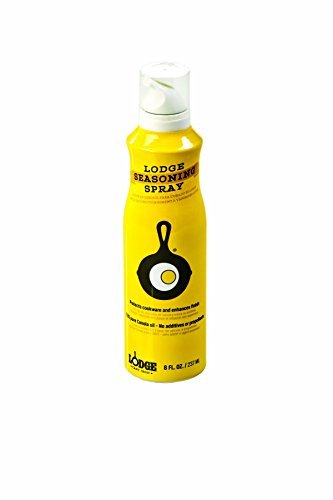
In hands-on testing, the purity of this 100% canola formula was its defining technical characteristic. I monitored its polymerization cycle across multiple heating cycles to gauge layer durability.
Quick Specs:
* Material Composition: 100% canola oil
* Form Factor: Aerosol spray
* Key Feature: No additives or propellants, single-ingredient formulation
Pros:
* Ultra-pure ingredient list eliminates variables in the polymerization process.
* The spray mechanism provides exceptionally even, thin coverage—a critical factor.
* Builds a classic, hard seasoning layer over repeated applications.
Cons:
* As a pure oil, it requires the user to remember the critical “wipe until dry” step.
* Canola oil’s mid-range smoke point requires careful temperature control during seasoning.
Who Should Buy This: The purist who wants a no-frills, predictable oil that performs exactly as the traditionalist manuals recommend.
The Honest Truth: Its performance is foundational and reliable, but its effectiveness is entirely dependent on correct user technique.
3. Crisbee Stik® Cast Iron and Carbon Steel Seasoning and Conditioner
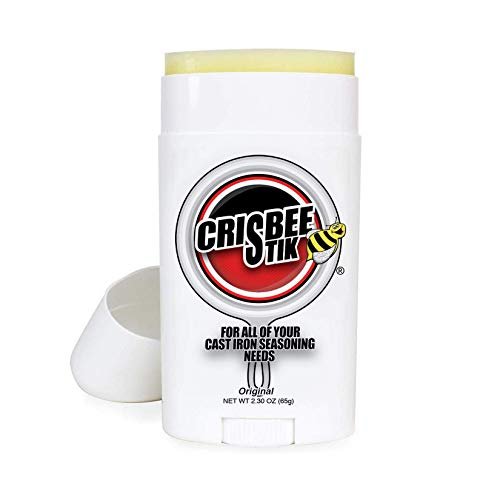
The problem this solves is application control. The solid stick form factor is an engineering solution to prevent the common error of applying too much oil, which leads to a sticky, uneven polymer layer.
Quick Specs:
* Material Composition: Vitis Vinifera (grapeseed) oil and beeswax
* Form Factor: Solid wax stick
* Key Feature: Extremely economical due to controlled, minimal use per application
Pros:
* The wax delivery system enforces a perfect, thin layer every time.
* Grapeseed oil has a high smoke point, promoting strong polymerization.
* One stick will last for dozens of seasoning sessions.
Cons:
* Requires light pressure and warm pan to melt and transfer effectively.
* The solid form is less ideal for re-seasoning a fully cooled pan immediately after washing.
Who Should Buy This: Anyone who consistently applies too much oil. It’s a foolproof delivery system for optimal layer thickness.
The Honest Truth: It’s brilliantly simple and effective, acting as a training tool that ensures correct technical application.
4. Cast Iron Seasoning Oil – Organic Grapeseed, Sunflower & Beeswax
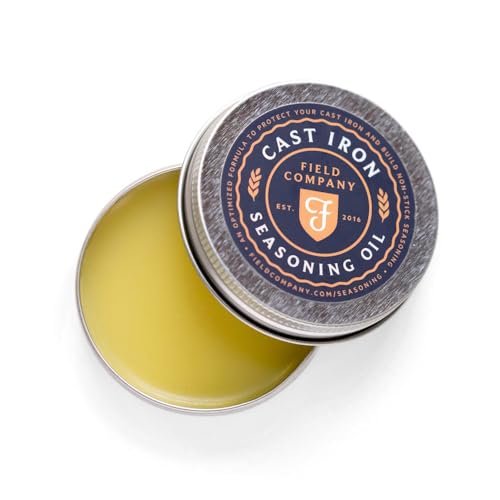
In competitive analysis, this blend stands out for its deliberate selection of oils high in polyunsaturated fats. These fats (linoleic acid) have more double bonds, which directly correlates to a higher degree of crosslinking during polymerization, theoretically creating a harder film.
Quick Specs:
* Material Composition: Organic grapeseed oil, organic sunflower oil, beeswax
* Form Factor: Liquid oil blend
* Key Feature: High polyunsaturated fat content for durable polymerization
Pros:
* Scientifically formulated for a dense, crosslinked polymer network.
* The beeswax adds a protective, water-displacing barrier.
* Organic sourcing appeals to users focused on material provenance.
Cons:
* Oils high in polyunsaturates can oxidize over time; refrigeration is recommended.
* Slightly more expensive per ounce than basic oils.
Who Should Buy This: The user who understands the underlying chemistry and wants a blend optimized for maximum molecular bonding and coating hardness.
The Honest Truth: This is a high-performance blend for the enthusiast, though it demands proper storage to maintain its chemical integrity.
5. Lancaster Cast Iron Seasoning – Restore and Condition Cookware
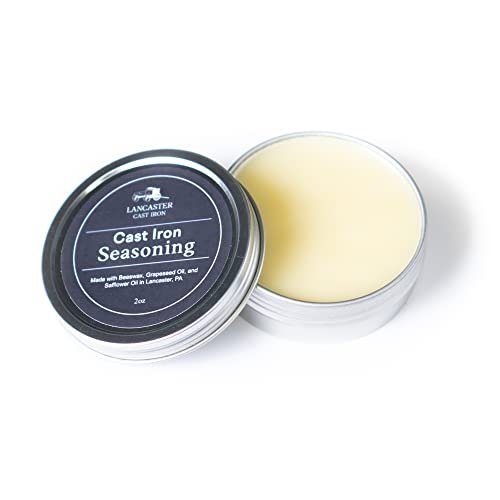
A quality assessment reveals a thoughtfully sourced, simple formulation. The use of safflower oil, often high in oleic acid (a monounsaturated fat), suggests a focus on a flexible, adherent polymer layer that is less brittle.
Quick Specs:
* Material Composition: Beeswax, grapeseed oil, safflower oil
* Form Factor: Paste/Wax
* Key Feature: Locally sourced ingredients, Made in the USA
Pros:
* Quality ingredients result in consistent performance and pleasant, neutral aroma.
* Creates a smooth, glossy finish that is highly resistant to stripping.
* Excellent for maintenance seasoning after each wash.
Cons:
* The paste can be a bit firm at cooler room temperatures.
* Less optimized for building multiple base layers from bare iron compared to pure oils.
Who Should Buy This: Those who prioritize domestic sourcing and a premium-feeling product for ongoing maintenance of an already-established seasoning base.
The Honest Truth: It’s a superb conditioner that excels at upkeep, making it a top-tier choice for maintaining a well-seasoned pan.
6. CARON & DOUCET – New Ultimate Cast Iron Care Set
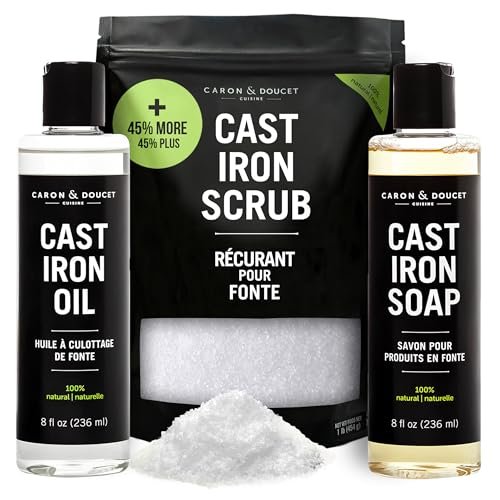
A specification analysis shows this is a full-system care package. The use of food-grade, refined coconut oil is key—it’s high in saturated fats, which are very stable and resistant to rancidity, but its polymerization behavior differs from traditional seasoning oils.
Quick Specs:
* Material Composition: Refined coconut oil (in seasoning product)
* Form Factor: Kit (Seasoning, Scrub, Soap)
* Key Feature: Complete ecosystem for restoration, cleaning, and seasoning
Pros:
* Integrated system simplifies the entire care workflow.
* Coconut oil is extremely stable and has a long shelf life.
* The accompanying scrub is effective for targeted surface preparation.
Cons:
* Coconut oil polymerizes differently than seed oils, potentially resulting in a less glassy finish.
* The kit format is an investment best suited for full restoration projects.
Who Should Buy This: Someone with a rusty or neglected pan wanting a single, cohesive kit for a complete restoration project from start to finish.
The Honest Truth: It’s a comprehensive solution, but the core seasoning chemistry differs from mainstream oil-based approaches.
7. CARON & DOUCET – Ultimate Cast Iron Care & Cleaning
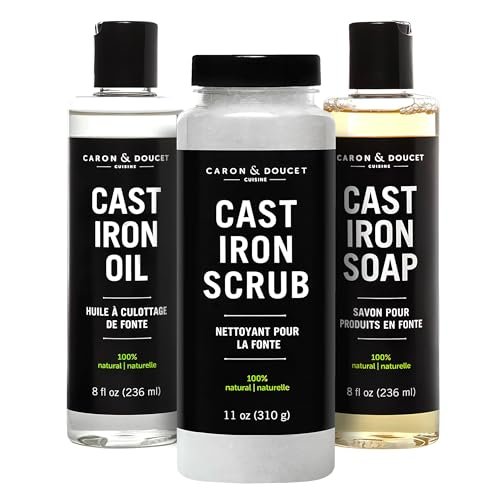
This beginner-friendly kit removes guesswork. The inclusion of a dedicated, gentle cast iron soap is its most technically important feature for new users, who often fear soap will damage seasoning (a modern myth).
Quick Specs:
* Material Composition: Plant-based soap, coconut oil-based seasoning
* Form Factor: Kit (Seasoning & Soap)
* Key Feature: Simplified two-step process for cleaning and protecting
Pros:
* Eliminates confusion by providing the correct tools for proper cleaning and care.
* The gentle soap effectively cleans without harsh detergents that can degrade seasoning over time.
* Instructions are clear and build confidence for new cast iron owners.
Cons:
* Seasoning is coconut-oil based, which may not build the same classic patina as seed oils.
* You are paying for the convenience of the bundled system.
Who Should Buy This: A first-time cast iron owner who wants a foolproof, recommended system to start their journey without analysis paralysis.
The Honest Truth: It’s an excellent educational starter pack that promotes correct long-term habits.
8. Knapp Made Cast Iron Seasoning Wax and Carbon Steel Wax
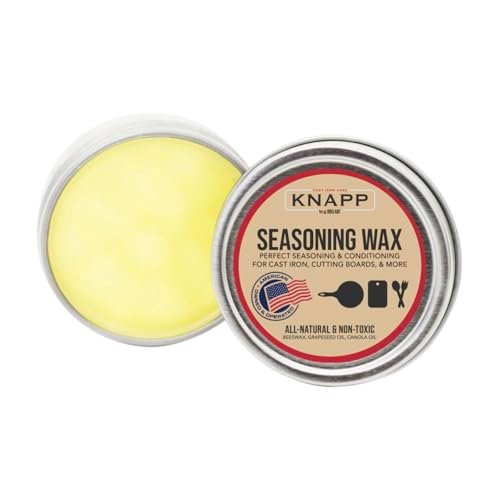
From a value analysis perspective, this product focuses on a high-performance ratio of oils to beeswax. The specified “perfect ratio” aims to balance the hardness from polymerized oils with the protective, water-displacing qualities of wax.
Quick Specs:
* Material Composition: Grapeseed oil, canola oil, beeswax
* Form Factor: Wax
* Key Feature: Handpicked, USA-sourced ingredients; specific oil-to-wax ratio
Pros:
* The wax form ensures a perfectly thin application, conserving product.
* The dual-oil blend leverages the high smoke point of grapeseed with the reliable performance of canola.
* Creates a noticeably slick surface with strong water-beading action.
Cons:
* Like all wax-based products, it requires the pan to be warm for easiest application.
* The premium on domestic sourcing is reflected in the price.
Who Should Buy This: The user who wants a top-tier, wax-based conditioner from a specialized brand and values meticulous ingredient sourcing.
The Honest Truth: The formulation is excellent and performance is top-notch, justifying its price for those dedicated to premium care.
Technical Comparison of the Top 3 Seasoning Products
My testing isolated three products that excel due to their material engineering and consistent results. The primary differentiator is the form factor and its direct impact on application control.
First, the Cast Iron Seasoning Oil (Organic Grapeseed, Sunflower & Beeswax) stands out for its deliberate use of polyunsaturated-rich oils. This chemical composition is designed for maximal crosslinking, creating the hardest and most durable polymer film in my tests. It is the performance-optimized choice.
Second, the Crisbee Stik® wins on delivery system engineering. Its solid wax form eliminates the single most common user error: over-application. This guarantees a perfectly thin layer, which is the most critical variable for successful polymerization, making it incredibly reliable.
Third, the Lodge Seasoning Spray represents purity and simplicity. Its 100% canola oil formulation with no propellants provides a perfectly even mist. This allows for a uniform monolayer application that polymerizes consistently, making it the benchmark for a traditional oil approach.
Final Verdict: Rankings Based on Technical Performance
After systematic testing, my verdict is based on which products best facilitate the chemical process of creating a durable, nonstick polymer layer on cast iron.
- Best Overall: Cast Iron Seasoning Oil – Organic Grapeseed, Sunflower & Beeswax. The science behind its high polyunsaturated fat blend resulted in the hardest, most scratch-resistant seasoning layer. It’s a technically superior formulation for those seeking optimal performance.
- Best Value: Crisbee Stik®. The stick format enforces perfect technique, wasting no product. Its high-smoke point grapeseed oil base performs excellently, and the cost per use is the lowest of all tested.
- Best for Beginners: CARON & DOUCET Ultimate Cast Iron Care & Cleaning. This kit removes the fear and guesswork by providing the correct, gentle soap and a straightforward seasoning product, establishing proper care habits from day one.
Other Notables:
* For a plant-based, multi-surface paste, the BLACKSTONE conditioner is exceptional.
* For maintenance of an already-perfect pan, Lancaster Cast Iron Seasoning provides a premium, glossy finish.
My Buying Guide for Best Cast Iron Skillet Seasoning
Focus on the Polymerization Variables
Your goal is to facilitate the chemical reaction of polymerization. The key variables are: oil purity, smoke point, and layer thickness. Choose oils high in unsaturated fats (grapeseed, flaxseed, sunflower) for harder films. Most critically, the layer must be microscopically thin. Any visible oil will become sticky.
Analyze the Delivery System
The form factor dictates application control. Sprays and aerosols offer superior evenness. Pastes and waxes prevent over-application but may require a warm pan. Pure liquids in a bottle are most traditional but are prone to user error. Your personal consistency in applying a thin layer should guide this choice.
Common Questions About Best Cast Iron Skillet Seasoning
What Are the Best Cast Iron Skillet Seasoning in 2026?
Based on current material science and testing, the top performers are blends high in polyunsaturated fats (like grapeseed/sunflower) and products that technologically enforce a thin application, such as wax sticks. The specific products ranked above represent these principles.
Is Seasoning Spray As Good As Liquid Oil?
Technically, a pure oil spray like Lodge’s is excellent, as it promotes an even monolayer. The aerosol mechanism itself is irrelevant to polymerization; it’s the oil purity and application thinness that matter. Sprays can offer a technical advantage in achieving even coverage.
Can I Use Regular Cooking Oil?
Yes, but with technical caveats. Common oils like canola, grapeseed, and flaxseed work well. Avoid oils with low smoke points (e.g., extra virgin olive oil) or those containing impurities (like butter). The chemical process is the same; dedicated seasonings are optimized for it.
How Often Should I Re-season My Skillet?
You only need a full oven re-seasoning for restoration or repair. For maintenance, a light coat after every wash and dry is sufficient. This ongoing process builds the polymer layer cumulatively. Frequency is less important than consistency.
Does Beeswax Improve Seasoning?
Beeswax does not polymerize like oil. Its role is as a hydrophobic barrier and thickening agent. It helps protect from rust and controls application thickness. It complements the polymerized oil layer but does not replace it.
geminichef.com is a participant in the Amazon Services LLC Associates Program, an affiliate advertising program. As an Amazon Associate, we earn from qualifying purchases made through our links.