Deciding between a chef knife and a santoku can be tricky for a beginner home cook. The chef knife excels at rocking cuts and versatile tasks, while the santoku is perfect for precise push cuts and thinner slices. This comprehensive guide offers recommendations and maintenance tips to help you choose the best foundational knife for your culinary journey, focusing on comfort and your unique cooking style.
Stepping into the world of home cooking is an exciting adventure! You’re ready to create delicious meals, experiment with new recipes, and maybe even impress a few friends and family members. But before you can julienne like a pro or perfectly dice an onion, you need the right tools. And when it comes to kitchen essentials, nothing is more fundamental than a good knife. For many beginner home cooks, the first big decision often boils down to two titans of the culinary world: the chef knife and the santoku knife.
It’s a common dilemma. Both are incredibly versatile, designed to handle a multitude of tasks, and often recommended as the go-to “do-it-all” knife. But they are distinct, each with its own unique characteristics, advantages, and ideal uses. This guide is here to help you navigate the choice between a chef knife vs santoku, offering beginner home cook recommendations and crucial maintenance tips so you can make an informed decision and confidently start your culinary journey.
Choosing your first quality kitchen knife isn’t just about picking a sharp blade; it’s about finding an extension of your hand that feels comfortable, safe, and efficient. Let’s dive deep into what makes each of these knives special, how they perform in the kitchen, and what you need to know to keep them in top shape for years to come.
Key Takeaways
- Chef Knife Versatility: The chef knife is a true workhorse, excelling at a wide range of tasks from mincing herbs to dicing vegetables, thanks to its curved blade ideal for a rocking motion.
- Santoku Precision: The santoku knife, with its straighter edge and “sheep’s foot” tip, is fantastic for precise push cuts, thin slicing, and chopping, often featuring a Granton edge to prevent sticking.
- Beginner’s Choice is Personal: There’s no single “best” knife for every beginner home cook; the ideal choice depends on your comfort, preferred cutting style, and the types of foods you prepare most often.
- Maintenance Extends Life: Proper cleaning, storage, and regular honing are crucial for keeping both chef knives and santokus sharp, safe, and long-lasting. Sharpening is for restoring a dull edge, while honing maintains it.
- Comfort and Balance Matter Most: For a beginner, a knife that feels comfortable and well-balanced in your hand is far more important than its brand name or price tag.
- Don’t Overspend Initially: Start with a good quality, affordable option. You can always upgrade later once you’ve developed your skills and identified your preferences.
- Practice Makes Perfect: Whichever knife you choose, consistent practice with proper technique will improve your cutting efficiency and enjoyment in the kitchen.
Quick Answers to Common Questions
Which knife is better for a beginner, chef knife or santoku?
Neither is inherently “better”; it depends on your comfort and preferred cutting style. If you like a rocking motion, a chef knife is great. If you prefer a straight chop, a santoku might be more intuitive.
Can a chef knife do everything a santoku can, and vice versa?
They are both highly versatile, but each excels at different tasks. A chef knife is better for rocking cuts and larger items, while a santoku is better for precise push cuts and thin slices. You can adapt, but one might feel more natural for certain jobs.
How often should I hone my knife?
For a beginner home cook, it’s a good idea to hone your knife frequently, perhaps every 2-4 uses, or whenever you feel the edge start to lose its initial keenness. This keeps it sharp and reduces the need for frequent sharpening.
What is the ideal angle for sharpening these knives?
Most Western-style chef knives have a sharpening angle between 18-20 degrees per side, while many Japanese-style santokus are sharpened at a slightly finer 10-15 degrees per side. Always check your knife’s manufacturer recommendations.
Is a more expensive knife always better for a beginner?
Not necessarily. While high-end knives offer superior materials and craftsmanship, a good quality, moderately priced knife (e.g., $40-$80) is often perfect for a beginner. Focus on comfort, balance, and reputable brands rather than just price.
📑 Table of Contents
Understanding Your Kitchen Workhorse: The Chef Knife
The chef knife is arguably the most iconic kitchen tool, recognized globally as the quintessential all-purpose knife. Originating in Europe, its design has been refined over centuries, making it an indispensable item for chefs and home cooks alike. When people think of a “knife,” they’re often picturing a chef knife.
Anatomy of a Chef Knife
A typical chef knife ranges from 6 to 12 inches in blade length, with 8 inches being the most popular choice for home cooks. Its most distinctive feature is its curved blade, which tapers to a sharp point. This curve, often referred to as a “rocker” profile, is key to its functionality. The spine (top edge) is usually thick, adding weight and strength, while the blade tapers to a fine edge. Chef knives can be forged (made from a single piece of steel) or stamped (cut from a sheet of steel), with forged knives generally being heavier and more durable.
Ideal Uses and Techniques
The design of the chef knife makes it incredibly versatile. Its curved blade is perfectly suited for a “rocking motion” cutting technique. Imagine placing the tip of the blade on the cutting board and rocking the knife down through your food, pushing forward slightly as you go. This technique is excellent for:
- Mincing: Think garlic, herbs, or shallots. The rocking motion allows you to finely mince ingredients with ease.
- Dicing: Onions, carrots, celery – the chef knife handles these tasks beautifully, allowing you to create uniform pieces quickly.
- Slicing: Meats, larger vegetables, and even fruits can be efficiently sliced.
- Chopping: From robust root vegetables to firm squash, the weight and balance of a chef knife make chopping straightforward.
For a beginner home cook, mastering the rocking motion with a chef knife is a foundational skill that will serve you well across countless recipes.
Pros and Cons for Beginners
Pros:
- Extreme Versatility: It can genuinely handle almost any task you throw at it.
- Comfortable for Rocking: If you prefer a rocking motion for dicing and mincing, this knife is designed for it.
- Weight and Power: Often heavier, providing a sense of stability and making it easier to cut through tougher foods.
- Widely Available: Easy to find in various price ranges and styles.
Cons:
- Can Feel Bulky: For those with smaller hands or who prefer lighter tools, a longer chef knife might feel unwieldy at first.
- Learning Curve: Mastering the rocking motion and handling a larger blade can take some practice.
- Less Precise Tip: The pointed tip, while useful, can be less ideal for very delicate, precise tasks compared to other specialized knives.
The Versatile Japanese Blade: The Santoku Knife
The santoku knife is the Japanese answer to the all-purpose kitchen knife. Its name, “santoku bōchō,” translates to “three virtues” or “three uses,” typically referring to its ability to handle meat, fish, and vegetables equally well. It’s gained immense popularity in Western kitchens for its unique feel and precision.
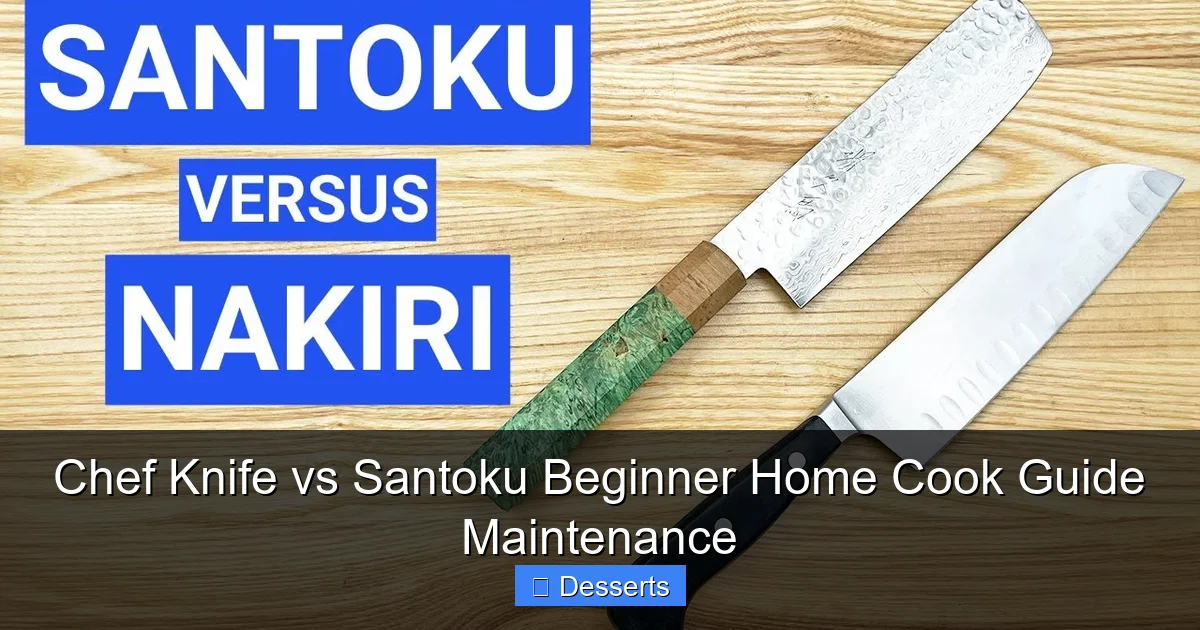
Visual guide about Chef Knife vs Santoku Beginner Home Cook Guide Maintenance
Image source: homeunderstandable.com
Anatomy of a Santoku Knife
Santoku knives usually have a shorter blade than a chef knife, typically ranging from 5 to 7 inches. The most distinctive feature of a santoku is its straighter edge profile and a “sheep’s foot” tip, which means the spine curves down to meet the edge at a less acute angle, creating a blunter, rounded tip. Many santoku knives also feature a Granton edge – those distinctive dimples or indentations along the blade – which helps prevent food from sticking. The balance of a santoku often feels more forward-weighted than a chef knife.
Ideal Uses and Techniques
Due to its straighter edge, the santoku is best suited for a “push cut” or “chopping” motion, rather than a rocking motion. With a push cut, you lift the knife straight up and push it straight down through the food, moving it slightly forward or backward between cuts. This technique excels at:
- Slicing: Creating thin, even slices of vegetables, fruits, and boneless meats. The straight edge provides excellent contact with the cutting board.
- Chopping: Efficiently chopping a variety of ingredients, especially when uniform pieces are desired.
- Dicing: Its straight edge makes it easy to dice with precision, especially for ingredients like cucumbers or bell peppers.
- Minced Herbs and Garlic: While different from a chef knife, a santoku can still achieve fine mincing with a precise up-and-down chopping motion.
The Granton edge, if present, is a real bonus for reducing friction and preventing sticky foods like potatoes or squash from clinging to the blade.
Pros and Cons for Beginners
Pros:
- Precision and Control: The straighter edge and often lighter weight allow for very precise cuts.
- Excellent for Push Cuts: If you prefer an up-and-down chopping motion, the santoku is naturally suited for it.
- Comfortable for Smaller Hands: Often shorter and lighter, making it more manageable for those who find chef knives too big.
- Granton Edge Benefit: Reduces sticking, making food prep smoother.
Cons:
- Less Suited for Rocking: The straighter blade makes the rocking motion less effective and can be uncomfortable.
- Blunt Tip: The “sheep’s foot” tip is less effective for piercing or intricate tasks like deboning.
- Can Feel Less Powerful: Its lighter build might feel less robust when tackling very hard or thick items.
Chef Knife vs Santoku: A Head-to-Head Comparison
Now that we’ve explored each knife individually, let’s put them side-by-side to highlight their key differences, which will be crucial for any beginner home cook making a choice. Understanding these distinctions is key to making your knife recommendation.
Blade Shape and Cutting Style
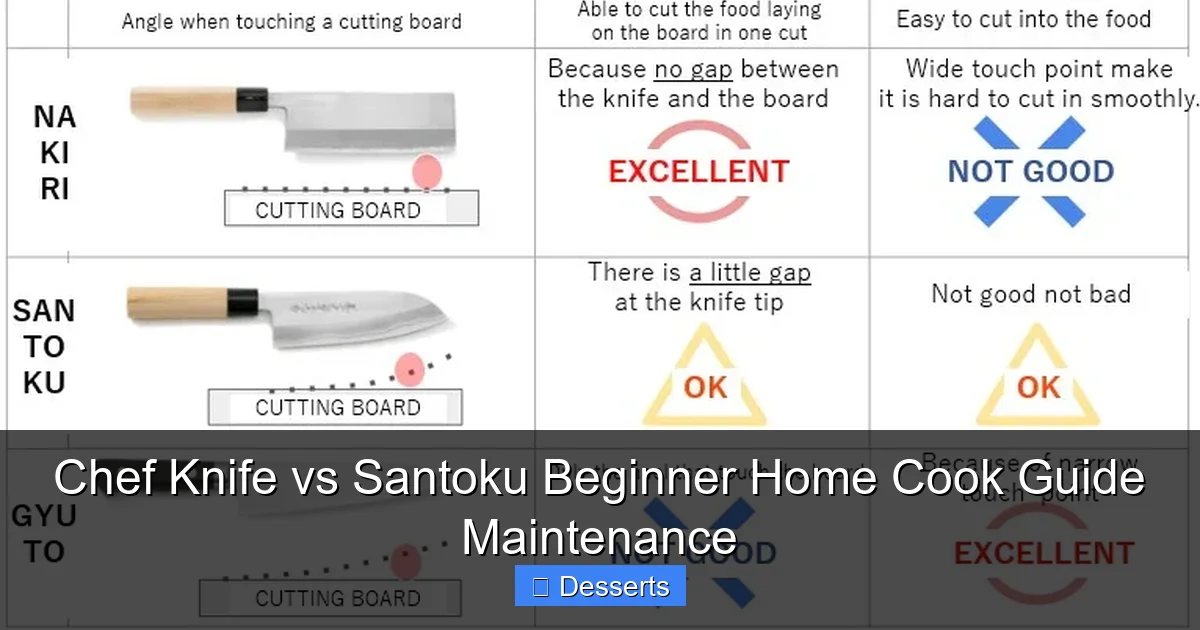
This is the most significant difference. The chef knife’s curved belly is designed for the classic rock-chop, where the blade maintains contact with the board at a single point while the rest of the blade rocks through the food. The santoku’s straighter edge and lower tip make it perfect for a clean, swift push-cut, where the entire blade ideally contacts the board with each chop. If you naturally prefer to rock your knife, a chef knife will feel intuitive. If you prefer a precise, straight chop, the santoku might be more comfortable.
Weight and Balance
Traditional chef knives, especially forged ones, tend to be heavier and have a more robust feel. This weight can provide leverage for cutting through tougher ingredients and often feels stable in hand. Santokus are generally lighter and often feel more agile. Their balance point is sometimes more forward, closer to the tip, which can give a sense of control for precise work. For a beginner home cook, the feel of the knife’s weight and balance in your hand is critical for comfort and safety.
Material and Sharpness Retention
Both types of knives are available in various steels, from softer stainless steel to harder high-carbon steel. Generally, Japanese knives (like santokus) are often made from harder steels, which can take a very sharp edge and hold it for longer, but can also be more brittle and prone to chipping if misused. German-style chef knives (often considered the archetype) are typically made from slightly softer, tougher steel that is more forgiving and easier to sharpen but may need more frequent honing. For a beginner home cook, a slightly softer steel might be more forgiving while you learn proper technique and maintenance.
Ergonomics and Comfort
This is highly personal. The handle design, the weight, and the overall feel of the knife in your hand are paramount. Some people prefer the larger, often more robust handles of chef knives, while others find the typically thinner, more contoured handles of santokus more comfortable. Before making a decision about your chef knife vs santoku, if possible, hold both types of knives. How does it feel? Does it fit your hand size? Does it feel balanced? Your comfort will directly impact your safety and enjoyment in the kitchen.
Recommendations for the Beginner Home Cook
So, which one should you choose? A chef knife vs santoku for your first serious kitchen blade? There’s no single right answer, but here are some tips to guide your decision for any beginner home cook.
Consider Your Cooking Style
Think about the types of food you prepare most often and your natural cutting motion. If you frequently mince herbs, dice large quantities of vegetables, and prefer a fluid rocking motion, a chef knife is likely a fantastic fit. If you gravitate towards precise slicing, work with more delicate ingredients, or naturally prefer an up-and-down chopping motion, a santoku could be your ideal partner. Your primary cooking style should heavily influence your knife recommendation.
Test Drive If Possible
If you can, visit a kitchen supply store or a department store that allows you to handle the knives. Pick them up, feel their weight, and imagine yourself using them. Some stores even have demo vegetables or dummy cutting boards. This hands-on experience is invaluable for a beginner home cook trying to choose between a chef knife vs santoku.
Don’t Break the Bank
As a beginner, you don’t need the most expensive, handcrafted knife. There are many excellent quality chef knives and santokus available in the $40-$80 range that will perform beautifully and last for years with proper care. Focus on reputable brands that offer good value. A good quality entry-level knife is perfect for developing your skills.
Focus on Comfort
Ultimately, the best knife for you is the one that feels most comfortable and safe in your hand. A comfortable grip reduces fatigue and the risk of accidents. Pay attention to the handle material (wood, synthetic, composite), its shape, and how it feels wet or dry. A great knife recommendation is always one that feels like an extension of your own hand.
Essential Maintenance for Both Blades
No matter if you choose a chef knife or a santoku, proper knife maintenance is critical. A well-maintained knife is a joy to use, safer, and will last much longer. This is a crucial part of any beginner home cook’s journey.
Cleaning and Storage Best Practices
Cleaning: Always hand wash your knife immediately after use with warm, soapy water. Avoid putting it in the dishwasher, as the harsh detergents, high heat, and jostling can dull the blade, damage the handle, and even cause rust. Dry it thoroughly with a clean towel to prevent water spots and rust. This simple step is vital for chef knife vs santoku longevity.
Storage: Never just toss your knife into a drawer where it can clang against other utensils. This dulls the blade and is a safety hazard. Instead, use one of these methods:
- Knife Block: A classic solution that protects the blade and keeps it accessible.
- Magnetic Strip: Saves counter space and displays your knives safely.
- In-Drawer Knife Organizer: Keeps knives separated and protected within a drawer.
- Blade Guards/Sheaths: Ideal for individual knives, especially if you transport them.
Sharpening vs. Honing (and How to Do It)
These two terms are often confused, but they serve different purposes:
Honing: This is something you should do frequently, often before or after every few uses. Honing doesn’t remove steel; it realigns the microscopic burrs on the very edge of the blade that get bent out of place during use. A honing steel (or ceramic rod) is the tool for this. To hone, hold the knife at a consistent 15-20 degree angle against the steel, drawing the blade down and across the steel from heel to tip, alternating sides. For a beginner home cook, honing is your first line of defense in maintaining a sharp edge on your chef knife vs santoku.
Sharpening: This is a less frequent process (maybe once every 6-12 months for a home cook, depending on use). Sharpening actually removes a tiny amount of steel to create a new, fresh edge when honing no longer restores sharpness. This can be done with whetstones, pull-through sharpeners, or professional sharpening services. For beginners, a simple pull-through sharpener can be convenient, but whetstones offer the best edge control once you learn the technique.
Common Mistakes to Avoid
- Cutting on Hard Surfaces: Never cut directly on glass, ceramic, or metal. Always use a cutting board made of wood or plastic to protect your blade’s edge.
- Using the Wrong Knife for the Job: While a chef knife or santoku is versatile, don’t use it to cut bones, frozen food, or pry things open. That’s a job for a cleaver, saw, or specialized tool.
- Neglecting Maintenance: A dull knife is a dangerous knife! It requires more force, increasing the chance of slipping. Regular honing and occasional sharpening are non-negotiable for safety and efficiency.
- Dishwasher Washing: As mentioned, avoid this at all costs. It’s detrimental to the knife’s longevity.
Elevating Your Culinary Journey
One Knife is Just the Start
While this guide focuses on helping you choose between a chef knife vs santoku, remember that your culinary journey is just beginning. Many home cooks eventually find a need for a few specialized knives: a paring knife for small tasks, a bread knife for crusty loaves, or even a carving knife for roasts. But for now, getting one excellent, versatile knife that you love to use is the perfect foundation.
The Joy of a Sharp Tool
There’s a unique satisfaction that comes from using a truly sharp knife. It makes prep work faster, safer, and more enjoyable. It transforms daunting tasks into simple, rhythmic motions. Investing time in proper knife selection and maintenance is an investment in your culinary happiness.
Choosing between a chef knife vs santoku is a personal decision for every beginner home cook, but with the insights from this guide, you’re well-equipped to make the right call. Consider your comfort, your preferred cutting style, and commit to consistent maintenance. Whichever blade you welcome into your kitchen, it will quickly become your most trusted companion, helping you chop, slice, and dice your way to countless delicious meals. Happy cooking!
🎥 Related Video: How To Pick A Chef Knife
📺 Joshua Weissman
Frequently Asked Questions
What is the main difference in cutting technique between a chef knife and a santoku?
The main difference lies in the cutting motion. A chef knife, with its curved blade, is designed for a rocking motion where the tip stays on the board, while a santoku, with its straighter edge, is best used with a “push cut” or up-and-down chopping motion.
Do I need a honing steel if I have a sharpening stone?
Yes, you still need a honing steel. A honing steel realigns the blade’s edge and should be used frequently to maintain sharpness, whereas a sharpening stone removes metal to create a new edge and is used less often.
Can I use my chef knife or santoku to cut through bones?
No, neither a chef knife nor a santoku is designed for cutting through bones. Using them for this purpose can severely damage or chip the blade. For bones, a heavy-duty cleaver or a specialized saw is more appropriate.
How do I know if my knife needs sharpening versus just honing?
If your knife feels noticeably dull and honing no longer restores its sharpness, it likely needs sharpening. A common test is to see if it can easily slice through a ripe tomato or a piece of paper held upright.
What is a Granton edge and is it important for a beginner?
A Granton edge features indentations (dimples) along the blade, which create air pockets, preventing food from sticking to the knife. While not strictly essential, it can be a nice feature for a beginner home cook as it makes slicing some foods easier and less frustrating.
How should I store my knife to keep it safe and sharp?
Always store your knife in a way that protects the blade and prevents accidents. Options include a knife block, a magnetic strip on the wall, an in-drawer knife organizer, or individual blade guards/sheaths. Avoid tossing it loose in a drawer with other utensils.
geminichef.com is a participant in the Amazon Services LLC Associates Program, an affiliate advertising program. As an Amazon Associate, we earn from qualifying purchases made through our links.