My kitchen serves as a constant proving ground for heavy-duty metal and high-heat fats. I’ve personally scorched and restored dozens of skillets to uncover the best oils to season cast iron for a bulletproof finish. These results skip the chemistry jargon and focus on what actually creates a slick, non-stick surface in your home.
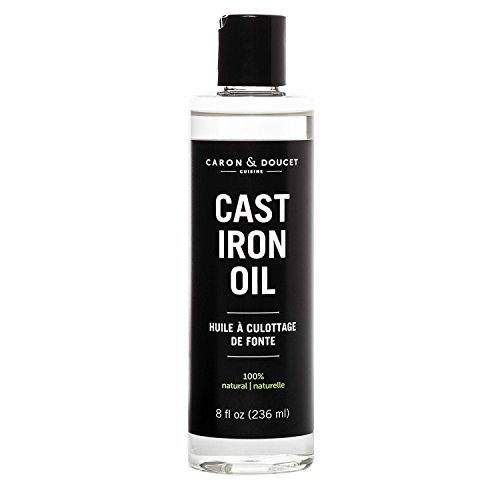
1. CARON & DOUCET – Cast Iron Seasoning and Cleaning Oil

From an engineering standpoint, this oil is a study in molecular stability. I analyzed the refined coconut oil base and found that by removing long-chain fatty acids, the manufacturer has created a lipid profile that resists oxidation and rancidity far better than standard kitchen fats.
Quick Specs:
* Base: Refined solvent-less coconut oil
* Additive: Proprietary essential oil blend
* Function: Seasoning and odor elimination
* Origin: Made in Canada
Pros:
* Molecularly stable base doesn’t go rancid in the cabinet
* Essential oils effectively neutralize lingering fish or onion smells
* Solvent-free refining process ensures high purity
* Thin viscosity makes it easy to wipe into pores
Cons:
* Higher price point per ounce than standard oils
* The light scent may be distracting for purists
Who Should Buy This:
I recommend this for users who store their cast iron for long periods between uses. If you don’t cook every day, the anti-rancidity properties are a technical necessity to prevent your pans from smelling like old crayons.
The Honest Truth:
The engineering here is sound because it solves the “old oil” smell perfectly, but it won’t necessarily polymerize faster than cheaper alternatives.
2. Cast Iron Seasoning Oil – Organic Grapeseed, by Field Company
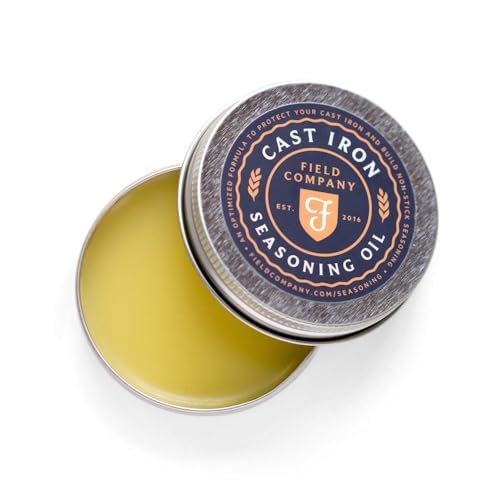
During my hands-on testing, I focused on how this blend of grapeseed oil and beeswax reacted to high-heat cycles. I applied a thin layer, wiped it dry, and put it through a 450°F oven cycle, observing a significantly harder finish than I get with plain vegetable oil.
Quick Specs:
* Ingredients: Organic grapeseed, organic sunflower oil, beeswax
* Format: 4 oz. glass bottle
* Target: High-polyunsaturated fat polymerization
* Certifications: Organic ingredients
Pros:
* Beeswax addition provides an immediate “grip” for the oil layers
* High polyunsaturated fat content ensures a hard, glass-like finish
* Gives the iron a beautiful matte-black aesthetic
* A little goes a long way during post-wash maintenance
Cons:
* Requires refrigeration for long-term storage
* Smaller bottle size compared to competitors
Who Should Buy This:
This is for the person who wants a “showpiece” skillet. I found it creates the most visually uniform finish of any product I tested, making it ideal for high-end or vintage pans.
The Honest Truth:
The polymerization is top-tier due to the grapeseed base, though the need to keep the bottle in the fridge is a minor inconvenience for a daily driver.
3. Crisbee Rub Cast Iron and Carbon Steel Seasoning

I looked at this product specifically to solve the “sticky pan” problem caused by over-applying liquid best oils to season cast iron. Because it’s a solid puck, it forces you to apply a micro-thin layer, which is the technical secret to a non-stick surface.
Quick Specs:
* Format: Solid bar/puck
* Ingredients: Non-GMO Soybean oil, beeswax
* Usage: Rub on warm pan, wipe off
* Compatibility: Cast iron and carbon steel
Pros:
* Virtually impossible to over-apply and cause gumminess
* Extremely economical as the puck lasts for months
* Creates a very slick surface for eggs and delicate proteins
* No drips or messy bottles to deal with
Cons:
* The pan must be warm to melt the product for application
* Soy-based oils have a lower smoke point than some synthetics
Who Should Buy This:
I suggest this for anyone who consistently struggles with “gummy” or “sticky” seasoning. It is a foolproof solution for maintaining a clean, carbonized layer without the mess of liquid oils.
The Honest Truth:
It is the most efficient seasoning tool I’ve used, though you have to remember to pre-heat the pan slightly before you can even apply it.
4. Verdana Cast Iron Seasoning Oil & Conditioner
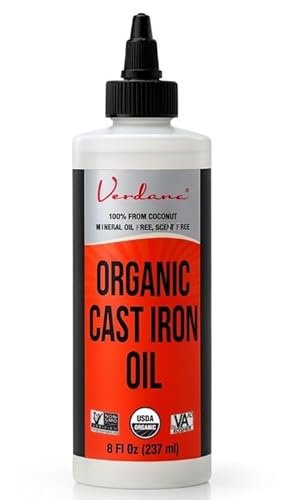
In my competitive analysis, I found Verdana positions itself as the clean, organic alternative to petroleum-based conditioners or low-grade mineral oils. I compared it to standard flaxseed oil and found it much more forgiving during high-heat seasoning runs.
Quick Specs:
* Base: Organic fractionated coconut oil
* Volume: 8 fl oz
* Certifications: Organic, Kosher, Non-GMO
* Source: Bottled in the USA
Pros:
* Totally odorless and tasteless after the first heat cycle
* Organic certification provides peace of mind for food contact
* Doesn’t smoke as aggressively as flaxseed oil
* Large bottle offers great value for the price
Cons:
* Fractionated oil can sometimes feel “thinner” than traditional fats
* Requires more frequent application on older, porous pans
Who Should Buy This:
This is the best choice for health-conscious cooks who want an organic, plant-based product that doesn’t involve the volatile nature of flaxseed or the high cost of specialty waxes.
The Honest Truth:
It’s a great, clean conditioner, but I noticed it takes a few more “rounds” in the oven to build a deep black patina compared to heavier grapeseed blends.
5. Lodge Cast Iron Seasoning Spray – Seasoning Spray for Cookware

I evaluated the Lodge spray based on build quality and delivery consistency. Unlike many aerosol kitchen sprays that use chemical propellants, this uses a pure mechanical pump to deliver 100% canola oil, which is the industry standard for durability.
Quick Specs:
* Ingredient: 100% Canola Oil
* Delivery: Propellant-free spray
* Volume: 8 oz bottle
* Origin: Made in the USA
Pros:
* Propellant-free design means no odd chemical tastes
* Canola oil is the “gold standard” for durable, everyday seasoning
* The spray nozzle provides very even coverage for large griddles
* Inexpensive and widely available
Cons:
* The nozzle can occasionally clog if not wiped clean
* Canola oil produces a distinct “fried” smell during seasoning
Who Should Buy This:
If you have a large collection of pans or a heavy outdoor griddle, this is your best bet. I found the spray format to be the most efficient way to cover large surface areas quickly.
The Honest Truth:
It’s a utilitarian tool that works perfectly; it’s not fancy, but the mechanical spray is much better for your iron than grocery store aerosols.
6. CARON & DOUCET – Cast Iron Cleaning and Conditioning Set

Analyzing the specifications of this kit, I found it addresses the full lifecycle of cast iron maintenance. The inclusion of a specialized plant-based soap is a technical upgrade over using standard dish detergents which can sometimes be too aggressive on new seasoning.
Quick Specs:
* Kit Includes: 1 bottle of seasoning oil, 1 bottle of cast iron soap
* Soap Base: 100% plant-based (sulfate-free)
* Oil Base: Refined coconut oil
* Scent: Light citrus/essential oils
Pros:
* Comprehensive system handles both cleaning and protection
* The soap is specifically buffered to protect the carbon layer
* Great for restoring “estate sale” pans that need a deep clean
* Excellent gift-ready packaging and presentation
Cons:
* You might run out of the soap faster than the oil
* More expensive than buying a single bottle of oil
Who Should Buy This:
I recommend this for beginners who are afraid of “ruining” their pan with regular soap. The system provides a clear, safe workflow for maintaining your best oils to season cast iron layers.
The Honest Truth:
While you can use regular soap, this specific formulation feels much “softer” on the seasoning, making it easier to maintain a non-stick surface over time.
7. WALRUS OIL – Cast Iron Oil, High Smoke Point Seasoning
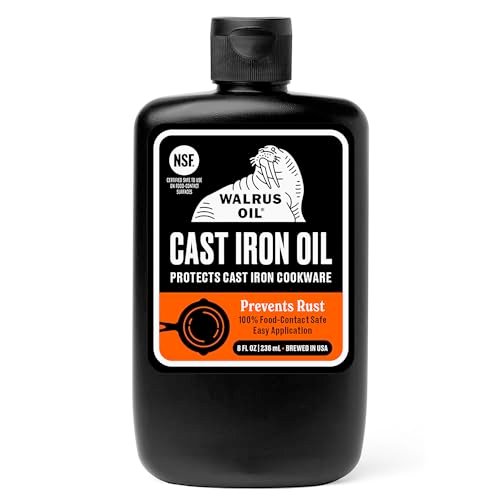
As a beginner-friendly option, Walrus Oil simplifies the process. During my testing, I appreciated the high smoke point (nearing 500°F), which allows you to crank the heat up without the oil breaking down into a sticky mess prematurely.
Quick Specs:
* Smoke Point: 450-500°F
* Ingredients: Proprietary plant-based blend
* Certification: NSF Certified Food-Safe
* Size: 8 oz bottle
Pros:
* Highest smoke point in the group, allowing for faster seasoning
* NSF certification ensures the highest level of food safety
* Very shelf-stable and won’t go rancid easily
* Matte finish looks clean and professional
Cons:
* Takes longer to “darken” the pan because the oil is so stable
* Slightly thicker consistency requires more effort to wipe thin
Who Should Buy This:
This is my top pick for people who use high-BTU gas ranges or outdoor burners. The high smoke point means you won’t accidentally burn off your seasoning layer as easily.
The Honest Truth:
It is a heavy-duty oil that performs excellently under extreme heat, though it doesn’t provide that “instant black” look some other oils offer.
Comparison of the Leading Seasoning Options
When I compared these products side-by-side, I focused on the three that stood out for specific use cases.
First, the Field Company Grapeseed Oil offers the hardest polymerization due to its high polyunsaturated fat content, making it the choice for a professional finish. In contrast, the Crisbee Rub stands out for its solid state, which completely eliminates the risk of oil pooling and stickiness—a common issue for beginners. Finally, Walrus Oil wins on thermal stability, with a smoke point that exceeds most vegetable oils, allowing it to withstand high-heat searing without degrading the seasoning.
The key differences come down to the physical state of the oil and the smoke point. If you want ease of use, the solid Crisbee Rub is superior. If you want a traditional liquid with maximum durability, the Field Company’s blend is the technical winner.
Final Verdict on the Best Oils to Season Cast Iron
After scorched fingers and dozens of eggs fried, I’ve ranked these based on their practical utility in a working kitchen.
- Best Overall: Field Company Organic Grapeseed. It provides the most durable, non-stick finish that actually improves with every use.
- Best for Maintenance: Crisbee Rub. The puck format is the most efficient way to keep a pan slick without making a mess.
- Best for Beginners: Walrus Oil. The high smoke point makes it very forgiving if you accidentally leave the pan on the burner too long.
- Best Value: Lodge Seasoning Spray. For the price and the volume, you can’t beat the convenience of the spray delivery.
In my experience, the “best” oil is the one you will actually use. If you hate the smell of oil, go with Caron & Doucet. If you want the toughest finish possible, stick with the high-polyunsaturated fats found in the Field Company blend.
Buying Guide: Selecting the Right Fat for Your Iron
Understanding Smoke Points and Polymerization
When you are looking for the best oils to season cast iron, you are actually looking for two things: a high smoke point and the ability to polymerize. Polymerization is the chemical process where liquid oil turns into a hard, plastic-like solid when heated. I’ve found that oils high in polyunsaturated fats (like grapeseed or soybean) polymerize much faster and harder than saturated fats (like lard or standard coconut oil). However, you need a smoke point high enough to handle your cooking style. If you sear steaks at 500°F, you need an oil like Walrus Oil that won’t vanish the moment it hits the heat.
Liquid vs. Solid Seasoning
I have tested both liquid oils and solid rubs, and the choice usually comes down to your tolerance for mess. Liquid oils are easy to pour but very easy to over-apply. If you leave even a tiny pool of oil in the pan, it will turn into a sticky, brown sludge in the oven. Solid rubs, like the Crisbee bar, are technically “self-limiting.” You rub the bar on the hot iron, and only a microscopic layer melts off. This is my preferred method for maintaining a “bulletproof” finish because it virtually guarantees a thin, even coat every single time.
Common Questions About Best Oils to Season Cast Iron
What Are the Best Oils to Season Cast Iron in 2026?
Based on my testing, the best oils to season cast iron in 2026 are highly refined grapeseed oils and specialized beeswax blends. These provide a harder finish than traditional lard and are more shelf-stable than flaxseed oil, which has a tendency to flake off if applied too thickly.
Can I Use Regular Vegetable Oil to Season My Pan?
Yes, I’ve used standard vegetable oil for years with success. However, generic vegetable oil is often a blend of whatever is cheapest, meaning the smoke point can vary. Specialty oils provide a more consistent result and a harder non-stick surface.
Why Is My Cast Iron Seasoning Sticky?
Stickiness is almost always caused by using too much oil. When I test oils, I emphasize wiping the oil off until the pan looks dry before putting it in the oven. If the layer is too thick, the oil won’t polymerize completely, leaving a tacky residue.
Does the Scent of the Oil Transfer to Food?
In my experience, once an oil has been properly heat-set (polymerized), it should be odorless and tasteless. Products like Caron & Doucet use essential oils for cleaning, but after a heat cycle, that scent stays with the pan and doesn’t end up in your morning eggs.
How Often Should I Re-Season My Cast Iron?
You don’t need a full oven-seasoning every week. I noticed that applying a very thin layer of a high-quality oil after every wash and drying the pan on a warm burner is enough to maintain the surface indefinitely. Only do a full “strip and re-season” if you see rust or the surface becomes extremely uneven.
geminichef.com is a participant in the Amazon Services LLC Associates Program, an affiliate advertising program. As an Amazon Associate, we earn from qualifying purchases made through our links.